Project 1
Aim
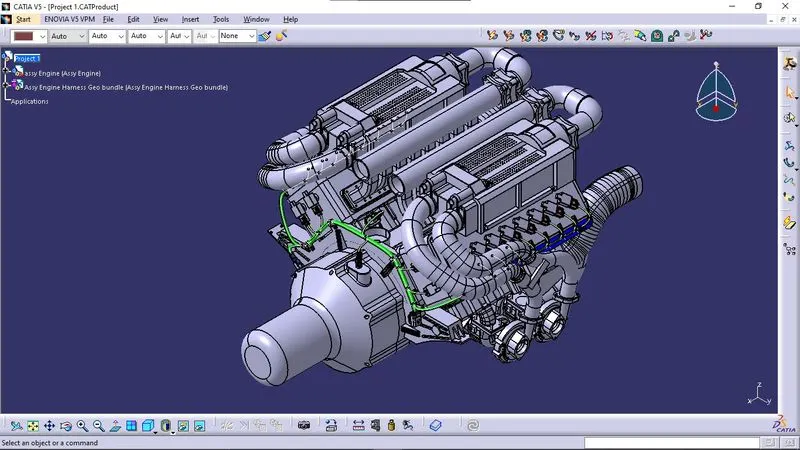
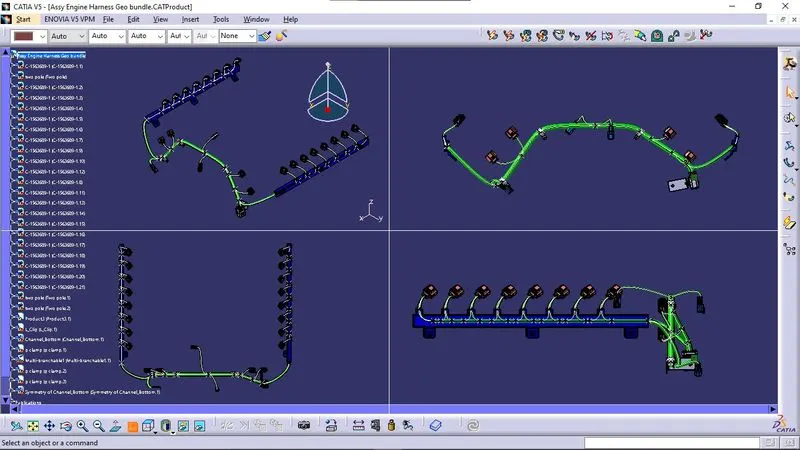
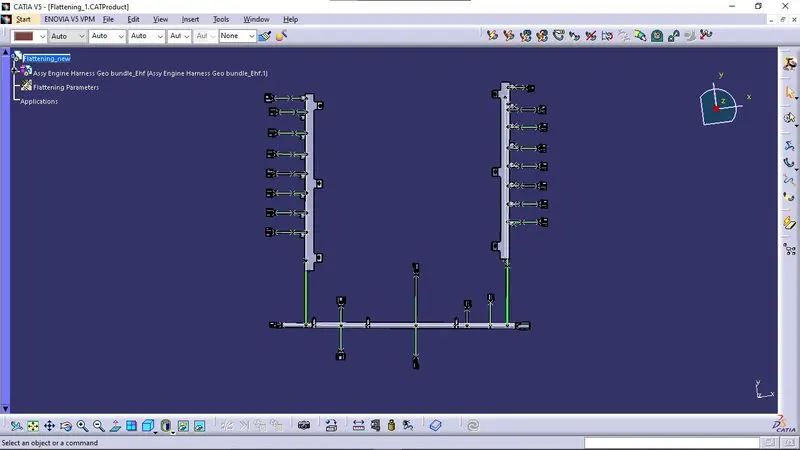
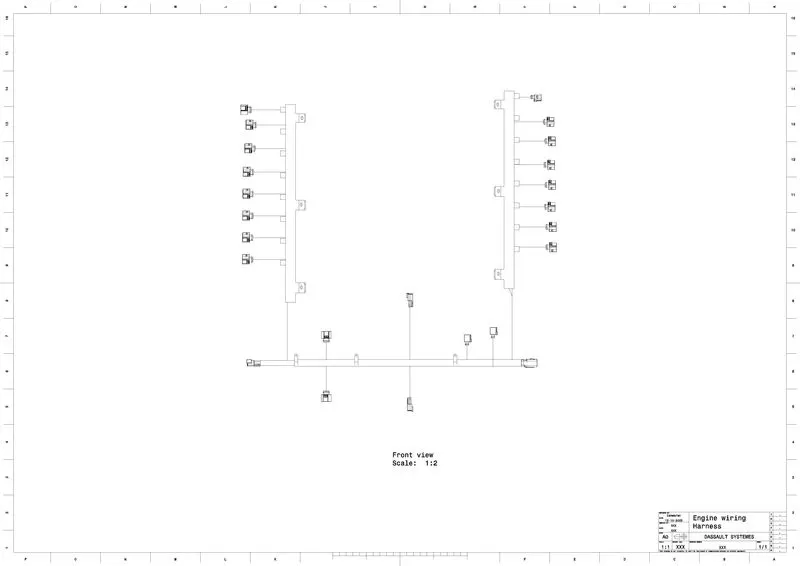
To Route the Wiring harness on Given Engine and Prepare flatten view drawing.
Software Used
Catia V5
Introduction
CATIA® is the world's engineering and design leading software for product 3D CAD design excellence.It is used to design, simulate, analyze, and manufacture products in a variety of industries including aerospace, automotive, consumer goods, and industrial machinery
A wire harness, also commonly referred to as a wiring harness, is an exterior sheath used to cover some types of electronic wires. Generally, wiring harnesses are made of thermoplastic or thermoset materials that can help protect the cables from the environment. It is a low-cost, simple method for technicians to keep wires organized, protected, and easy to navigate. Although most wires come with their own exterior sleeves, those sleeves seldom are thick enough to protect the wires from dust, debris, and moisture. The thicker the wire is, the more risk there is of it sustaining damage due to a burned fuse.
The term “wire harness” is often used interchangeably with the term “cable assembly.” However, these are actually two different products. While both are exterior sheaths used to protect wires or cables, the cable assembly is made of a more durable material and is created to offer a higher level of protection in the most extreme conditions. Wiring harnesses and cable assemblies each have a distinct purpose in the electrical field. Selecting the right one is based on the application needed and is an important part of the success of your product. Ensuring that you have experienced, and informed members of your team helps ensure that you are using the correct components for your project.
Design Methodology
- Wiring harness routing shall provide ease in manufacturing, accessibility, easy removal, and easy maintenance of attached equipment and wiring harness.
- Routing through small structural holes and openings shall be avoided, minimize chaffing and handling of the wiring harness during installation.
- Avoid the harness routing and clipping in the Blind zone of the Operator during harness assembly or in service.
- Routing shall offer protection against possible damage through common misuses such as being handhold and temporary support for test equipment.
- Provide additional slack to the harness according to the surroundings and harness bending requirements. Ensure the routing meets the clearance requirements with different surrounding parts.
- Avoid routing over the bolts, near to the bolted joints. It may damage the harness or puncture the harness. Keep harness away from panel mounting screws.
- Avoid harness routing near sharp edges, if not possible provide protection to the harness. The maximum distance between two clips on a straight branch is 200mm.
- Provide Clips and clamps if the harness is going to bend at multiple locations. The use of too many sheet-metal brackets should be avoided.
- The branch length should be more than 50 mm.
- Min distance between clip and branching point to be 25 mm. Min distance between two branch breakouts should be 50 mm.
Input
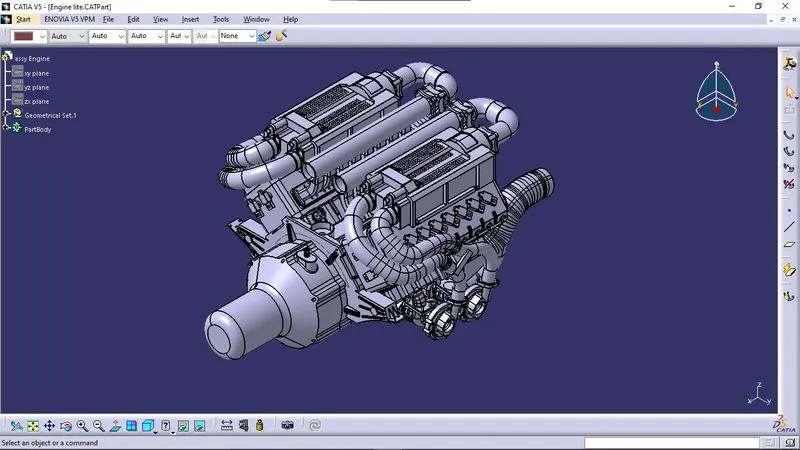
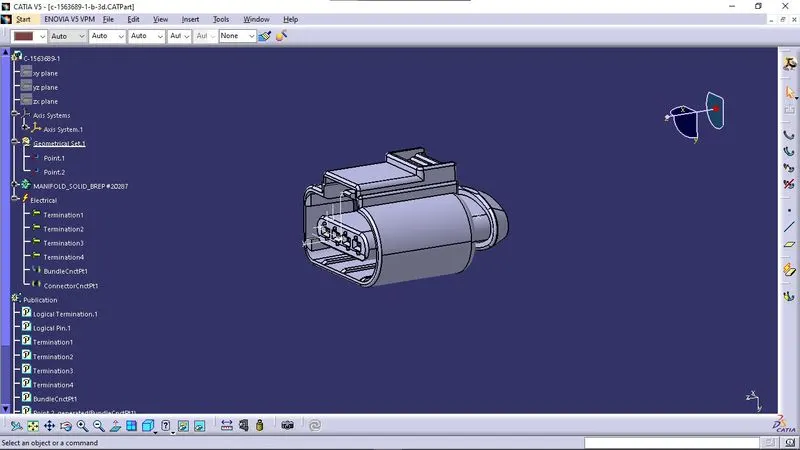
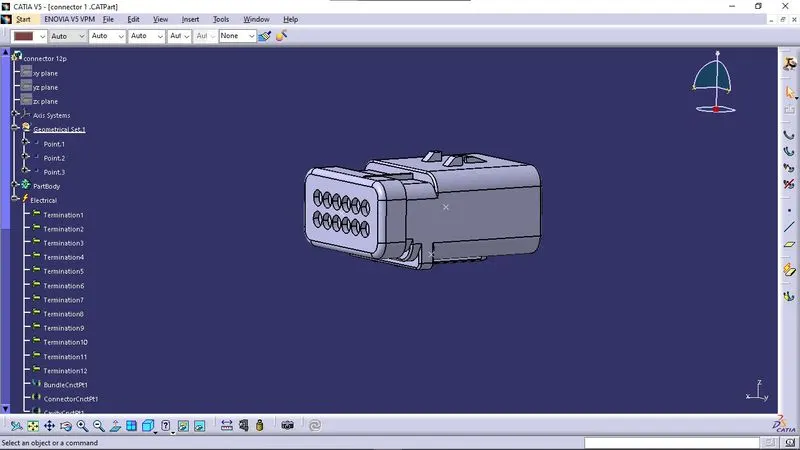
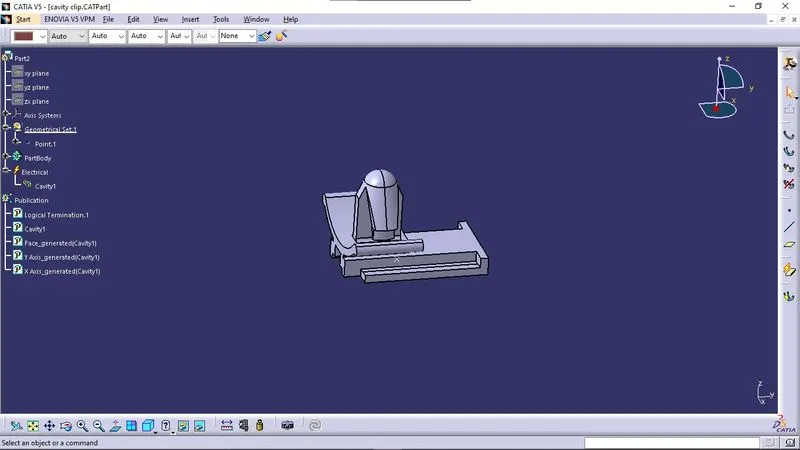
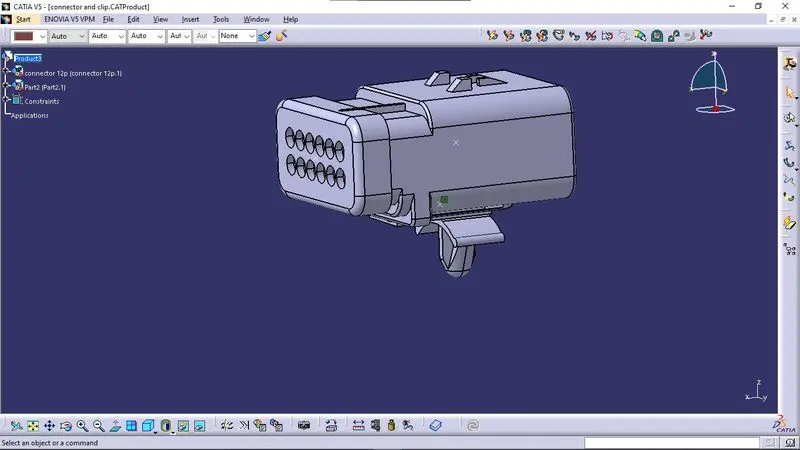
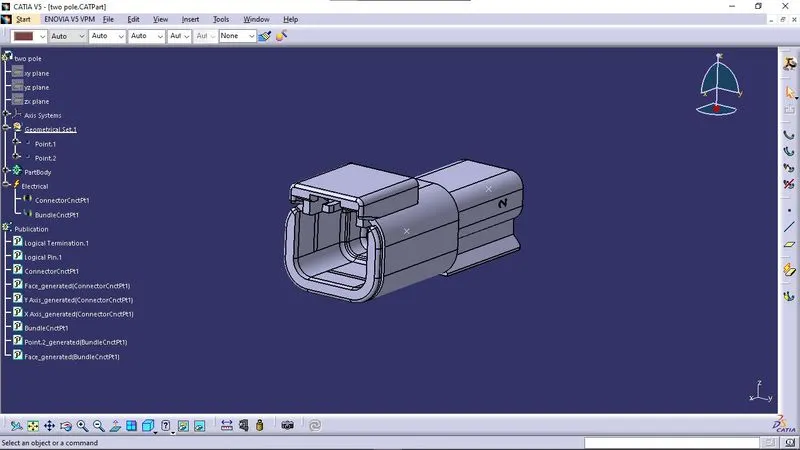
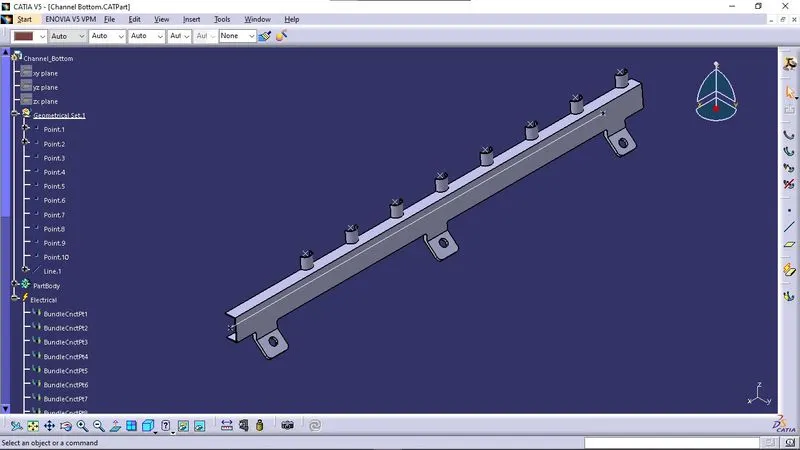
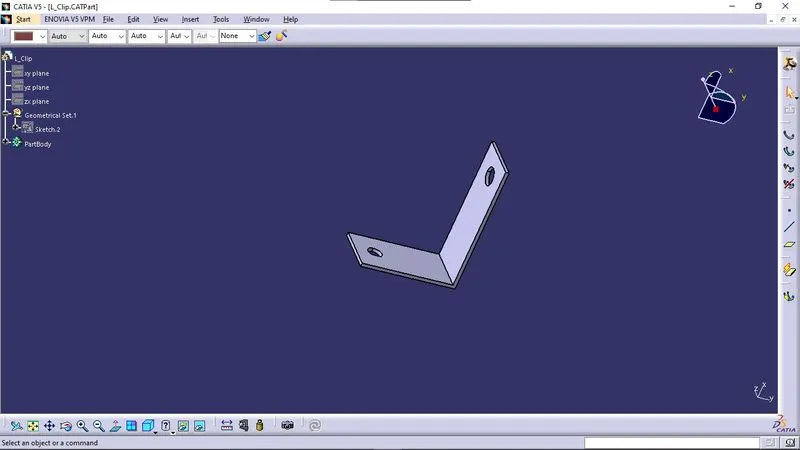
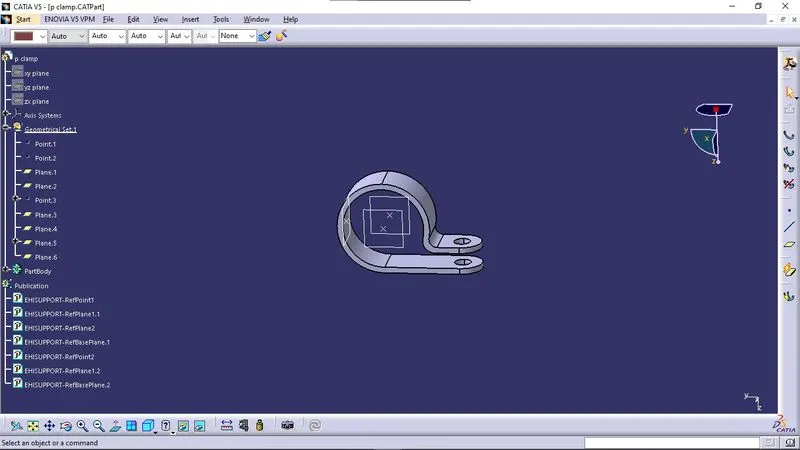
Electrically Defined Components
Output
Conclusion
The Engine wiring Harness project is thus concluded.