Benchmarking
AIM
To prepare a report explaining about Benchmarking and a comparison between various types of Cars which is suitable for Mr.D.S. Pughazhyendhii and his family.
WHAT IS BENCHMARKING ?
Benchmarking is defined as the process of measuring products, services, and processes against those of organizations known to be leaders in one or more aspects of their operations. Benchmarking provides necessary insights to help you understand how your organization compares with similar organizations, even if they are in a different business or have a different group of customers.
BENCHMARKING PROCEDURE
- Consideration
- Before an organization can achieve the full benefits of benchmarking, its own processes must be clearly understood and under control.
- Benchmarking studies require significant investments of manpower and time, so management must champion the process all the way through, including being ready and willing to make changes based on what is learned.
- Too broad a scope dooms the project to failure. A subject that is not critical to the organization’s success won’t return enough benefits to make the study worthwhile.
- Inadequate resources can also doom a benchmarking study by underestimating the effort involved or inadequate planning. The better you prepare, the more efficient your study will be.
- Plan
- Define a tightly focused subject of the benchmarking study. Choose an issue critical to the organization’s success.
- Form a cross-functional team. During Step 1 and 2, management’s goals and support for the study must be firmly established.
- Study your own process. Know how the work is done and measurements of the output.
- Identify partner organizations that may have best practices.
- Collect
- Collect information directly from partner organizations. Collect both process descriptions and numeric data, using questionnaires, telephone interviews, and/or site visits.
- Analyze
- Compare the collected data, both numeric and descriptive.
- Determine gaps between your performance measurements and those of your partners.
- Determine the differences in practices that cause the gaps.
- Adapt
- Develop goals for your organization’s process.
- Develop action plans to achieve those goals.
- Implement and monitor plans.
PROS
- It gives you a performance improvement.
- It inspires creativity.
- It creates a deeper understanding.
CONS
- It doesn’t really measure effectiveness.
- It is often treated as a solo activity.
- The wrong type of benchmarking might be used.
DIFFERENT TYPES OF SUGGESTED VEHICLES
- Renault Kiger
- Nissan Magnite
- Hyundai Venue
- Maruti Vitara Brezza
- Kia Sonet
- Mahindra XUV300
- Ford Ecosport
- Tata Nexon
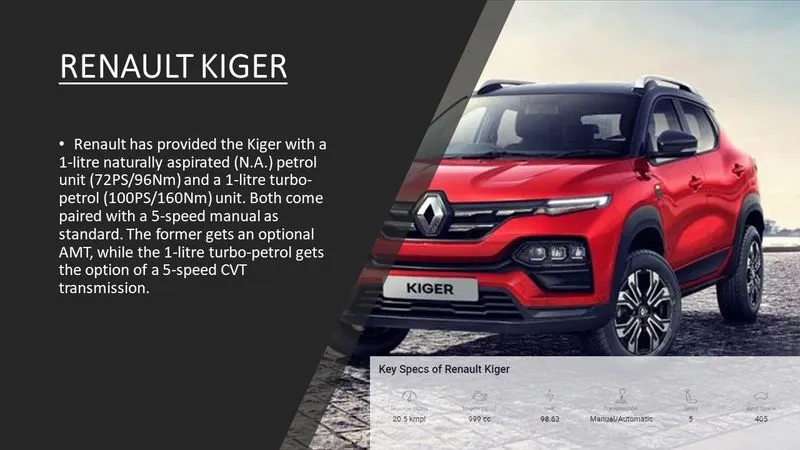
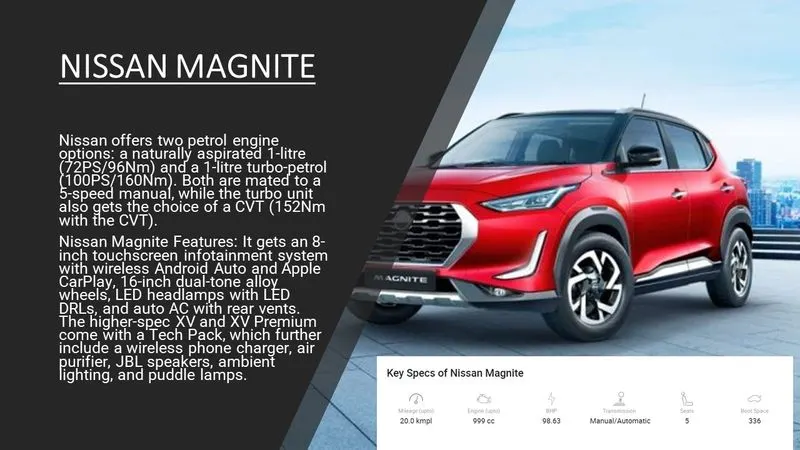
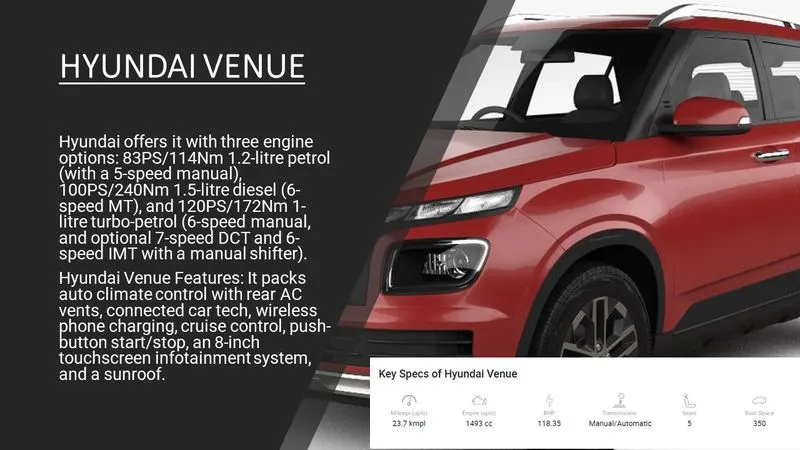
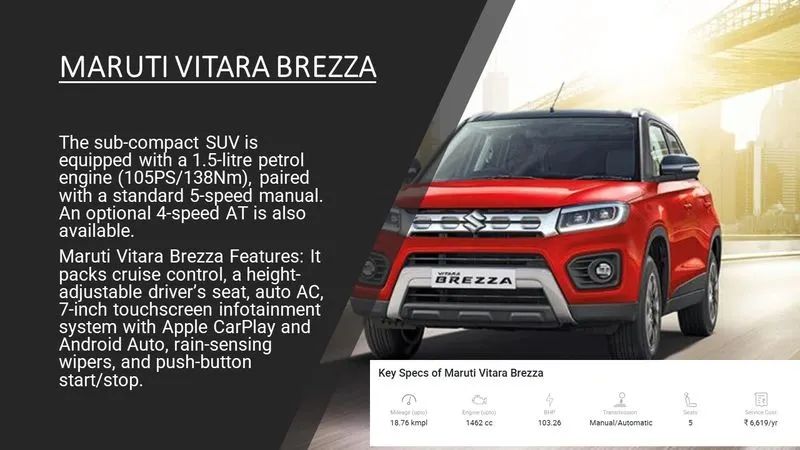
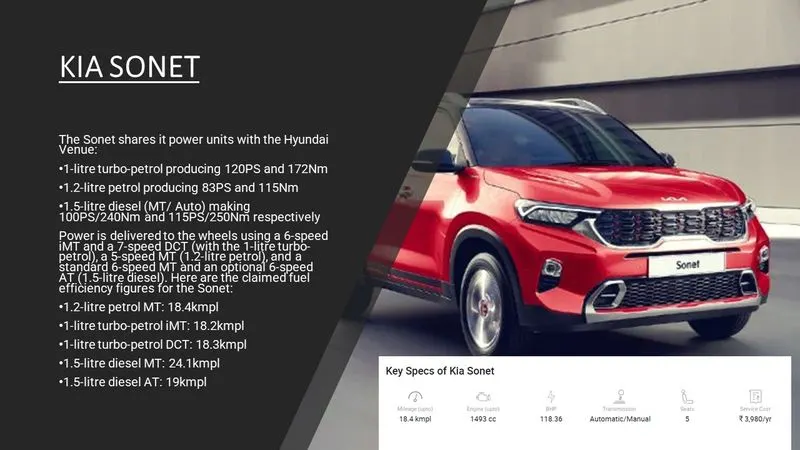
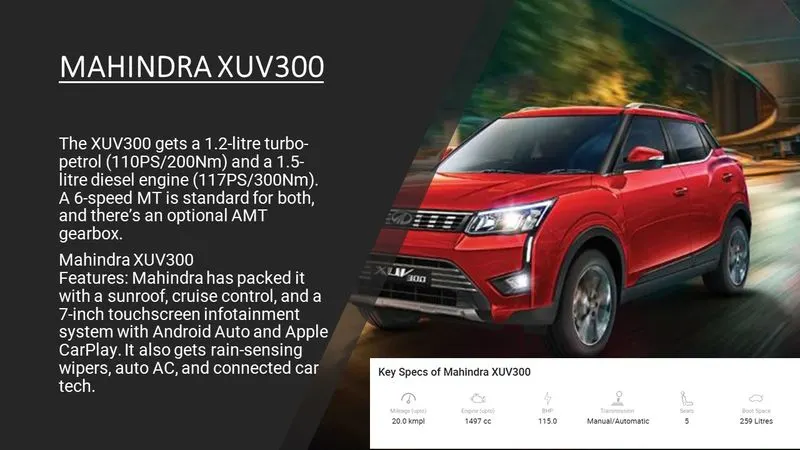
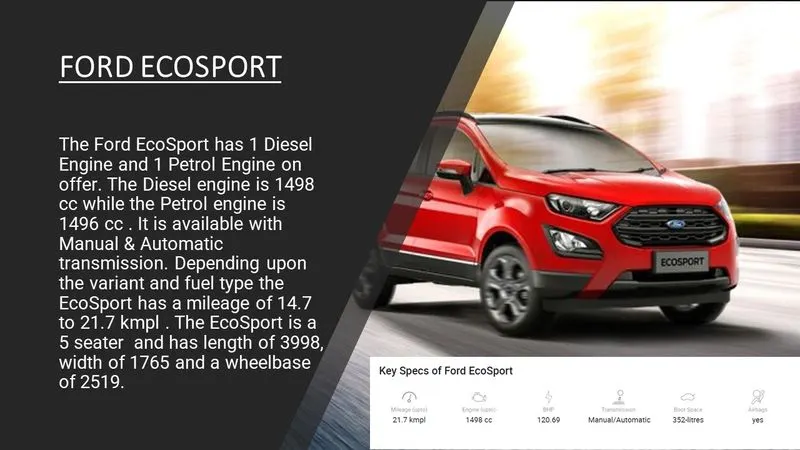
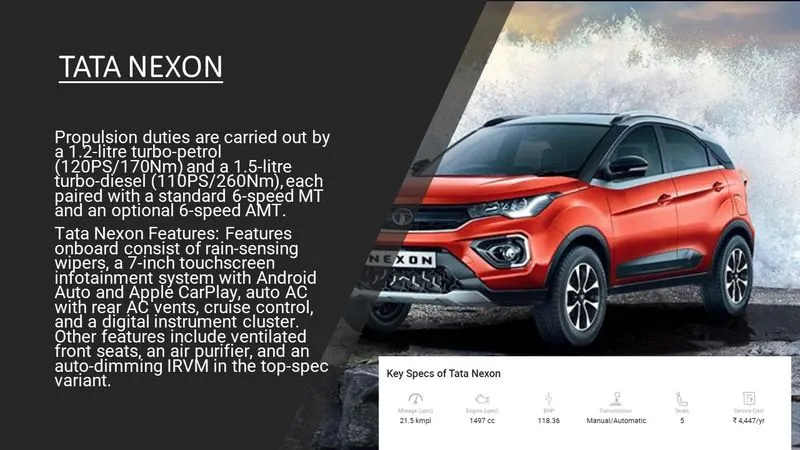
COMPARISON
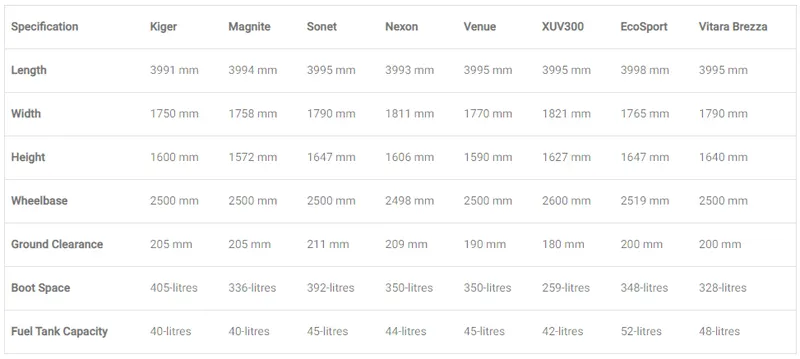
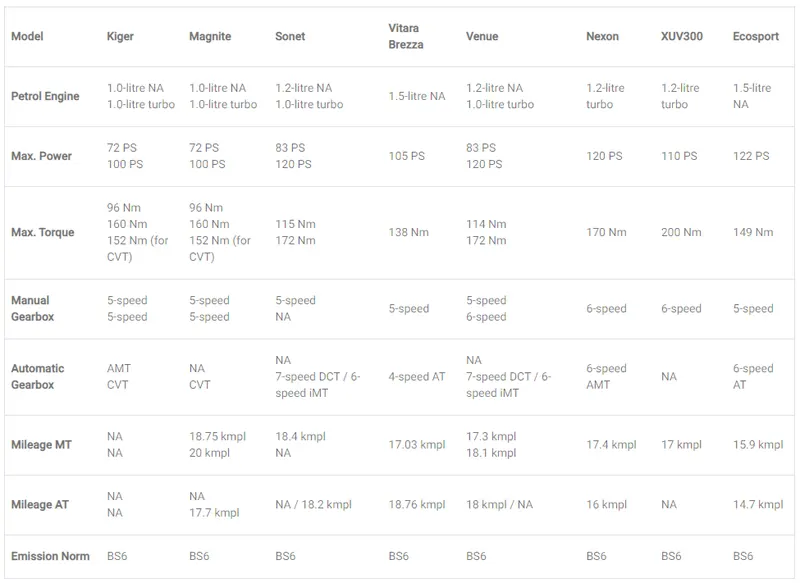
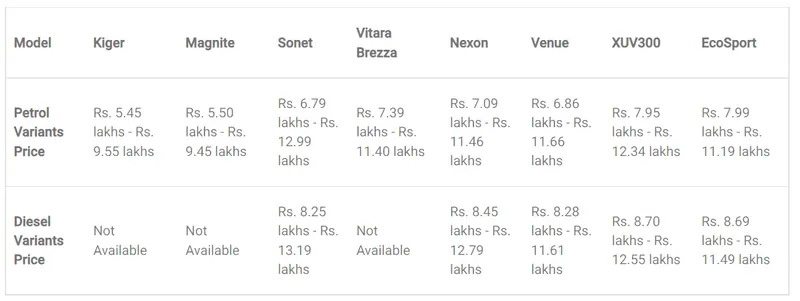
CONCLUSION
My suggestion for the selection of vehicle will be based on mainly two options:
- Value for money including safety : I would recomend Tata Nexon or Kia Sonet.
- Mileage and Price : I would Recomend Kia Sonet or Hyundai Venue.
So to conclude my best option to recomend Mr.D.S. Pughazhyendhii and his family will be Kia Sonet as it gives better performance in mileage and safety.