Project 1
Aim: To model a Multiple mast tensile structure and to do form-finding analysis
Step-1:
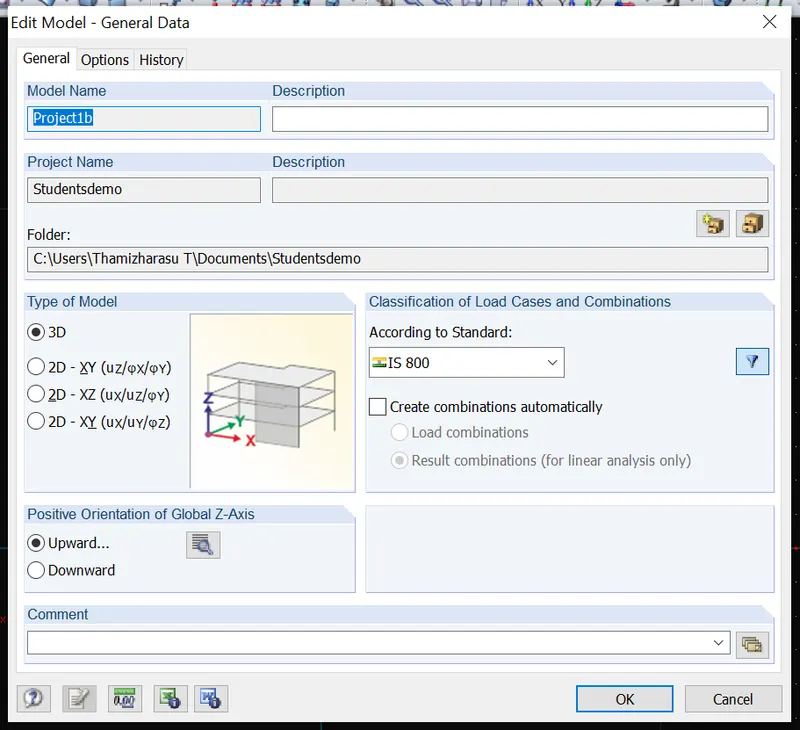
Project naming and creation using "New Project"
Step-2:
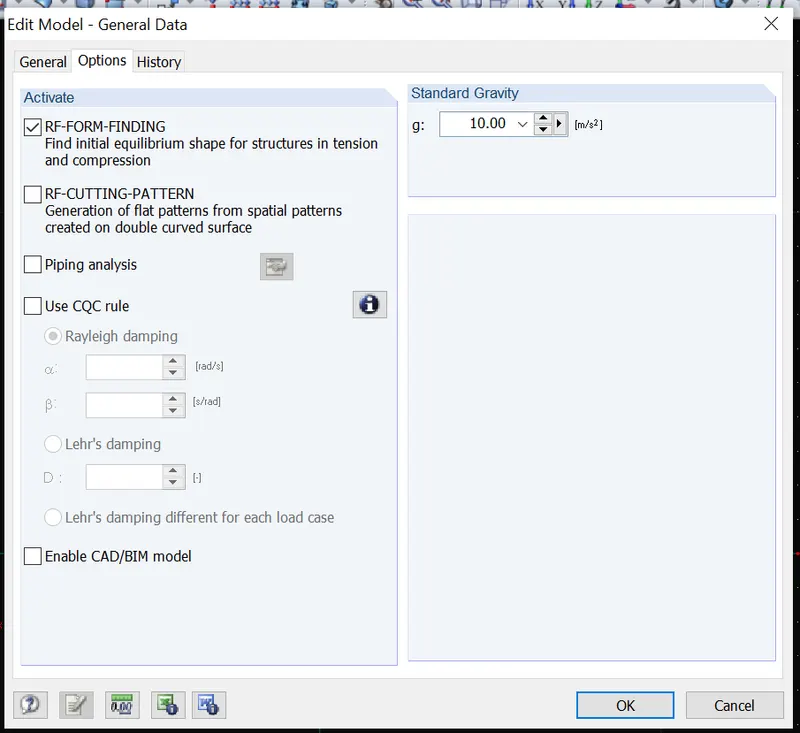
Switch on the RF-FORM FINDING TOOL
Step-3:
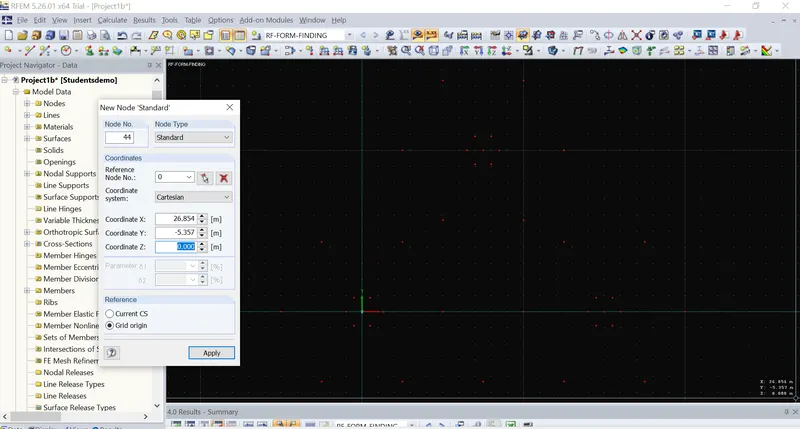
Provide Nodes at required points using "New Nodes" option
Step-4:
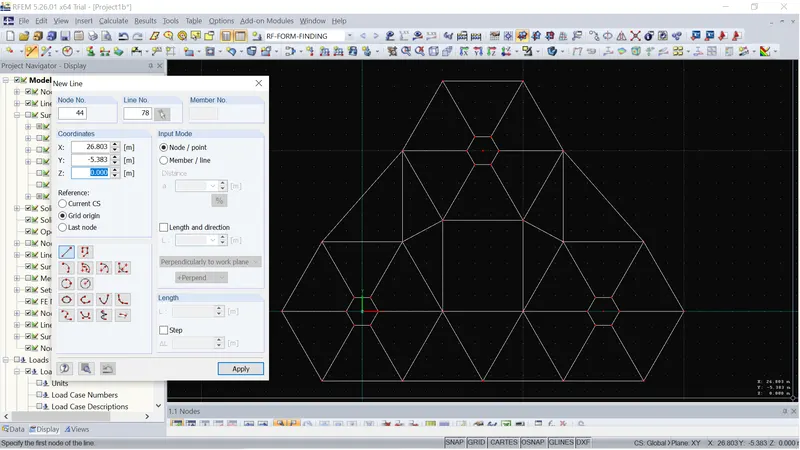
Connect the nodes with analysis lines using "New Line" option.
Step-5:
Select sufficient points where steel supports are to be placed. And double click any of the selected nodes. Go to Support tab and select "Active" and choose Hinge support.
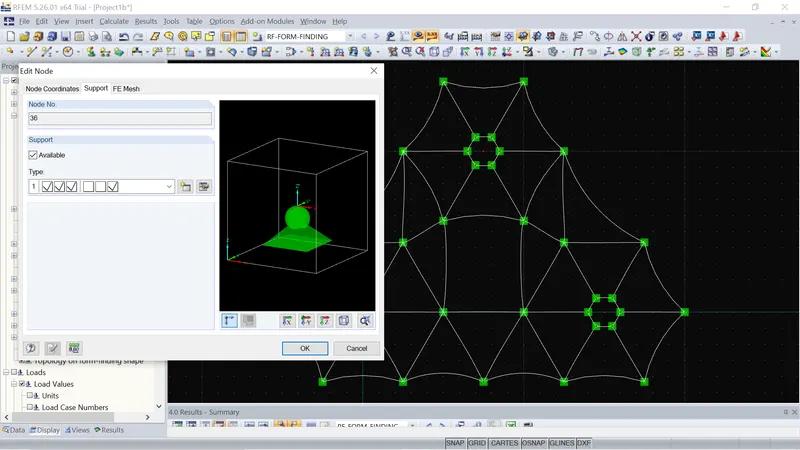
Step-6:
Select all the lines and double click any of them. In the new line property window, Assign a cable material to all the lines.
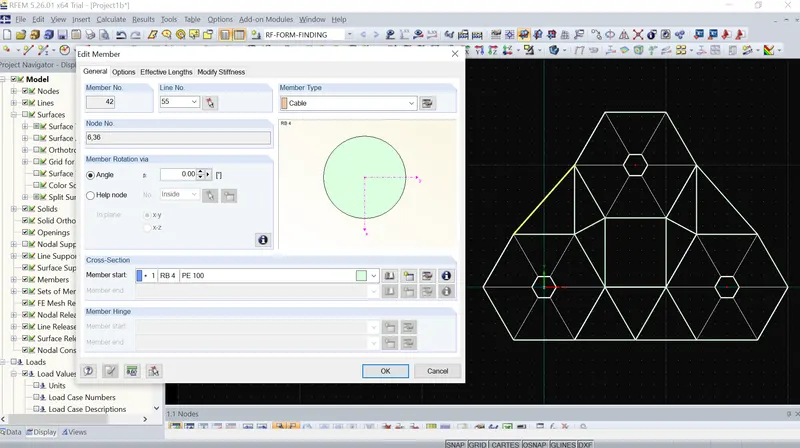
Step-7:
Using "New quadrangle surface" option, choose required boundary lines and create surfaces
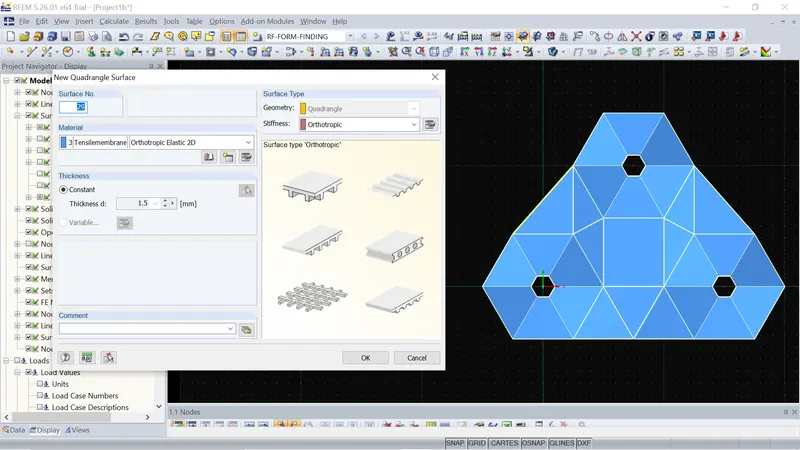
Step-8:
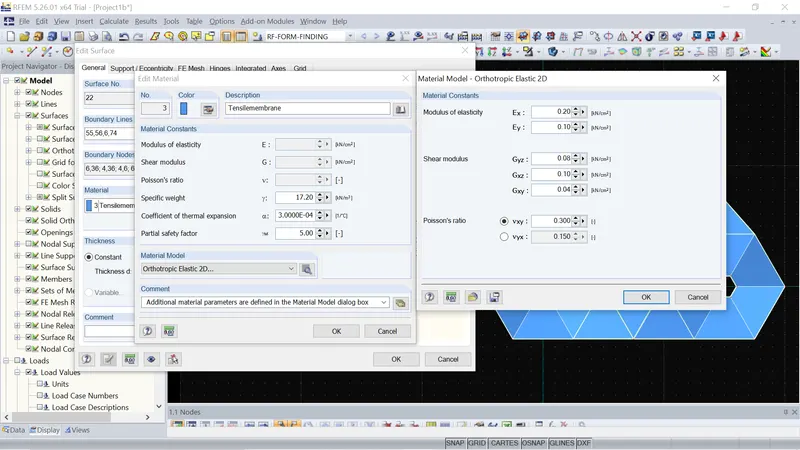
Make surface type as "Orthotropic membrane". Create a new Tensile material with the following properties as given by the manufacturer.
Density = 17.2 kN/m3
Thermal coefficient = 0.0003
factor of safety = 5
Ex = 0.2 kN/cm2
Ey = 0.1 kN/cm2
Gyz = 0.08 kN/cm2
Gxz = 0.1 kN/cm2
Gxy = 0.04 kN/cm2
Poisson ratio = 0.3
Step-9:
Assign the Tensile membrane property for all surfaces.
Step-10:
Select only the conical surfaces and choose Projection method for prestress. Keep 0.8 KN/sq.mm value for the prestress in warp and weft direction.
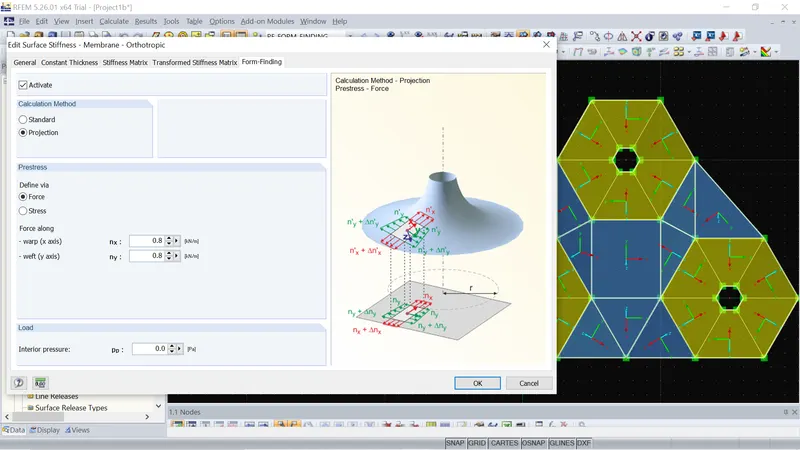
Step-11:
Select only the connecting surfaces and choose Standard method for prestress. Keep 0.8 KN/sq.mm value for the prestress in warp and weft direction.
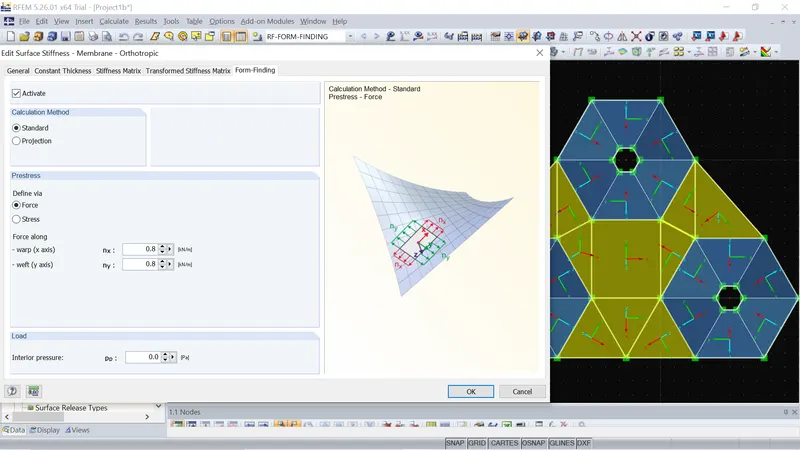
Step-12:
Choose individual surfaces and edit its axes based on its orientation. Repeat the action for all individual surfaces.
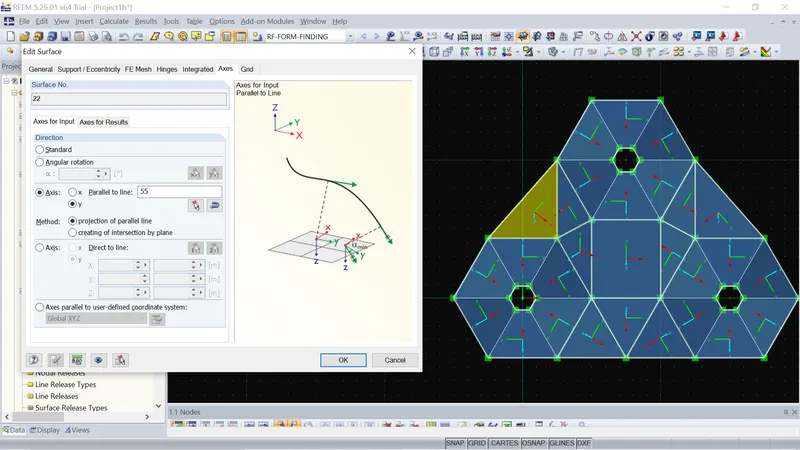
Step-13:
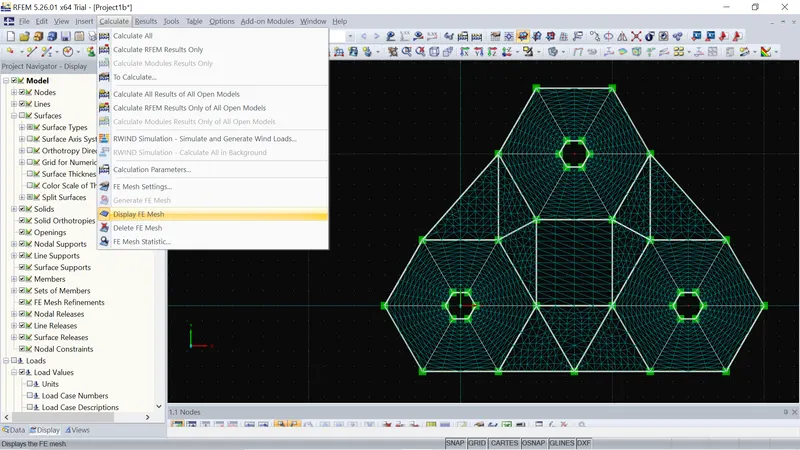
Go to Calculate > FE mesh settings
Provide 1 meter for FE mesh rectangle sizing and Keep Triangle shape meshing.
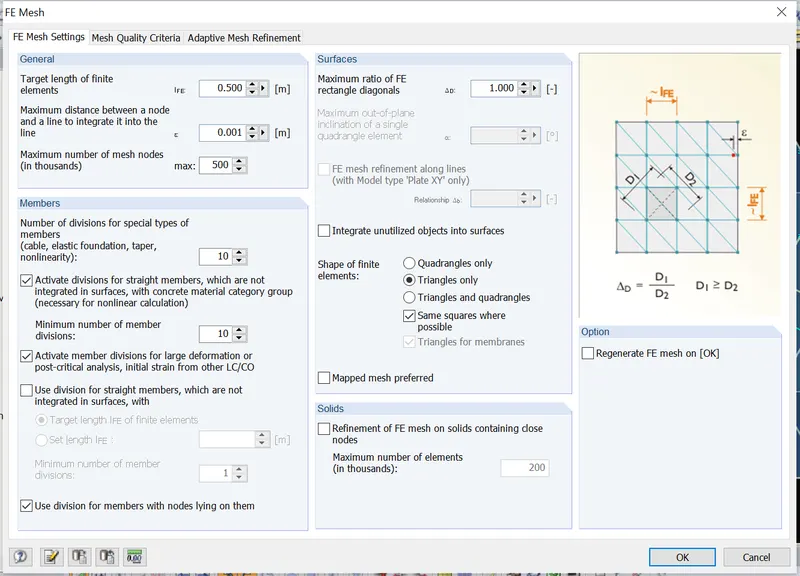
Step-14:
Go to Calculate > Create FE mesh
Once you confirm the formation of mesh in the surfaces, Select "Calculate All"
Step-15:
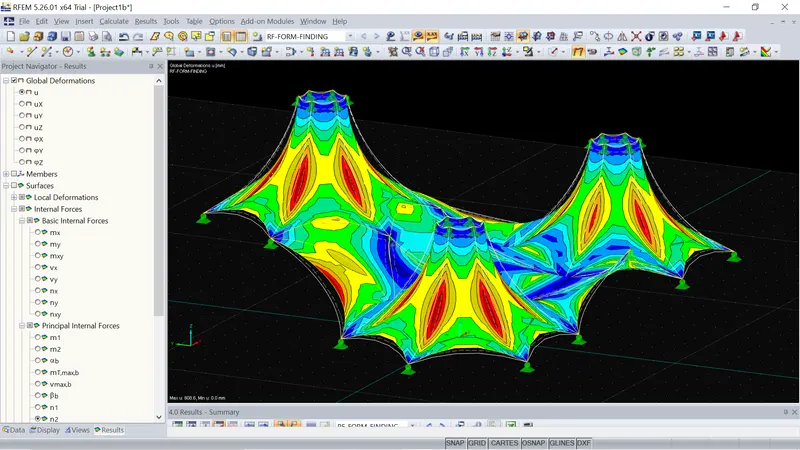
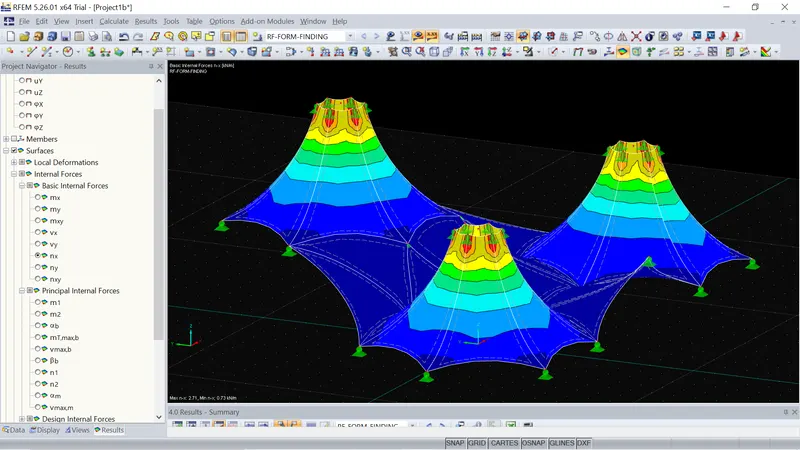
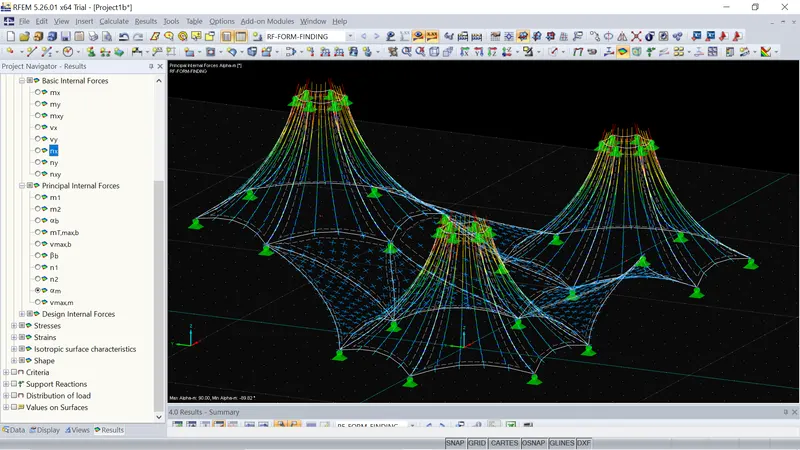
Now we can able to see the deformation, Stresses and forces for all members, nodes, and surfaces also.
(I) Global deformation
(ii) Internal stresses
(iii) Principle force direction
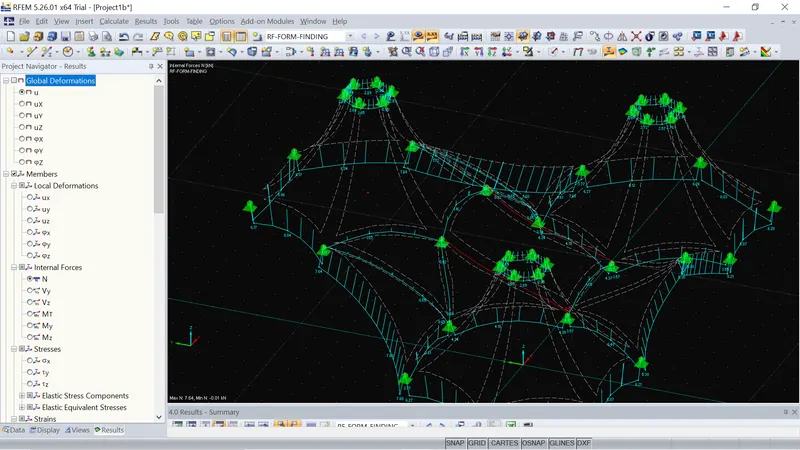
(iv) Axial force in Cables
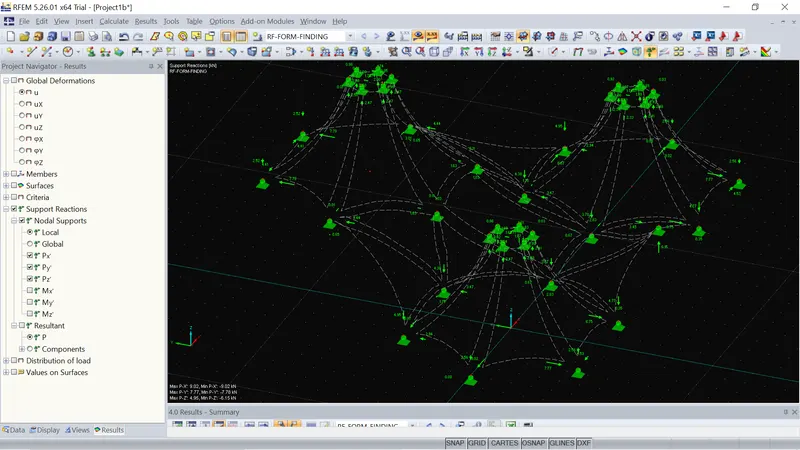
(v) Support reactions
Result:
Thus, multiple mast tensile structure has been modelled using RFEM and form-finding analysis is done.