Project 1
- MULTI PARAMETER MONITORING SYSTEM :
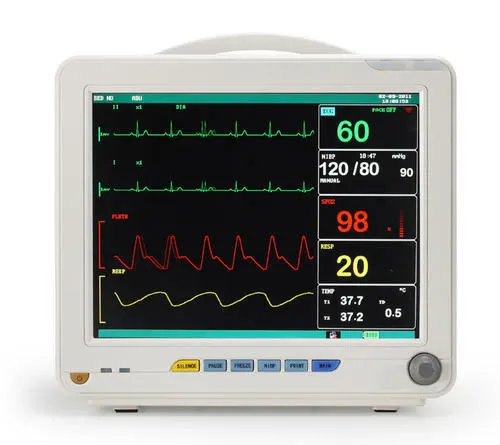
- A patient monitoring system is used to monitor physiological signals.
- It calculates ECG, respiration, blood pressure, and body temperature, among other things.
- Care for the critically ill patient necessitates prompt and accurate decision making in order to administer life-saving therapy as needed.
- Generally, ICU requires a computer system for patient monitoring.
- In patient monitoring system sensors and electrodes used for receiving physiological signals human’s body.
- PARAMETERS ARE COMMONLY MONITORED BY MULTI PARAMETER MONITORING SYSTEM :
- ECG : An electrocardiogram (ECG) is a simple test that can be used to check the rhythm and electrical activity of your heart.
- Pulse oximeter : measurement of the amount of oxygen-carrying haemoglobin in the blood in comparison to the amount of haemoglobin that does not carry oxygen.
- Blood Pressure (invasiv/Non-invasiv) : Blood pressure is the force of blood against the arteries.
- Body Temperature : Normal temperature of the Body The average normal body temperature is thought to be 98.6°F (37°C).
- Heart rate : Heart rate is the number of heartbeats per unit of time. Usually heart rate is expressed as beats per minute (BPM).
- Pulse rate : pulse rate is the number of times the blood flows from the capillaries that are caused due to the contractions in a minute.
- Respiration rate : Respiratory rate is the number of breaths taken per minute.
- NORMAL RANGE OF VITAL PARAMETER OF HUMAN BODY :
| VITAL PARAMETER | NORMAL RANGE | ACQUISTION METHOD |
| ECG | 0.5 TO 4 MV | SKIN ELCTRODE |
| PULSE OXIMETER | 95% TO 100 % | IR LIGHT AND PHOTO DETECTOR |
| BLOOD PRESSURE | 80 TO 120 MMHG | CUFF/STRAIN GAUGE |
| BODY TEMPERATURE | 32C TO 40C | THERMISTOR |
| HEART RATE | 60 TO 100 BPM | DERIVED FROM ECG |
| PULSE RATE | 70 TO 100 BPM | DERIVED FROM PULSE OXIMETER |
| RESPIRATION RATE | 12 TO 20 BPM | IMPEDENCE |
- SENSOR FOR ACQUISTION OF VITAL PARAMETER OF HUMAN BODY :
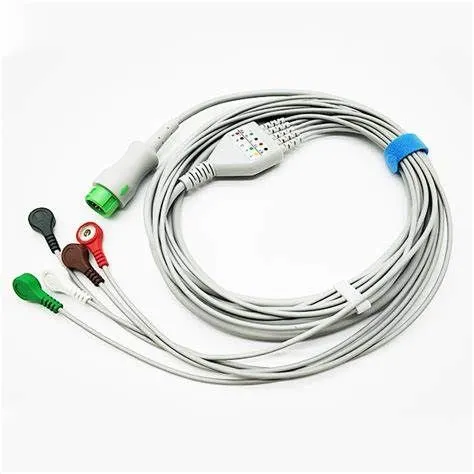
- ECG : Ecg acquisition sensor is called ecg lead and skin electrode and also heart rate and respiration rate is acquired from these sensor.
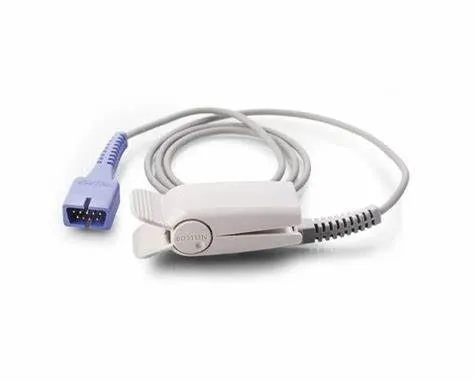
- OXYGEN SATURATION IN BLOOD (SPO2): SPO2 acquistion sensor is called spo2 probe and spo2 mesurment teqnic based on IR light detection. and pulse rate is also acqired from the spo2 probe.
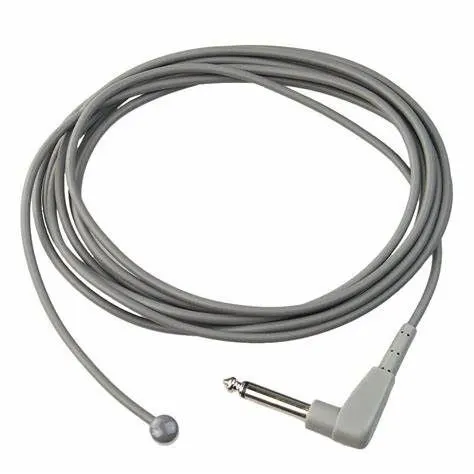
- BODY TEMPERATURE : Thermistor is used for body temperature acquisition.
- BLOOD PRESSURE : Blood pressure acquired through the bp cuff and hose pipe.
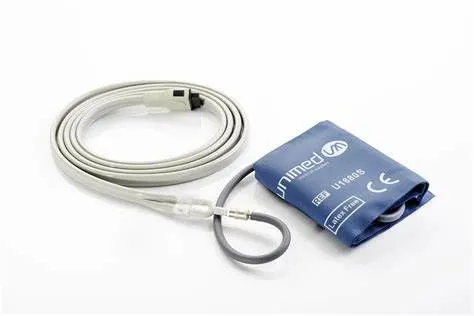
- BLOCK DIAGRAM OF MULTIPARAMETER PATIENT MONITORING SYSTEM :
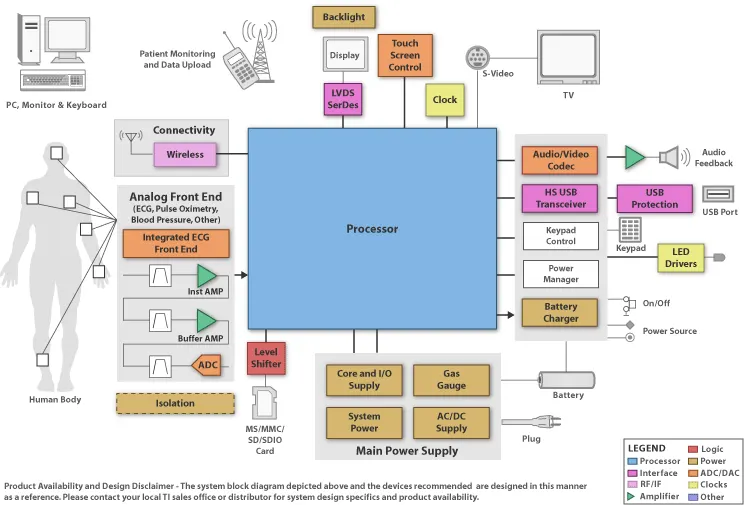
- Block diagram of patient monitor is consist various pre amplifier,signal conditiong circuit ,microprocessor,diplay and speaker ,keybord ,data storage module,data tarnsmission module and power supply
- pre amplifiers is amplify data of acquired from the patient side.
- after signal conditiong part is used for filter data and noise reduction and analog to digital conversion.
- microprocessor is control all over the process and also display the data on display,resive input from the key bord and store data and transmit the data.
- power supply bord is provide power supply to patient monitor.
- DATA PROCESSING :
- AMPLIFICATION
- FILTERING
- NOICE REDUCTION
- ANALOG TO DIGITAL CONVERSATION
- DIGITAL SIGANL PROCESSING FOR DATA INTERPRETATION
- SCREEN LAYOUT :
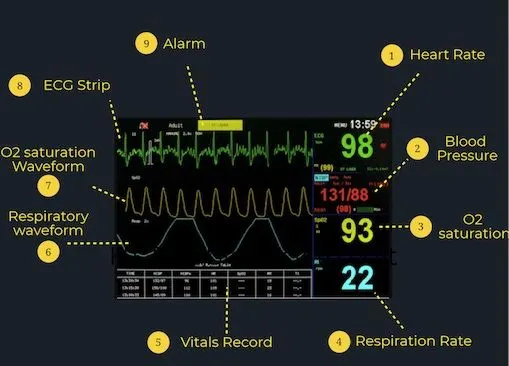
- CENTARL NURSING SYSTEM (CNS):
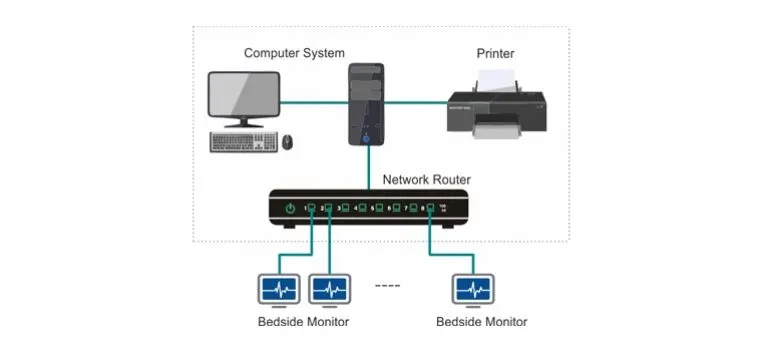
- In central monitoring, the measured values are displayed and recorded at a central station.
- In cental monitoring system all bed side monitor data are displayed in cental dispaly.
- The central station monitoring equipment may incorporate a multi-microprocessor architecture to display a flexible mixture of smooth waveforms, alphanumerics and graphics on a Dispaly or monitor.
- This presents all the information at a glance and thus assists the hospital staff in
- it generates audible and visual alarms if preset vital sign limits are exceeded.
- It is important that the central station announces these emergencies without generating too many false alarms, arising due to patient movements, etc. Secondly, it displays the patient’s vital sign data.
- By watching this data, the attending staff can detect problems before they reach the alarm stage.
- ALARM :
- The Monitor gives AUDIBLE and VISUAL alarms to indicate the medical staff,when vital sign of patient is abnormal or mechanical or electrical problem occur in the monitor.
- patient monitor alarm is classify in two categories :
- Technical alarms : technical alarms also triggered by a device malfunction or electrical and mechanical problems.
- physiological alarms : Physiological alarm triggered when patient's vital sign is abnormal.