Project 1
Here we are discussing about the drive cycles using in conventional vehicle
There are many drive cycles:
1.UDDS
2.HWFT
3.FTP
4.US06
5.NEDC
5.WLTP
But here we only consider two cycles i.e. UDDS and HWFT
UDDS: Urban Dynamometer Driving Schedule
The US FTP-72 (Federal Test Procedure) cycle is also called Urban Dynamometer Driving Schedule (UDDS) or LA-4 cycle (CFR 40, 86, App. I) [2656] . This cycle should not be confused with the UDDS schedule for heavy-duty vehicles. The cycle simulates a urban route of 7.5 mi (12.07 km) with frequent stops.
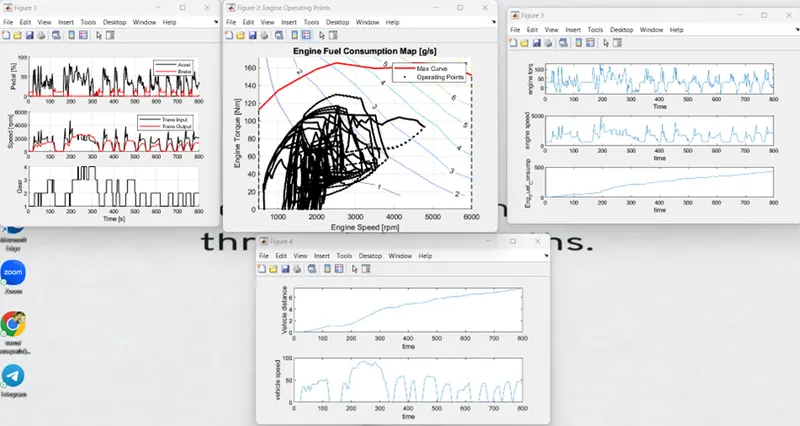
In UDDS the mileage of the vehicle is 12.7816
Here the mileage was reduced to 12 kmpl. Because the urban city roads the vehicle may stops at several times. Because of the irregular movements the mileage may lost.
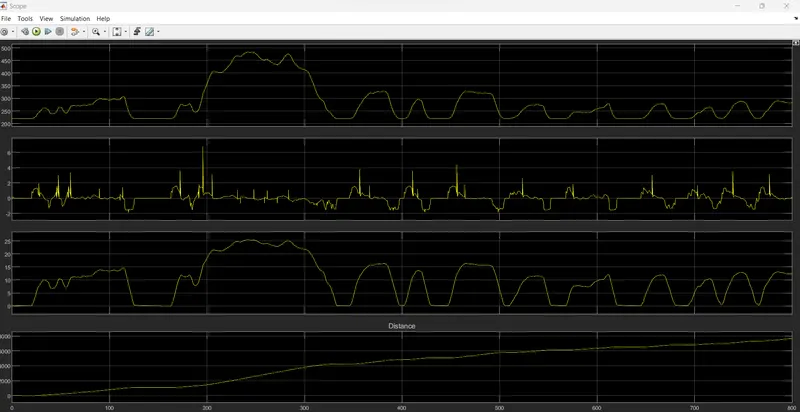
Observe the graph once there are several times the vehicle was stopped.
Due to this condition vehicle may lost there energy.
And also here consumption fuel is high
HWFET: The Highway Fuel Economy Test
The Highway Fuel Economy Test (HWFET or HFET) cycle is a chassis dynamometer driving schedule developed by the US EPA for the determination of fuel economy of light duty vehicles [40 CFR 600, subpart B]. The HWFET is used to determine the highway fuel economy rating, while the city rating is based on the FTP-75 test.
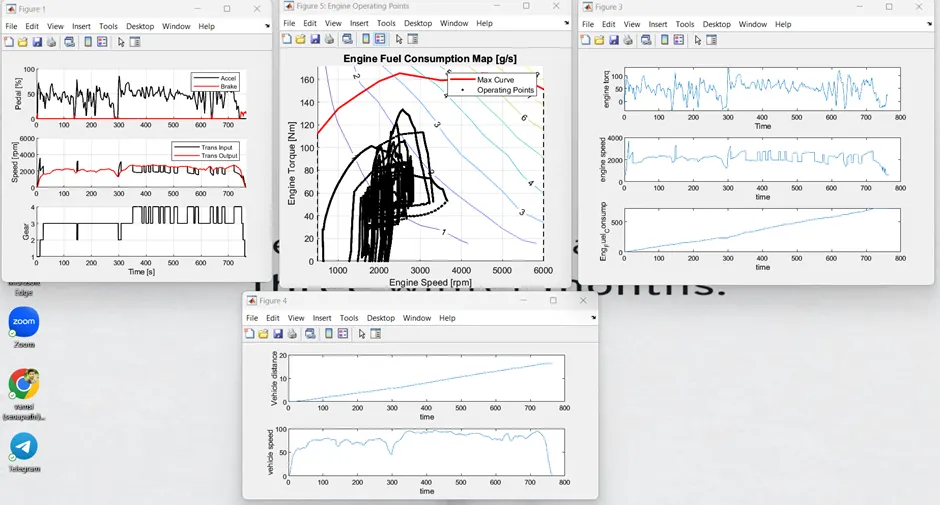
In HWFET the mileage of the vehicle is 16.3298kmpl
Here we get good mileage because of the constant speed of the of the vehicle.
In highway the vehicle movements is constant. And also the energy losses will be reduced. Because of the highway condition the fuel consumption is low.
Now the plotting graphs will be like:
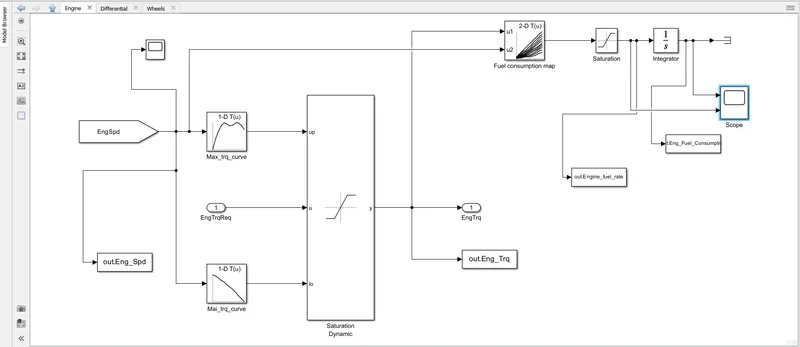
Engine model:
And the scope is like:
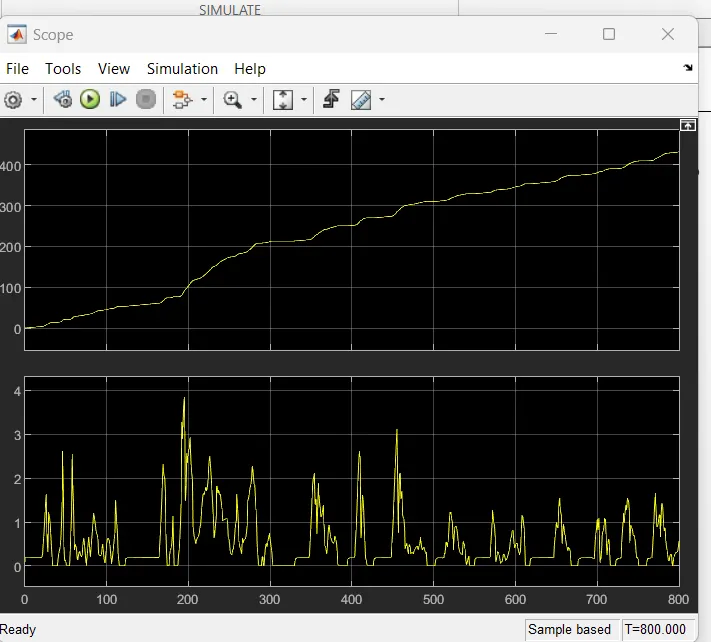
And next will be vehicle dynamics block:
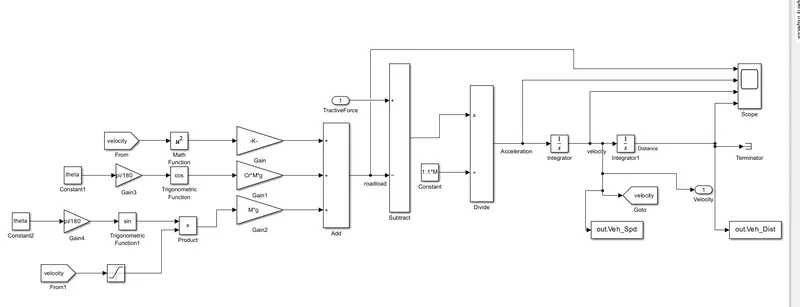
The scope will be like: