Mixing efficiency
AIM: The aim of the challenge is to set up mixing tee simulation using Ansys Fluent and check the convergence of the simulation for checking effective mixing of hot and cold air in pipe.
Procedure:
We have given 2 cases for the given challenge as follows:
- Case 1
- Short mixing tee with a hot inlet velocity of 3m/s.
- Momentum ratio of 2, 4.
- Case 2
- Long mixing tee with a hot inlet velocity of 3m/s.
- Momentum ratio of 2, 4.
We have been provided with geometry file for both the cases (short and long tee)
Step1: Clean up the CAD file (Geometry)
We first prepare our geometry to do so we visualize our geiometry using spaceclaim in Ansys fluent. We need to consider only the volume in which flow of air (fluid) take place so we use volume extract to remove the solid part and consider only the domain which is considered for running our simulations. the suppress for physics is activated in order the make sure that solid part which is not under doamin of consideration is not present in further steps.
Original geometry: THe following figure shows the cad file geometry for Short Mixing Tee
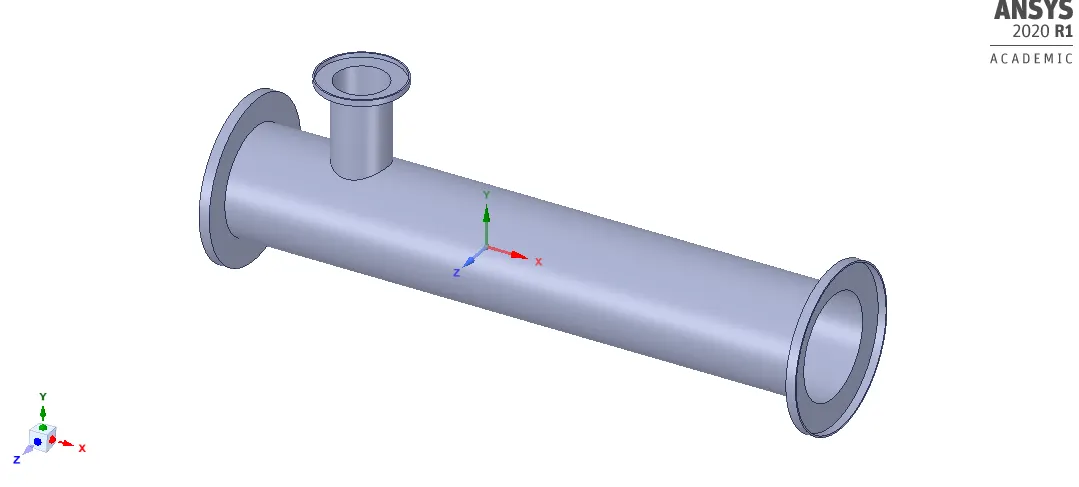
A) Short Mixing Tee Geometry: The file dhows the prepared geometry considering only the region under consuderation for our simuation.
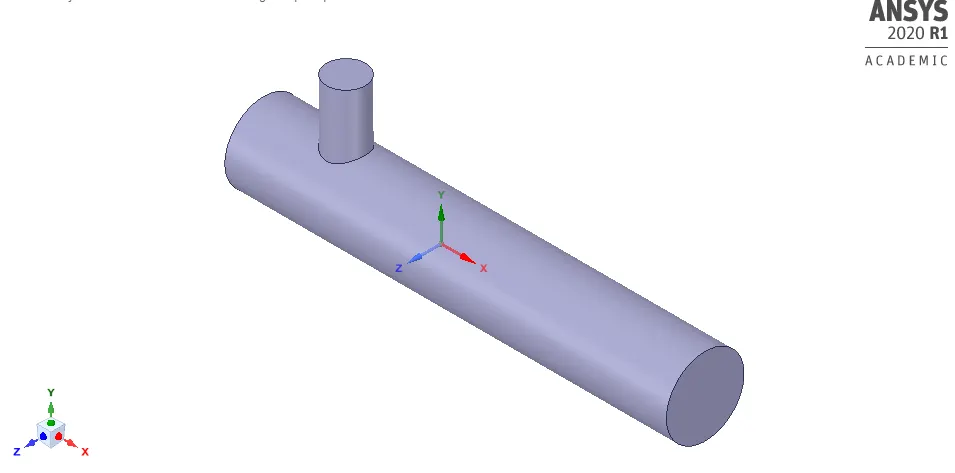
B) Long Mixing Tee Geometry: The file dhows the prepared geometry considering only the region under consuderation for our simuation.
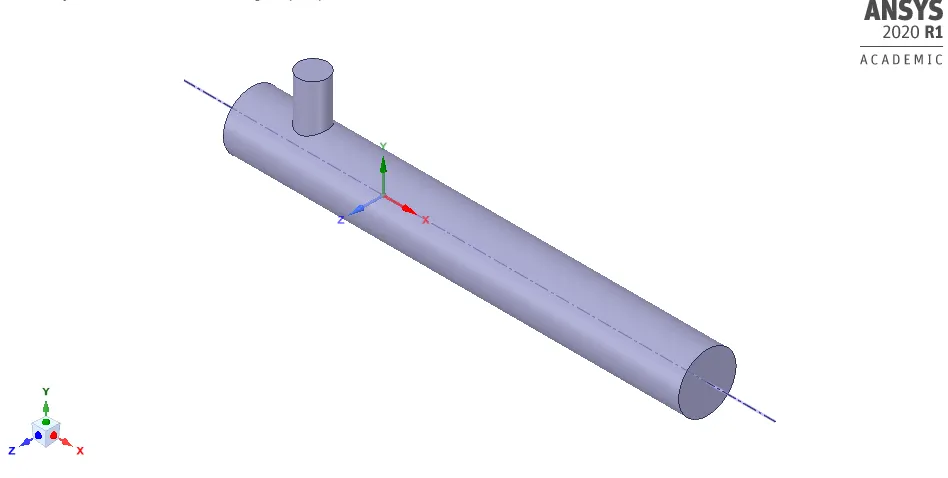
Step2: Meshing
Mesh is generated using generate mesh command. Before that the Boundary is created using command create named selection by clicking on the geometry.
We have generated following boundaries in geometry:
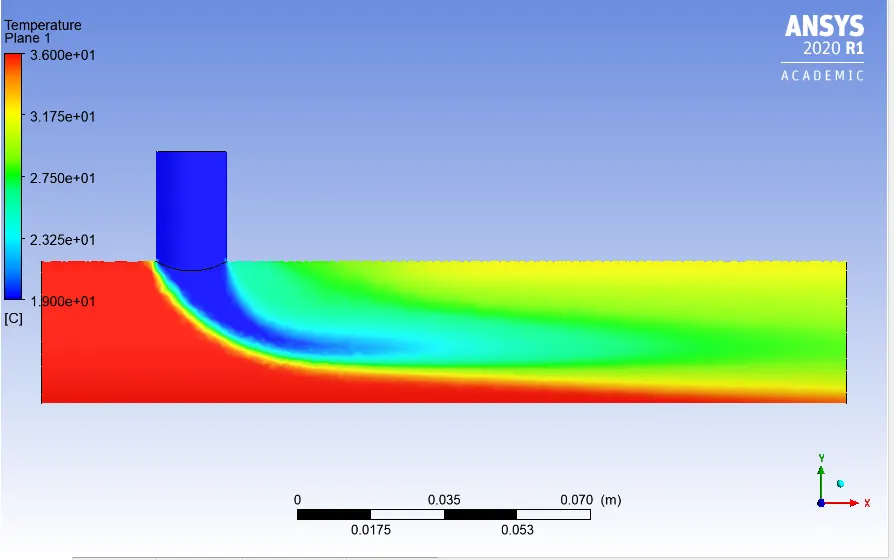
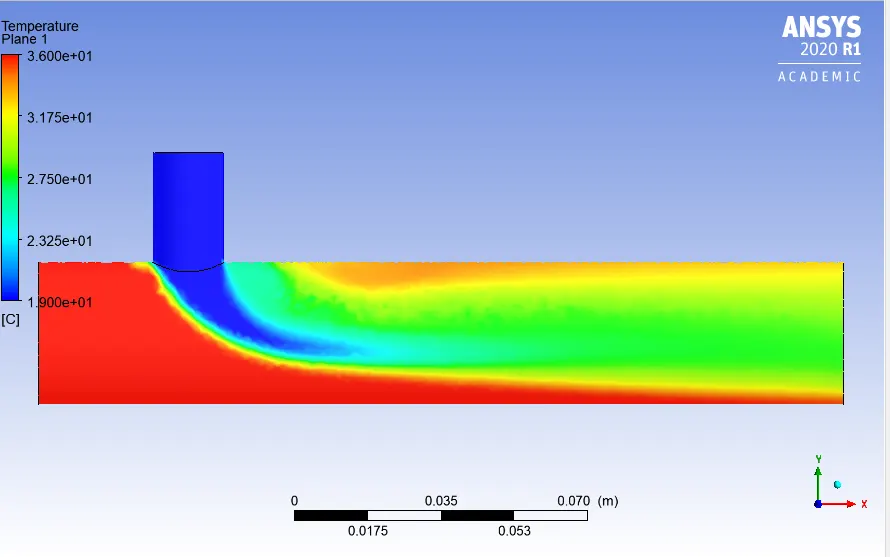
INLET-X: For hot air at 36 degree C
INLET-Y:For cold air at 19 degree C
OUTLET:Outlet of mixing tee
WALL: Outer surface of the Geometry
The meshing is done as per preffered solution required i have used maximum amount of cells which are allowed for student version of Fluent for both the cases in ordert to capture physical prpoperties more accurately.
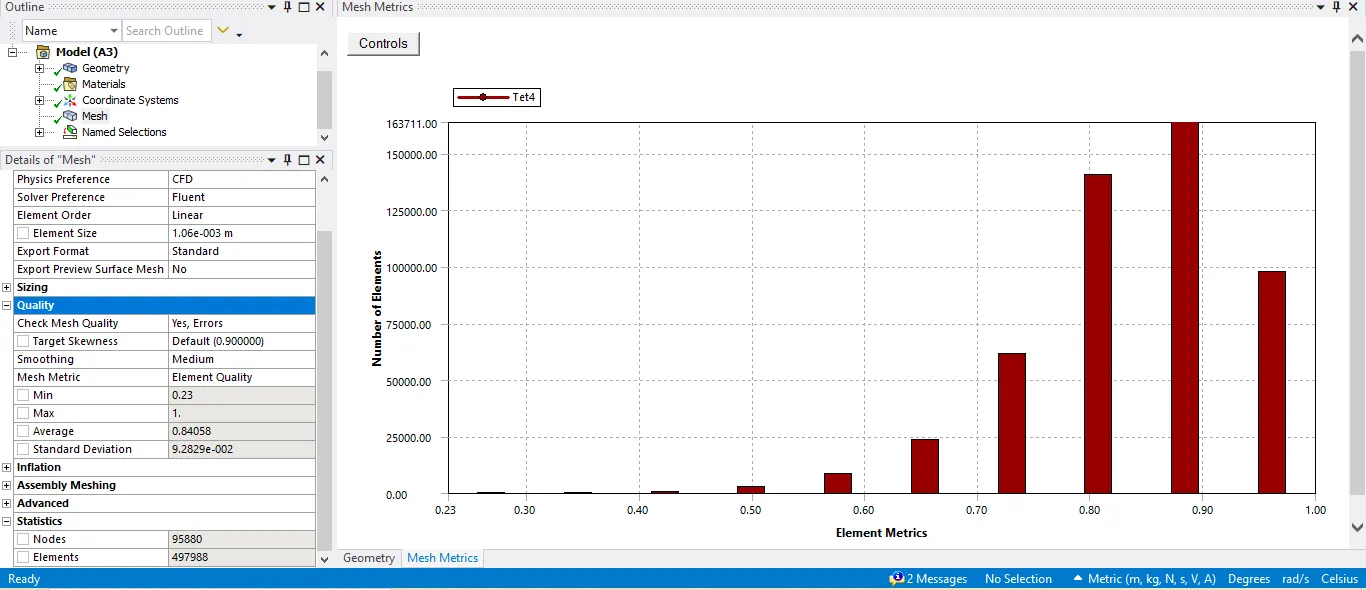
Case 1) Meshing of Short mixing Tee:
Element SIze: 1.06e-003 m
No of Elements: 497988
Mesh Quality:
Mesh Matric:Element Quality
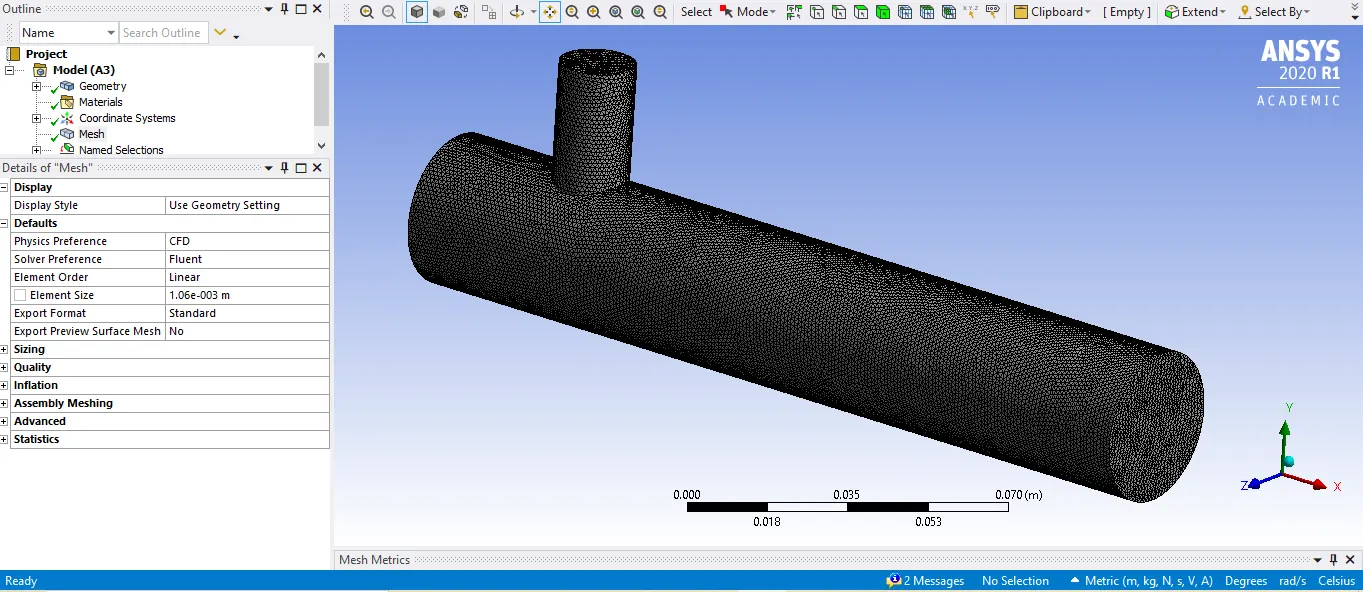
Element Quality Graph:
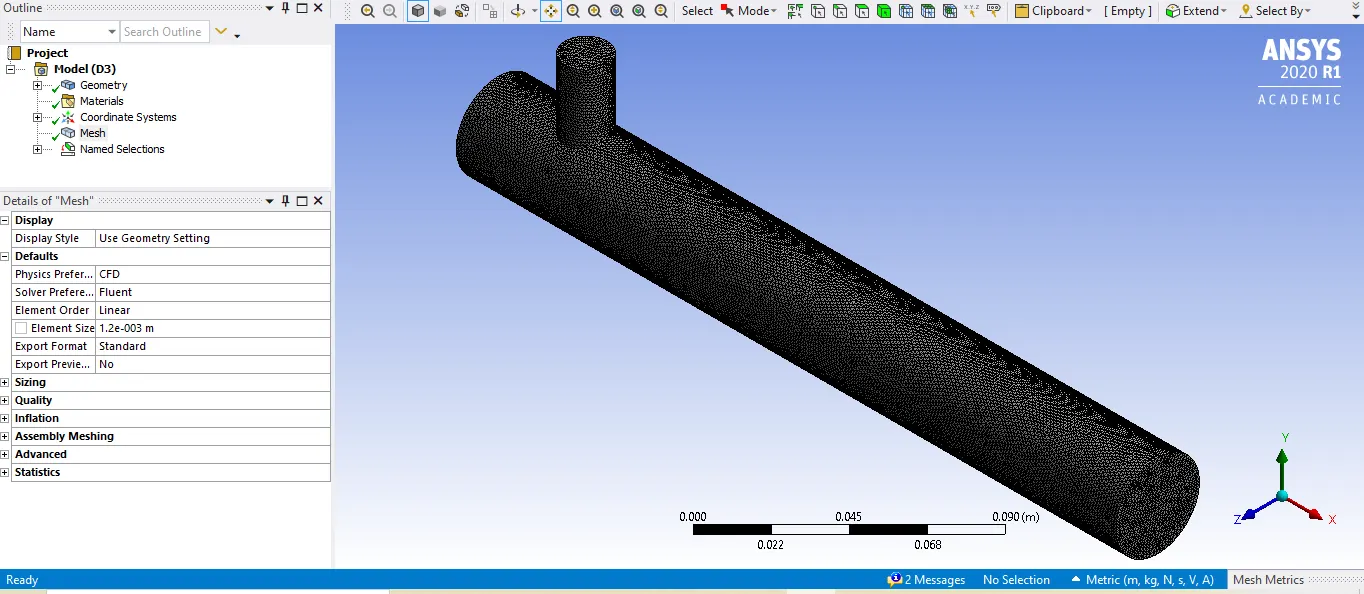
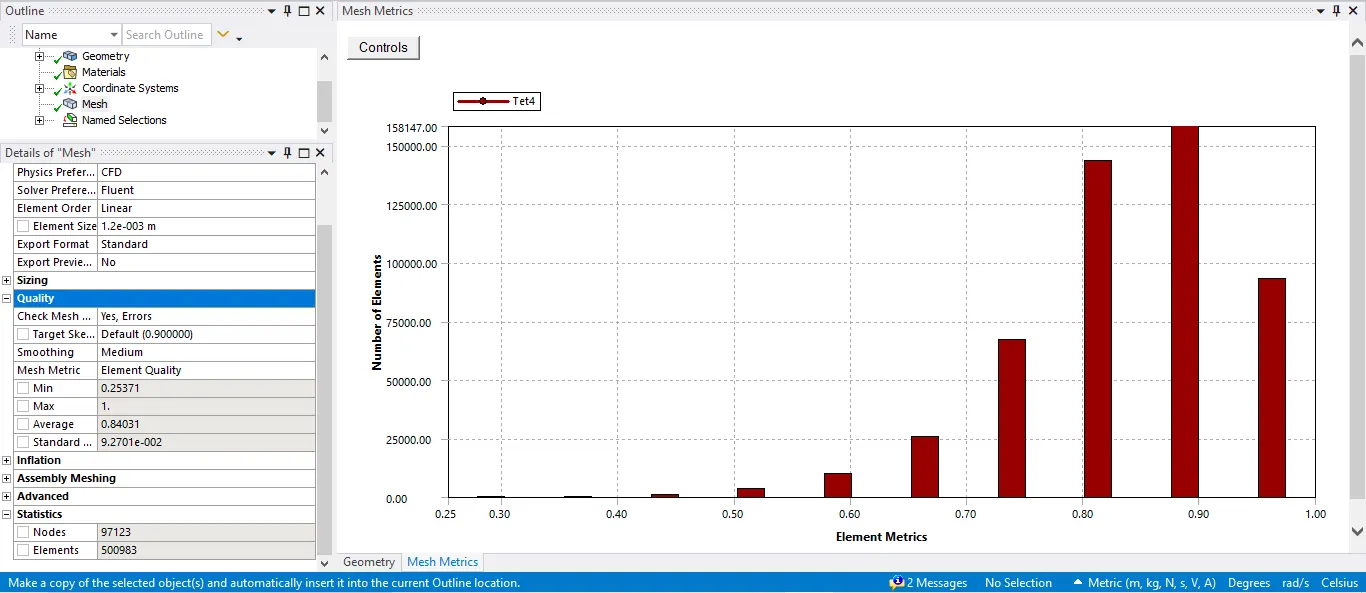
Case 2) Meshing of Long mixing Tee:
Element SIze: 1.2e-003 m
No of Elements: 500983
Mesh Quality:
Mesh Matric:Element Quality
Element Quality Graph:
Step3) Setup the solution:
The Meshed geometry is automatically loaded in graphic window when we click open fluent for setup. here we define the type of CFD solver we need and the values of physical quatities to initialize the solution.The Ansys Fluent directly checks for the quality of mesh for you. For enabling heat tranfer we check the Energy option in physics and for turbulance modeling we have used two models realizable k-epsilon and k-omega SST model in our simulation.
Setup details:
1) Physics:
A. Enable heat transfer by activating the energy equation.
B. Models=Realizable K-epsilon model and k-epsilon SST model(for case 1b)
C. Material=Air
D. Boundaries= INLET-X(velocity inlet) 36 degree C , velocity:3 m/s
INLET-Y(velocity inlet)=19 degree C
velocity= 6 m/s for momentum ratio 2
velocity =12 m/s for momentum ratio 4
Outlet=pressure outlet (0, gauge pressure)
Wall= Wall B.C
2)Solution: A.Area weighted avg Teamperature at outlet plot
B. Starndard deviation at outlet temperature plot
Initialization= Hybrid Initialization Method
Run calciulation for good number ot iterations
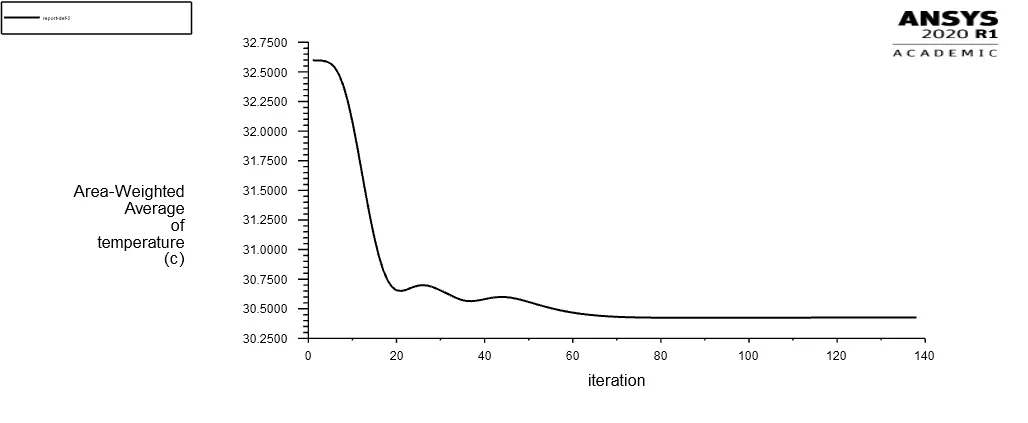
Case1) Short Mixing Tee
case 1-a-1 :
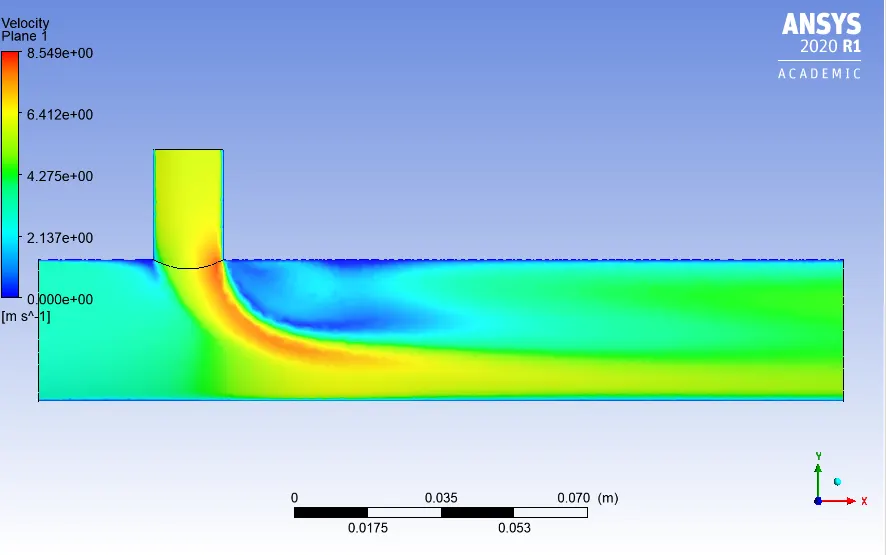
Inlet-x velocity=3m/s
Inlet-x Tempreature=36 degree C
Inlet-y velocity=6m/s
Inlet-x Temperature=19 degree C
K-epsilon realizable model
Results:
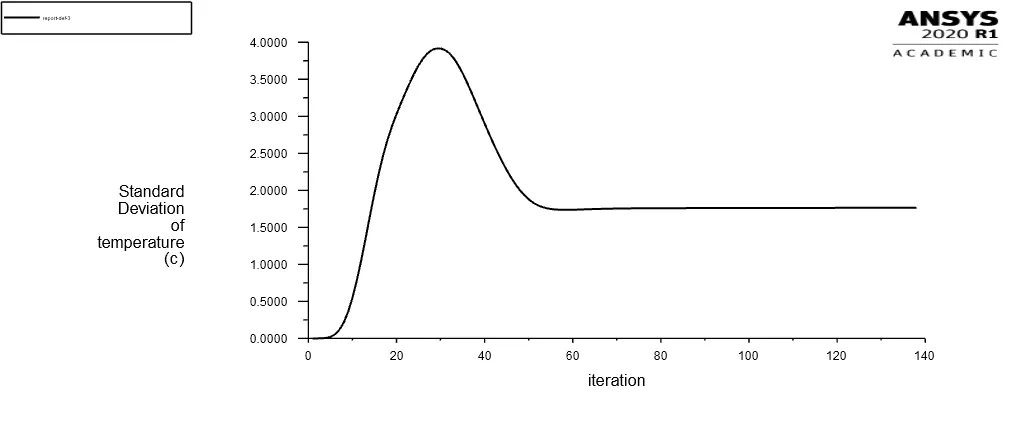
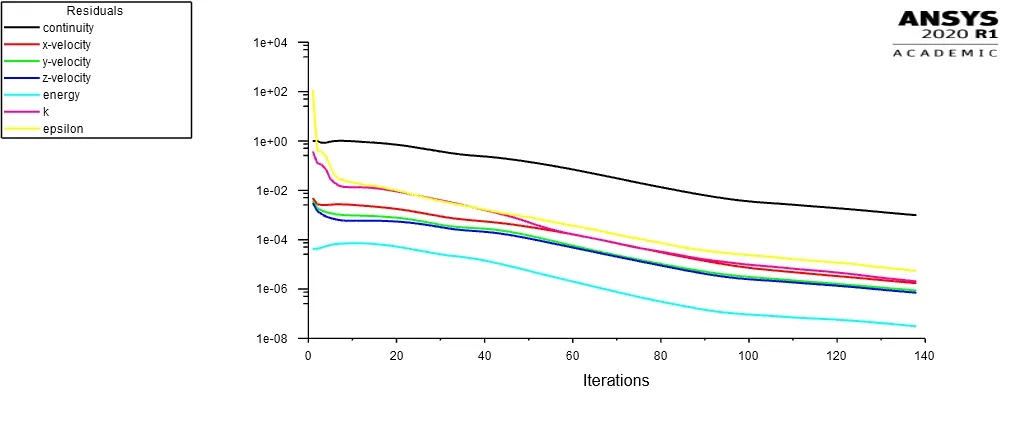
Number of iteration=138
Area Weighted avaerage of temperature:
Standard Deviation of Temperature
Residual:
case 1-a-2 :
Inlet-x velocity=3m/s
Inlet-x Tempreature=36 degree C
Inlet-y velocity=6m/s
Inlet-x Temperature=19 degree C
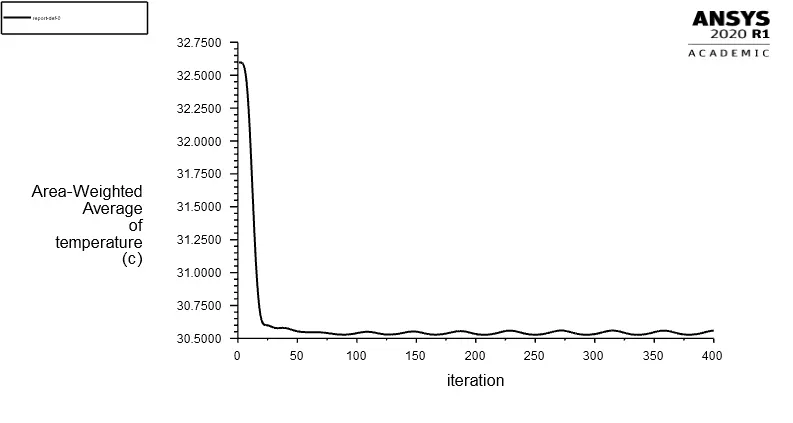
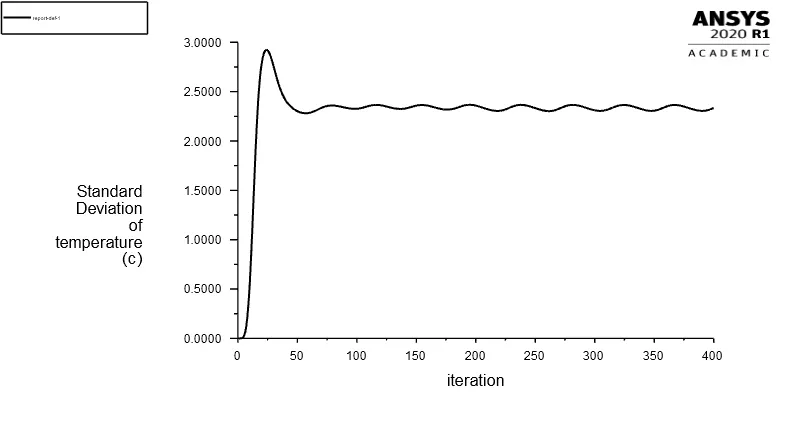
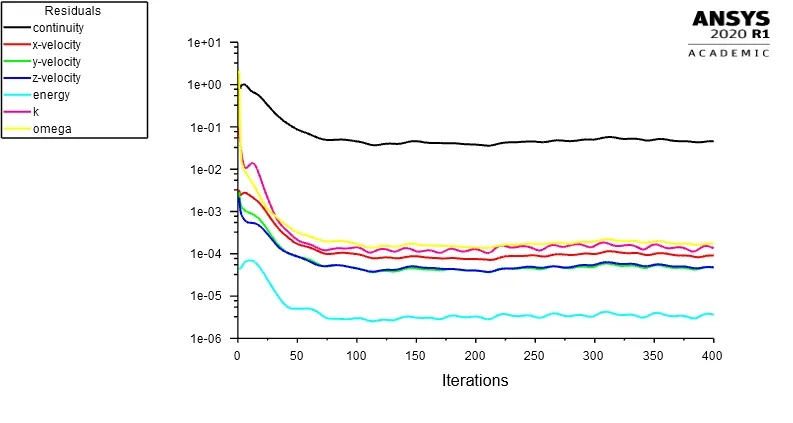
K-omega SST Model
Results:
Number of iteration=300-400
Area Weighted avaerage of temperature:
Standard Deviation of Temperature:
Residual:
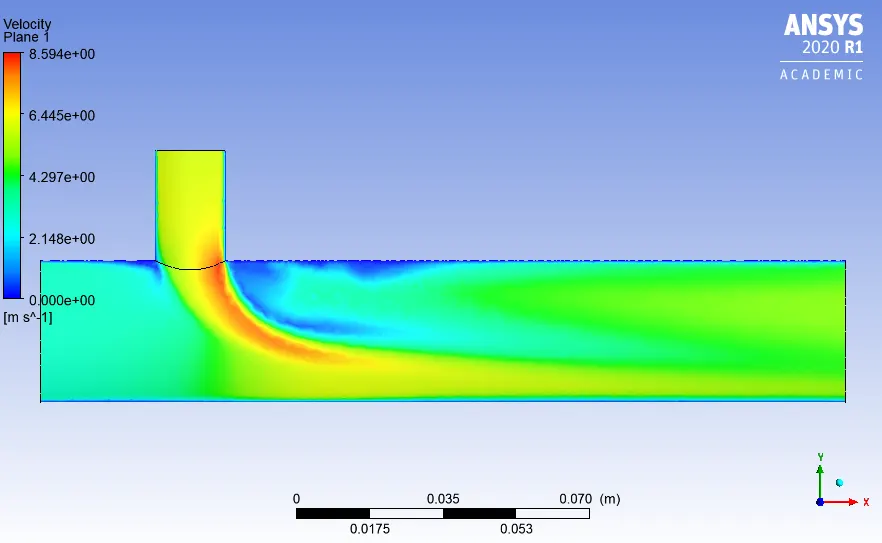
case 1-b:
Inlet-x velocity=3m/s
Inlet-x Tempreature=36 degree C
Inlet-y velocity=12m/s
Inlet-x Temperature=19 degree C
K-epsilon realizable Model
Results:
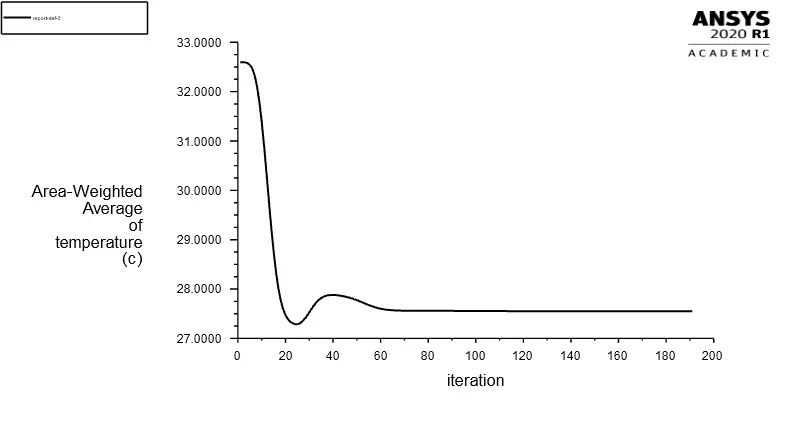
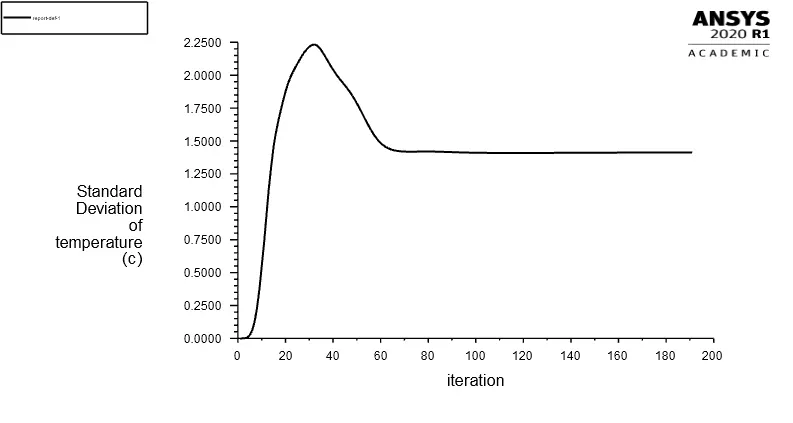
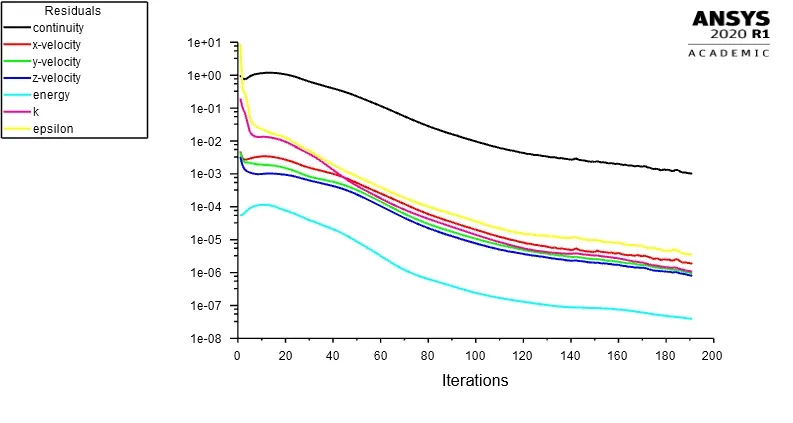
Number of iteration=191
Area Weighted avaerage of temperature:
Standard Deviation of Temperature:
Residual:
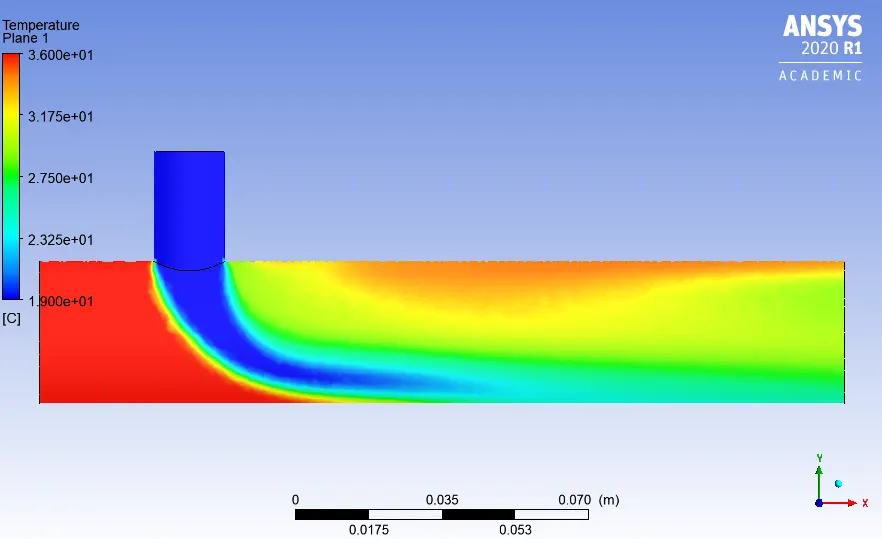
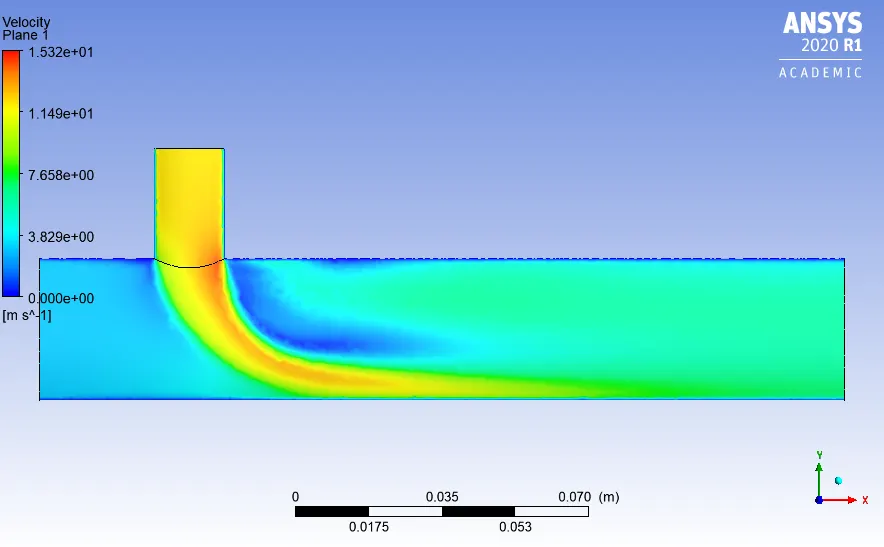
Case2) Long Mixing Tee
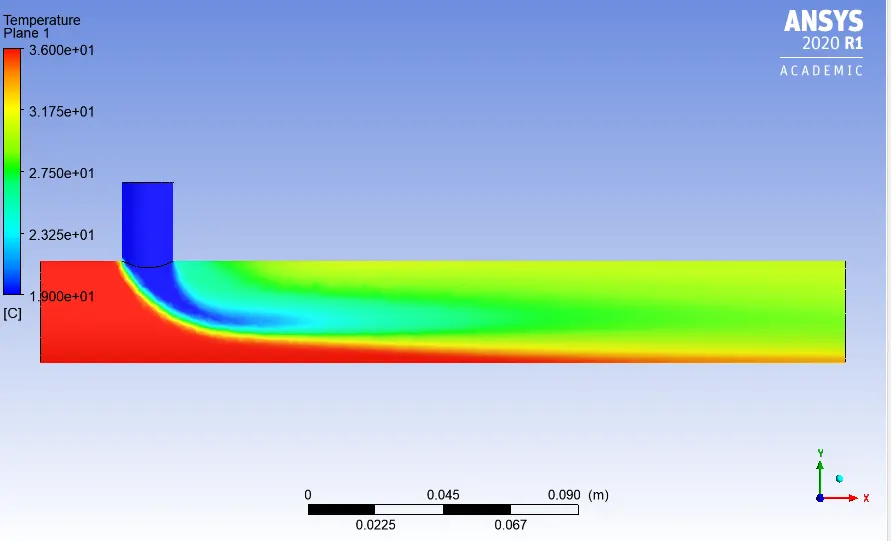
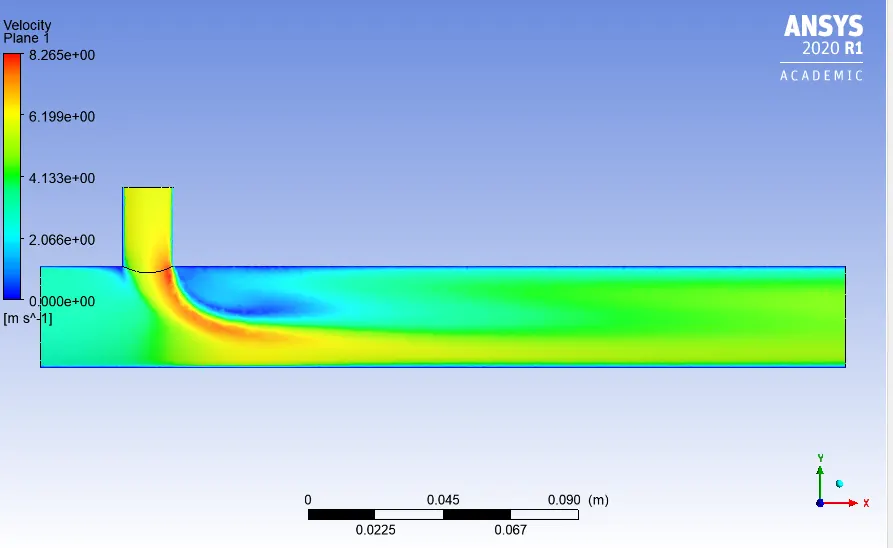
case 2-a:
Inlet-x velocity=3m/s
Inlet-x Tempreature=36 degree C
Inlet-y velocity=6m/s
Inlet-x Temperature=19 degree C
K-epsilon realizable Model
Results:
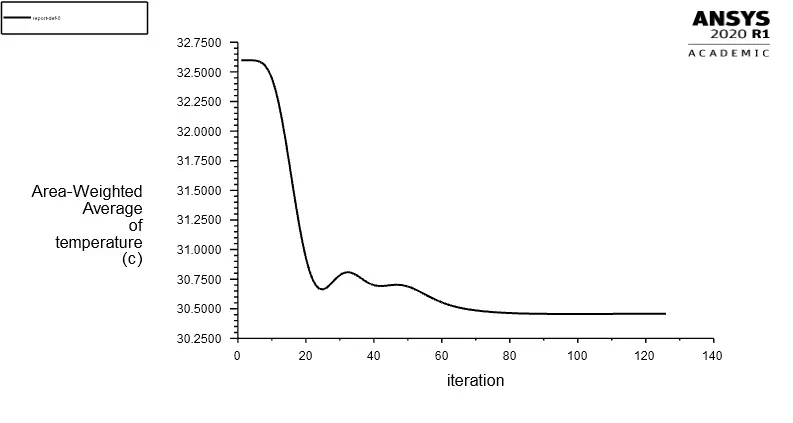
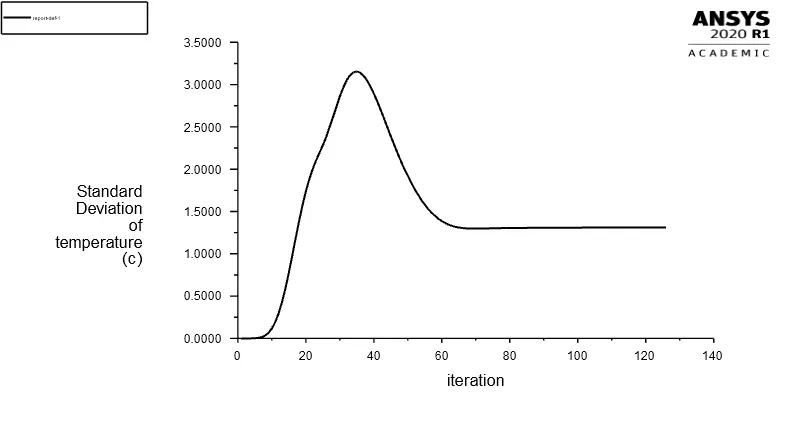
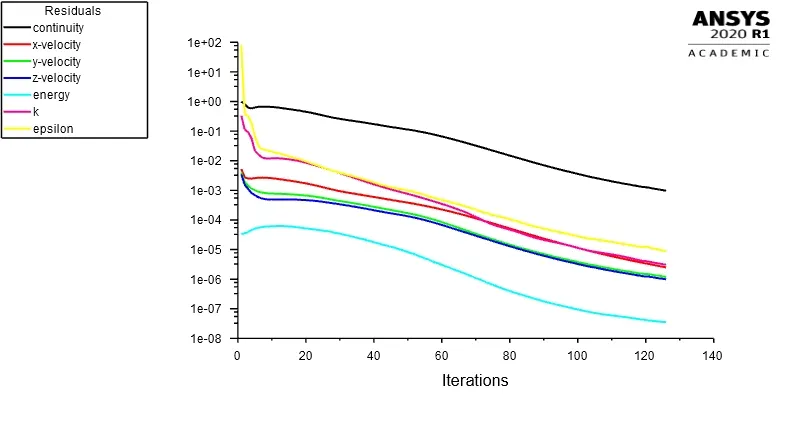
Number of iteration=126
Area Weighted avaerage of temperature:
Standard Deviation of Temperature:
Residual:
case 2-b:
Inlet-x velocity=3m/s
Inlet-x Tempreature=36 degree C
Inlet-y velocity=12m/s
Inlet-x Temperature=19 degree C
K-epsilon realizable Model
Results:
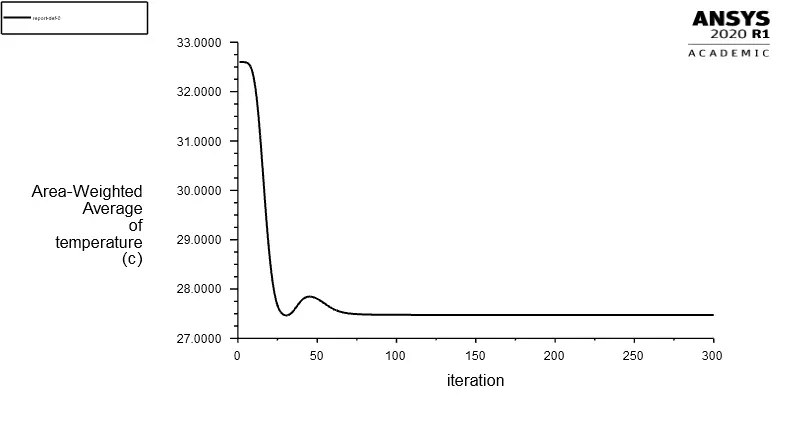
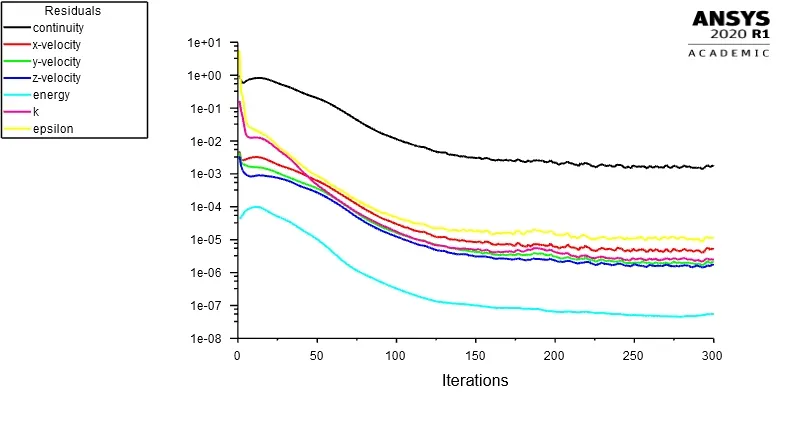
Number of iteration=300
Area Weighted avaerage of temperature:
Standard Deviation of Temperature:
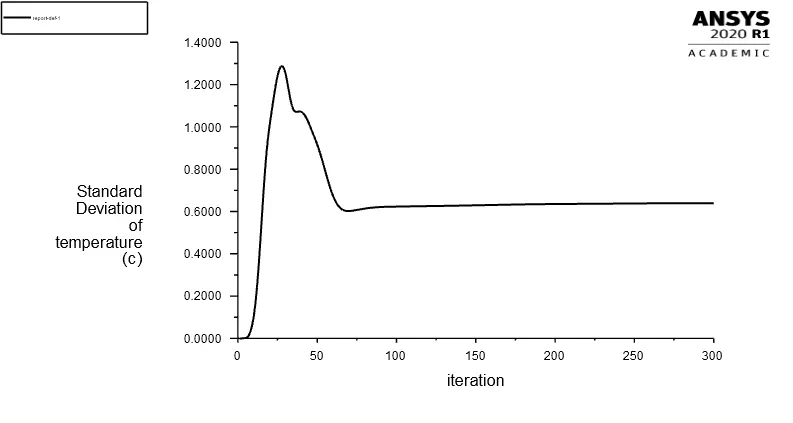
Residual:
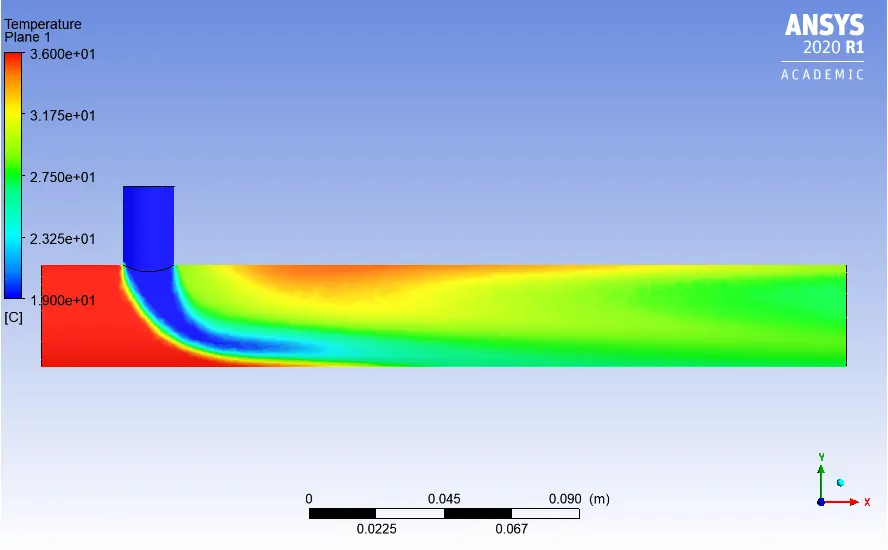
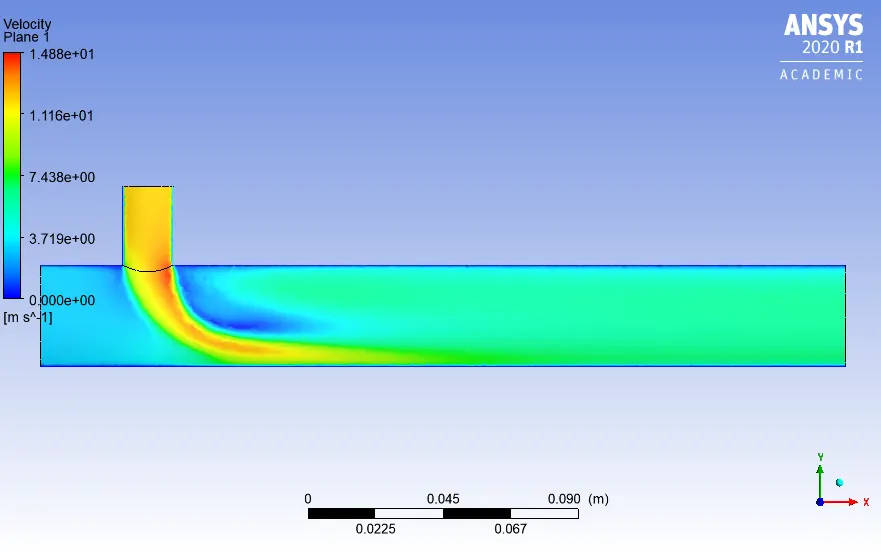
|
Case |
Turbulance Model |
No.of.Iteration |
Cell Count |
Average outlet temperature |
Standard deviation |
|
Short Mixing Tee (Momentum ratio 2) |
K-epsilon (Realizable) |
138 |
497988 |
30.40 |
1.75 |
|
Short Mixing Tee (Momentum ratio 2) |
K-Omega (SST) |
300-400 |
497988 |
30.55 |
2.25 |
|
Short Mixing Tee (Momentum ratio 4) |
K-epsilon (Realizable) |
191 |
497988 |
27.5 |
1.35 |
|
Long Mixing Tee (Momentum ratio 2) |
K-epsilon (Realizable) |
126 |
500983 |
30.45 |
1.25 |
|
Long Mixing Tee (Momentum ratio 4) |
K-epsilon (Realizable) |
300 |
500983 |
27.5 |
0.66 |
Conclusion:
The above tabel concludes that:
1) The temperature at the outlet is almost similar for both K-epsilon and K-omage turbulance model applied for short mixing tee with momentum ratio 2. But we can see that number of iteration required for convergence of results is more in K-Omega model which in turns increses the computational time and memory also the standard deviation of temperature is much higher with K-omega model. Hence i have used Realizabel K-epsilon model for further cases.
2) The Momentum ratio plays an significant role in mixing as we can see the outlet temperature is more effective with momentum ratio 4 as cold air is at higher velocity which causes temperature drop at the intersection of hot and cold air which further gives lower outlet temperature in both long and short Mixing Tee.
3) The Length of the pipe doesnt show any significant effect on the outlet temperature of air, Except the standard deviation of temperature is much lower in case of Long mixing tee than in Short mixing tee.
Hence we can conclude that Short Mixing Tee is more effective with good momentum ratio and it also reduces the cost of material.