Mid Project - 2
AIM:-
To setup and analyse Geneva drive Mechanism
THEORY:-
Introduction:-
Geneva Drive is a gear mechanism that translates rotation motion into intermittent rotary motion.
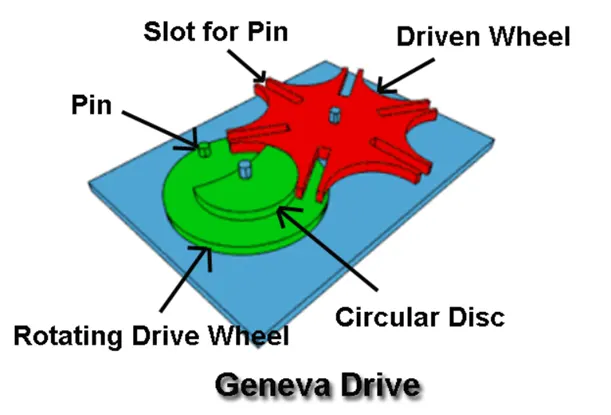
The rotating drive wheel has a pin that enters into the slot of driven wheel and make it rotate step by step. The driving wheel has also an elevated half circle that lock the driven wheel in position between steps.
The main difference between Geneva drive and other gears is that Geneva drive have unusual teeth. Unlike other gears, in Geneva drive the interaction between the driving and the driven part is not continuous and the resultant motion is intermittent.
Working:-
In Geneva drive there are two wheels, driving and driven wheel. The driving wheel has a pin and a little more than semi-circular disc which is elevated.
The driven wheel has 4, 6 or more slots in which the pin of driving wheel passes and rotates the driven wheel to angle depending upon number of slots. If it has 4 slots ,it will be rotated 90 degrees in one step and if it has 6 slots, it will be rotated 60 degrees at one step. The circular elevated disc is used to lock the driven wheel after each step.
Types:-
1) External Geneva Drive
2) Internal Geneva Drive
3) Spherical Geneva Drive
1) External Geneva Drive :-
In this External Geneva Drive, the driven wheel is connected with rotating drive wheel externally. This is the most popular Geneva Drive and used in many mechanical products like watch and film projector. It can withstand higher mechanical stresses.
2) Internal Geneva Drive :-
In Internal Geneva Drive, the driven wheel is connected with the rotating drive wheel internally.
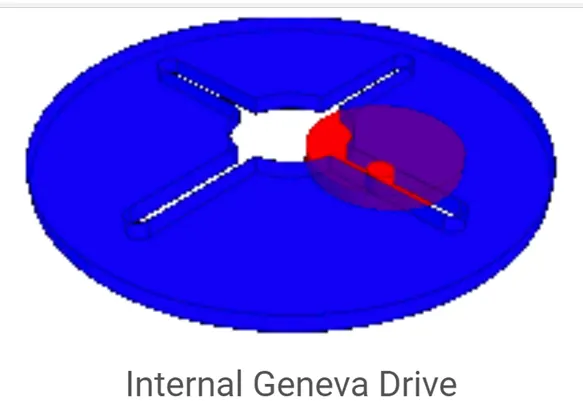
Both the driver and the driven wheel rotate in the same direction. Its disadvantage is that it cannot be built smaller and cannot withstand higher mechanical stresses like external Geneva drive .
3) Spherical Geneva Drive :-
In Spherical Geneva Drive, the driven wheel is in spherical shape and is connected to rotating drive wheel externally. In this driving and the driven wheel are on perpendicular shafts i.e input and output shafts are perpendicular to each other.
Applications:-
1) The most common application of Geneva Drive is Movie Projectors.
2) Bank Note Counting Machines
3) Automated sampling machines.
4) Plotters – Plotter is a computer printer for printing vector graphics.
5) Wrist Watches.
CONSTRUCTION:-
STEP 1: Import the CAD model of Driver and Driven part as step file in Motion view as shown in image below.
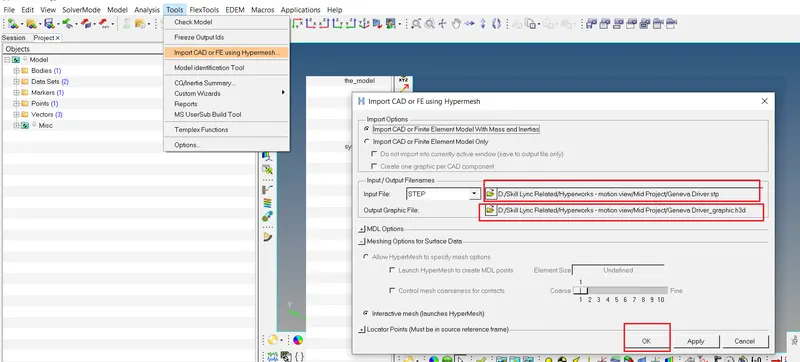
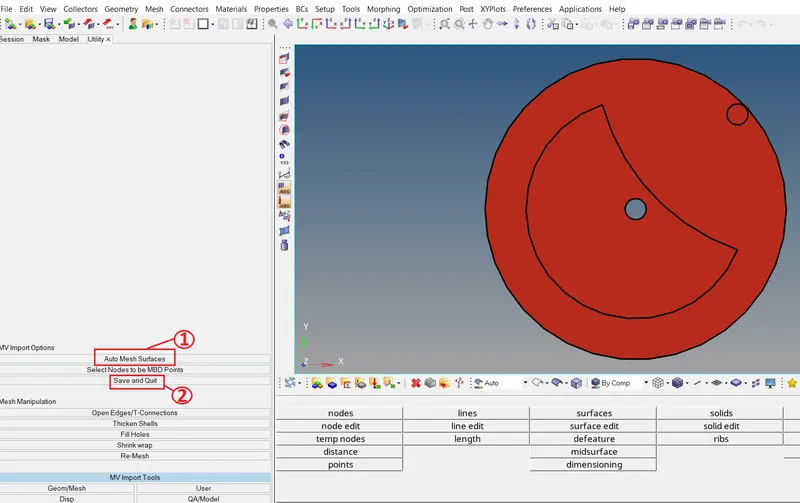
STEP 2: A pop up Hyper mesh window will open, Select Auto mesh surface and click save and quit as shown in image below
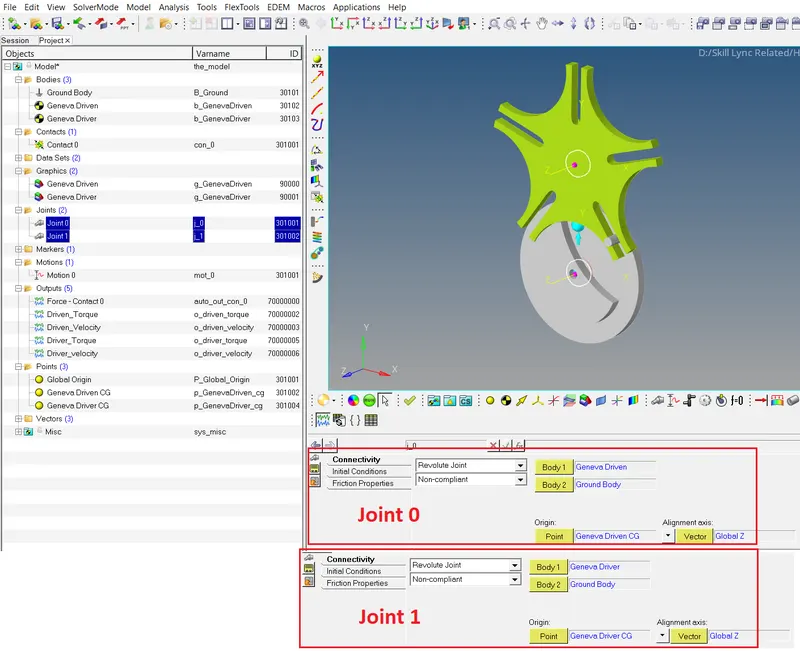
STEP 3: Create Joint 0 on Driven and Joint 1 on Driver as Revolute Joint shown in the image below
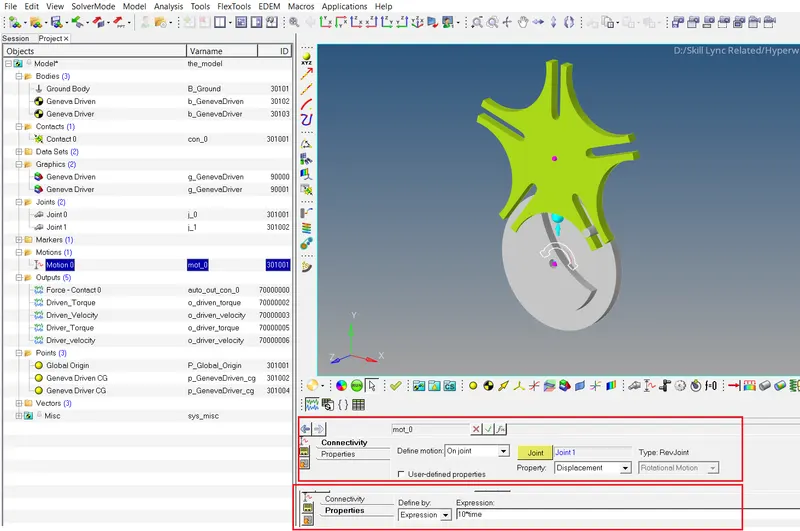
STEP 4: Create a Motion on Revolute Joint 1 as shown in image below
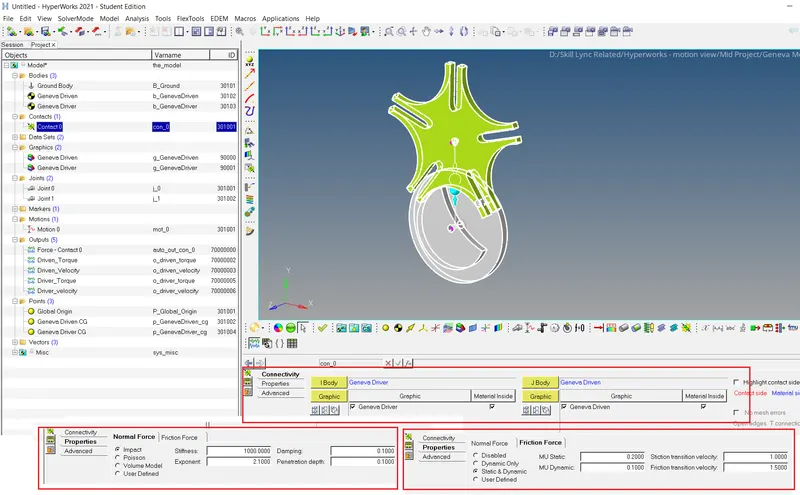
STEP 5: Create a Contact as shown in image below
STEP 6: Create Output for Driver and Driven and Run the simulation for 3 sec,
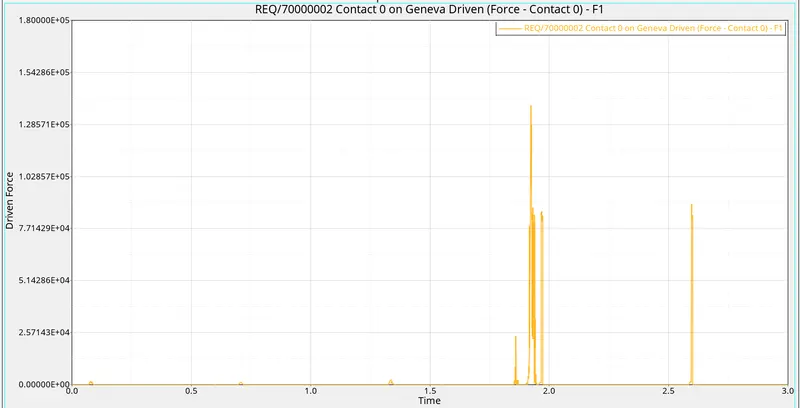
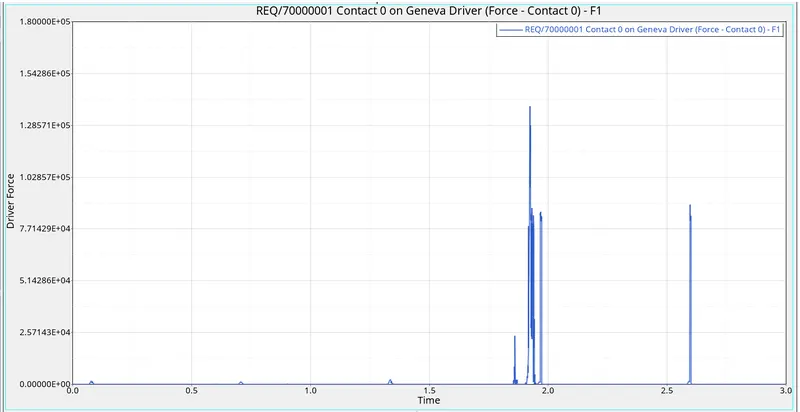
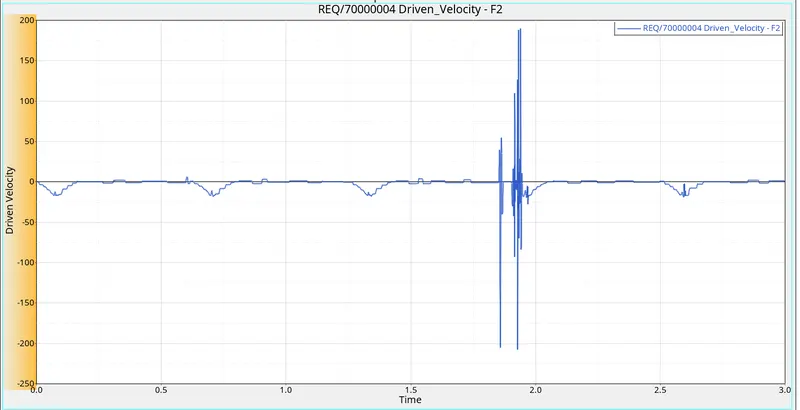
STEP 7: Plots and Results are shown below
Force_Driven
Force_Driver
Driven_Velocity
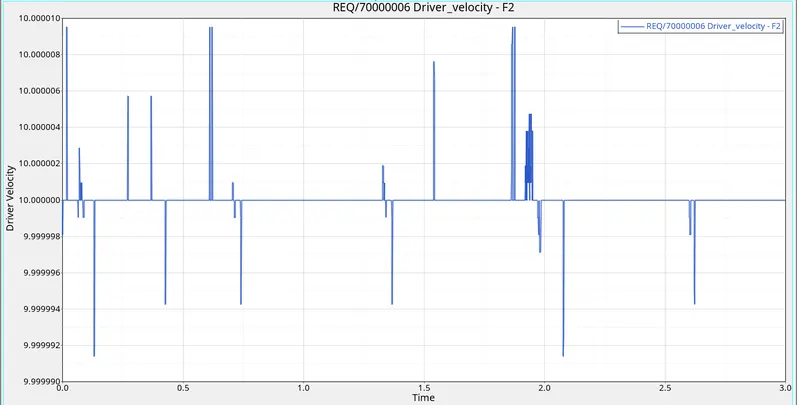
Driver_Velocity