Identification of Cracks
Q. What is the mode of failure or damage of the beams in the figure above? Are the damages repairable? Elaborate
ANSWERS:
1A) BEAM COLUMN CONNECTION FAILURE:
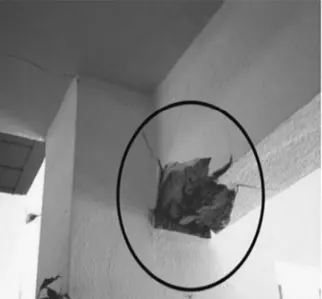
- Beam-column joints of buildings generally suffer from the use of insufficient or no transverse reinforcement, low-quality concrete and problematic beam bar anchorage details.
- During earthquakes, the failure of beam-column joints by the bond and shear failure mechanisms are usually brittle. In such cases, the reinforcement bars slip inside the joint region and lose their joint capacity.
1B) EXTERIOR BEAM-COLUMN JOINT FAILURE:
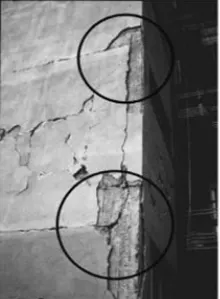
- in Beam - column joint, the stiffness of the joint is gets degraded when the joint is subjected to reversal loading. i.e., when concrete and reinforcement bars are subjected to several loading, unloading and reloading cycles.
- The joints initially develop micro-cracks inside and by cyclic loadings, the cracks will turn into major and visible cracks.
1C) BEAM - COLUMN JOINT FAILURE:
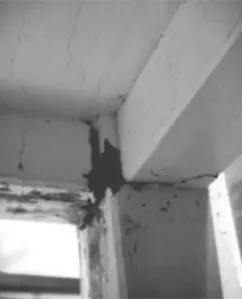
- In beam-column joints, the cracks developed by loading
- The cracks observed at the intersection of beam and column is due to shear cracks
- The formation of the plastic hinge at undesirable locations. The joint is not supposed to be a weak link between 4 components ( 2beams and 2columns). These elements are subjected to very high shear force during seismic activity. If these cracks are left unattended will lead to loss of strength and collapse. shear failure governs the beam-column. The formation of plastic hinges occurs at the end of the beam s not at the beam-column joints.
2A) COLUMN BUCKLING FAILURE:
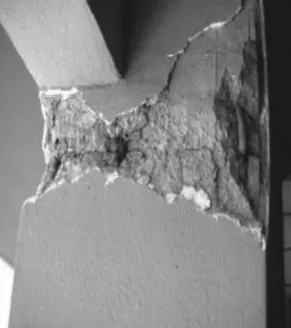
- This type of failure is due to the high slenderness ratio as its effective length is higher than the lateral dimension of the column.
- This type of failure is observed when the column is subjected to heavy loads or less usage of reinforcement than required.
- It can be reduced by the increase in the percentage of reinforcement.
2B) SHEAR FAILURE OF COLUMN:
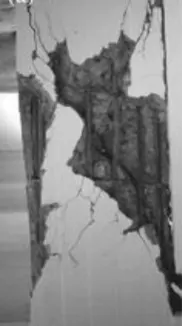
- The above type of failure is shear force failure this is due to When lateral loads are generated by wind force, seismic loads that act on verticle elements like columns, shear walls do not carry these lateral loads shear failure occurs.
- This type of failure is considered a failure of the designer.
- These types of failures can be avoided or reduced by increasing the size of the column in the direction of shear and providing adequate shear links to improve shear capacity.
2C) SOFT STOREY MECHANISM (Short column effect):
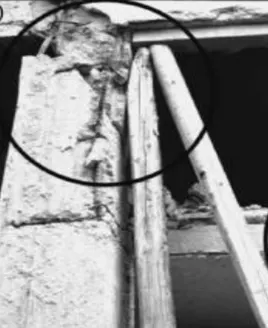
- It is a Beam - column joint failure of soft storey mechanism, here failure is due to the Strong beam and weak column design
- It is due to the formation of the plastic hinges at undesirable locations and the typical concentration of failures or damage seen at the ground storey of the building.
- The short column effect is caused due to influence of partial height infill increasing column shear force which causes an undesirable mode of deformation. It happens due to ignoring the stiffening effects of built non-structural partial height masonry infill built hard up against the column. The shorter column attracts higher shear force which often leads to deformation or collapse.