Identification of Cracks
Question 1: What is the mode of failure or damage of the beams in the figure above? Are the damages repairable? Elaborate
a)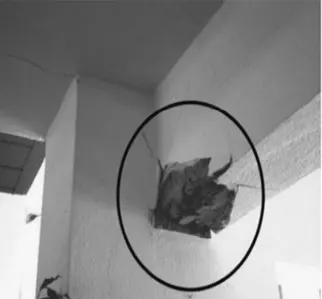
Mode of failure:
Bearing failure of the beam
This is the failure that occurred at the bearing of the beam where beam is connected to the column. This happened due to the disintegration of the beam and column connection where minimal cover would be provided. Due to this when load acts on the beam.the bottom reinforcement bars of the beam would be buckled.
This type of the failurecan be prevented by increasing the cover provided or by providing the retrofit beam on the column-beam connection
b) 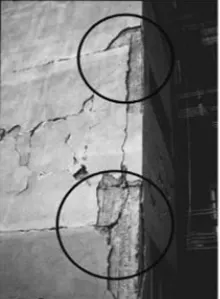
Modeof failure:
Shear failure / pull·out of the beam
Lateral loads in a structure are carrying by vertical elements such as columns and shear walls.
When there are no shear walls, columns carry these lateral loads.
Lateral loads are generated by winds, earthquake loads, from retaining structures, etc.
Shear links are provided to columns based on the shear forces excreted on them. Further, the size of the columns is increased in the direction of shear to increase the shear capacity.
This type of the failureoccurs due to the insufficient development length of the beam was provided into the column which is the length of the retrofit beam. Due to this i.vhen lateralforces are acted therewould be the loss of anchorage in the column-beam connection where the proper hinge is disturbed.And it also may be due to the decreased bond strength between the reinforcement and concrete.
This type of the failurecan be avoided by providing the proper retrofit beam or by incraeing the bon strength of the concrete and reinforcement bars.
c) 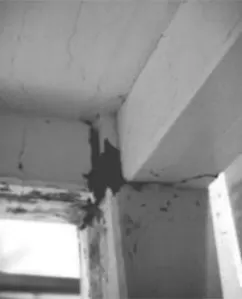
Mode of Failure:
Beam-column bearing failure
This type of the failure occurred due to the improper connection between the beam and the columns and this is the scenario of the strong column and the weak beam where beam is not safely designed for the load acting on the beam. This is the affect of the high shear force actingon the beam.
This type of the failurecan be avoided by design the beam for the higher loadsand increasing the strength of the concrete and the grade of the steelreinforcement bars used.
Question 2:
a) 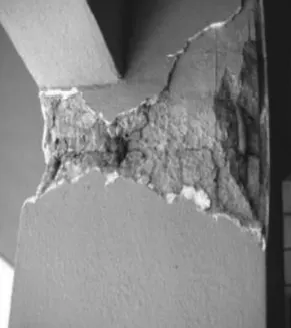
Mode of Failure:
Flexural failure of the column
This is the scenario of the strong beam and weak column i.vhere.the beam designed is strong enough to bear the load and the column
designed isweak to tolerate the load acting on it This failure occurs due to the heavy axial loads acting on the affected column.
This type of the failurecan be avoided throu gh the provision of the lateral ties for the reinforcement of the column and by increasing the reinforcement bars sizes used in the column.
b) 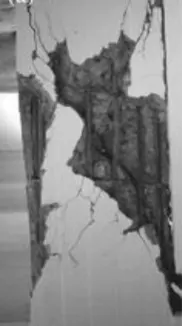
Mode of Failure:
Shear failure of the column
Lateral loads in a structure are carrying by vertical elements such as columns and shear walls.
When there are no shear walls, columns carry these lateral loads.
Lateral loads are generated by winds, earthquake loads, from retaining structures, etc.
Shear links are provided to columns based on the shear forces excreted on them. Further, the size of the columns is increased in the direction of shear to increase the shear capacity.
This type of the shear failure takes placedue to the heavy/ high intensity lateral load i.e..seismic or wind loads are acting on the structure. In the stru cture columns will be bearing this load in the absence of the shear walls.When the columns are designed weak for these loads this type of the failures occur.
This failurecan be prohibited by the increase the size of the columns por by providing the shear waitsto the structure/building and we can also add the bracings if needed .
c) 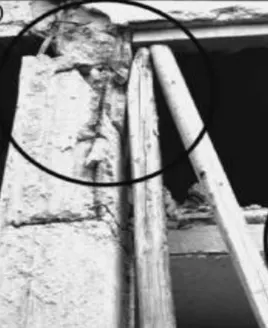
Mode of Failure:
It is due to the short column effect
In this kind of failure direct compressive strength acting onthe column vJoutd be mare as it may also be the effect of the positioningof the column in the structure due to which more compressive strength is actingon the column. Due to this direct compression column will be brittleand the crushing of the colu mn is going to take place as shown in the figure above
This type of the short column failures can be prevented by the providing the high compressive strength of the concrete and provision of the high strength steelas the reinforcement to the column.