Identification of Cracks
1)What is the mode of failure or damage of the beams in the figure above? Are the damages repairable? Elaborate
A)
a)
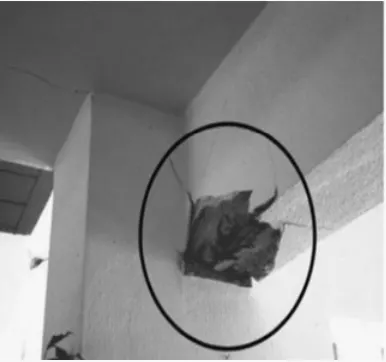
The above figure represents the Flexural cracks developed at the bottom flange of the beam. This failure initiates by cracking and spalling of concrete and subsequent yielding of steel reinforcement and can also be formed as result of plastic hinge formation at undesirable location.
This usually developes at the bottom flange as the top flange is suffiently supported by the slab.
b)
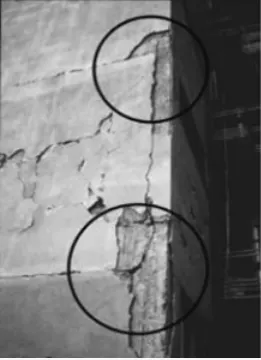
This type of failure is termed as Pull out failure. This failure is developed in beams due to inadequate rebar development from beam to column (inadequate rebar bond). So, in this case the beam will be strong enough to withstand the load but at the bear column connection due to inadequate rebar development length, the joints will be weak and cracks will be developed as a vertical line along the beam column junction.
These type of failures are non-repairable.
c)
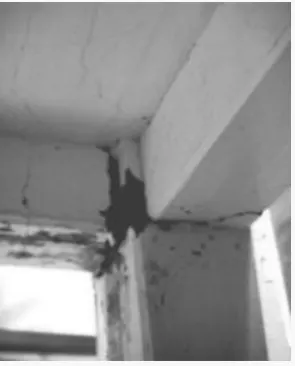
In This figure represents Beam-Column connection failure. It occurs due to the formation of plastic hinge at undesirable locations. These beam column juctions are the weakest links as it fails in shear under lateral seismic loads resulting in unrepairable damage to the buildings. Shear failure governs in beam column connection failure. The shear cracks thus developed, if left unattended can lead to collapse of the building and can cause severe damage to the structure.
The plastic hinge formation at the beam column interface is undesirable which leads to shear cracks, instead the plastic hinge should be formed some distance away from the junction.
This failure can also occur due to inappropriate detailing.
Question 2:
a)
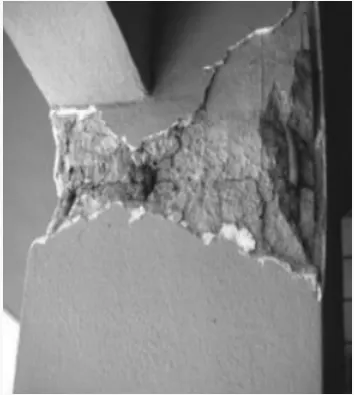
The failure shown in this figure is the Compression failure. This figure shows the concrete crushing.
Compression failure is caused due to excess axial stress. Due to this concrete and steel will reach the yield stress. As a result the concrete crushes and the steel buckles.
This type of failure is non-repairable.
b)
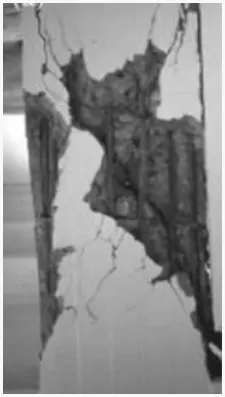
This figure depicts the Confinement failure of column.
This failure is mainly caused due to inappropriate detailing of plastic hinge location. Shear force increases during an earthquake especially at columns and beam-column joints.Seismic design requires increasing of ductility of structures for performance-based design approach. In particular, columns of buildings can be having sufficient transverse reinforcement in the plastic hinge region. Therefore, structural elements which have such details show low performance against dynamic loading and loose their shear and axial load carrying capacity.
These failure are also irrepairable.
c)
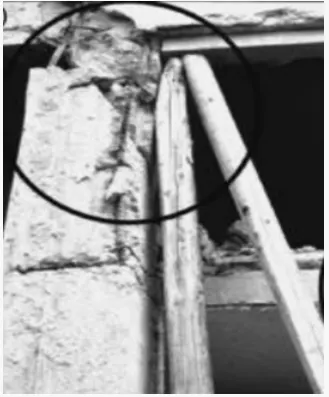
The failure depicted in this figure is the Short column failure or Influence of partial height infill increasing column shear force.
This type of failure can be caused due to structural adjustments or due to continous openings at the top of infill walls between columns. Lateral forces that occured by an earthquake are carried by column and shear walls. Length of columns is an important factor for dissipation of these loads. When the length of column decreases, the column becomes stiffer and brittle than other columns and this columns attracts more shear forces. Thus shear failure which is the critical type of concrete column damage occurs at these columns.
This failure is also non-repairable.