Identification of Cracks
Challange -1 : Identification of Cracks:
AIM: To Identify types of Failuers in Beams and Columns showing in Images.
Question 1 (a).
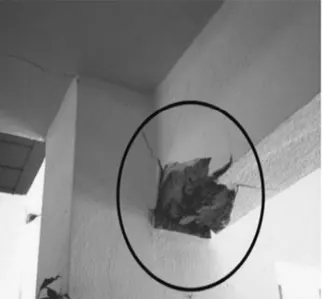
Ans:
This type of failure is called shear failure.
Description:
Shear failure occurs when the beam has shear resistance lower than flexural strength and the shear force exceeds the shear capacity of different materials of the beam. A shear load is a force that tends to produce a sliding failure on a material along a plane that is parallel to the direction of the force.
Question 1 (b).
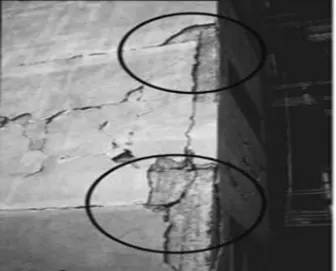
Ans:
This type of failure is called shear failure.
Description:
It is clear that a flexural mode of failure is preferable to brittle shear failure. But even walls controlled by flexure can have limited drift capacity. In the case of these walls, it is common to assume that inelastic curvatures concentrate at the wall base in what is referred to as “plastic hinges.”
Question 1 (c):
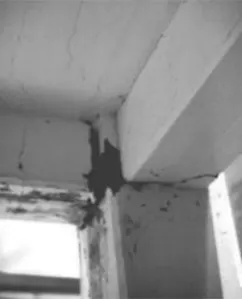
Ans:
This type of failure is beam-column joint failure.
Description:
During earthquakes, the failure of beam-column joints is governed by bond and shear failure mechanisms which are usually brittle. In such cases, the reinforcement bars slip inside the joint region, and beams lose their load capacity.
Question 2 (a):
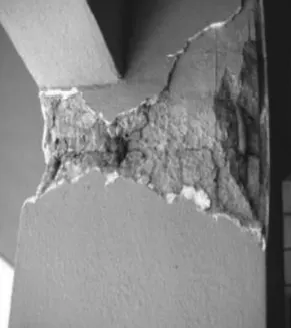
Ans:
This type of failure is strong beam weak column failure.
Description:
The failure modes in all the past earthquakes are almost similar and strong beam weak column comes out to be a major problem which leads columns to sway or sway mechanism and these structures also have lack of ductile detailing in beam and column joints.
Question 2 (b):
Ans:
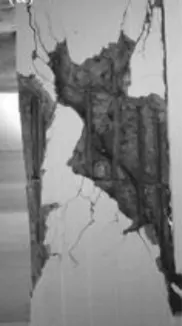
This is due to shear failure of column.
Description:
Lateral loads in a structure are carrying by vertical elements such as columns and shear walls.When there are no shear walls, columns carry these lateral loads.
Lateral loads are generated by winds, earthquake loads, from retaining structures, etc.Shear links are provided to columns based on the shear forces excreted on them. Further, the size of the columns is increased in the direction of shear to increase the shear capacity.
In general, failure of columns due to shear can be identified as the failure of design. Designers should have provided adequate shear links or sections to carry the shear forces.
Question 2 (c):
Ans:
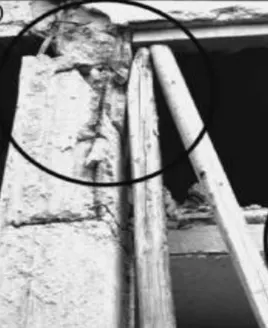
This is due to crushing of column.
Description:
This type of failure occurs due in short column. the column is classified as short column if its slenderness ratio is less than 3. Slenderness ration is the ratio of effective length to least lateral dimension. this type of failure is avoided by providing intermediate column instead of short column that is having slenderness ratio 3 to 12 and also by providing high characteristic compressive strength concrete and high yield steel reinforcement.