Identification of Cracks
Question 1
What is the mode of failure or damage of the beams in the figure above? Are the damages repairable? Elaborate:
a.
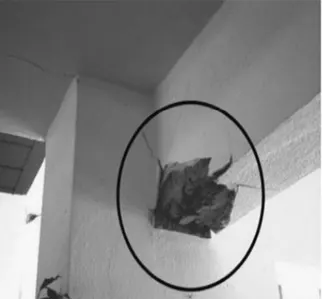
MODE OF FAILURE- flexural tension failure
this failure occurs when the load on beam exceeds its flexural capacity.Here failure starts by yielding steel reinforcement followed by crushing of concrete at compressive side.It initially cracks at the tension side of the beam then extends to compressive side.This can be avoided by providing main steel on both tension and compresiive sides of the beam.Here the damages are repairable,by providing additioaly steel screw up with the main steel/replacing the failed steel.
b.
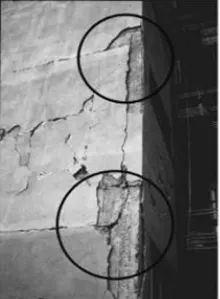
MODE OF FAILURE- failure due to the errors in the constrcution.
This is occured due to change in concrete grade or lack of strength in the concrete due to faiure of supplier during concreting.Sometimes it can be due to high slump concrete usage.This will mainly lead to formation of honeycomb strcutures in the concrete.honeycomb is the voids in concrete formed due to improper compaction or incomplete filling of the concrete.This can be repaired by choosing garde of concrete wisely,using air entrained concrete,fibre reinforced concrete/polymer concrete.Also to provide proper compaction during the placement of concrete.Can also provide thcik concrete cover.
c.
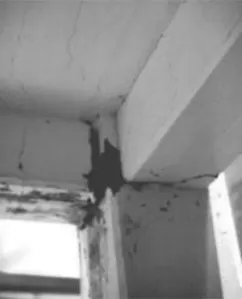
MODE OF FAILURE- beam-column connection failure.
beam column connection failure is the common type of failure in earthquake zone areas.It is mainly due to formation of plastic hinge at the ends in strong column and beam weak combinations.It is can repaired by providing achorage bars at the joint/connection.
Question 2
a.
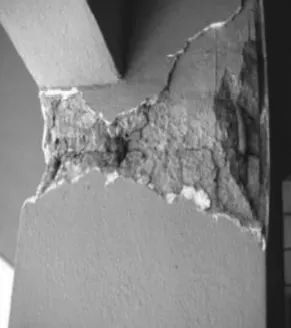
MODE OF FAILURE- flexural compressive failure of column
So flexura failure is the compressive failure is type of brittle failure, which are generally seen in high rised RC building.Column will be subjected to both axial load and bending moments,when it exceeds its flexural capacity failure occurs.It is said to be flecural compresiive failure as failure begins by crushing of concrete in compresiive side followed by yieldig of steel in tension side.It can be avoided by providing over-reinforced concrete beam /by providing additonal steel at compressive side.
b.
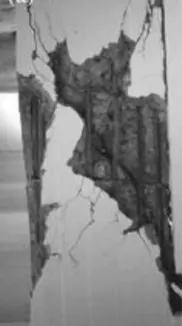
MODE OF FAILURE- shear failure of column(diagonal tenson failure)
Usually lateral loads are carried by shear wall and columns(vertical element) in the strcuture to foundation.When shear wall is not their,columns will alone carry the load.The failure occured due to shear.In order to avoid this,shear inks to be provided in the column and column size to be increased in the direction of shear such that the shear capacity of the column will increased.basically,failure begins by development of vertucal crack followed by bent in diagonal direction.
c.
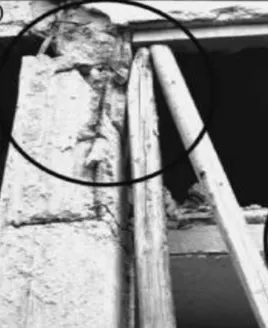
MODE OF FAILURE- short column effect/buckling failure.
Columns are classified as long column and short colum based on slenderness ratio.Short column is a clumn which has slenderness ratio less than 32.It basically fails due to crushing when direct stress is applied on the column,as the buckling stress is very small compared to direct stress applied.This can be resolved by providing links to the column apart from shear links.