Identification of Cracks
22/09/21
Answer
Aim
We are investigating the beam, column joint, and the function of the beam and column. After investigating the beam, column joint, and surface.
- We need to see the binding ability of the concrete and steel. how the steel and concrete are subjected to expansion and contraction in a moderate climate.
- finally, we need to determine the properties of the brittle action and it will lead to any damage or failure.
First, we need to understand the difference between Damage and failure
Damage
- in words, we can say as damages are the stepping stones to failure.
- in detail, the damage was meant to be brittles but the extension of the problem in a very high range led to the major effect.
- damage is a process of the removal of the top layer of the concrete or improper binding of a concrete.
Failure
- in words, failure was a symbol of destruction or collapse.
- in other words, failure has a major impact on the structure and it affects the total constructed area.
- when we are in the critical state of the structure, we need to refurbish or strengthen the building.
- failure is a term that emphasizes, loss of structural integrity or the loss of load-carrying capacity in the component or a whole structure.
Question 1:
a)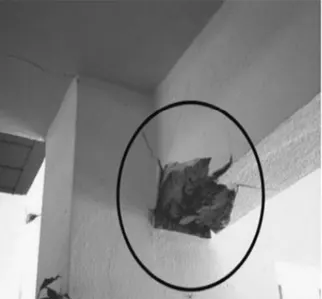
Area - beam-column joint
Defect - removal of the top layer (flexural failure)
Reason - Water cement ratio not as per the codel provision and might be while pouring the concrete slurry settle in the bottom of the shuttering. so the damage exists.
Explanation - when the expansion and contraction of the beam are quite natural. but the over-expansion is led to the damage. in other words, the beam is attain its ultimate withstand ability and reaches its failure.
rectification - special cement or high-pressure grout we can use for filling the area.
b) 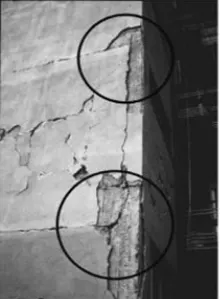
Area - Column top surface
Defect - removal of the top layer (Pull out Failure)
Reason - there is a lot of minor crack throughout the column. steel and concrete ratio was irrational to the actual. might be overloading the column.
Explanation - when the overloading occurs, the loose top layer will brittle first is a sign of failure and the rebar are very minimum in the area, the tensile strength will become very low. the collapse occurs.
rectification - construct a new column or we can enlarge the old column to support the structure.
c) 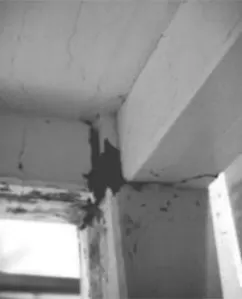
Area - beam-column joint
Defect - cracks in (beam, column, slab)
Reason - cover problem in the slab or problem in the composition of the column and beam(material problem)
in another way, very mild attack of the seismic. because the crack is very less density but throughout the structure.
Explanation - Ductile in nature, so the total structure withstands the lateral force.
rectification - special cement or high-pressure grout we can use for filling the area.
What is the mode of failure or damage of the beams in the figure above? Are the damages repairable? Elaborate
Question 2:
a) 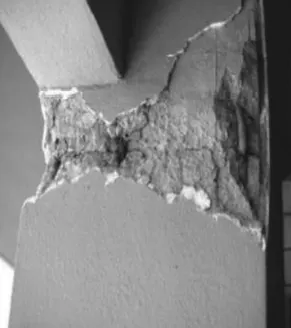
Area - column area
Defect - compression failure
Reason - there will be an axial load acting heavy on a column or the rebar to obtain maximum deformation.
Explanation - totally the failure obtain by, exit the threshold limit of the column.
rectification - special cement or high-pressure grout we can use for filling the area.
Damage - Non- repairable
b) 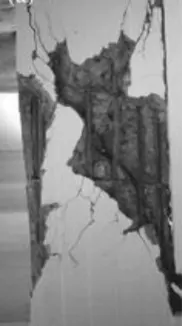
Area - column area
Defect - Brittle of the concrete in the column
Reason - cover problem or problem in detailing in steel-concrete ratio or over steel or shear failure.
Explanation - there is no sign of the bending of the column or buckling of the column. In the vertical element, the shear force acting a very aggressive way. deformation occurs.
rectification - very difficult to repair the column
Damage - Non- repairable
c) 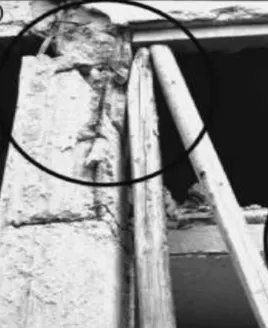
Area - beam-column joint
Defect - improper connection of the beam column. complete concrete is crushed and the reinforcement is bend.
Reason - flexural failure when the poor construction or the poor quality of materials
Explanation - there is a possibility of lateral force attack the structure but the construction-wise poor in all aspect
Damage - Non- repairable