Identification of Cracks
Question 1: a.
What is the mode of failure or damage of the beams in the figure above? Are the damages repairable? Elaborate
- Crack is formed due to flexural failure in beams.
- Shear failure happens when the applied shear stress on a beam exceeds the shear strength of the material, leading to the failure of the beam along a shear plane.
- it can be observed that reinforcements cannot be repairable as it already looses its strength. This may haapen due to improper vibration or not providing cover to the bottom of the tension reinforcement. It can be repairable only with the use of providing additional concrete with required compressive strength
- These cracks are formed due to high slump concrete.
- To avoid cracks in concrete, avoid using high slump concrete. Concrete of moderate slump results in less cracking. High slump concrete can only be used if it is controlled by concrete admixtures or designed such that segregation and bleeding of concrete is controlled. Concrete admixtures such as water reducers or super plasticizers can be used to increase slump while reducing addition of water content.
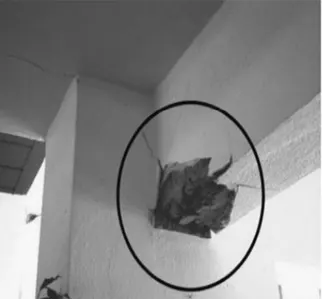
- Honeycombing occurs when the concrete is not properly compacted or consolidated during construction, resulting in areas where the concrete has not completely filled the formwork or has not properly bonded with adjacent concrete surfaces. Honeycombing can weaken the structure and compromise its durability.
- It is not repairable.
- This cracks are formed due to the beam-column joint failure. In the strong column-weak beam design, beams are expected to form plastic hinges at their ends and develop flexural overstrength beyond the design strength.
- It occurred due to high shear forces during seismic activity. If it is not repaire correctly by excessive loss in strength, the structure will collapse.
Question 2: A
- From the above figure it shows that the failure occurs due to soft storey one.nfill walls are not been constructed probably at the ground level. Grouting process can be adopted in such cases. Yielding of steel can also observed in this figure which cannot be repairable.
Question 2: B
- Due to Shear failure in the column. Lateral loads are carried in vertical elements of the structure. The size of columns is increased in the direction of the shear to increase shear capacity. Shorter queues attract high shear forces. These failures occur during an earthquake at open ground floor level.
Question 2: C
- It is formed due to short column failure. Short columns fail by crushing.
- The shorter column attracts higher shear force which often leads to deformation or collapse.
- It is a critical type of concrete column damaged at these columns.
- It can be repairable by providing suitable retrofitting technique such as steel jacketing .