Identification of Cracks
Challenge 1 : Identification of Cracks
1.
a)
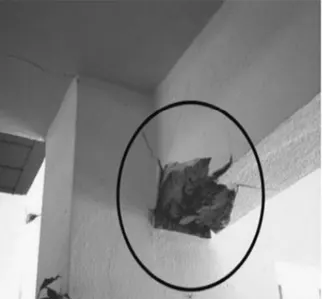
FLEXURAL FAILURE
- The concrete portions have ruptured at the bottom in this figure, which means this can be formed due to flexural failure of the beam
- The Flexural strength is also known as the modulus of rupture, which represents the highest stress experienced within the material at its moment of rupture
- Under the effects of high lateral seismic loads, beam-column joints are subjected to high force and high moments, which results in significant influence on the response of the structure.
- The use of low strength concrete, adequate transverse reinforcement, plain reinforcement bars etc are the main factors which increases this failure risk
- We can rectify this damage, by replacing the patched areas with the concrete of same grade.
b)
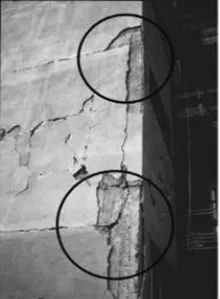
HONEY COMBS IN COLUMNS
- These cracks or honey combs are majorly formed due to the mistakes done during construction
- Honey combing occurs when the fine mortar fails to fall and fill the gaps created by the aggregates , poor stamping with rods(vibration), improper mix ratio and poor consolidation.
- To avoid these, avoid using high slump concrete, that is, moderate slump less than 5 inches can results in less cracking or high slump concrete with conrtolled amount of admixtures should be used, so as to reduce bleeding of concrete
- This can be repaired by breaking the afected area and applying the grout to the older surface.
- At places of juction of columns and beams concrete with slighly more water-cement ratio should be used to avoid honeycombs. Tapping with hammer on the sides of the shuttering during concreting and vibrating also helps in reducing the formation of honeycombs.
c)
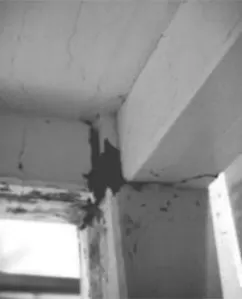
BEAM-COLUMN JOINT FAILURE
- Normally, the beams are expected to form plastic hinges at their ends and develops flexural overstrength beyond the desired strength.
- This type of failure of beam may be occured due to non compliance in design or exceessed design loads or earthquake could have affected the building
- The high internal forces developes at the plastic hinge cause critical bond conditions in reinforcing bars passing the joints and can also impose high shear demand in the joint core
- This can be rectified only by knowing the revised design requirements and the reasons of failure of this structure
2.
a)
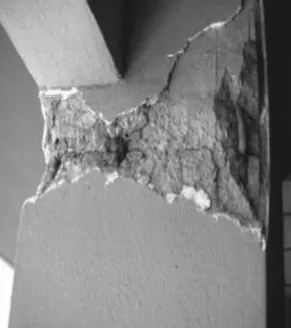
PLASTIC HINGE FAILURE OF COLUMN
- This is the deformation which occured due to the deformation of a section of a beam where the plastic bending occurs
- Plastic hinges extends along short lengths of beams.
- Actual values of these lengths depend on cross-sections and load distributions.
- These are non repairable failure
b)
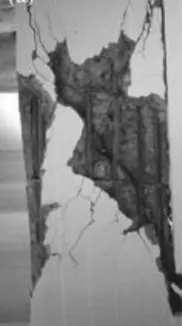
SHEAR FAILURE OF COLUMN
- Columns and shear walls carry the lateral loads (like those generated by winds, earthquake, loads from retaining structure)in a structure, in this figure, it can be predicted that the shear failure has occured due to gravity load or lateral load.
- The column may fail in shear mode after yielding of main reinforcement, resulting in less ductility.
- The shear failure is caused by the development of diagonal cracks predominates in higher reinforced concrete beams without transverse reinforcement.
- These are non repairable failure
c)
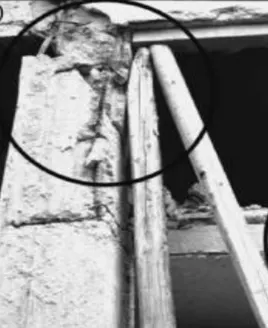
BUCKLING FAILURE
- This can be predicted to be buckling failure, which is caused due to the sudden change in shape of short columns due to lateral applied loads
- This can be mainly due to failure of the design or the additional bending moment in the column, column slenderness and ignoring the stiffness effects in the non structural partial height masonary infill build up against column
- This failure is also known as Short column effect, since it is caused due to the influence of the partial height, increasing the column shear force, which often leads to deformation
- .This is a non-repairable failure