Identification of Cracks
IDENTIFICATION OF CRACKS
Cracks in the building is a universal problem faced throughout the world. Building components develops cracks whenever stress in the component exceeds its srength. Stress in the building components could be caused by externally applied forces such as dead, live, wind, seismic loads or foundation settlement or could it be induced by internally due to temperature variations, moisture changes and chemical actions. Cracks affects the building,s artistic look and it destroys the wall integrity, affects the safety of structures and even reduces the durability of structure.
TYPES OF CRACKS
1.STRUCTURAL CRACKS
Structural cracks amy rise due to various reasons such as incorrect design, overloading of the structural components. Structural cracks endanger the stability of the building and may be difficult to be rectified
Structural Cracks Formed On Beam, Column , Slab
| BEAMS | COLUMNS | SLABS |
| Flexture cracks | Horizontal crack | Flexure crack |
| Shear cracks | Diagonal crack | shrinkage crack |
| Torsional cracks | Corrosion crack | corrosion crack |
| Corrosion crack | ||
| Combination of above cracks |
2.NON-STRUCTURAL CRACK
Non-structural cracks are generally due to internal forces developed in the building materials due to moisture variation, temperature chamges and suitable remedial measures can be taken to control it
1.(a)
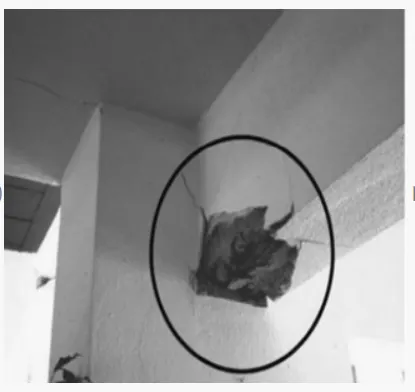
Flextural Failures
This failure mode occurs when loads on the beam exceed its flexural capacity.The shear strength of the beam should be greater than its flextural strength otherwise the shear failure would occur before flexural failure.
OBSERVATIONS
- From the figure we can see that the concrete get crushed and the reinforcement is exposed at the bottom of the beam
- Concrete spalled beyond the reinforcement which may be the sign of rupture
- Top of the beam is safe because of the flange advantage from slab
- The crack develops from bottom to top means rebar yielding occurs in support bottom only
CONCLUSION
- Its form of flexural failure due to reversal of stress during earthquake
- During stress reversal, support top experiences compression and bottom experiences tension
- Top compression is managed by slab advantage
- Bottom tension is no satisfied by the provided reinforcement
- Since the reinforcement got yielded , it cannot be repaired
1.(b)
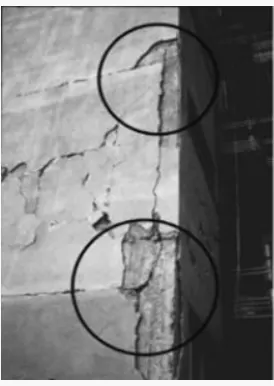
The beam column joint is the crucial zone in the reinforced concrete moment resisting frame. It is subjected to large forces during severe ground shaking and its behaviour has a significant influence on the response of the structure
OBSERVATIONS
- We can see in the picture cracks along the beam-column edge
- Cracks seem to have developed through the structure as it looks much wider
- Beam looks separated from the column at joint
- Concrete is not severely crushed
CONCLUSION
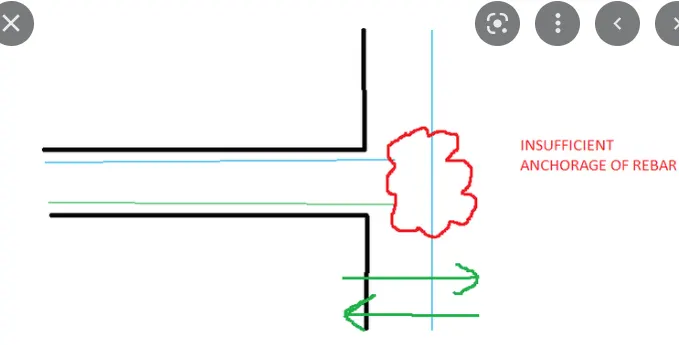
- Its beam pull out failure due to insufficient development length of reinforcement in joints
- During earthquake,the horizontal movemet of structure makes this condition worse and detached the beam member from column
- Providing anchorage length between two existing concrete is very difficult.So not repairable
1.(c)
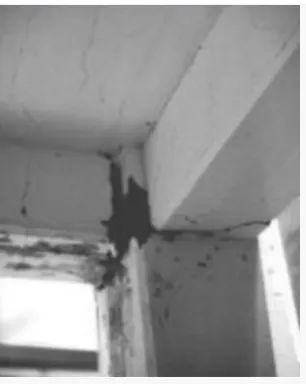
OBSERVATIONS
- From the picture we can see that cracks generated in column-beam junction
- Cracks in beam developed through its entire width
- We can see that cracks have developed in the slab also along the direction of beam
CONCLUSION
- Its a plastic hinge failure
- The damage occured only in the joint zone first of all
- Cyclic lateral loading and stress reversal at the joints led to the damage
- Even the slab participated to its best to handle the tension(slab is severly cracked means it has undergone tension with its flange condition) but unable to control the damage
- The joint can be strengthened
2.(a)
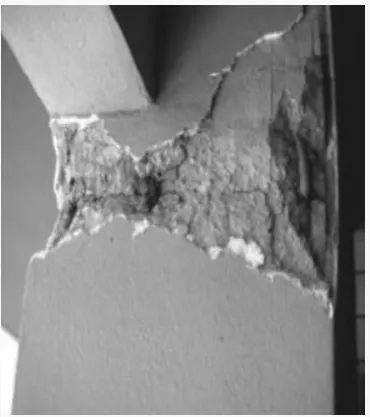
OBSERVATIONS
- Concrete damaged at top of a column
- Concrete damaged all around the column face
- Beams are safe
- The location of column looks at edge of the building
- No walls are built along the column means it is probably at ground floor, for parking car movement access
CONCLUSION
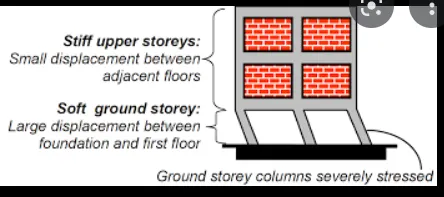
- It's a soft storey failure, technically plastic hinge formation
- Due to absence of infill walls at the ground floor,The plastic hinge forms at the top of ground storey columns during lateral movement
- Based on the development of crush of concrete,it can be eithr be repairable or non-repairable
2.(b)
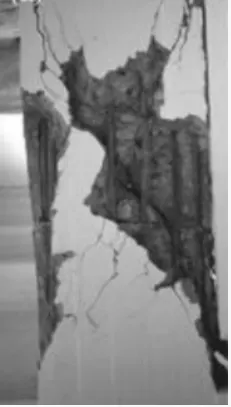
Column shear failure can occur not only in nonductile frames but also in ductile frames.Column shear failure is important because it can induce a decrease in the axial load resistance of the column,which may result in the progressive collapse of the building
OBSERVATIONS
- From figure we can see that the developed concrete is completely broken diagonally
- Longitudinal reinforcements and braces are fine
- Shear reinforcement spacing looks wider (which means probably lesser shear rebar provided)
CONCLUSION
- It's a pure shear failure
- Inadequate shear reinforcement compels concrete takes all the shear stresses
2.(c)
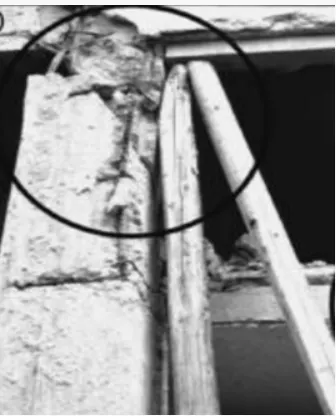
OBSERVATIONS
- From the figure we can see that the column failed completely
- Failure at top of column and bottom part is safe
- There are two slabs connected to the column, probably one at mid height of the column
- The wooden piles might be a post failure support after column failed , providing temporary prop to avoid collapse of the entire structure
CONCLUSION
- It's a short column failure
- An additional slab or beam connected to acolumn in mid heighjt leads to this effect
- This leads to failure especially if the connection is unintentional and not accounted in design
- The failure given in the picture is not at all repairable