Identification of Cracks
1). a): Beam column joint failure:
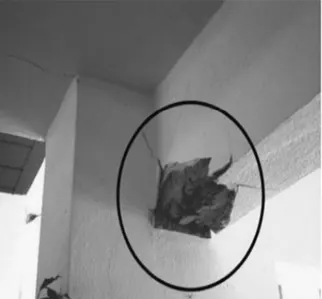
In framed structures, both steel reinforced concrete, beam-column joints plays a very crucial role in terms of seismic resistance. Under the effects of high lateral seismic loads, beam-column joints are subjected to high forces and moments and their behaviour have a significant influence on the response of the structure. Poor seismic performance of inadequately detailed joints can lead to the total or partial collapse of reinforced concrete frame structures. The use of low sttrength concrete, plain reinforcing bars, problematic anchorge details and adequate transverse reinforcement in beam-column joints are the factors increasing the failure risk of the structures during severe earthquakes.
b). Honey combs in column:
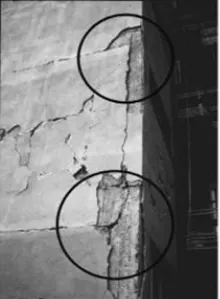
Honeycombs are hollow spaces and cavities left in concrete mass on the surfaces or inside the mass where concrete could not reach. These look like honeycombs or honey bess nests.
Improper vibration and workability of concrete are main causes of honeycombs in concrete. Honeycombs which are on sides are visible to naked eyes and can be detected easily as soon shuttering is removed. Honeycombs which are inside mass of concrete can only be detected by advanced techinques like ultrasonic testing etc.
Places like junction of beam to beam to column and to one or more beams are the typical spots where honeycombs are observed. This is due to jumbling of reinforcement of beam and column rods at one place during concreting and vibrating.
Presence of more percentage of bigger size of aggregate in concrete also prevents concrete to fill narrow spaces betweeen the reinforcement rods.
REPAIR OF HONEYCOMBS:
The affected area should be broken and the portion should be re-concreted after applying grouting chemical to the old surface. Honeycombs as a defects not only reduces the rods and rusting and corrosion strats.
At places of junction of column and beam concrete with strictly 20mm and down aggregate should be used with slightly more water and cement to avoid honeycombs.
Taping with wooden hammer the sides of shuttering from outside during concreting and vibrating will help minimizing honeycombs to a great extent in case of column and beams.
Use of thinner needle say 25mm or kess with vibrator at intricate places or concreting will also help in reducing honeycombs.
c) 
STRONGER COLUMN WEAK BEAM FAILURE:
- All structural elements should be designed to be capable of withstanding the stress developed due to all combination of loads irrespective of whether column or beam
- Failure of any beam element may occur due to non compliance in construction or subjected to exceeding design loads.
- Columns are connected with 2,3 or 4 beams and designed for maximum load transfer from these beams .we need to understand that at a time it is remote chance that all beams are subjected to maximum load and implies that columns are subjected to load less than design load and never reach to design load
- Also due to grouping of columns inherant reduntance exists in most of columns.
- Early failure warning in beams essential and can be achieved by avoiding brittle failure of concrete. Beam design to be steel failure first and ductility of steel and stirrups play important role in early warning.
- To conclude there is no such thing of weak beam and strong column. The fact is Max imum load transfer does not occur for columns and they are strong , where as there is every possibility that excess over design load could occur in beams hence redundancy is less in beams and are weak in these terms
- Beams to be designed as first steel failure criteria .
- the word under reinforced should be dropped and changed as first steel failure criteria.
2) QUESTION:
A). 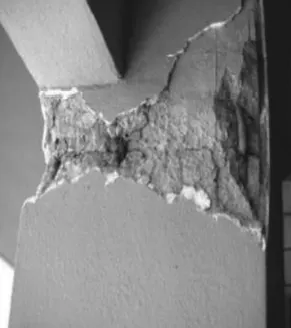
COMPRESSION FAILURE:
The column is an element that transfers the weight of a structure as axial stress to the foundation or supporting element.
Concrete is capable of carrying the compressive load is dominant in carrying loads whereas in other elements such as beams compressive stress is taken only by part of the section.
Reinforcement is also provided to columns where it is not possible concrete to carry the whole load or as nominal reinforcements.
The column can fail in compress due to the increase of the axial stress than its capacity. These types of failure could be due to the following reasons.
- Reinforcement and concrete have certain capacity based on there amount and area of the section. If axial stress is greater than that capacity column will fail in compression.
- Further, the reinforcement and concrete have their own stain that they can bear. As per the British standards, concrete is capable of carrying a strain up to 0.0035 and steel starts yielding at a strain of 0.002 and it can increase greater than the concrete. When the axial stress exceeds a certain amount resulting in concrete strain grater than 0.0035 concrete will fail suddenly. It will be a sudden crushing of concrete.
- If the section is sufficiently reinforced, it will provide warnings before these types of column failure. The article published as structural cracks in concrete could also be referred more information on cracking.
B). SHEAR FAILURE:
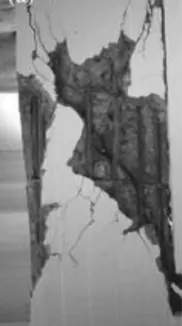
Lateral loads in a structure are carrying by vertical elements such as columns and shear walls.
When there are no shear walls, columns carry these lateral loads.
Lateral loads are generated by winds, earthquake loads, from retaining structures, etc.
Shear links are provided to columns based on the shear forces excreted on them. Further, the size of the columns is increased in the direction of shear to increase the shear capacity.
C). BUCKLING FAILURE:
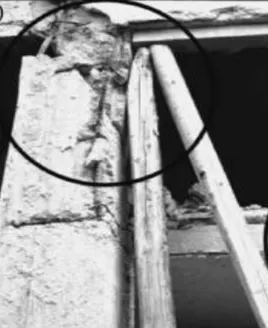
It is formed due to the column of bukling.
buckling is sudden change of shape of the columns due to the lateral load applying.
Mainly, the buckling failure can be identified as a failure of the design as we consider the buckling effect in the design. If the designer aware of these types of column failures, he could attend this.
The additional bending moment of the column slenderness of the column is considered in the design.
Further, the effective height of the column is considered based on its pattern of bucking.
Buckling failure, the name itself provide the idea about the mode of failure. Therefore, we consider it in the design. Buckling failure is the other basic mode of failure of columns in addition to crushing failure of columns.