Identification of Cracks
1.A
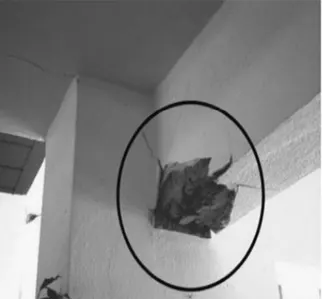
Observations
- Concrete is broken and the reinforcement at the bottom is exposed.
- The concrete is broken due to failure of reinforcement.
- The top reinforcement is still active due to the slabs reinforcement.
- The cracks developed from the bottom to the top it means the reinforcement is yielded at the bottom.
Conclusion.
- It is a flexural failure due to earthquake.
- Generally Top experience tension and Bottom experience Compression. But during Earthquake the top experience compression and it can withstand by the slabs with beam having flange like connection.
- But the bottom experience tension which cannot be handled by the reinforcement provided.
- Hence the reinforcement is yielded and it cannot be repaired.
1.B
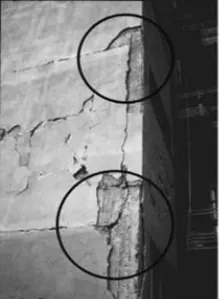
Observations
- Cracks developed at the beam column joint.
- Concrete is not broken.
- But the cracks developed are seen longer.
- The beam is separated from the column.
Conclusion
- Its beam pull out failure due to insufficient development length of reinforcement at the joints.
- During earthquake the horizontal movement of the structure makes the beam and column to detach.
- Providing anchorage reinforcement between two columns is very difficult so it is not repairable.
1. C
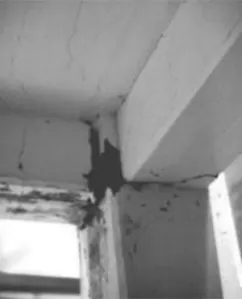
Observations
- Cracks are developed at the joints of beam column.
- The cracks are developed to the width of the beam
- Slabs also developed cracks along the beam width direction.
Conclusion
- This is the plastic hinge failure. Formation of plastic hinge at undesired location.
- The cracks are created only in the joints.
- These type of cracks are generated due to high shear force during the seismic activities.
- Even the slab also helps to control the tension, but unable to control the tension. It develops cracks.
- The joint is strengthened.
2.A
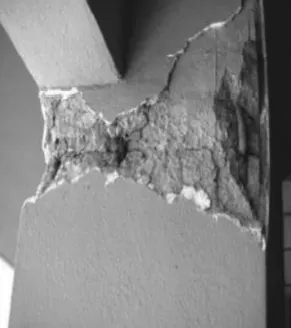
Observation
- Concrete is damaged at the top of the column.
- Beams are not damaged, even no cracks are seen in the beam.
- Concrete is damaged all around the column.
- No wall is built in between the column. Thus it is a parking space or ground floor.
Conclusion
- It is a weak column strong beam failure, due to soft storey mechanism.
- The plastic hinge is developed at undesired location.
- Due to no walls connected at the ground floor columns the plastic hinge formed at the top of the column in ground floor.
- Based on the spalling of concrete it can either be repairable or non-repairable.
2.B
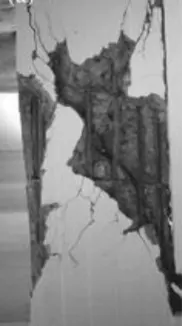
Observation
- Concrete is completely damaged along the longitudinal direction.
- The longitudinal reinforcement are intact.
- The shear reinforcement are spaced wider.
Conclusion
- It is purely shear failure.
- Inadequate shear reinforcement will lead the concrete to take all the shear force and leads to spalling of concrete.
2.C
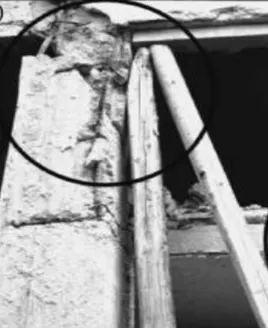
Observation
- Column failed completely.
- Column failed at the top.
- There are two slab levels connected to the column probably one is service level and other is floor level slab.
- The wooden piles are provided post failure of column to support the beam to avoid the collapse of entire structure.
Conclusion
- It is a short column failure
- An additional slab or beam connected to the mid-level of the column leads to this effect.
- This failure is especially due to unintentional and unaccounted slab in the mid height of column during design.
- It is not repairable.