Identification of Cracks
Question 1:
a)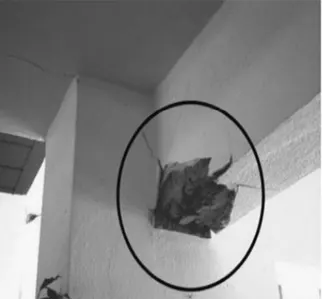
b) 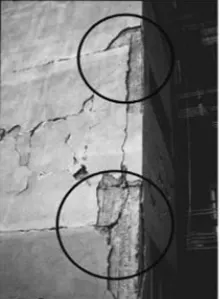
c) 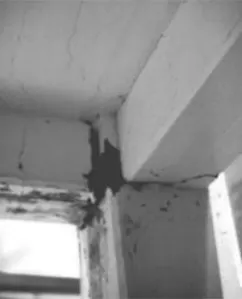
What is the mode of failure or damage of the beams in the figure above? Are the damages repairable? Elaborate
Answer:
a)
Observation:
- Concrete seems crushed and RCC is exposed to the air in the picture.
- The failure seems to reach very deep into the structure. Even though the failure ain't looking very bad as the beam is still intact at its position.
- The failure is created from bottom to top.
Conclusions:
- It is a form of flexural failure.
- This type of failure occurs due to the reversal stresses of the earthquakes.
- When the reversal stresses acted on the beam, the upper part was taken care of by the slab but the lower part didn't overcome the forces and a failure was observed.
- As the reinforcements seem not to be yielded and a permanent deformation can be seen, this failure is nonrepairable.
b)
Observation:
- A photograph of the whole structure can be seen.
- There seem very big and deeper cracks in the structure.
- It seems like the beams are totally separated from the columns and are about to fail completely.
- Even though the concrete structure has failed, it seems that the reinforcement is holding up the whole structure.
Conclusions:
- This type of failure is created due to the very less development length of the RCC bars provided in the structural frame.
- When the seismic forces act, the beams try to pull themselves out of the beam, and due to the less development length provided over here the structure failed.
- Ad the cracks are wide open and the development length provided is very less, the structure is not repairable again.
c)
Observation:
- Cracks can be observed over the whole width of the beams, and columns and are about to start to spread all over the slab.
- The cracks are developed at the JOINT.
Conclusions:
- A very high load had acted on the structure.
- All the components have tried their level best to overcome the forces.
- As it can be observed that the slab has also developed cracks due to the forces.
- As the cracks are very minor, this whole situation can be covered back.
- This is a repairable condition.
Question 2:
a) 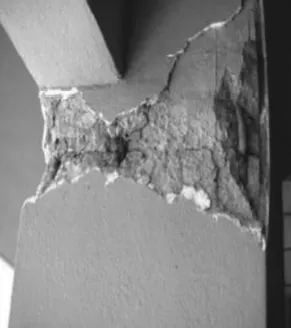
b) 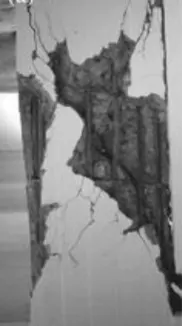
c) 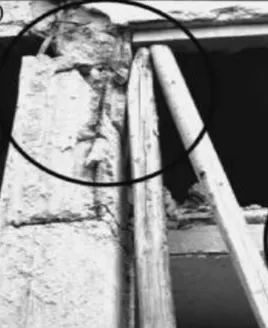
Answer:
a)
Observation:
- The columns structure seems to be damaged over here.
- As there seems no wall constructed near it, it may be a column of the ground floor or parking area.
- No failure has occurred on the beam.
Conclusions:
- As the column is on the ground floor, and when the seismic force would have acted, a plastic hinge may have been created over there due to the absence of the walls.
- This may have caused the failure.
- It doesn't seem so bad that it can't be repaired.
- This type of failure must be assessed first before doing anything to it.
b)
Observation:
- This seems like a shear failure to me.
- All the reinforcements are visible.
- The crack is wide and deep.
Conclusions:
- Improper RCC calculation is done while providing the shear bars to the structure.
- This is a clear case of the shear failure.
- No repairing can be done over here.
c)
Observation:
- Complete column failure.
- The upper part is failed.
- Wooden piles have been added to give support to the slabs.
- There seem two slabs being supported on one column. The lower slab may be of the landing of the stairs.
Conclusions:
- This is surely a short column failure.
- The design might not be taken into the analysis consideration before constructing it.
- This is surely not repaorable.