Hood design-Week 2
Hood design in UG NX
Objective
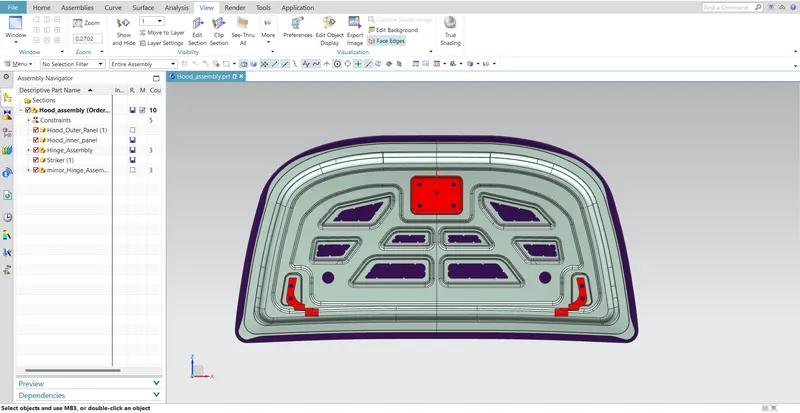
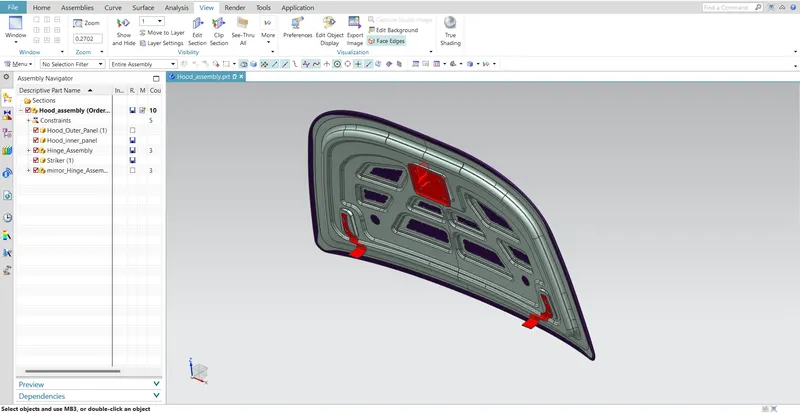
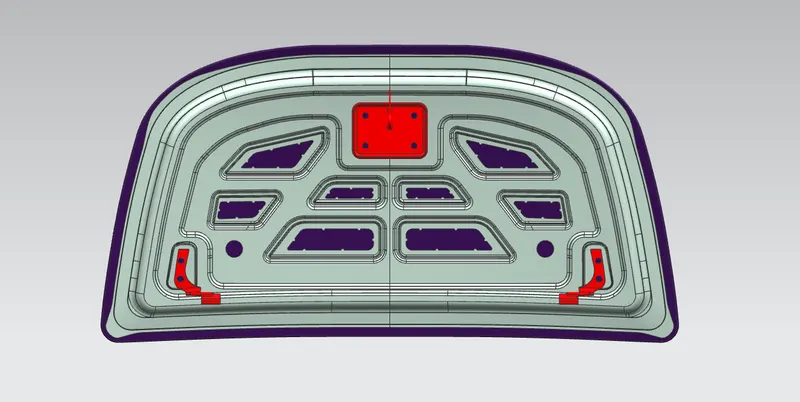
Design hood outer panel, inner panel and reinforcements with the given outer hood skin, master section and design parameters.
Introduction
The hood or bonnet is the hinged cover over the engine of motor vehicles. Hood can open to allow access to the engine compartment (or trunk on rear -engine and some mid-engine vehicles) for maintenance and repair. In design perspective hood should meet some specific condition like pedestrian safety, hood head zone for the lock striker, face distribution when subjected to frontal collision, manufacturability etc.
Design parameters
Hood thickness information
Outer panel thickness = 0.75mm
Inner panel thickness = 0.75mm
Reinforcement thickness = 1.5mm
Master section
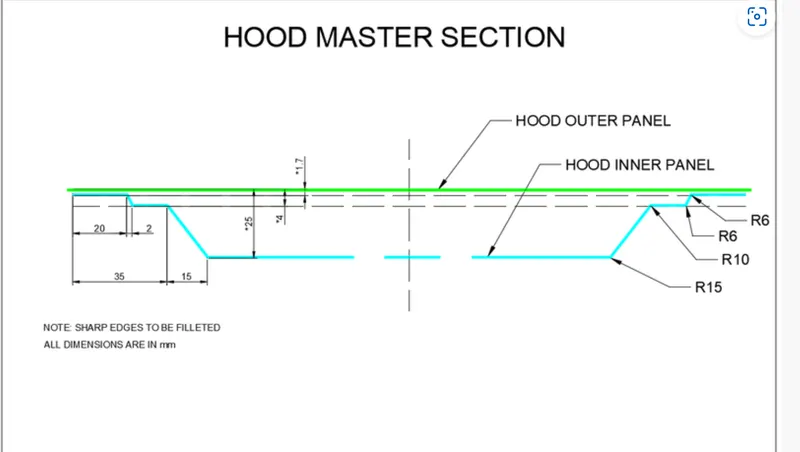
Components
- Hood outer panel
Outer panels are the aesthetic elements of a car. It is the styling team who provides the skin for the outer panel. The shape, position and size of the hood should satisfy the safety norms. So, while designing the hood we should give more importance to pedestrian safety. The outer panel is attached to the inner panel by hemming. So, it necessary to provide required hemming flange and reliefs for the hemming operation we also provide mastic sealants between outer panel and inner panel to reduce vibration.
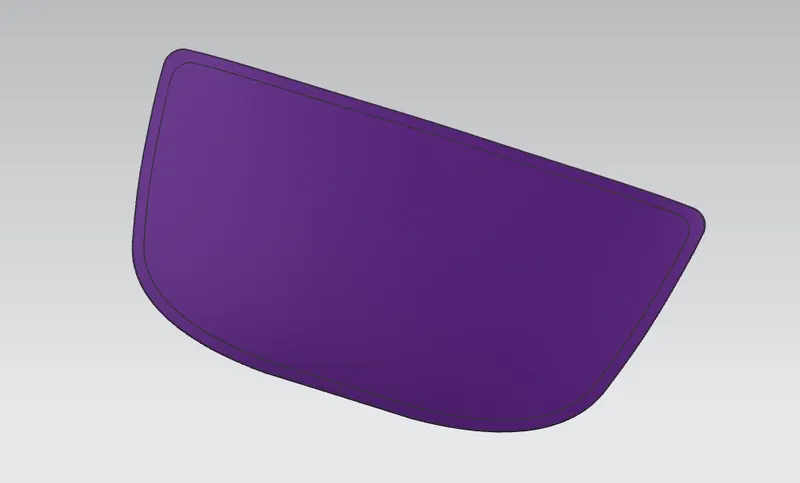
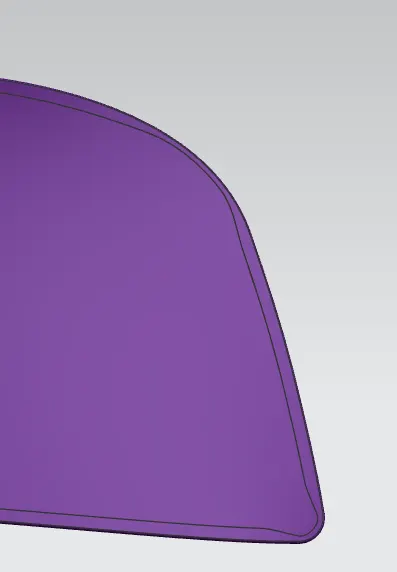
fig 1. outer panel fig 2. reliefs outer panel
- Hood inner panel
Inner panel is the part that gives strength and rigidity to the outer panel. The master section represents the inner emboss shape and size. Then we provide the emboss for the latch and hinge elements after the location.
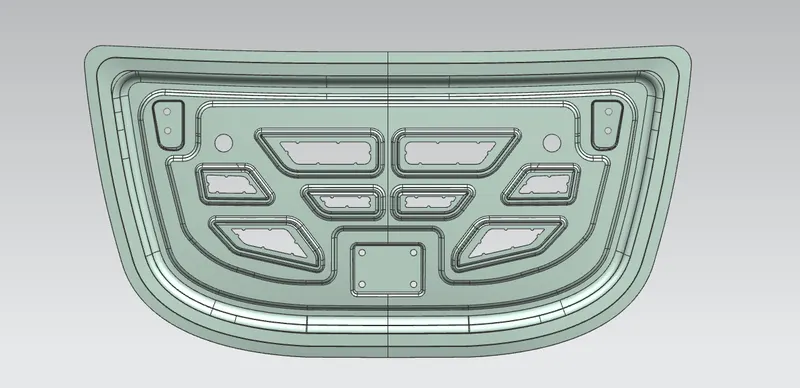
- Reinforcement
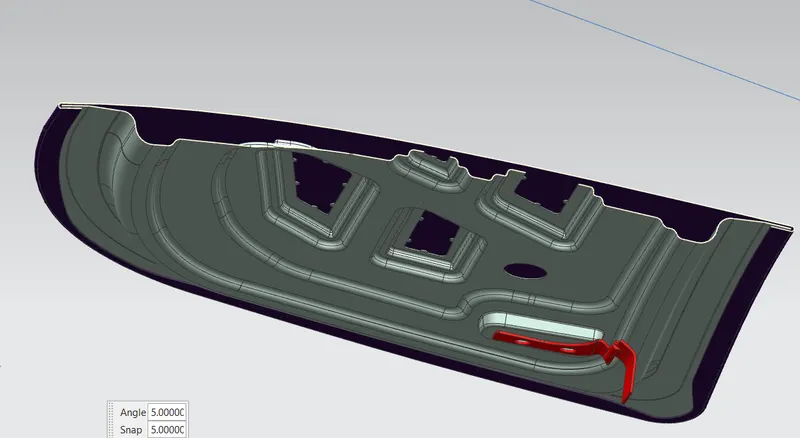
Reinforcement is provided according to the design requirements. Mainly it is provided at the hinge and latch regions to improve the strength locally.
Latch trajectory
Latch trajectory is given by circle drawn from the hinge axis point. Hinge axis point is the centre point of the hinge axis. First, we can fix either the latch or the hinge. if we have fixed the hinge position then we should plot the trajectory circle for the latch. For proper mating condition the striker axis through the tip of the striker should be tangential to the latch trajectory.
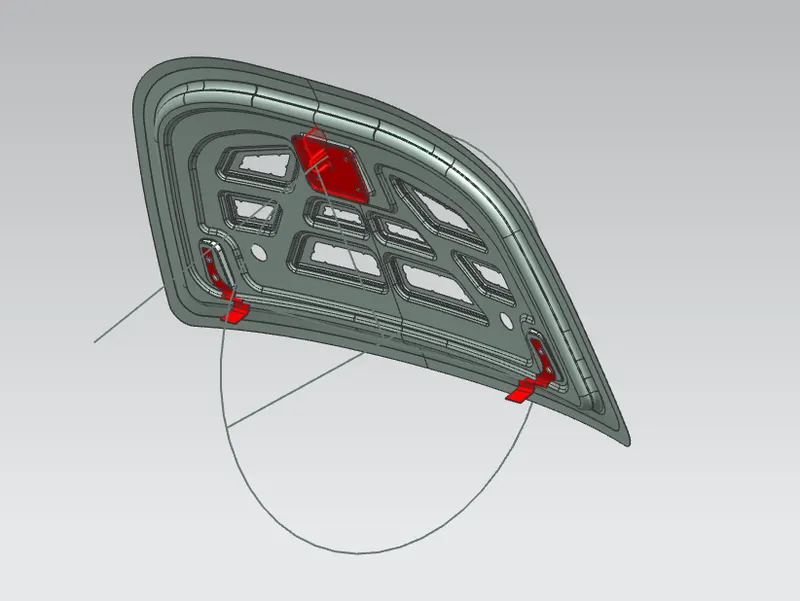
Emboss definitions
Throughout the inner panel we provide different emboss. We can increase the stiffness of the inner panel through these embosses. The shape and size of the embosses also determines the direction of the face distribution resulted from frontal collision. The force should be also distributed away from the passengers.
Mastic data
Hood commonly possess large surface area and hemming can only be provided through its boundary. We cannot use other joining techniques like welding, riveting etc because they have marks on the outer panel which spoil its aesthetic appearance. So, mastic sealants are used to stick the inner surface of outer panel and inner panel.
Deep drawing
Deep drawing is one of the most widely used processes in sheet metal forming. Apart from its use in many other sectors, it is applied in the automotive industry for the manufacturing of car body parts. The deep drawing process is a forming process which occurs under a combination tensile and compressive conditions.
Hemming
Hemming is a forming operation in which the edges of the sheet are folded or folded over another part in order to achieve a tight fit. Normally hemming operations are used to connect parts together, to improve the appearance of a part and to reinforce part edges.
There are two types of hemming operations,
- Conventional die hemming
In conventional die hemming, the flange is folder over the entire length with a hemming tool.
- Roll hemming
It is the roll hemming process that is used for automotive sheet metals. Roll hemming is carried out incrementally with a hemming roller and forms the flange. Roll hemming operation can also be hemming is very flexible to use and toll cost are significantly.
Final assembly