Hood design-Week 2
HOOD DESIGN
AIM ; The aim of the project is to design the hood or bonet of the passenger car by using the given master section by considering the design parrameters
OBJECTIVE
The main objective of the project is to design the hood of a passenger car by using the master section , and also we want to follow the design consideration and rules as per the industrial standards.
INTRODUCTION
The hood is a part of the vehicle which is placed over the engine department .The hood of a car is considered as the frontal BIW enclosure component. The hoods are designed to reduce air resistance as the air flows around the car . The hoods have a wide range of uses they serve a great deal in protecting the passenger inside the car and the pedestrian in the event of an accident . it also act as the protective covering for the engine and other components of a vehicle. One of the main purpose of a hood is to make ease of the maintenace and repair of the vehicle , hood make easy access to the person who services the car.
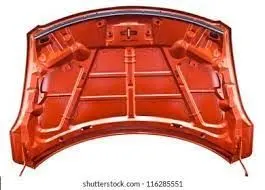
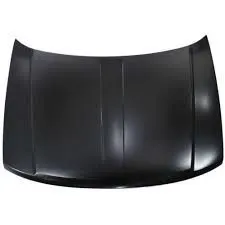
HOOD DESIGN CONSIDERATIONS
The things we want to consider before starting the design of a hood are followings,
- The height of the hood is designed based on the country standards for example, the height of a average person changes from place to place for example in india the average approximate height of a person is 5.5 feat but outside india in some country the average height is 6 feat and above.
- Another important design consideration of the hood design are the passangers safety , the hoods are mainly designed in the way that to reduce the impact force occuring to the passangers cabin when an accident occurs.For that we are providing emboses in the hood panel to diverting the impact towards othesides appart from passenger cabin.
- The european new car assesment program (Euro NCAP) is a european car program safety perfomance assesment , they test the safety of the passangers and pedestian , and accordingly they give the ratings , for getting better safety ratings we also want to consider these factors , likewise there are several assesment there nowadays.
- One of the important design consideration of a hood are the pedestrian safety while desiging the hood we also want to consider the pedestrian safety also. For that we want to make changes in our design .
- Another important consideration is to reduce the weight of the vehicle to increase the perfomance of the vehicle , by giving various cut outs in the hood we can able to reduse the weight of the hood without reducing the strength and likewise we can reduse the entire weight of the vehicle .
- Another factor is to reduce the manufacturing cost.
HOOD COMPONENTS DETAILS AND HOOD DESIGN
The main components of a hood are the following,
- Hood outer panel
- Hood inner panel
- Hinge assembly
- Stricker assembly
- Hood support
- Mastics
The data used for the design of the hoods are
outer panel thicknes= 0.75
Inner panel thickness = 0.75
Reinforcement thickness = 1.5
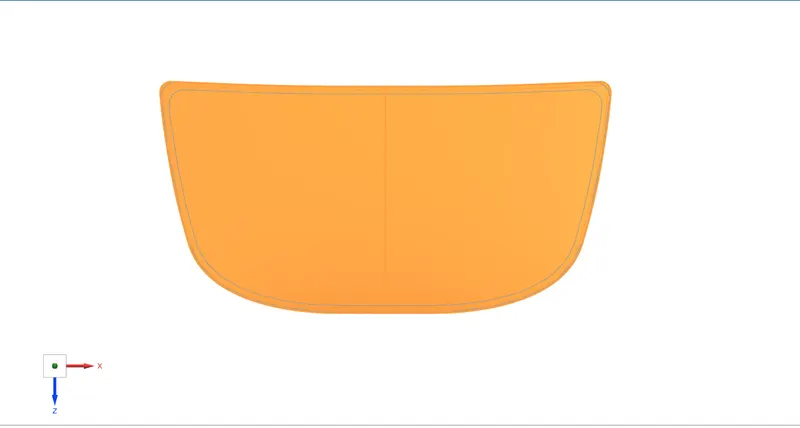
- OUTER PANEL
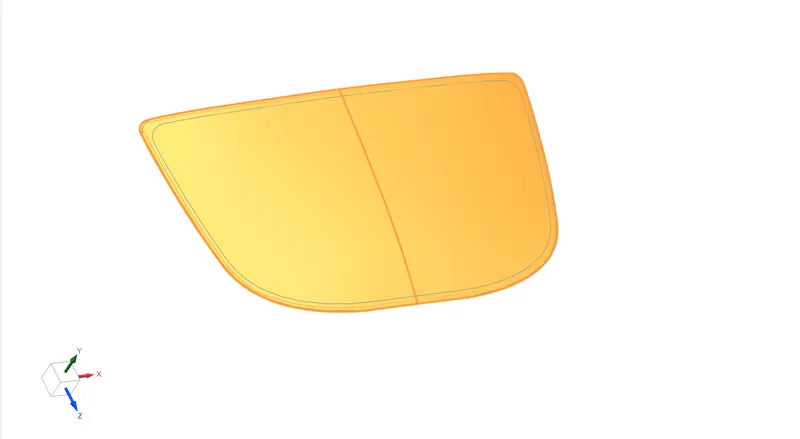
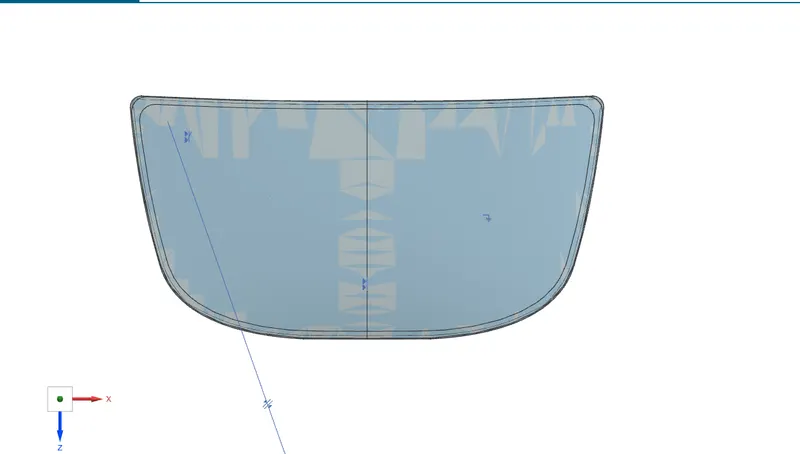
The outer panel is the part which gives the hood a very good aesthetic looks, they are mainly designed by considering aesthetic requirement for the vehicle, so in the outer panel sheet metal operations like weldings are prohibited. If these types of weldings are used in the outer panels then it will reduce the vehicle aesthetics , that is the main reason for the usage of hemming and mastic for the joining of outer panel and inner panel of the hoods ,inplace of weldings . Here the outerpanel is created by giving the thickeness of 0.75 mm as shown below.
- INNER PANEL
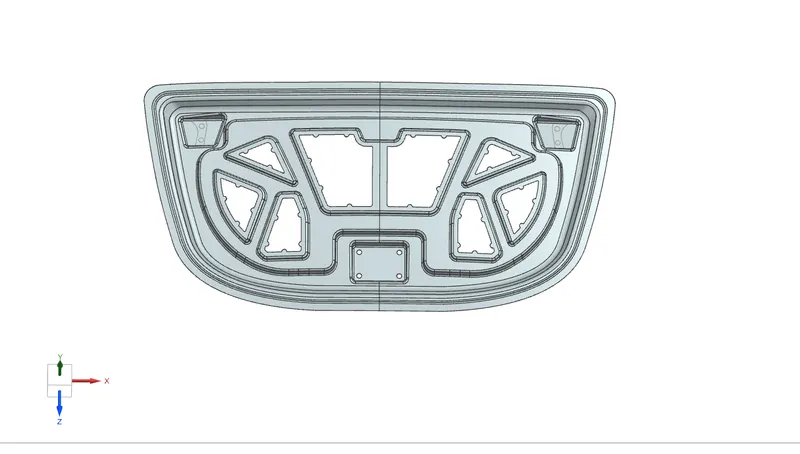
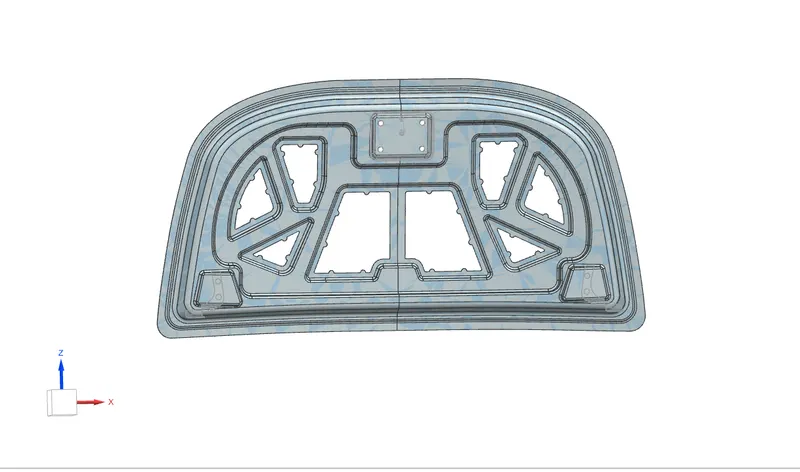
Inner panel is the main part of the of the hood that determines the rigidity of the hood and it is used to divert the direct impact force during the collisions , the inner panels are designed in such a way that the impact forces during the collisons move towards the A pillar or outwards rather than it goes directly to the passenger cabin. The inner panels are are designed not only considering the passenger safety they are also designed for the safety of the pedestrians also, lot of design changes and researches are done and being carrried out in the inner panel only to achieve the pedestrian safety and the passenger safety.
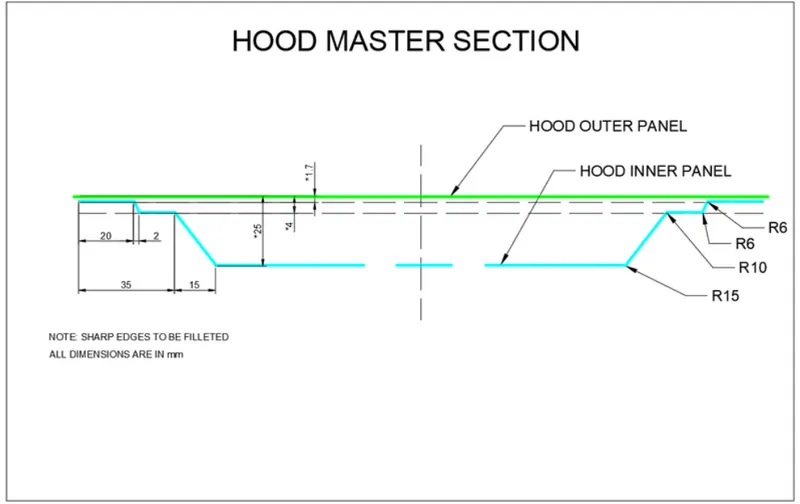
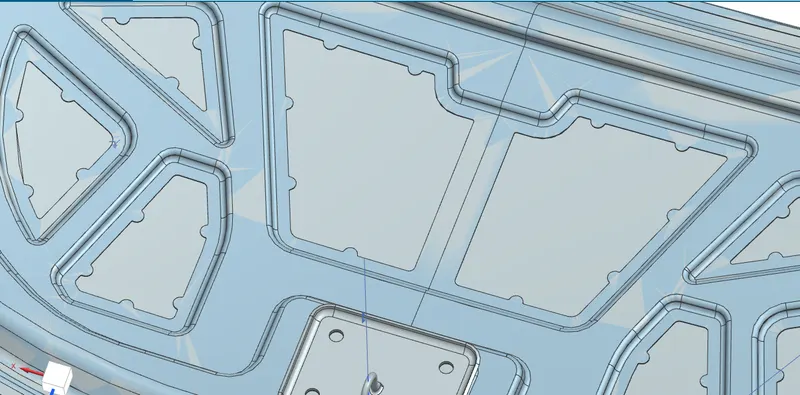
In the inner panels we are created some cutouts for reducing the weight of the vehicle without reducing the strength of the hood and also for reducing the cost and imrove the perfomance of the vehicle. Also the inner panel has the embosses and mastic points . The inner panel is designed by considering the master section shown above and thickness given to the inner panels are 0.75mm.
The embosses in the inner panels are designed in such a way that to reduce the impact force of the collision towards outwards as shown below,
- STRIKER - LATCH
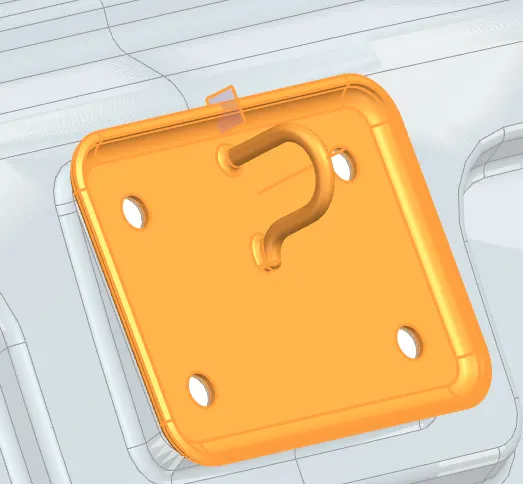
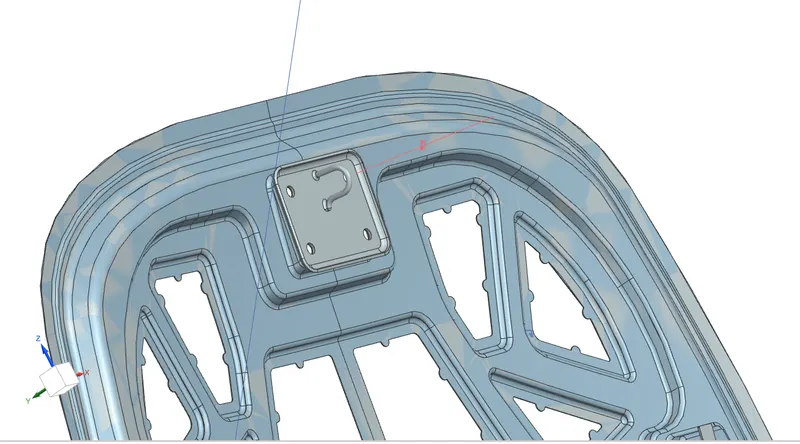
Striker is the part which is used for the locking of the hood with the hinge compartment by using the latch which is placed inside the engine compartment. The sticker is placed in the bottom middle of the hood as shown below
- HINGE ASSEMBLY
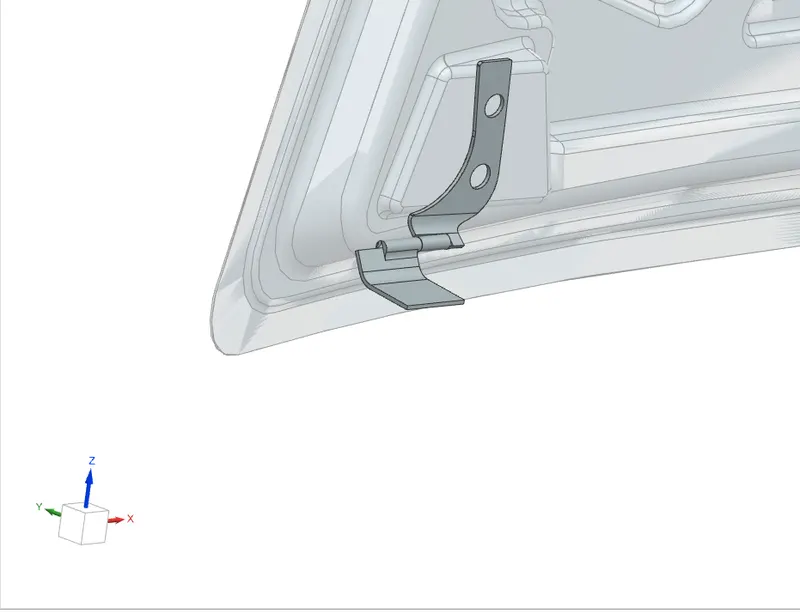
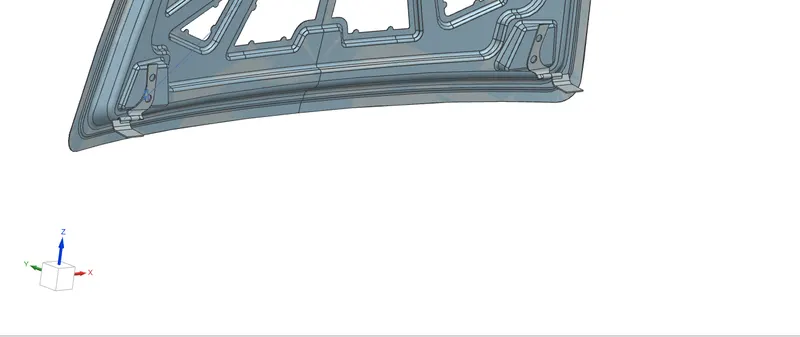
Hinge is a component that fixes the hood to the fenders of the car . The latch must be fixed perpenicular to the hinge axis so that the hood opens or closes correctly. Hinge assembly is attached at the each outwrd end of the hood and the engine compartment.
- HOOD SUPPORT
There are mainly two types of hoods are used in the automobile industry, they are support rod and gas stay ,support rods are more cheaper and most of the car manufactures are using the support rod for hood support , gas stays are commonly seen in luxury vehicles and when the weight of the hood is high for the manual opening and closing of the hood.
- MASTIC
Mastics are used for the joining of the inner panel and outer panel of the hood , they are a type of sealent , when applying condition it is in the form of liquid and after providing sufficient temperatures these mastic get into the solid state,
POSITIONING OF STRIKER AND HINGE ASSEMBLY
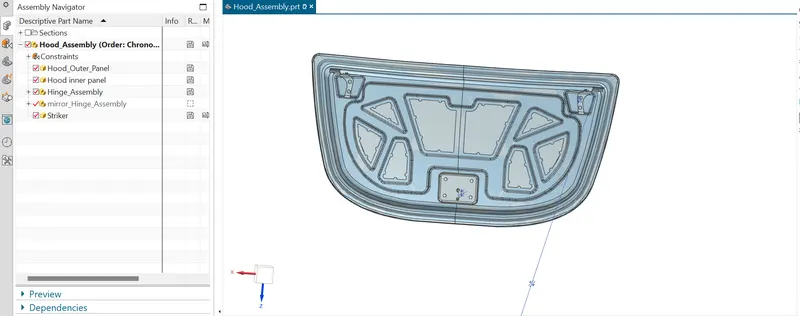
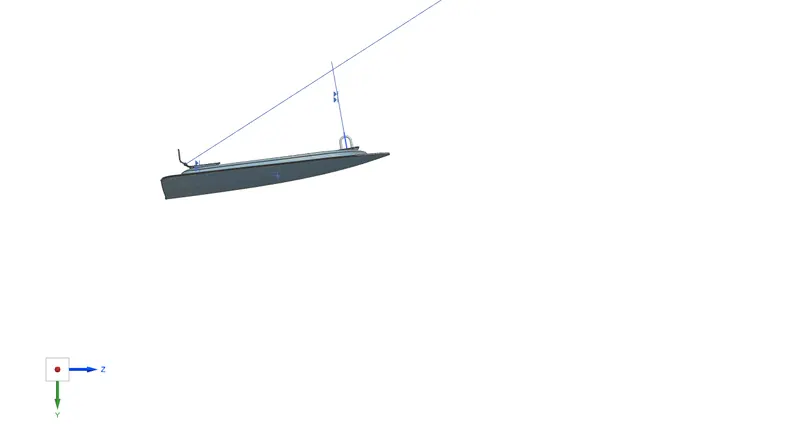
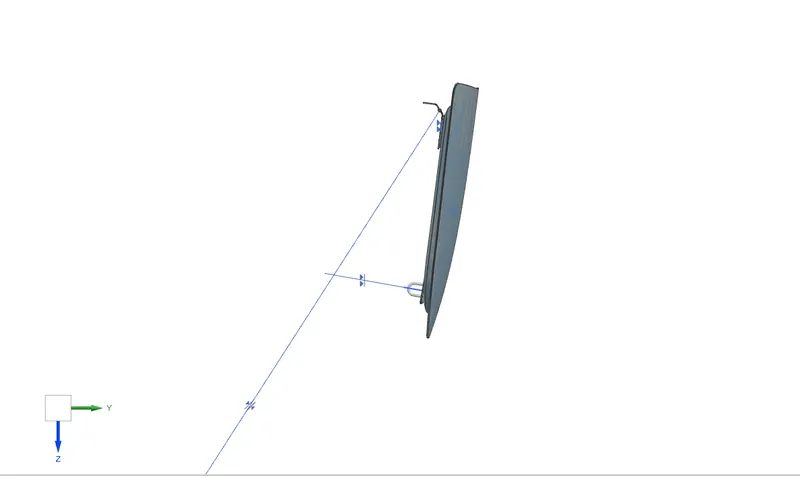
- The attachment of Hinge to the inner panel of the hood is done by these following procedures at first using the touch constrain the hinges are placed in the emboses that are create dfor the hinge placement and after that by using the parallel constrain the hinge assembly is assembled in the inner panel.
- The striker is assembled in the inner panel is by at first create a hinge axis across the two hinges asssembled and after that crate a circle is created at the mid point of that line and a tangent line is created in that circle and also a line is created in the striker and by using the align constrin the both the lines are aligned and the striker is placed accordingly using the move component tool.
SHEET METAL OPERATIONS
- HEMMING
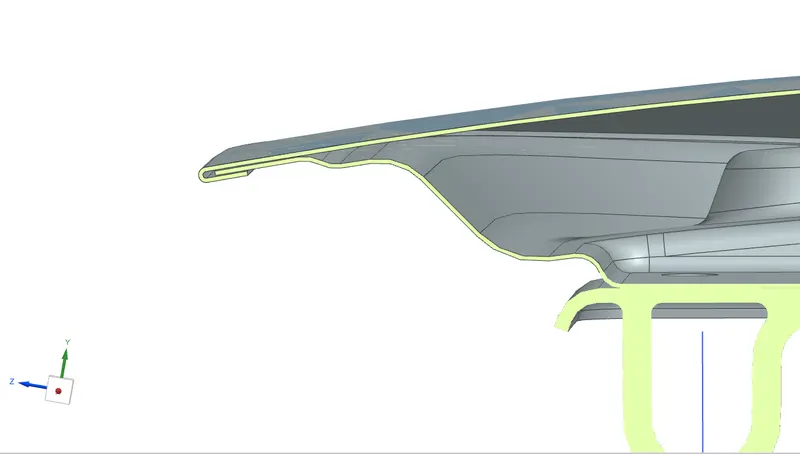
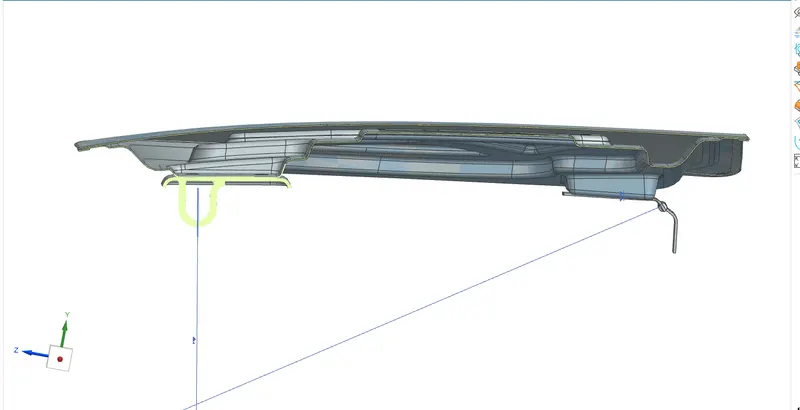
Hemming is used to fit the inner panel and outer panels together, hemmings are used in different parts of the automobiles mainly there are two types of hemming process roll hemming and the conventional die hemming , in the conventional method the hemming dies are used for the hemming process and in the case of roll hemmingrollers are used for the hemming, nowadays most of the automobile manufactures are following the roll hemming process , because they are more easier compared to the conventional die hemming.
In the case of hood the outerpanel is undegoing the hemming process it means the outer panel edge is fold using the rolller as shown below, here the hemming operations are also done as per the given master sections.
- EMBOSSING
Embossing is a kind of stamping process of applying the pressure to the flat sheet metal by the forming tool to create the projection on thhat sheet metal wherever required. The emboses are mainly created for incresing the strength and rigidity of the sheet metal and to change the direction of the impact fores during the collisions.
HOOD ASSEMBLY
CONCLUSION
Finally the hood is designed by following all the design considerations as per the industrial standards.