Hood design-Week 2
Hood Introduction:
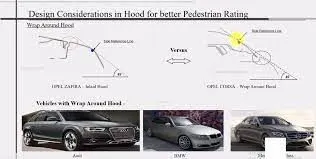
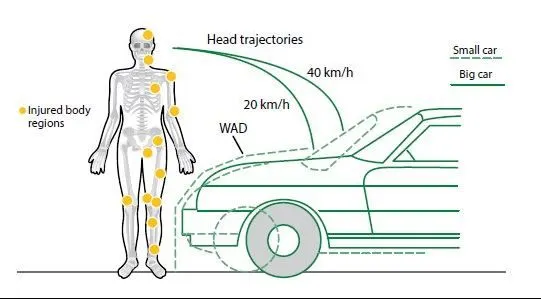
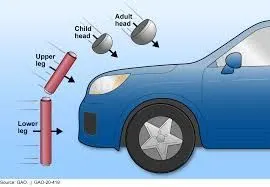
A hood is called as bonnet of the car. It is aesthetic part and styling surface of the car and acts as a cover for the engine compartment area. It also reduces the impact forces to the passenger who sits inside of the car when collosion is happen. It can be opened to access the engine compartment area in order to maintainance purpose and changing of parts or coolent oil change etc.., It is made up of steel, Aluminium or Carbon fiber material. Design of the car hood should be considered and fulfilled the Pedistrain safety as well as passenger safety. It plas vital role in the safety of the car.There are two types of hood. one is Inlaid hood and another one is Wrap around hood.
The hood assembly consits of Hood outer panel, Hood inner panel, Striker Assembly, Hinge assembly, Mastic seal and reinforcements. Hood outer panel is the styling surface of hood assembly. Hood inner panel is the reinforcement of the hood outer panel. Hood is opened and closed by actuation of hinge assembly. Support rod or Gas stay is used to keep the hood in opening condition.
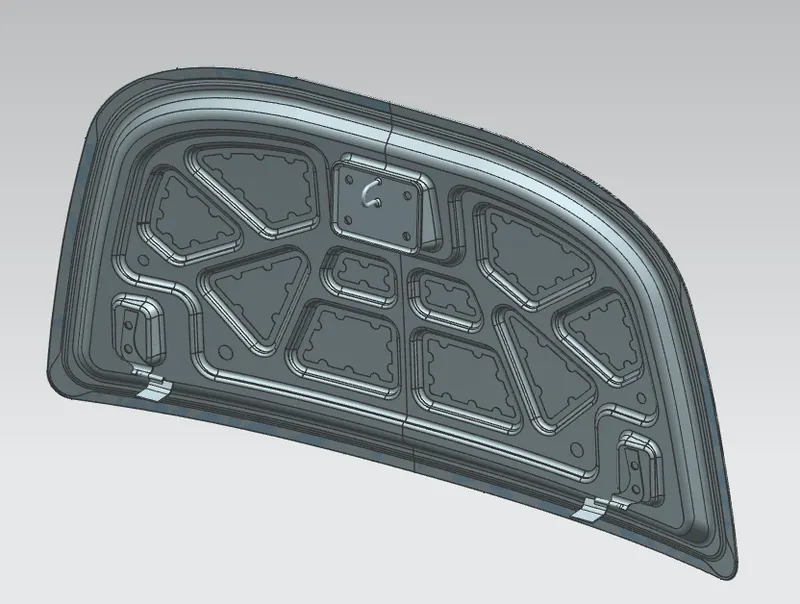
Hood Thickness Information
- Outer Panel Thickness = 0.75mm
- Inner Panel Thickness = 0.75mm
- Reinforcement Thickness = 1.5mm
1.Hood Outer Panel:
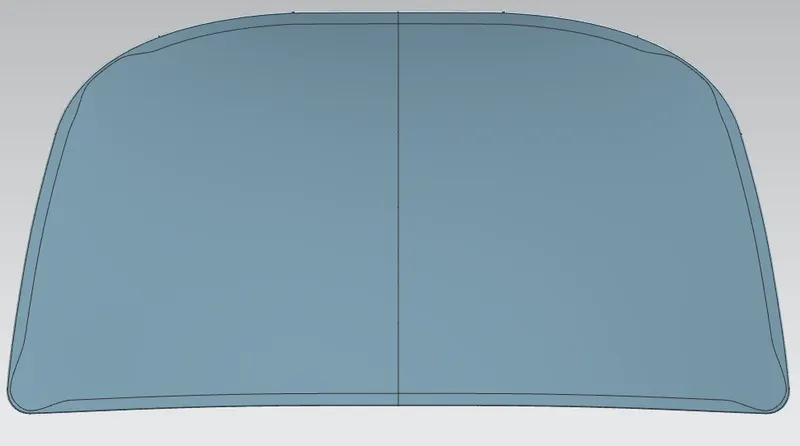
Hood outer panel is a Class-A of the hood assembly. Skin data will be given by the styling team. We have to check and redsign the outer panel to satisfy the Passenger safety who travels inside the car and pedestrain safety. It is joined by hemming with the Inner panel.
2.Hood Inner panel:
Hood inner panel is a class-B surface of the hood assembly. Inner panel should be designed to desipiate the forces towards side of the hood assembly when collision occurs. It should give the strength and rigidity.
3.Hinge Assembly:
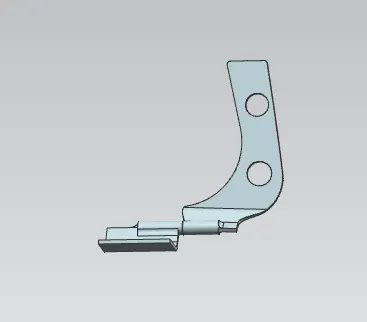
Hinge assembly is used to open and closing purpose of the hood. It gives the rotating actuation to the hood assembly. Hinge has two components one is fixed with Hood inner panel and another is fixed with engine compartment of BIW.
4.Latch Trajectory:
Latch mechanism is used to lock the hood. Latch should lock perfectly with Striker. If Latch is not perfectly closed it will create NVH. If NVH occurs it will reduce the value of Car. The axis of the striker should be tangential to Latch trajectory for perfect closing.
5.Reinforcements:
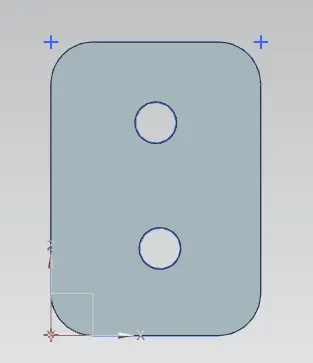
Reinforcements are used to strengthen the inner panel where the strength losses. It is provided for hinge and striker assembly. The thickness of the reinforcement is differs upon the loss of strength.
6.Mastic Seal:
It is a type of hard rubber glued between inner panel and outer panel to improve the NVH and strength of hood assembly. After placing rubber gets heated and stick strongly with two of them.
7.Draft Analysis:
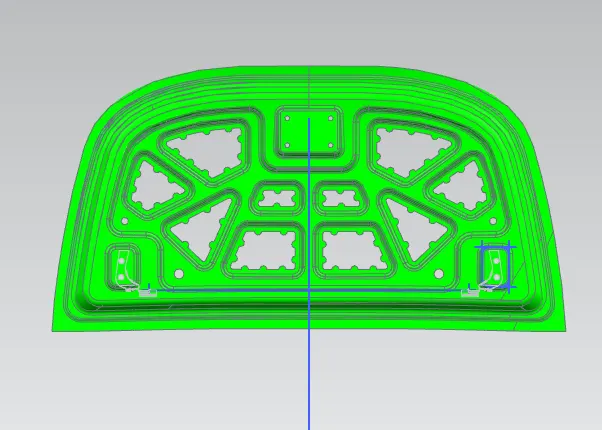
It is analysing method to analyse the created part can be drawing with out failure. If the part shows in green color it has positive angle. If any any shows in red color, it has negative angle. It can't be done in same drawing tool. We use seperate angle to achieve the shape.
Manufacturing Processes:
1.Deep drawing:
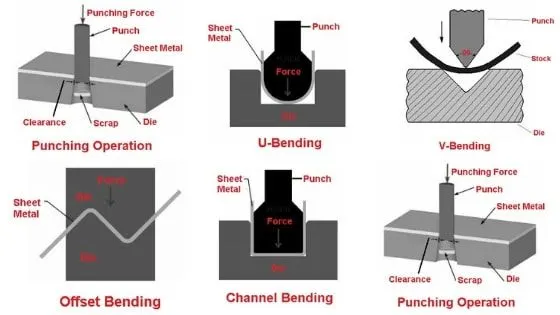
It is the most common process used in the sheetmetal process to acheive the desired shape. This is one of the forming technique. This method is widely used for Automobile, Aerospace industries. In this process, sheet is placed between upper and lower die. By, using hydraulic press machine tool is pressed to form the shape. Then the tool is removed from part. The deep drawing should be minimum 5 deg for sheet metal components. It improves the strength of sheetmetal.
2.Emboss:
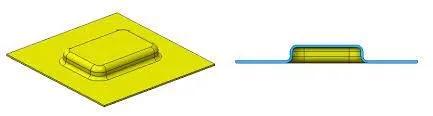
It is also one of the forming technique. Like, drawing process press machine is used to form the shape. Depending upon the dies, can create different types of embosses. There are many types of emboss.
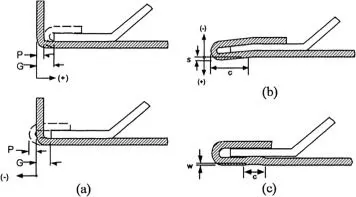
3.Hemming:
Hemming is also one of the forming techniques. It is achieved by 3 stages. It is mainly used to joint the two material. There are many types of hemming. Closed hem, Opened hem, Teardrop hem, Rope hem. Hemming can not be done easily on corners. To acheieve hem corner relief should be give.