Hood design-Week 2
HOOD DESIGN REPORT
A Hood is basically the front end of a vehicle that serves a multitude of purposes. Aesthetics, aerodynamic capabilities, providing safety of both the passengers as well as pedestrians and enabling servicability to name a few. Therefore, while designing a hood, it is necessary to take into consieration and satisfy certain design parmeters.
HOOD DESIGN PARAMETERS
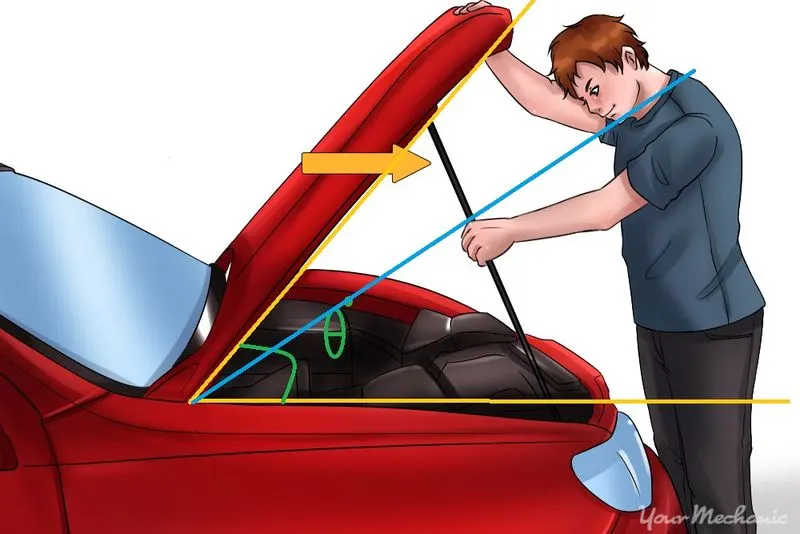
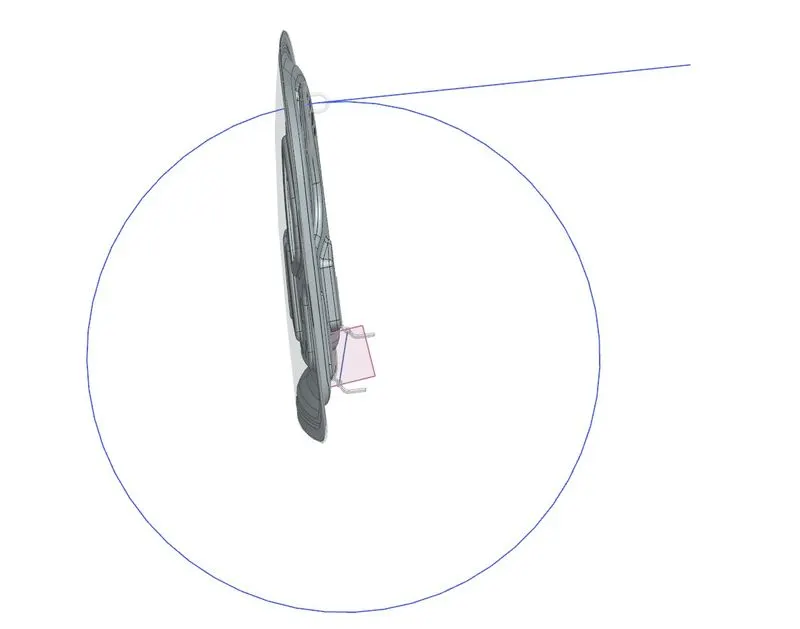
- Hood Opening Angle - It is basically the angle at which the hood opens. It is necessary to provide such an angle that facilitates easy access and visibility like the angle theta marked in green. This enables servicemen to have enough room for maneuvering and seeing within the hood. The angle created by the line marked in blue will not be suitable as it restricts both access and visibility. This angle varies from region to region. Support rods or Gas stays are used for keeping the hood in the open position.
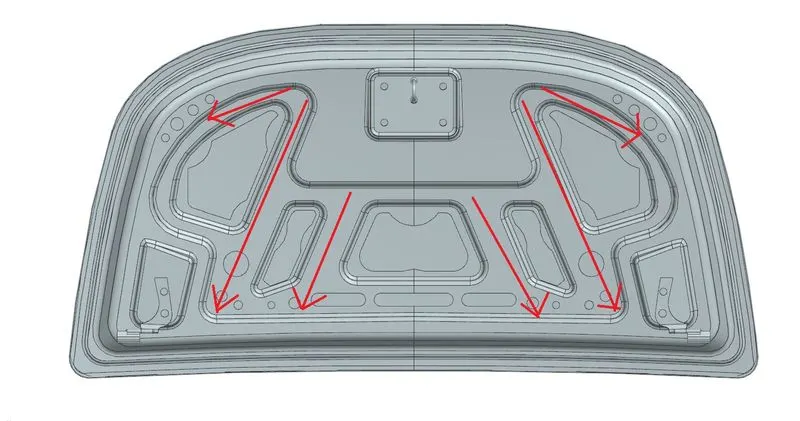
- Safety - This parameter can be viewed from two angles. One of the passenger and the other of the pedestrian. The passenger safety is provided by incorporating design elements in the inner panel of the hood like embossments which help in redirecting the impact in case of a crash to the outer sides of the vehicle and it also absorbs the impact up to an extent by crumbling.
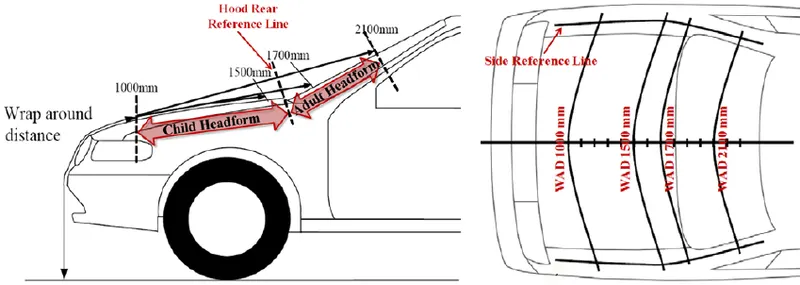
 Now for the pedestrian safety, the concept of wrap around distance helps in factoring in the location of reinforcements so that in the probable event of an accident, the head does'nt impact reinforced regions. This is considered for both adult and children
 The NCAP safety ratings are based on this principle that the most probable areas of head injury must be low impact to ensure survival.The automobiles that can provide low impact for theheadform region scores higher on the safety rating.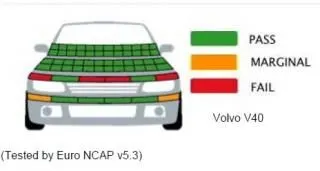
- Embossment - These are the raised or sunken designs in the inner panel of the hood. Their primary purpose is to strengthen the sheet metal locally. The latch and hinges are mounted on such embossments. The higher embosses on the inner panel acts as a facilitator for Mastic Sealant for joining with the outer panel. Embossments should be atleast 6 - 8 mm away from edges and 5-10 mm away from holes to prevent springback and shearing failure.
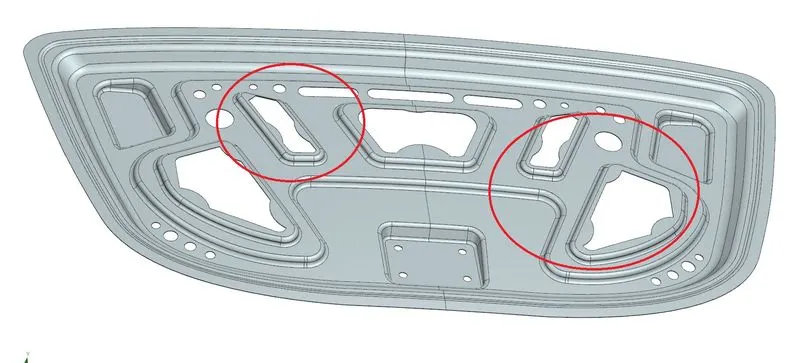
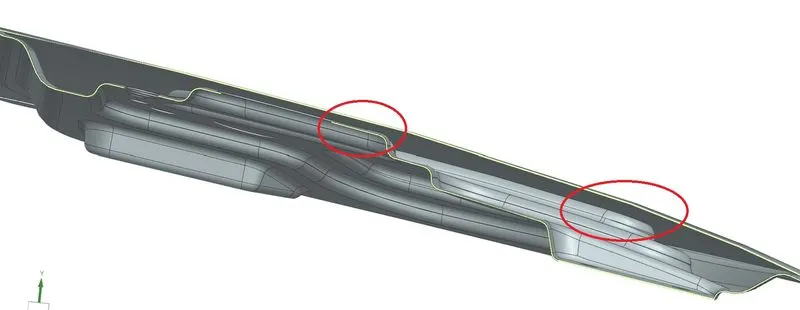
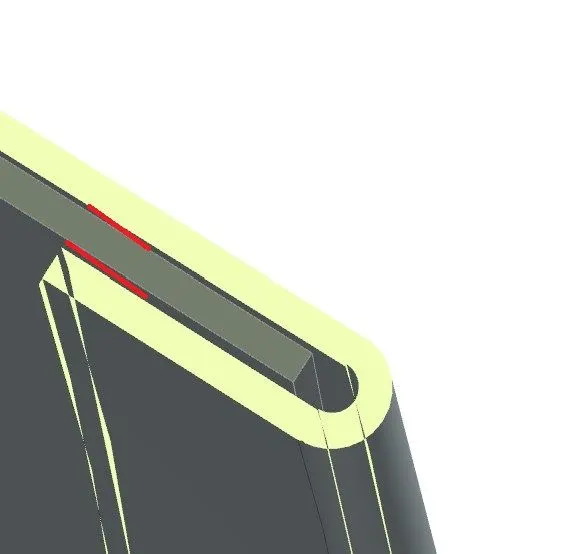
- Noise, Vibration & Harshness - Noise is basically the unwanted or undesired sound. Vibration is what produces these noises but they are more felt rather than heard. Harshness is generally used to describe the severity or discomfort felt with these. How is this applicable to hoods? Since there are two panels for a hood one inner and the other outer, they have to be joined together. In the event of an improper joining, undesired movement may occur which leads to NVH. Therefore joining must be carried out in ways NVH is bare minimum. The application of mastic sealant between the hood panels and also hem glue in between the hemmed region can create a proper joining whose position is highlighted below.
HOOD AND IT'S COMPONENTS
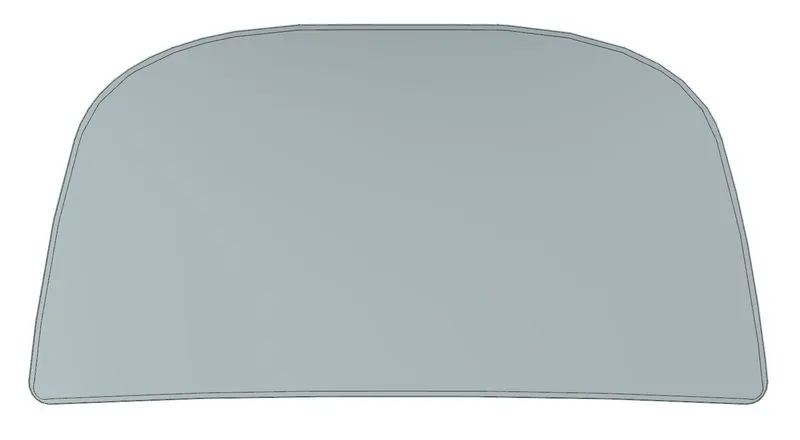
- Hood Outer Panel - It is the aesthetic part of the hood. The sheet metal thickness is between 0.65 - 0.75 mm. It is joined to the inner panel by hemming and mastic sealant. For the hemming corners, a relief has been provided to prevent wrinkling and folding over of the sheet.
- Hood Inner Panel - It is the structural part of the hood. It follows the master sketch for the hood with a maximum distance of 25 mm between the panels. The sheet metal thickness is between 0.65 - 0.75 mm. All embossing are carried out in this part. It houses the the hinges and striker. The crashworthiness of a vehicle is solely dependant on the design of the inner panel.
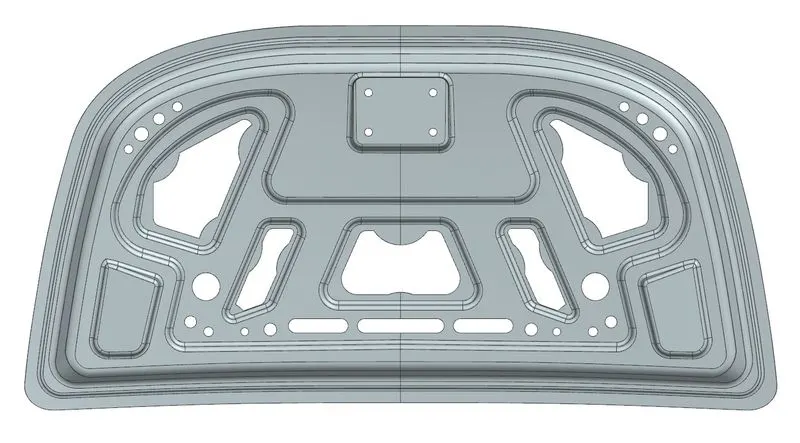
- Mastic Sealant - As the name implies, it is a sealant that is used to join both the panels of the hood. It is made of rubber and is usually applied as a paste and covers most of the hood. Once expanded it can cover upto 80 mm in diameter and 5 mm in height. Therefore, it is to be ensured that the distance between the two is at least 5 mm.
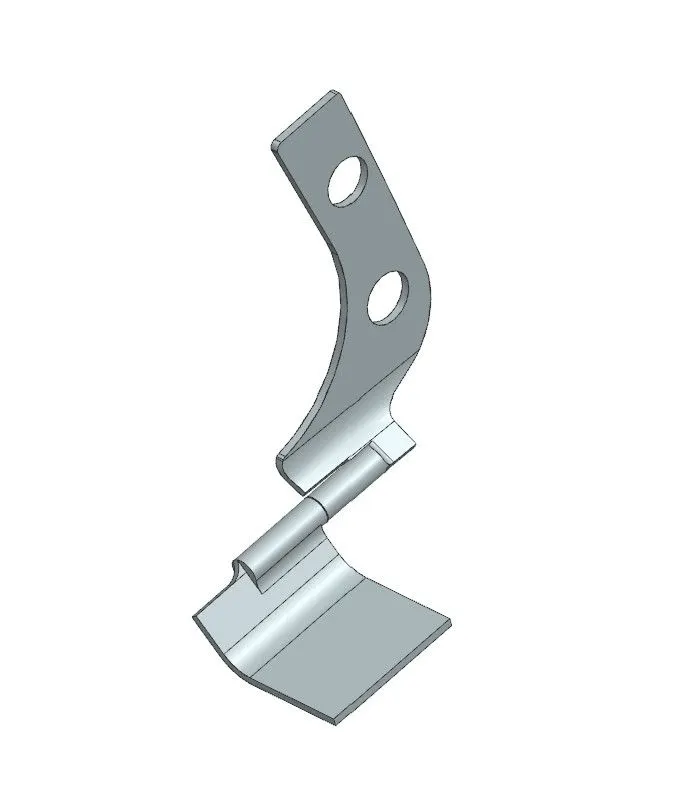
- Hinges- The hinges consists of two flanges. One that connects with the hood and the other to the engine compartment. Both the hinges at either sides of the hood must be along the same axis of rotation for its proper functioning. It is based on this axis that the position of striker is fixed.
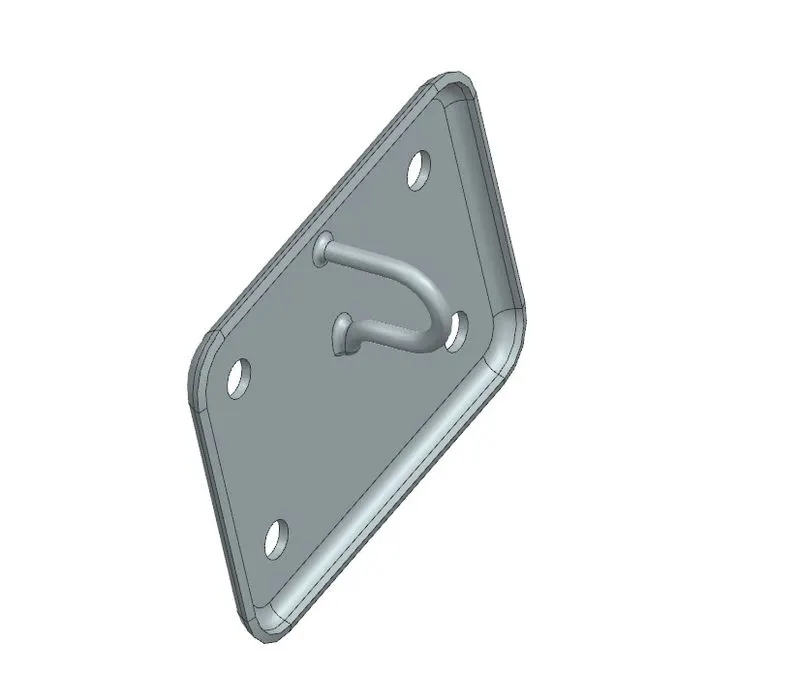
- Striker - The latch and striker together forms the locking of hood to the engine compartment. The striker must be tangential to the circle created by taking the axis of the hinges as centre at all times to ensure proper functioning. The radius of the circle is dependant on where the latch is located.
MANUFACTURING PROCESS
Deep Drawing
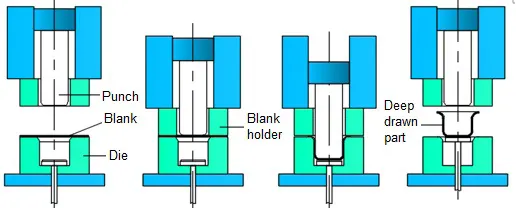
It is the process by which a flat sheet of steel is transformed into a deep often complex shape in which the flat sheet is drawn in from the edges and sucked in to create a deep shape that otherwise may not be possible using normal metal forming techniques.
-
The punch pushes the sheet metal blank downward and forces it into a die cavity which ultimately forms a shape of the desired part.
-
During the deep drawing operation, the tensile forces cause the sheet metal blank to plastically deform into a cup shaped part.
-
Generally the term deep drawing is referred to a drawn part which has depth more than its diameter.
-
The parts drawn by using a deep drawing process can have different cross sections like straight cross section, tapered cross section as well as cylindrical and rectangular parts can be drawn.
-
For deep drawing operation, the ductile metals like brass, copper, aluminum and mild steel show good drawability even at room temperature.
- Applications : Soda cans, Kitchen sinks, Kitchen utensils, etc.
Hemming
Hemming is a forming operation in which the edges of the sheet are folded or folded over another part in order to achieve a tight fit. Hemming operations are used to connect parts together, to improve the appearance of a part and to reinforce part edges.
- Hemming is used in assembly as a secondary operation after deep drawing
- There are mainly two types of hemming process namely conventional die hemming and roll hemming.
- Conventional die hemming is suitable for mass production. In die hemming, the flange is folded over the entire length with a hemming tool.
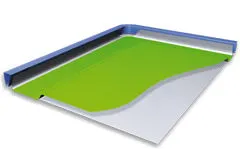
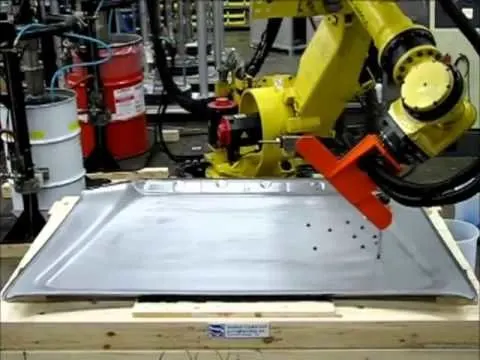
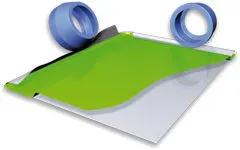
- Roll hemming is carried out incrementally with a hemming roller. An industrial robot guides the hemming roller and forms the flange. Roll hemming operation can also be divided into several pre-hemming and final hemming process steps.
- Applications : hoods, doors, trunk lids and fenders.