Hood design-Week 2
AIM:
To Design Hood outer panel, inner panel and the necessary reinforcements with the given outer hood skin and with the design parameters.
HOOD:
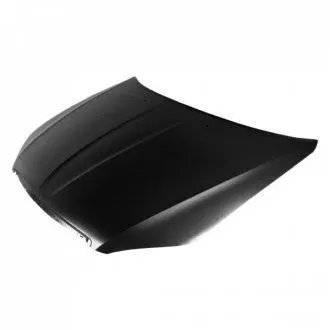
The hood or bonnet is the hinged cover over the engine of motor vehicles. Hoods can open to allow access to the engine compartment, or trunk on rear-engine and some mid-engine vehicles for maintenance and repair.
Hoods are typically made out of the same material as the rest of the body work. This may include steel, aluminium, fiberglass or carbon fiber. However, some aftermarket companies produce replacements for steel hoods in fiberglass or carbon fiber to make the vehicle lighter.
Software Used:
Siemens NX CAD 12.0
Design Parameters:
Hood Thickness Information
- Outer Panel Thickness = 0.75mm
- Inner Panel Thickness = 0.75mm
- Reinforcement Thickness = 1.5mm
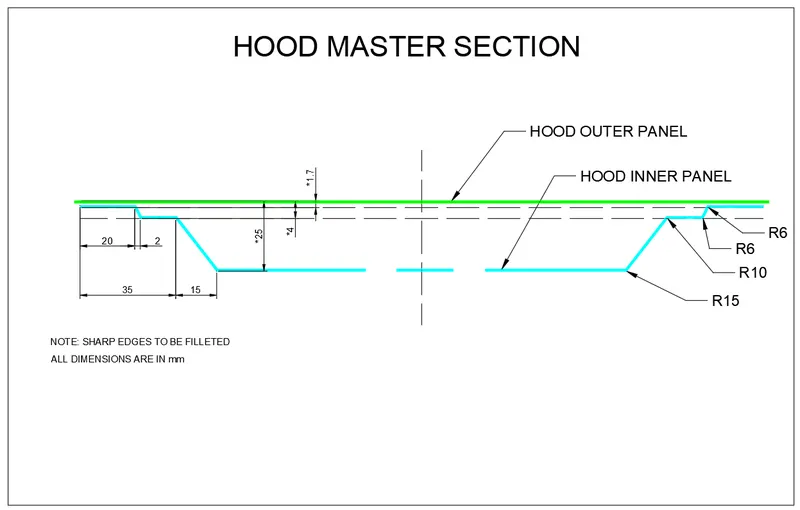
Master Section:
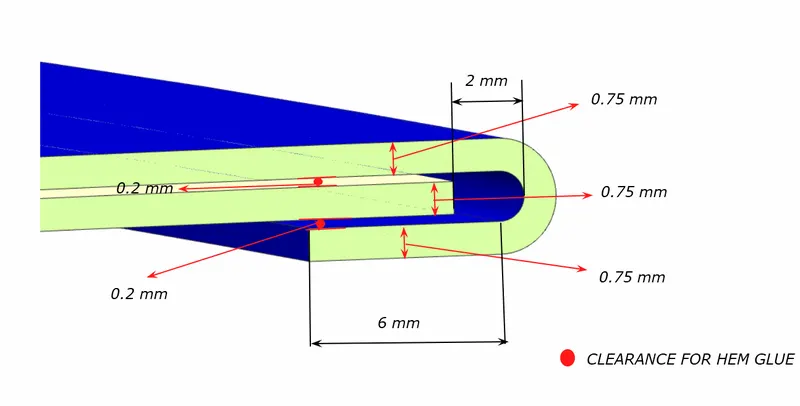
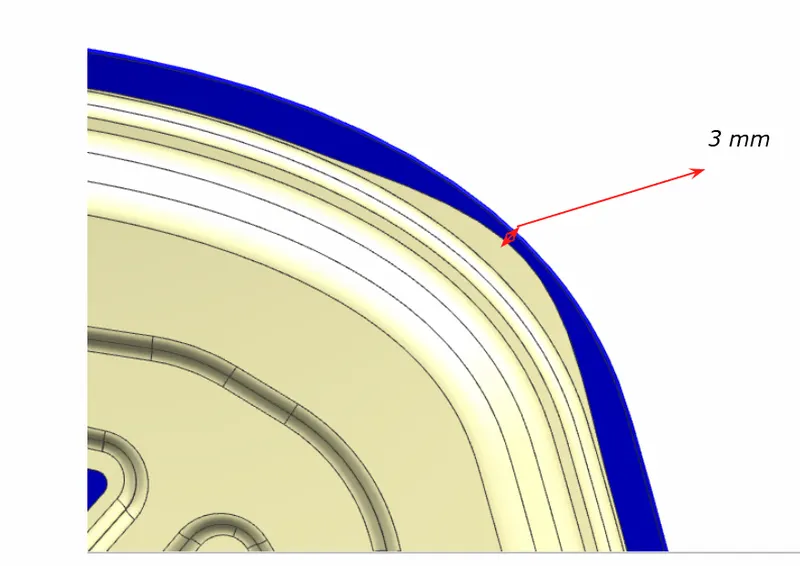
Hemming Requirements:
Relief Rear Section:
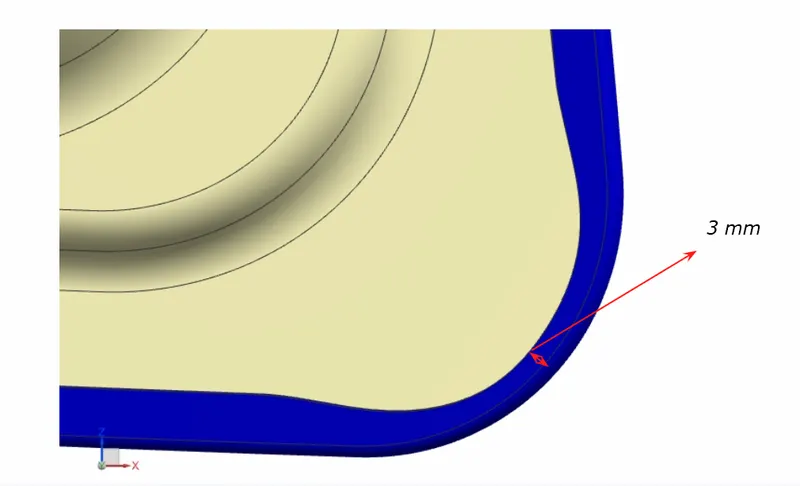
Relief Front:
Purpose Of Hood Design:
- Save and safety of purposes inside the car.
- Cover all engine parts and radiators.
- Reduce the Air effect due to design aerodynamic shape.
- provide access to the engine for repair and maintenance.
- reduces engine noise, providing you with a quieter drive.
- It can also help keep the paint underhood last longer.
Components Of Hood:
- Hood Outer Panel
- Hood Inner Panel
- Latch & Stricker reinforcement
- Hinge reinforcement
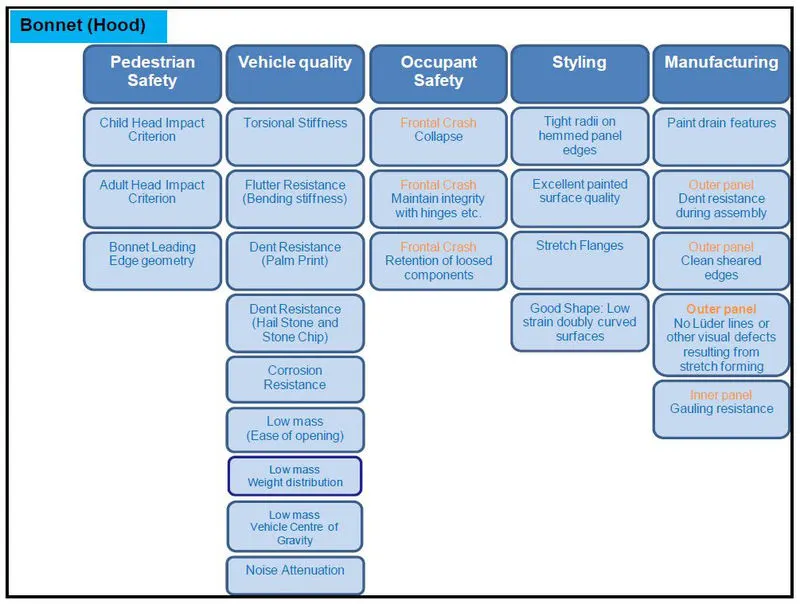
Design Consideration For a Hood:
- Pedestrian Safety
- Vehicle quality
- Occupant safety
- Styling.
- Manufacturing
Manufacturing Process:
Deep Drawing:
Deep drawing is one of the most widely used processes in sheet metal forming. Apart from its use in many other sectors, it is applied in the automotive industry for the manufacturing of car body parts.Deep drawing of sheet metal is used to form object with depth. It is a plastic deformation in which a flat sheetmetal or plate is formed into a recessed three dimensionpart with a depth several times the thickness of the metal.
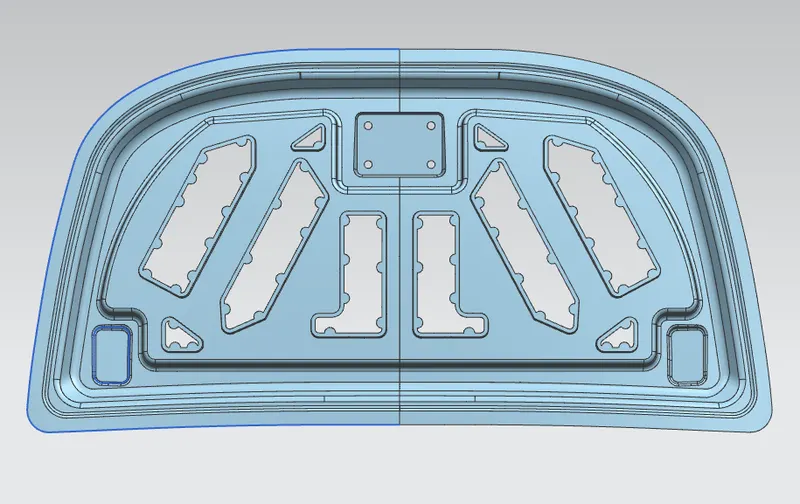
The process of deep draing begins with a flat sheetmetal held on the upper surface of the die. It is used in manufacturing inner panel.
Hemming:
Hemming is a Sheet metal forming process in which sheets are joined by bending it to 180 degree. Automotive body panels and automative parts such as deck-lids, trunk-lids, doors, hoods and tailgates are formed by the hemming process, in this process usually a sheet is bent with the help of inner and outer sheet.
Hemming is a forming operation in which the edges of the sheet are folded over another part in achieve a tight fit.
Embossing:
Sheet metal embossing is a stamping process for producing raised or sunken designs or relief in sheetmetal. This Process can be made by means of matched male and female roller dies or by passing sheet or a strip of metal between rolls of the desired pattern.
Metal sheet is drawn through the male and female roller dies producing a pattern or design on the metal sheet. Depending on the roller dies used, different patterns can be produced on the metal sheet.
Mastic Sealants:
A mastic sealant is a type of liquid sealant that cures in an elastic state, thus making it flexible while holding the bond of the surfaces that has attached together. It adheres to just about any material making an all-purpose type of sealant.
Designed Parts:
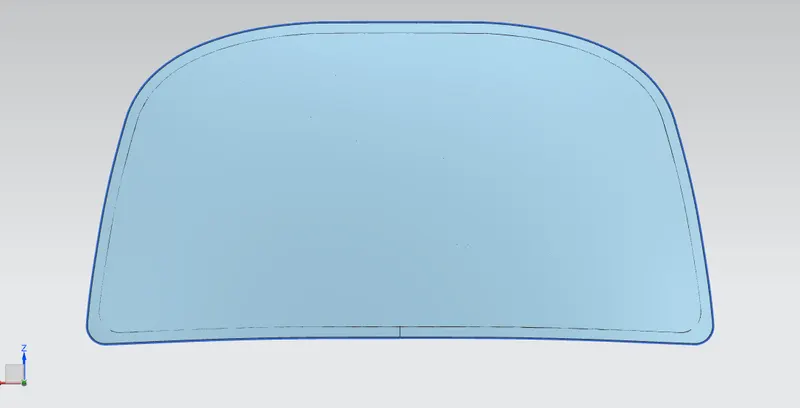
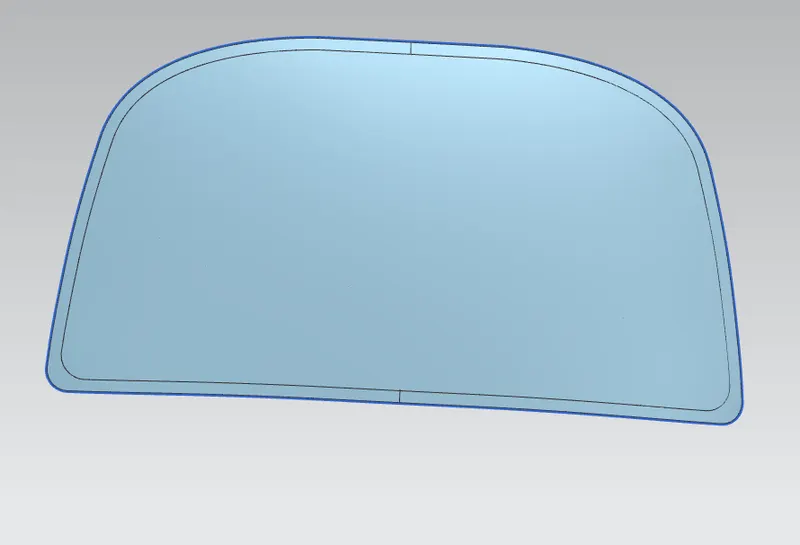
HOOD OUTER PANEL
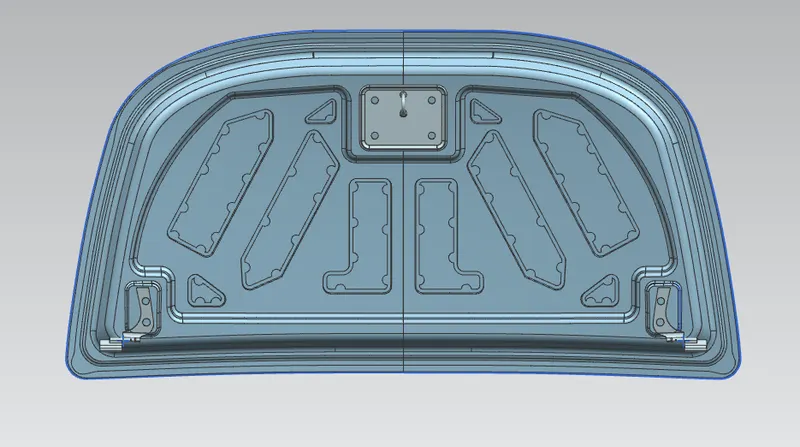
HOOD INNER PANEL
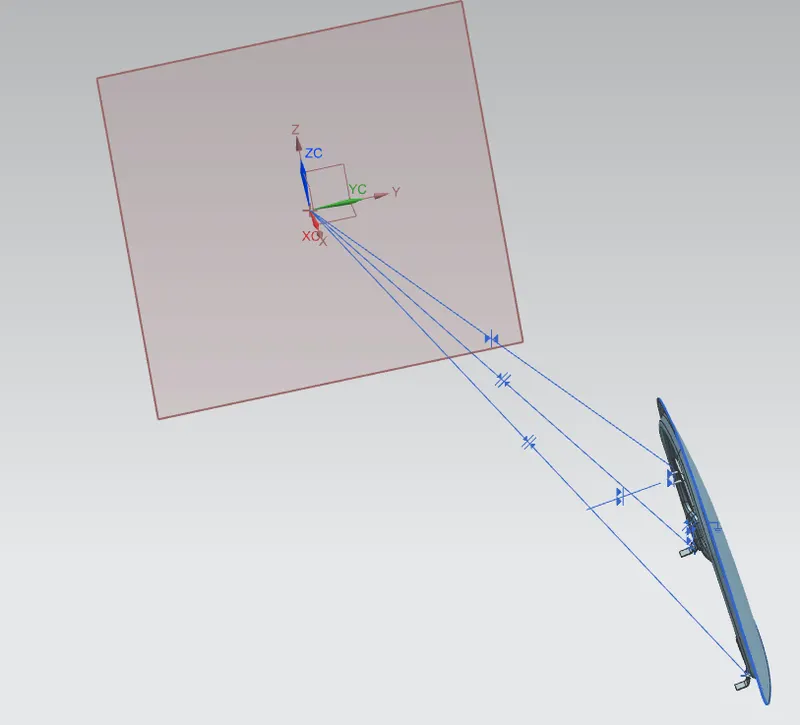
Hinge Axis and trajectory:
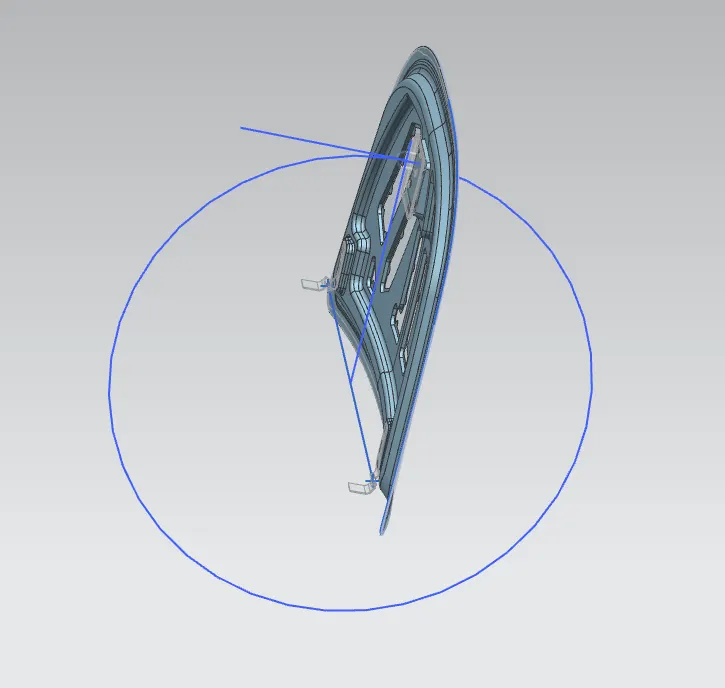
Assembly Constraints Given:
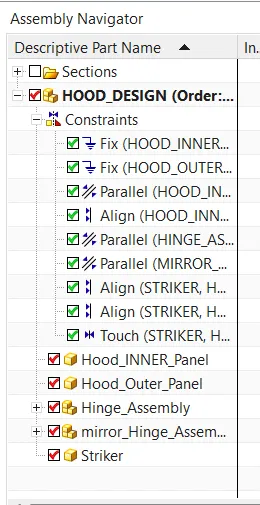
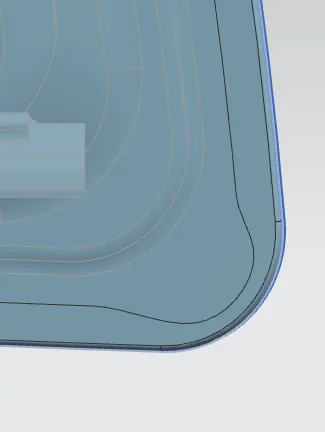
Relief Given:
Hood with Striker and Hinge Assembly:
Conclusion:
Thus the hood is designed considering passenger and pedestrian safety as per the master section and striker also place in the path of trajectory of the hinge axis.