Hood design-Week 2
Design Indention
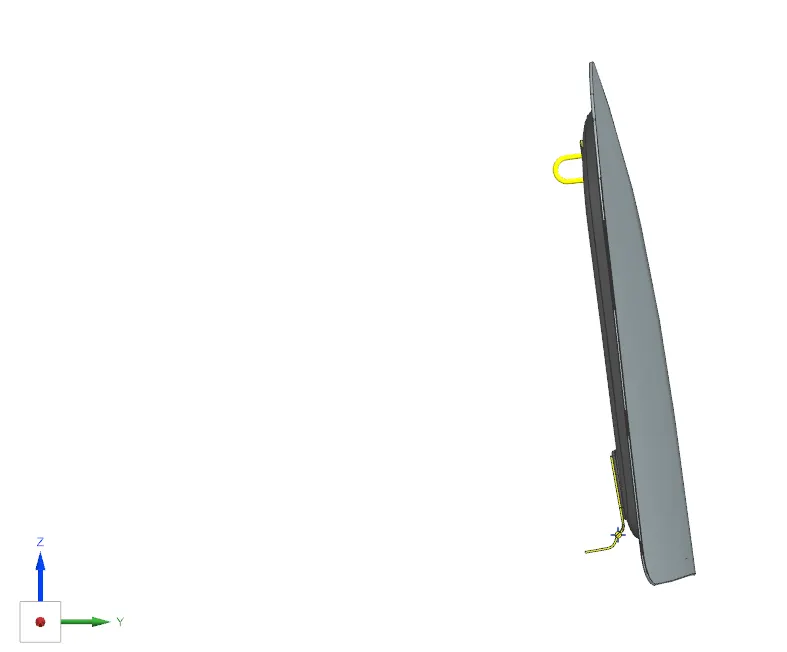
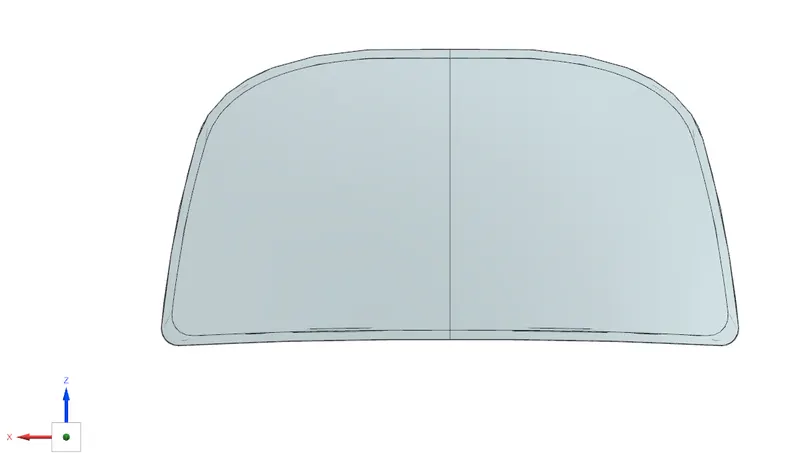
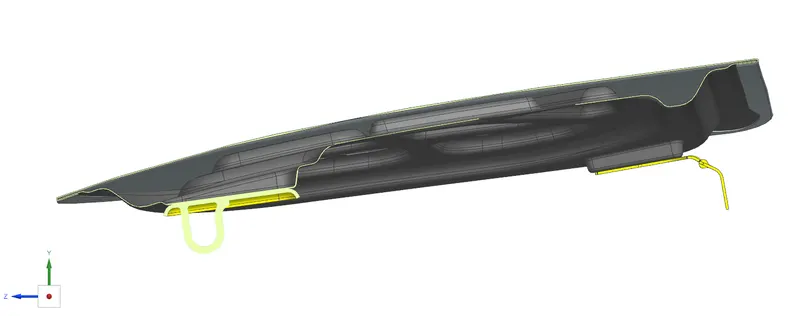
Design the hood for the given "Class A Surface" with proper design standers and dimensions.
Introduction:
The Hood is the important component of the car that is used to protect the Engine and Engine Parts. The Hood Design also give an impact on car performance.
Car Hood Components:
- Outer panel
- Inner panel
- Striker
- Hinge
Outer Panel:
The outer Panel is the most important part of the hood to make the car have a very good aesthetic appearance.
Inner panel
Inner Panel is the major part that gives rigidity to the hood and It is used to divert the impact outwards of the body of the car however possible.
The research is done and being carried out in the inner panel only to achieve pedestrian safety and passenger safety to make the standards.
Striker
striker is used for locking the hood with the car. It is usually placed in the space provided on the inner panel.
Hinge
A hinge is a component that fixes the hood to the fenders of the car. The latch must be fixed perpendicular to the hinge axis so that the hood opens or closes properly.
Hemming
Hemming is a forming operation in which the edges of the sheet are folded or folded over another part in order to achieve a tight fit. Normally hemming operations are used to connect parts together, improve the appearance of a part, and reinforce part edges.
In car part production, hemming is used in assembly as a secondary operation after deep drawing, trimming, and flanging operations to join two sheet metal parts (outer and inner) together. Typical parts for this type of assembly are hoods, doors, trunk lids, and fenders.
There are various types of hemming operations:
- Conventional die hemming
- Roll hemming
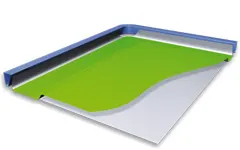
In conventional die hemming, the flange is folded over the entire length with a hemming tool.
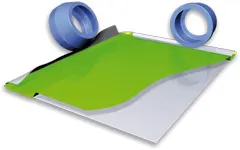
In roll hemming, the hemming roller is guided by an industrial robot to form the flange.
Conventional die hemming
Conventional die hemming is suitable for mass production. In die hemming, the flange is folded over the entire length with a hemming tool. Normally the actual hemming is a result of a forming operation in which the flange is formed with a hemming tool after the drawing and trimming operations have been completed. The formed flange is then hemmed in several process steps. These steps include, for example, the pre-hemming and final hemming depending on the respective opening angle of the flange. Production plants for conventional die hemming are very expensive, but the cycle times are very low.
Roll hemming
Roll hemming is carried out incrementally with a hemming roller. An industrial robot guides the hemming roller and forms the flange. Roll hemming operation can also be divided into several pre-hemming and final hemming process steps. Roll hemming is very flexible to use and tool costs are significantly lower as compared to those of conventional die hemming. However, the cycle times are much higher since the hemming is realized using a hemming roller that follows a defined path.
Conclusion
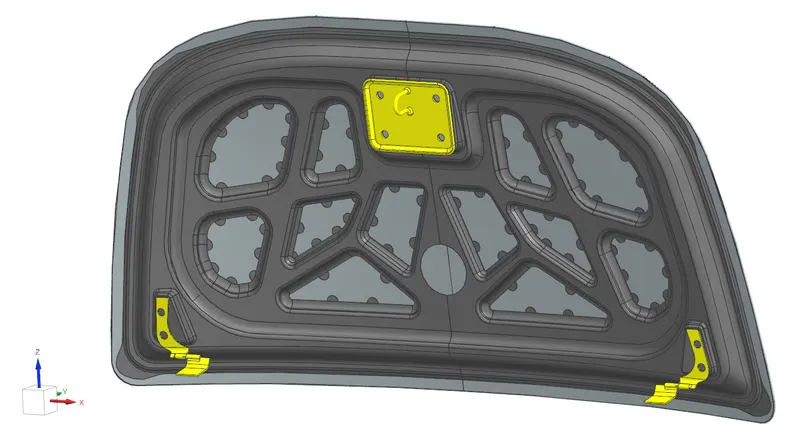
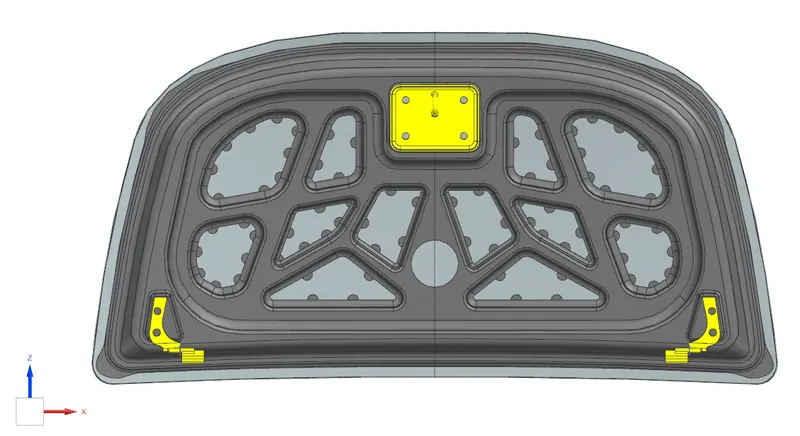
The Hood has been designed using NX Siemens with all of the design standards