Hood design-Week 2
Hood Design using NX:
Hood:
Hood of a car, also known as bonnet, is the front part of the car. The hood covers the engine compartment of the car. There are some aspects to be considered in designing the hood, such as the pedestrian safety, Hood open angle. The hood can be kept open with help of supports namely supporting rod, Gas stay. Most cars are produced with supporting rod as it is more affordable than gas stay. The below are the parts of the hood.
Hood and its components:
- Outer Panel
- Inner Panel
- Reinforcement
- Striker
- Hinge Assembly
Outer Panel:
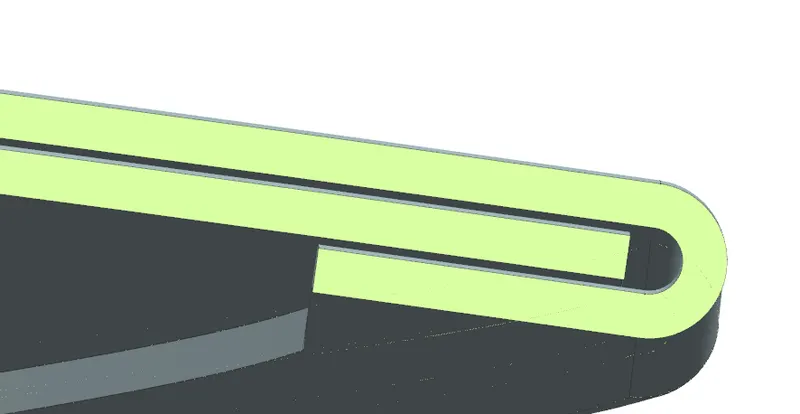
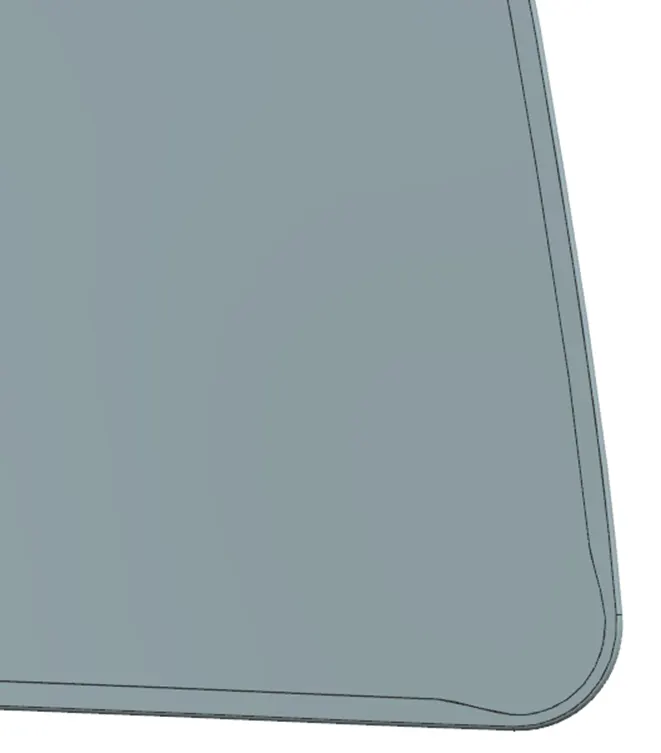
Outer panel is an aesthetic part of the car. The outer panel skin is provided by the styling team. The outer panel is joined with inner panel by hemming. Hence to avoid the build of stress concentration, relief is given in the corners. The thickness of the outer panel is 0.75mm. Outer panel is joined with the inner panel with help of mastic sealants, which can also reduce the vibration. Below is the outer panel showing the region where corner relief is provided.
Inner Panel:
The inner panel is the component which provides strength to the outer panel. The inner panel is provided with embosses to stiffen them. The inner panel holds the hinge assembly and the striker. Reinforcements provided to hold the hinge assembly and the striker. The inner panel is designed by using the outer panel skin and the data from the master sketch.
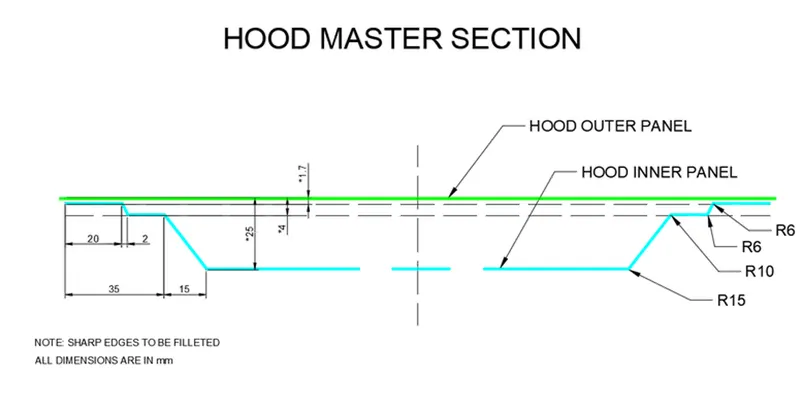
The assembly of the hood.
The challenging part is the assembly of the striker.
Latch Trajectory:
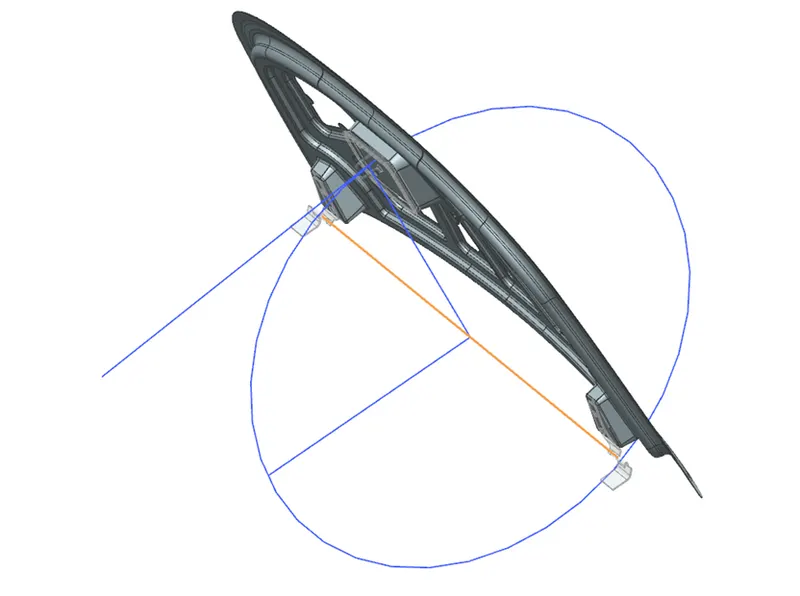
The striker in the assembly of the hood has to be locked in the latch properly. For proper assembly, the position of the striker is assembled in such a way that it is tangent to the circle, whose center point is the midpoint of the hinge axis.
Mastic Sealants:
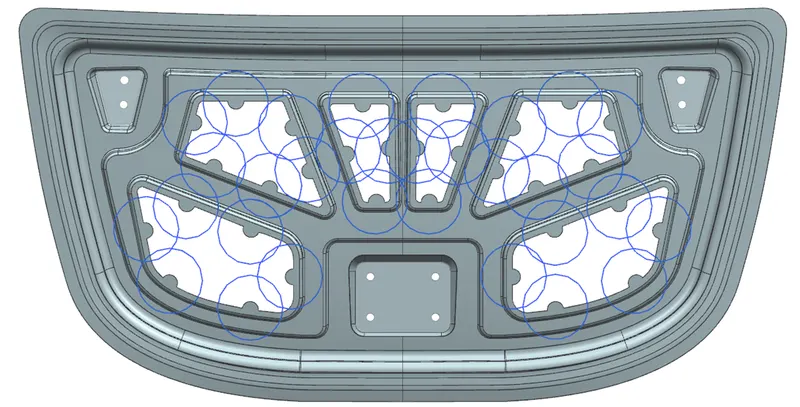
The Outer panel and inner panel of the hood cannot be joined by welding, as the outer panel is an aesthetic part, where the mastic sealants come to play. The mastic sealants are rubber like elastic materials, which help in reducing the vibration. They also help in joining the outer and inner panel along with the hemming process done on the outer edges. Each mastic sealant can provide the support and its effect is around a circle region of 60-80 diameters.
Emboss:
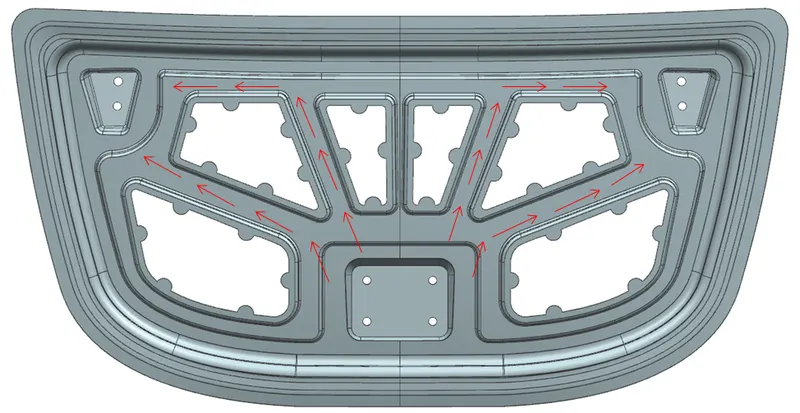
Emboss is a design feature which is used to provide stiffness to the components. The emboss provided in the inner panel is not only for stiffness but also for redirecting the forces, due to frontal crash, to the hinges and also outwards. So the forces reaching the passengers would be reduced. Emboss is also provided in the areas where the hinges and striker get assembled in the inner panel.
Manufacturing process mostly used in producing the hood are:
- Deep Drawing
- Hemming
Deep Drawing:
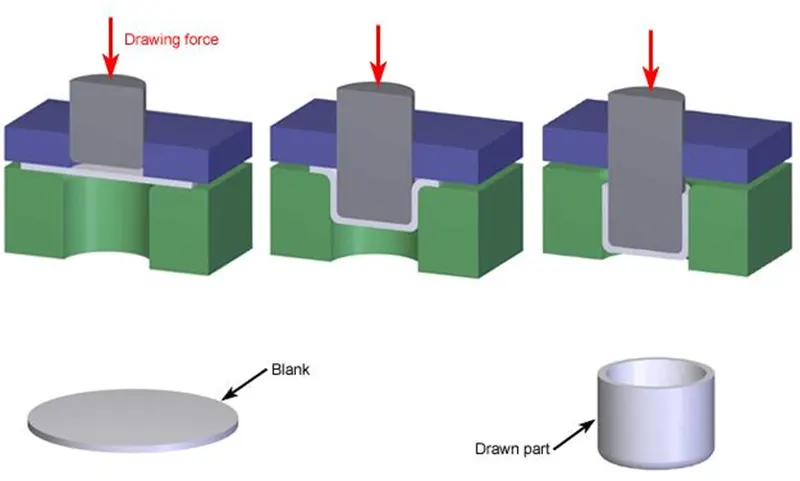
Deep drawing is a sheet metal forming process. It is a forming process which occurs under a combination of tensile and compressive conditions.
Hemming:
Hemming is also a sheet metal forming process where the sheet metal is joined with other sheet metal by bending it to 180 degrees. Hemming provides a tight fitment between the two components.