Fender Design - Wheel Arch Challenge
Wheel Arch:
Wheel arch is an arch-shaped, usually a semi-circle, cavity in the fender of the vehicle which houses the wheel.
Wheel arch is a criterion to be given importance while designing a fender of a vehicle. The wheel should be inside the fender, so that the chipping level will be low. This is indeed good for the safety of the pedestrians as well as the vehicle.
In ensuring the safety of the pedestrians there are different regulations followed for different locations:
- Japan
- European
- United States
Japan Regulations:
As per the Japan regulations for fender design, the requirements are,
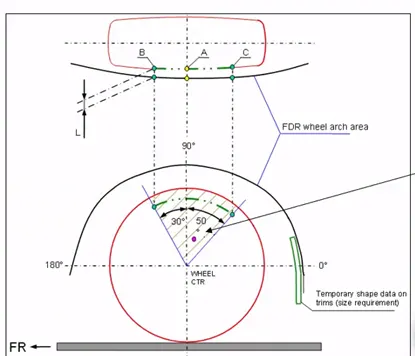
The ‘L’ value should be greater than 5 mm; there are specific regions to check the value of ‘L’.
Taking the vertical center axis of the wheel, two lines should be considered which must be 30° (front) and 50° (rear) from the center vertical axis respectively. The points got by intersection should be plotted and the distance is measured. As previously mentioned, the value must be greater than 5mm at all the locations to satisfy the Japan requirements.
|
Point |
Location |
|
A |
90 ° |
|
B |
30 ° front from center vertical axis |
|
C |
50 ° rear from center vertical axis |
European Regulations:
As per the European regulations for fender design, the requirements are,
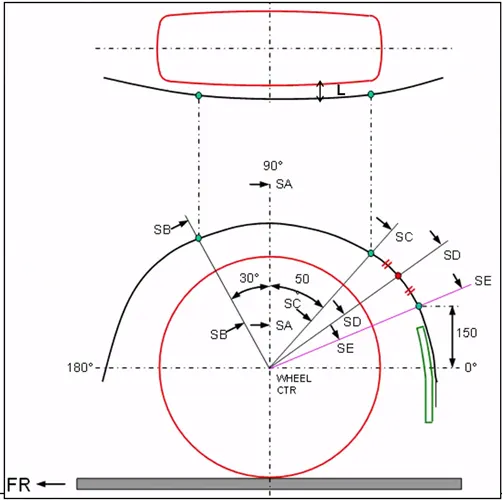
The ‘L’ value should be greater than 10 mm; there are specific regions to check the value of ‘L’. The number of points is more as compared to Japan regulation requirements.
Taking the vertical centre axis of the wheel, two lines should be considered which must be 30° (front) and 50° (rear) from the center vertical axis respectively. A point should be taken 150mm above the horizontal central axis of the wheel. There should be another line which should bisect the 50° line and the line from 150 mm point. The points got by intersection should be plotted and the distance is measured. As previously mentioned, the value must be greater than 10 mm at all the locations to satisfy the European requirements.
|
Point |
Location |
|
SA |
90 ° |
|
SB |
30 ° front from center vertical axis |
|
SC |
50 ° rear from center vertical axis |
|
SD |
Line bisecting SC & SE |
|
SE |
150 mm from the central horizontal axis |
United State Regulations:
As per the US regulations for fender design, the requirements are,
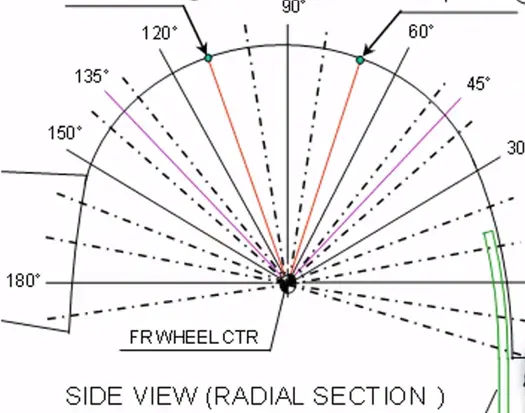
The ‘L’ value should be greater than 5 mm; there are specific regions to check the value of ‘L’. The number of points is more as compared to Japan & European regulation requirements. The same procedure to be followed but the difference is that, it should be done for every 10° from -100° to 100°.
Calculating the Wheel Arch gap:
Given file:
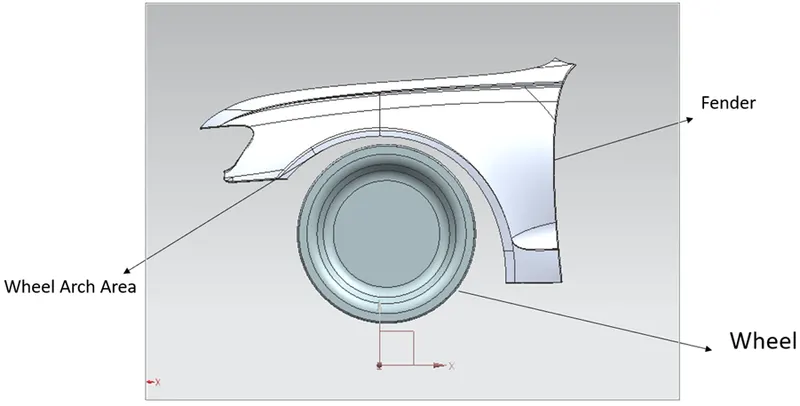
Points should be plotted as per the European regulations requirement and the distance should be measured.
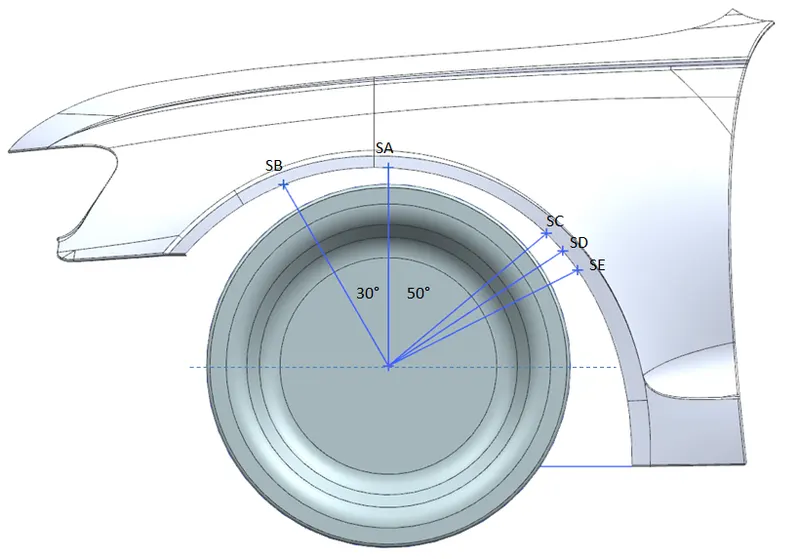
Measuring the distance at the specific regions:
Below is the summary:
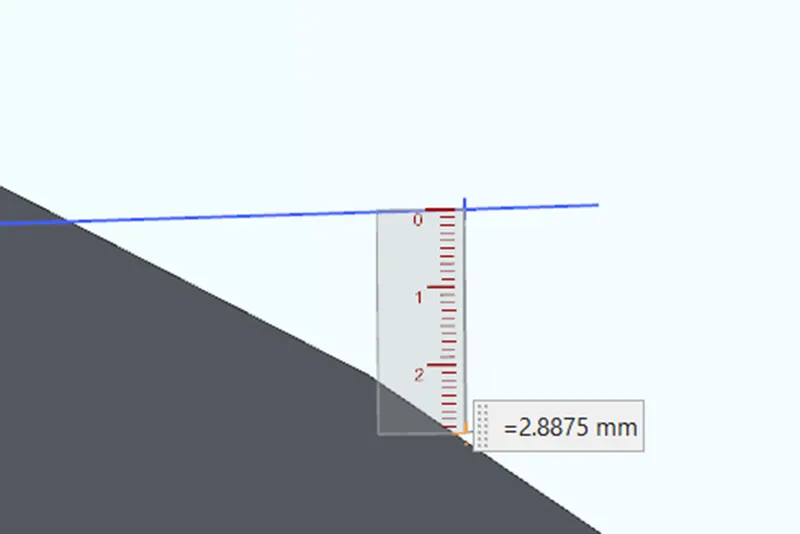
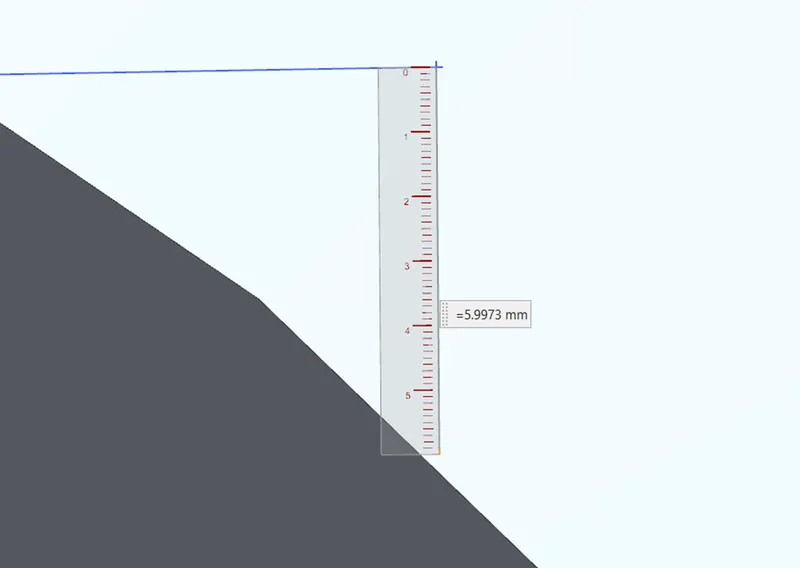
(Negative sign is given for the locations where the wheel is outside of the fender)
|
Point |
Measurement |
European regulation requirement conditions |
Remarks |
|
SA |
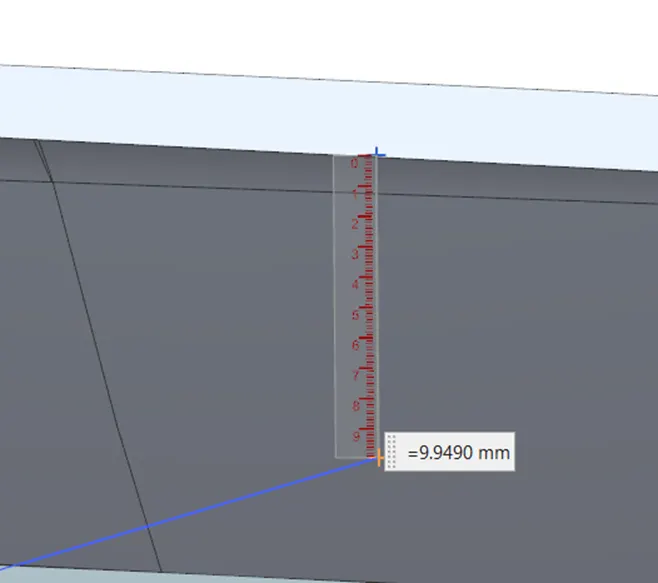
9.94 mm |
≥10 mm |
Fail |
|
SB |
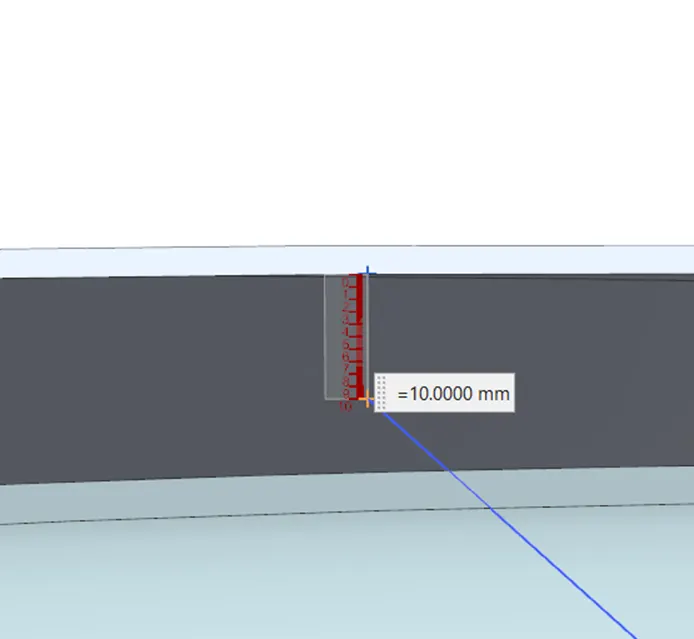
10 mm |
Pass |
|
|
SC |
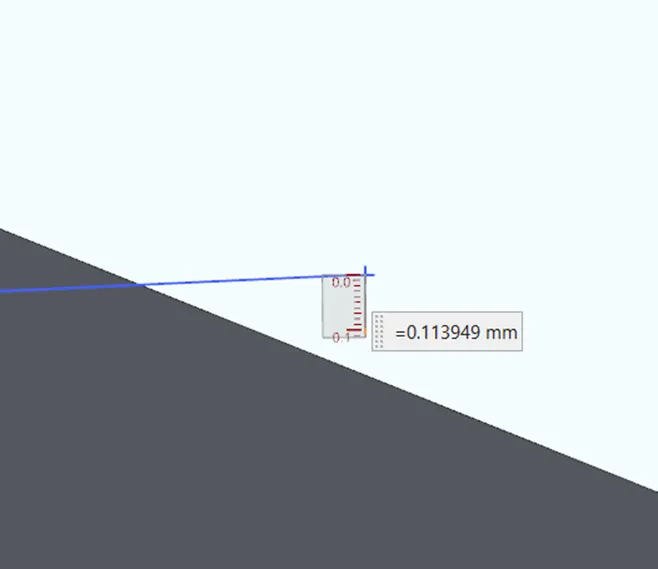
- 0.11 mm |
Fail |
|
|
SD |
- 2.88 mm |
Fail |
|
|
SE |
-5.99 mm |
Fail |
Snapshots:
1. SA = 9.94mm
2. SB = 10mm
3. SC = -0.11mm
4. SD = -2.88mm
5. SE = -5.99mm
Conclusion:
The provided fender did not the pass the requirements for European regulation. The skin should be returned back to the styling team and requesting them to increase the curvature of the fender where the distance is not achieved as per the European regulation requirements.