Hood design-Week 2
Automobile hood design
Introduction
The hood is the hinged cover over the engine of motor vehicles. Hoods can open to allow access to the engine compartment, for maintenance and repair.
It consists of the following major parts;
- Outer panel
- Inner panel
- Reinforcements
- Hinge assembly
- Striker
Design parameters
Hood thickness information
- Outer panel thickness = 0.75mm
- Inner panel thickness = 0.75mm
- Reinforcement thickness = 1.5mm
Hood Master section
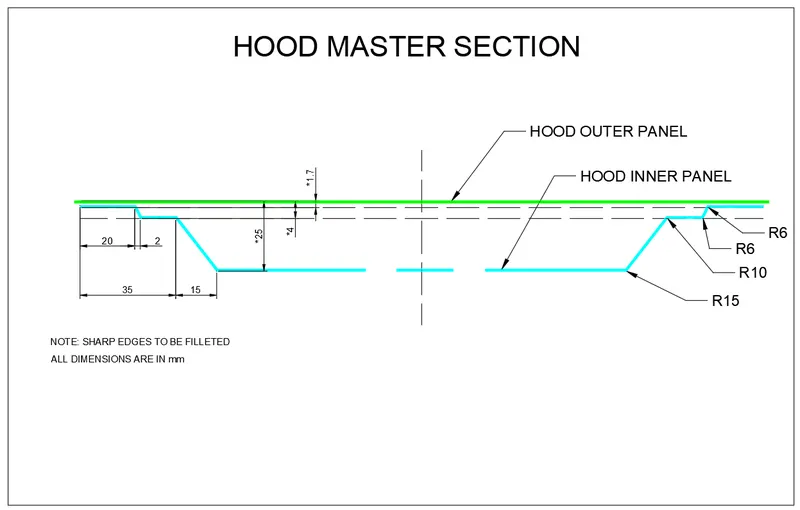
Hemming data
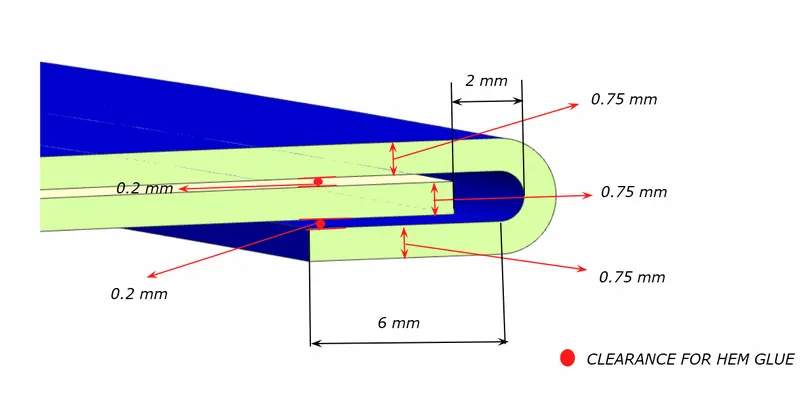
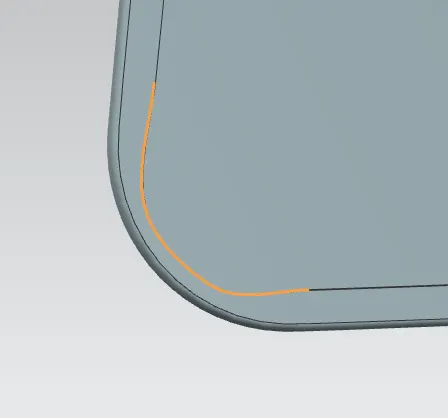
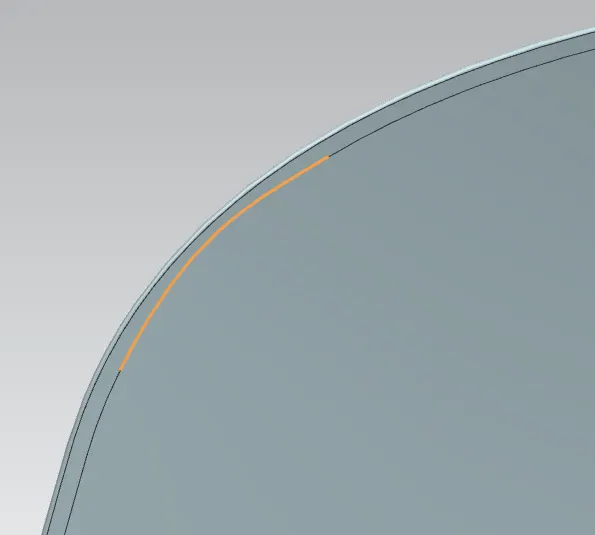
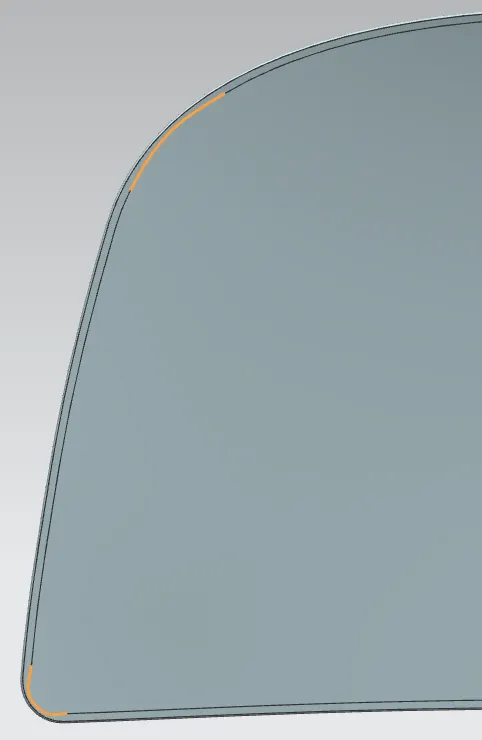
Hemming Relief
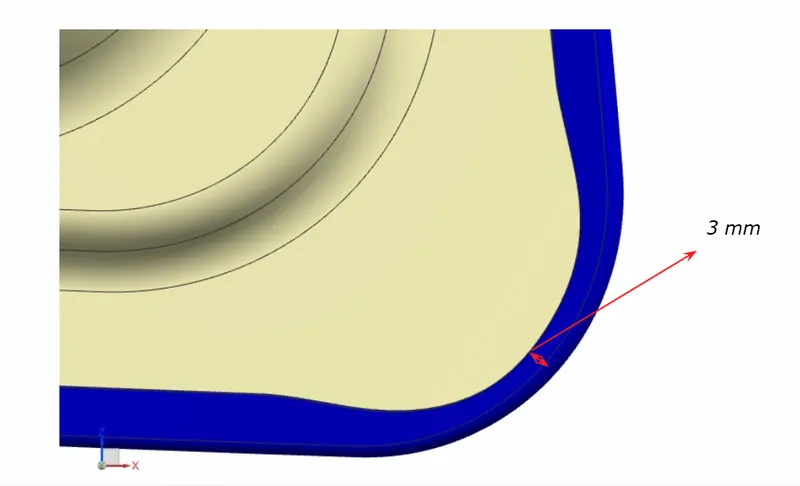
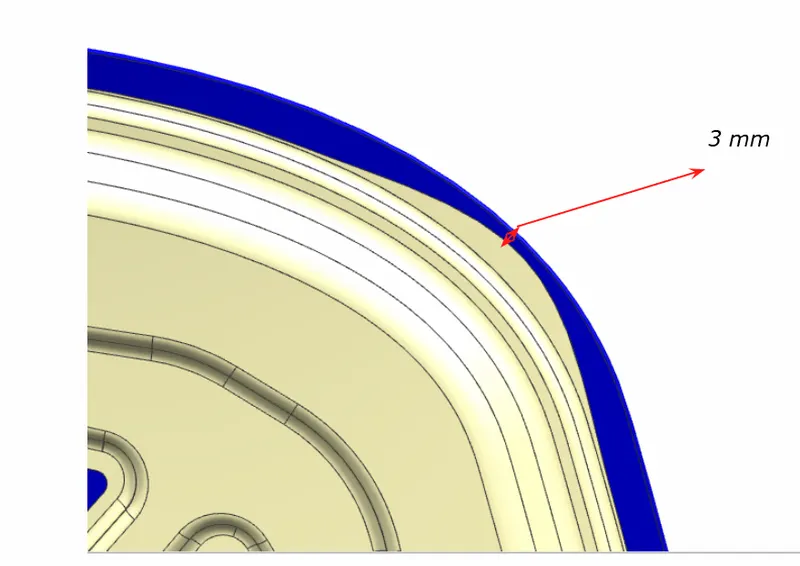
Design of the Hood Assembly
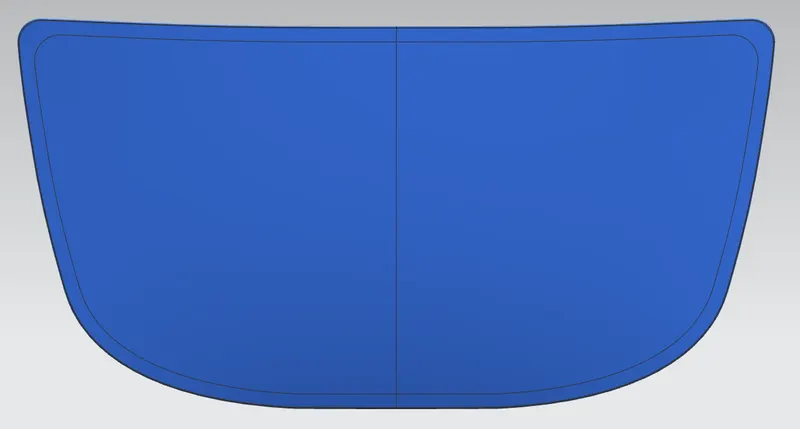
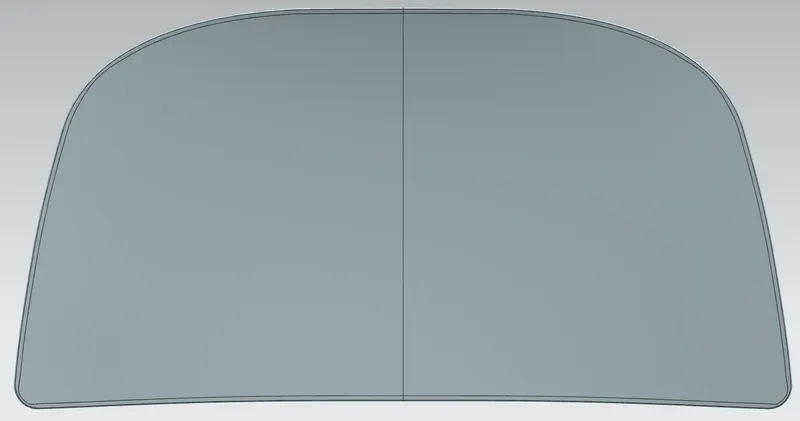
Outer Panel
It forms the outer visible region giving an aesthetic look to the Hood.
It is placed around the Inner panel by the process of Hemming.
Outer Panel
Hemming is a sheet metal forming process in which sheets are joined by bending it to 180°. Automotive body panels and automotive parts such as deck-lids, trunk-lids, doors, hoods and tailgates are formed by hemming process.
Hemming relief
Inner Panel
A hood inner panel for a vehicle is provided to improve rigidity, durability, and pedestrian protecting performance. It acquires its strength by the embosses provided in it.
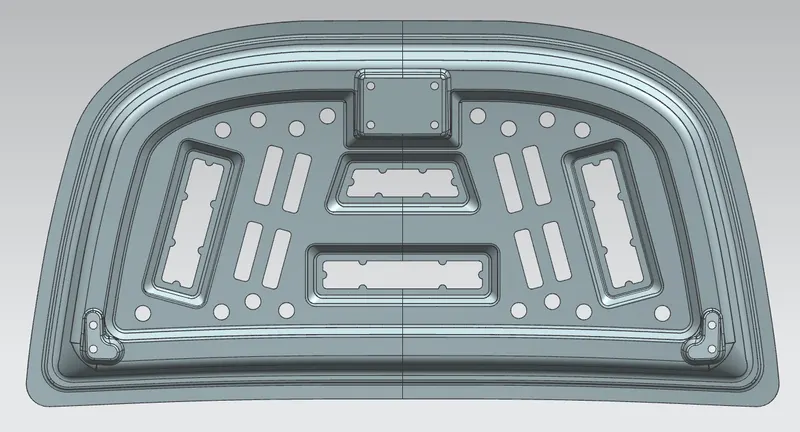


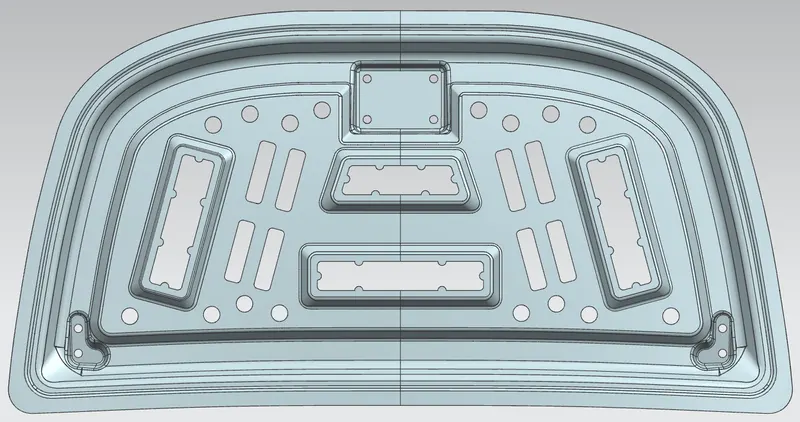
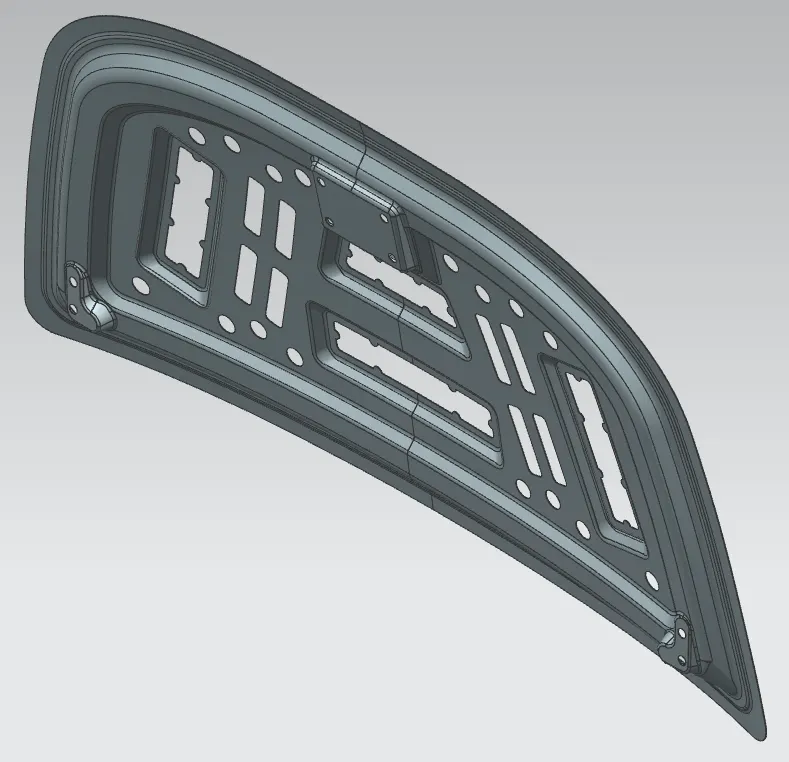
Embossing is a metal stamping process for producing raised or sunken designs or reliefs by passing metal sheet or strip between rolls of the desired pattern. The embossed CS of the sheet metal gives strength to the section.
Embosses in inner panel of hood
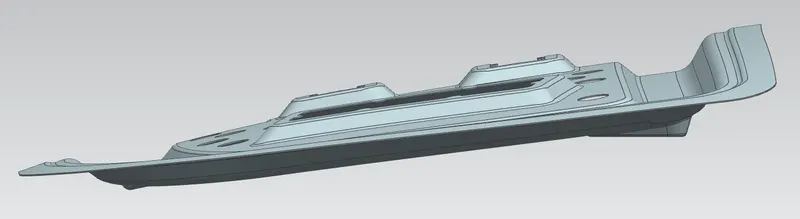
Deep drawing is a sheet metal forming process in which a sheet metal blank is radially drawn into a forming die by the mechanical action of a punch. This process helps to develop the required Master Section in the hood inner panel and also emboss and reinforcement regions.
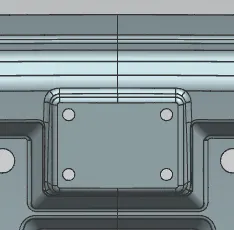
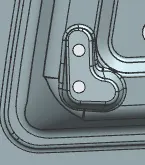
Reinforcements are sections which are added to increase the strength of the inner panel. The reinforcements are given at the Hinge and Striker assembly regions in the inner panel.
Striker and Hinge Reinforcement regions in inner panel of hood
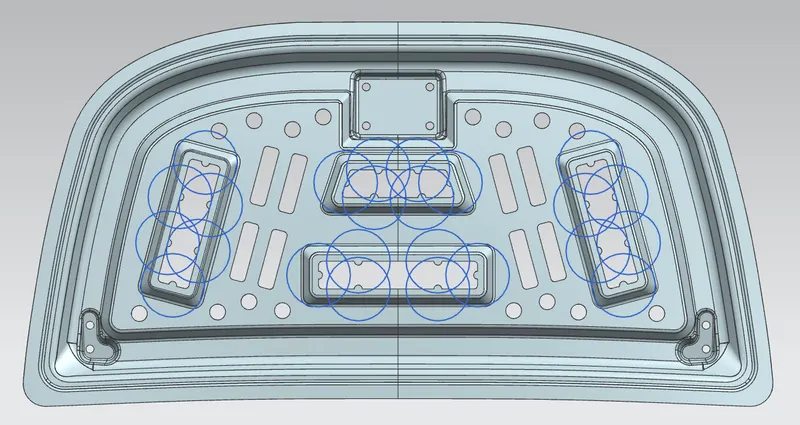
Mastic data; Mastic sealants are elastic compound that behaves like the rubber. It is placed between the outer and inner panel. Initially is it in paste form, but after the hot furnace bath it gets hardened thus joining the outer and inner panel. Mastic sealant has the tendency to increase the strength of the outer panel and has influence of around 80mm diameter.
Mastic points and their influence regions in hood inner panel.
Hinges
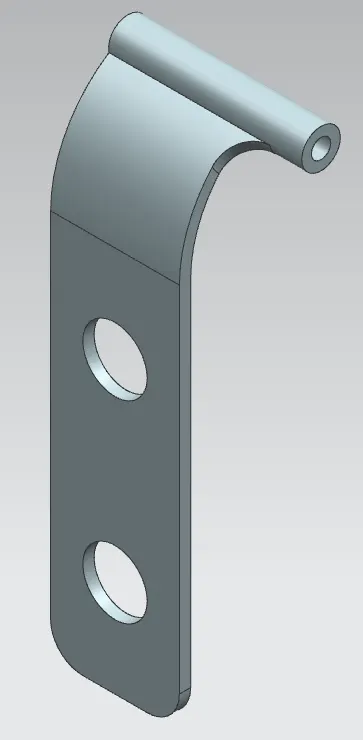
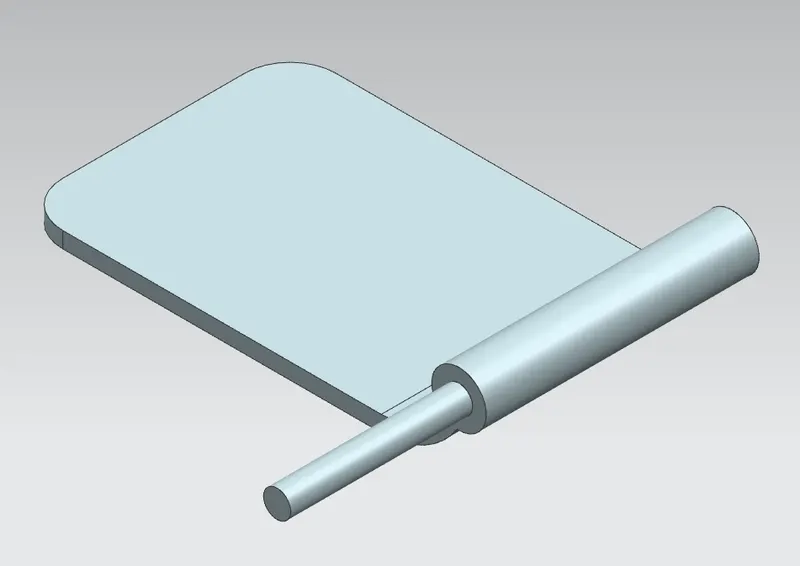
The Hinge assembly helps to attach the Hood assembly with the car at the Engine compartment with only one degree of freedom for the Hood assembly around the hinge axis, helping it to open and close.
Hinge assembly fixed in hood
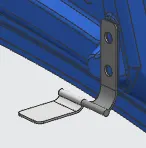
Hinge components
Striker
A striker plate is a piece of hardware that works with a latch to keep the hood closed.
Hood latch - that holds the hood of a car shut.
Striker
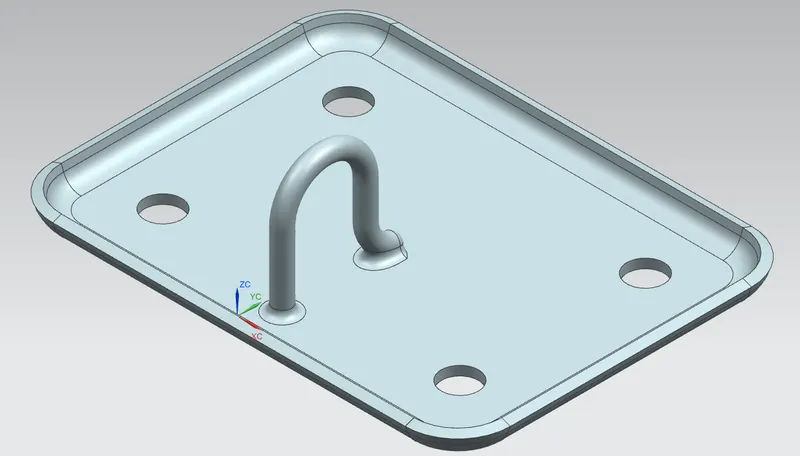
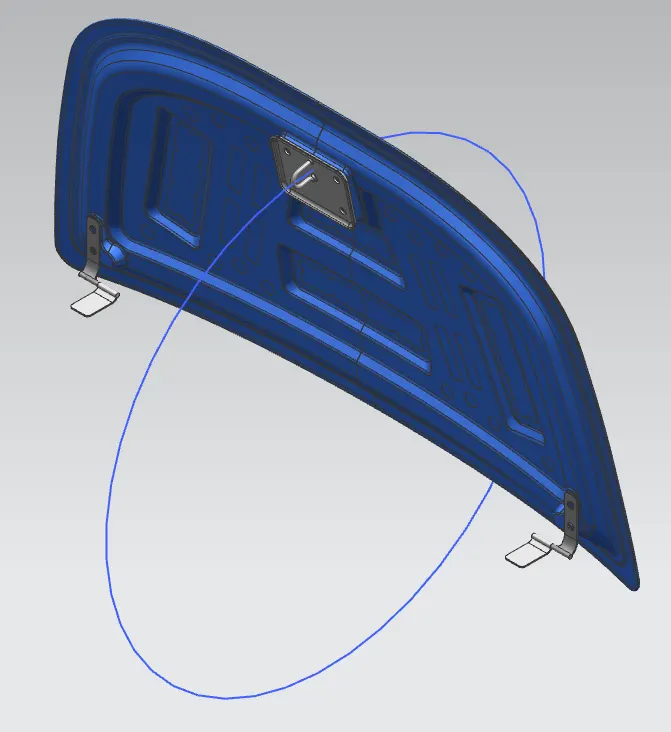
Latch trajectory - while assembling the striker with the hood panel it is strictly recommended that the position of latch striker should be placed such that the latch striker exactly fit into the lock hole in the engine compartment. Keeping this in mind, the latch striker is placed on the inner hood panel using latch trajectory path. This path is created using the hinge axis taken as reference.
Latch trajectory developed around the hinge axis
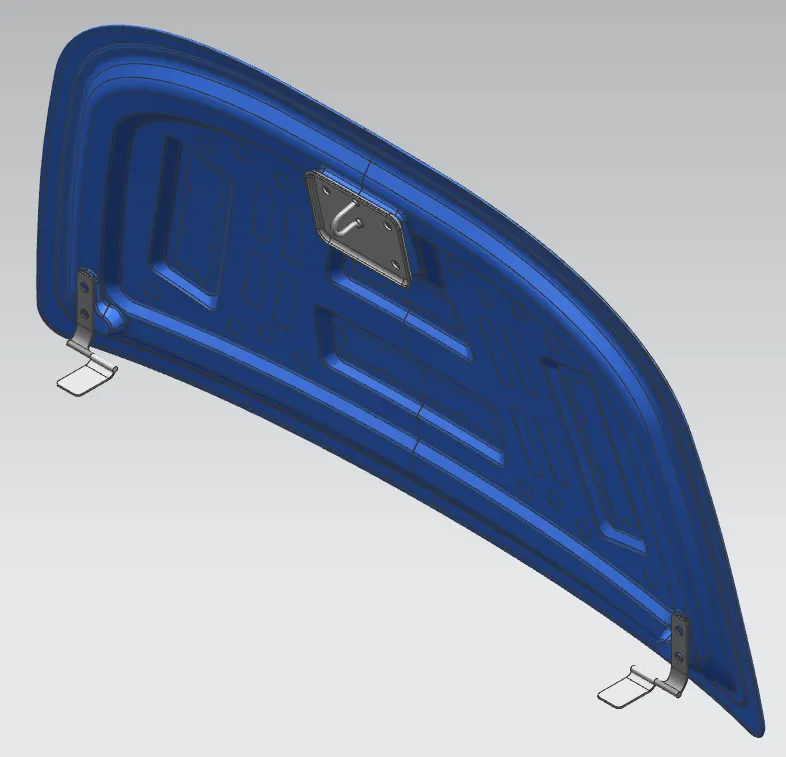
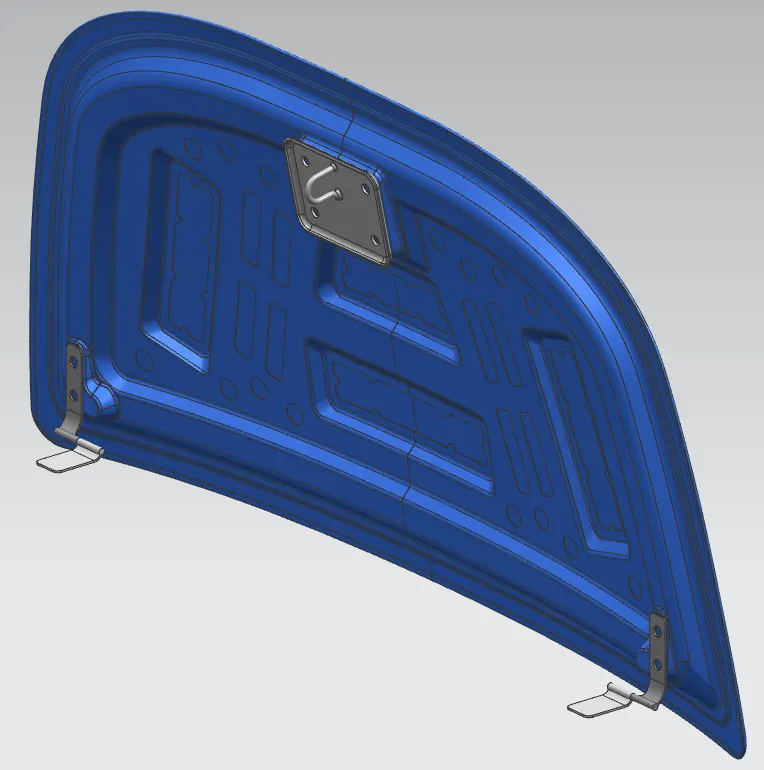
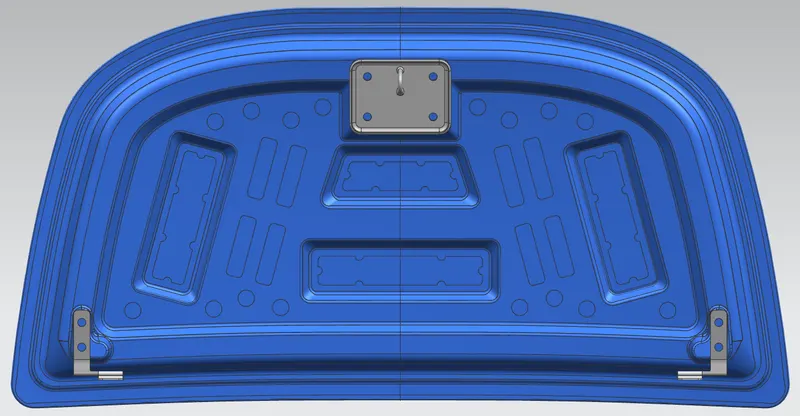
Final Hood Assembly


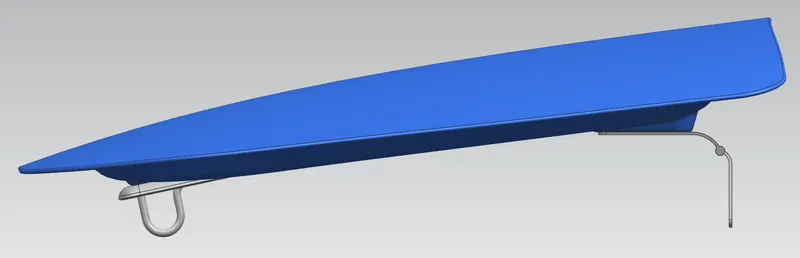
Conclusion
Thus the Hood design is completed, and the given parameters are satisfied.