Hood design-Week 2
Hood Design
Here we are going to understand and design the concept of front-mounted engine’s hood according to the standards. The hood or bonnet is the hinged cover over the engine of motor vehicles that allows access to the engine compartment, or trunk for maintenance and repair.
On front-mounted engine cars, the hood may be hinged at either the front or the rear edge, or in earlier models, it may be split into two sections, one each side, each hinged along the centerline. A further variant combines the bonnet and wheel arches into one section and allows the entire front bodywork to tilt forwards around a pivot near the front of the vehicle.
Materials
Hoods are typically made of the same material as the rest of the bodywork. This may include steel, aluminum, fiberglass, or carbon fiber. However, some aftermarket companies produce replacements for steel hoods in fiberglass or carbon fiber to make the vehicle lighter.
Before we dive into the design, let us understand the rules and regulation standards for designing the hood.
- A perfect hood design means it should have a great impact distribution angled outside the car.
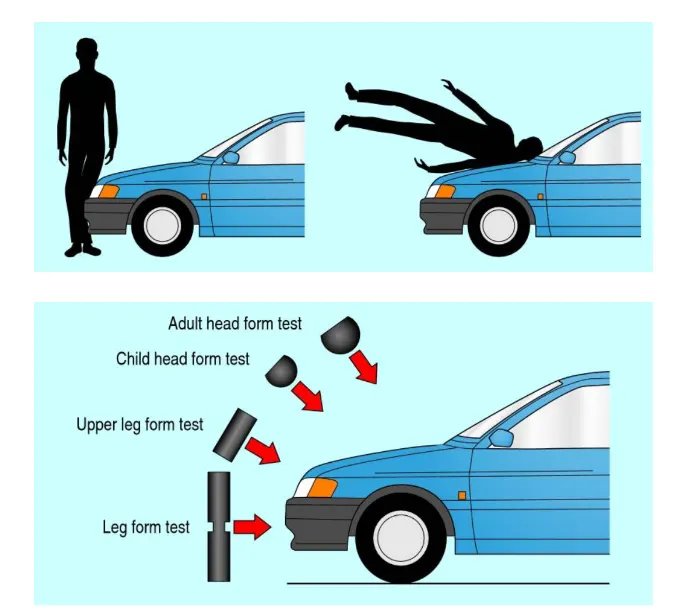
- In Japan and Europe, regulations have come into effect that places a limit on the severity of pedestrian head injury when struck by a motor vehicle. This is leading to more advanced hood designs, as evidenced by multicore hood inner panel designs.
- European Enhanced Vehicle-Safety Committee (EEVC), European New Car Assessment Program (euro NCAP)
Pedestrian -Vehicle Collision
- India, however, ranks 1 in the number of road accident deaths across the 199 countries reported in the World Road Statistics, 2018 followed by China and the US. As per the WHO Global Report on Road Safety 2018, India accounts for almost 11% of the accident-related deaths in the World.
- Road transport remains the most favored mode of transport for both freight and passenger movement in India. The fast-growing population, exceptional rate of motorization coupled with the ever-growing urbanization has made people vulnerable to frequent road accidents resulting in fatalities, injuries/disabilities.
- the sequence of injuries and events in a pedestrian collision images are mentioned below.
Hood Inner panel
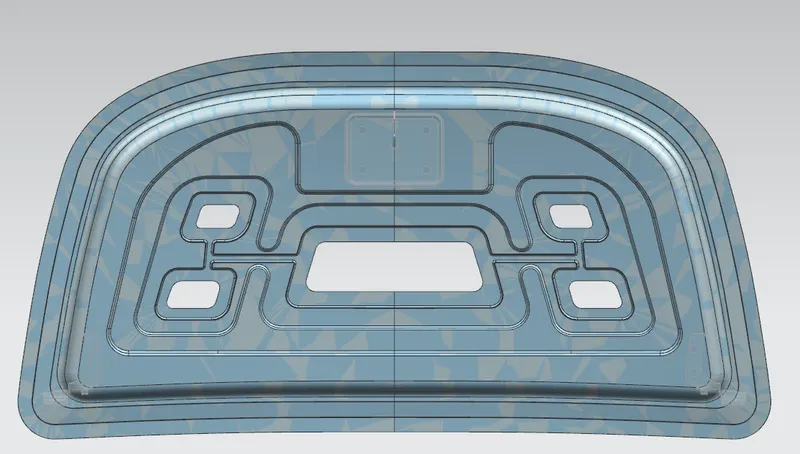
- The hood inner panel is required to have a high initial reaction force against the impact exerted on the hood to enhance the energy absorption capacity. The hood is further required to minimize a reduction of a reaction force by deformation in a collision.
- It is an object of the present invention to provide a hood inner panel capable of reduction of a reaction force of the hood inner panel even if a level of deformation of a hood of a vehicle increases, and ensuring a sufficient energy absorption capacity.
- In the inner panel only we can research and implement the safety of pedestrians and as well as the driver.in this panel only we can attach the reinforcement, embossed, mastic points, etc.
- Hemming in sheet metals
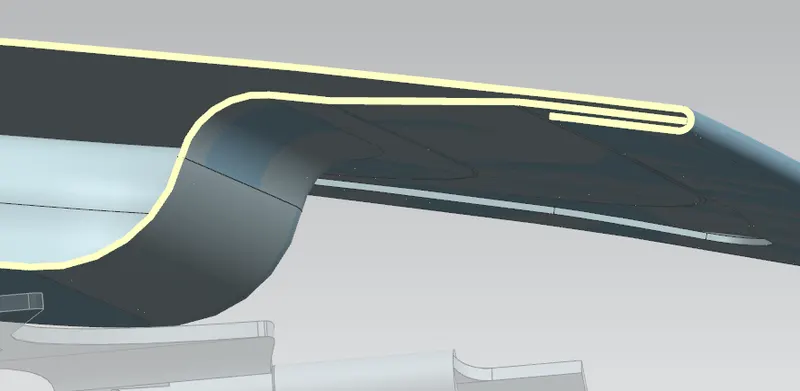
- Hemming is a sheet metal forming process in which sheets are joined by bending it usually to 180°. Automotive body panels and automotive parts such as deck-lids, trunk-lids, doors, hoods, and tailgates are formed by hemming processes.
-
Conventional die hemming is suitable for mass production. In die hemming, the flange is folded over the entire length with a hemming tool. Normally the actual hemming is a result of a forming operation in which the flange is formed with a hemming tool after the drawing and trimming operations have been completed
- Roll hemming is carried out incrementally with a hemming roller. An industrial robot guides the hemming roller and forms the flange. Roll hemming operation can also be divided into several pre-hemming and final hemming process steps.
- If weld or bolts were used to join the hood panels then the design and the aerodynamic features would get damaged so hemming is more significant to use.
Latch
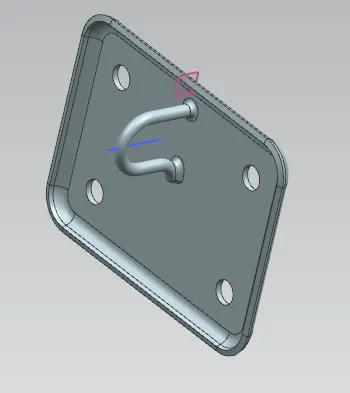
A hood latch is a very simple component. It's basically the fastener that keeps your hood closed shut. This latch ensures that your hood is securely connected to your vehicle and that it doesn't pop open unexpectedly
When tension is applied to the cable from the hood release handle, it pivots the secondary latch, which pulls away from a retaining seat located under the hood. By design, the secondary latch then releases the hood a few inches before a safety latch takes over.
Hinge
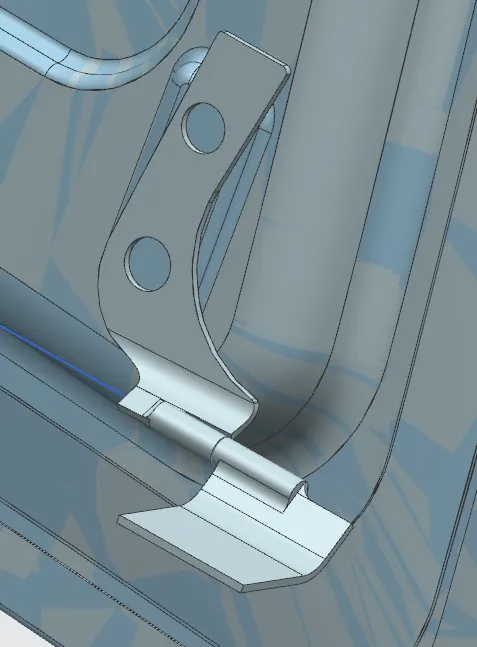
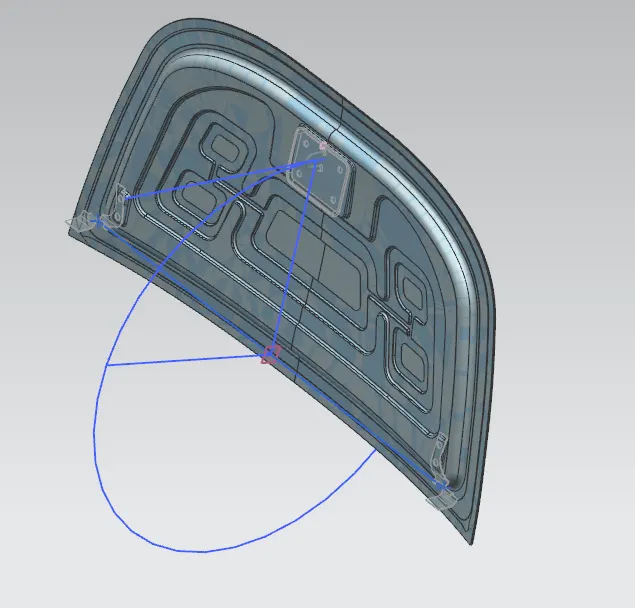
hinge is a component that fixes the hood to the fenders of the car. The latch must be fixed perpendicular to the hinge axis so that the hood opens or closes properly.
- Latch trajectory motion
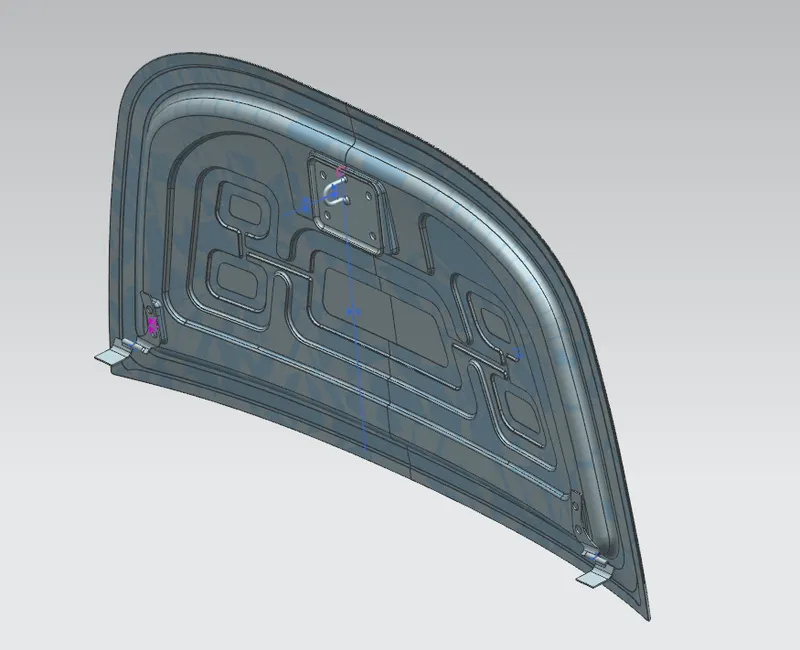
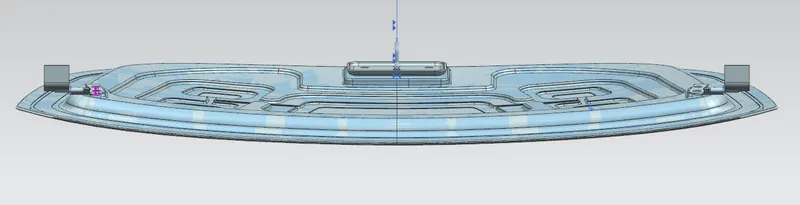
- Hood design
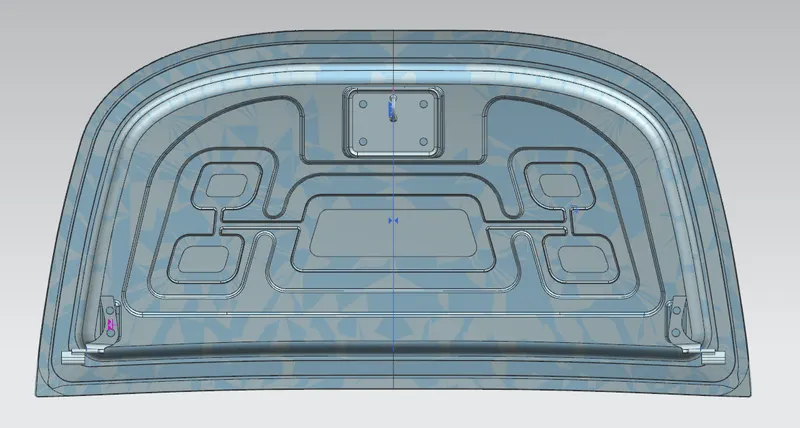
- Conclusion
Therefore, we have designed a hood that falls under the rules and regulations of the manufacturer's standards.