Hood design-Week 2
AIM:
Design hood outer panel, inner panel and reinforcements with the given outer hood skin, master section and design parameters.
Introduction:
Hood is also called as bonnet. It is one of the BIW part of car. It consists of inner and outer panel. Hinge system and striker. Inner panel gives strength and outer panel is cover and gives appearance to the car. Hood beside part is covered with sound absorbing material. Hinge gives rotation to the hood. It is rotating in one axis. Two hinges fixed in two corner side of hood. Striker locks the hood with main body.
Hood main purpose is which covert the engine component of car. It is designed by open and closing system because of maintaining the engine parts and services and other purpose. Sometime hood scoop, wiper jet and hood ornament are fixed on the hood. It is fixe for good appearance and other purpose.
SAFETY FACTORS IN HOOD:
Safety is most important criteria for designer to create the automobile parts who should concentrate on both occupant safety and pedestrian safety. Pedestrian safety is very important because of lot of traffic and accidents. Mostly there is head injury in accident because of hood and ground. So, this is necessary to develop new inner and outer panel with stiffer and more pedestrian friendly. So, head impact analysis is done by different location with adults and children height. In hood design mostly focused and worked for this factor. Then hood design also compared with previous model and check stiffness and other factors. This stiffness also compared with global stiffness and finalized the new design of hood. And also, analysis the probability of impact in different parts of adults like lower leg and upper leg.
When the hood is in open condition check the probability of head impact also checked. Hood wide distance front side flange also consider in designing.
Manufacturing process of hood:
Deep drawing method is widely used to sheet metal forming.
Deep drawing:
It is one of the forming processes in which process combination of tensile and compressive pressure is given to change flat sheet to hollow sheet bodies.
Process of deep drawing:
- The rigid tools consist of a punch, die and binder. This punch and die will be the product replica.
- In this process the holder closes after the sheet has been inserted.
- Then sheet is clamped on the die and binder hold the sheet
- The process will do slowly to prevent wrinkles forming under the binder.
- The punch pushes the sheet slowly get and the sheet gets die shape.
- The amount of punching force continually increased to lower dead centre of punch.
- In this process achieved in stretch purely decreased the thickness of the sheet metal.
- This is forming process in which only forming slightly curved and low depth product.
- This process is combination of stretch and deep drawing involved. So, in which process should stretched the sheet metal as well as possible without reaching material limits. If give low stretching in complex parts sometime it will give defects such as wrinkles and splits.
EMBOSSING:
It is one of the forming processes which is used to form raised, sunken and relief design. In this process male and female rollers are passed on both sides and give desired patten. This design is fully depended
Characterizes:
- Ductile sheet metal also formed in this process
- Production rate is medium to high
- Same thickness is got after processing
- Varity of Pattern is available in this processing.
- Reproduces also done without variations.
HEMMING:
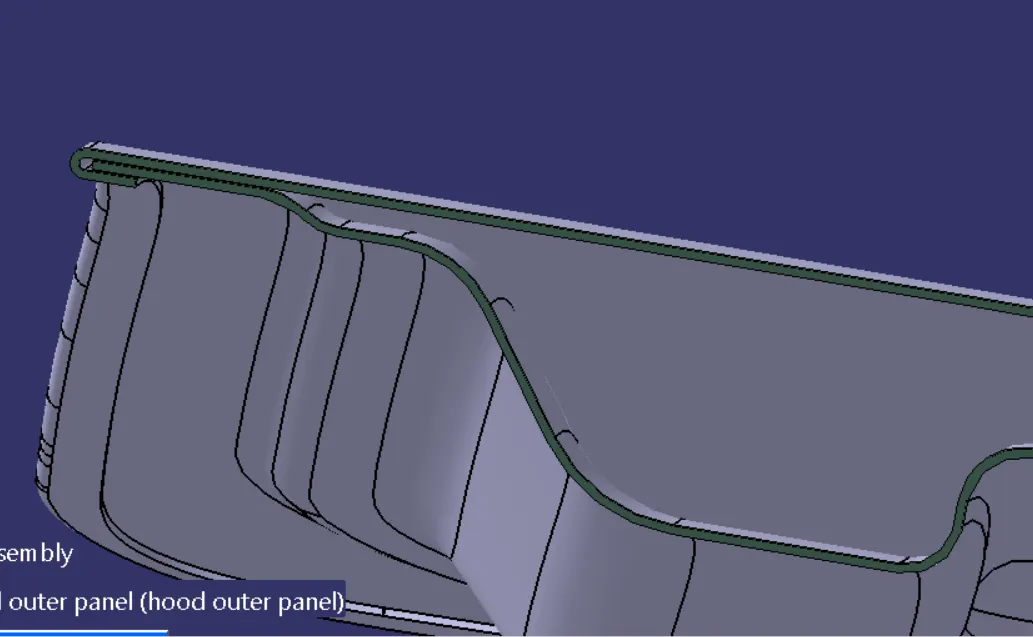
Hemming is one of the cold joining processes which is used to join a sheet metal part on another part. Outer panel has flanges which flanges will fold on the inner panel bottom side which is permanently joined. It is done by traditional press or robotically controlled roller. This process mostly used for doors, hoods and decklids.
Types of hemming:
- Open hemming
- Flattened/closed hemming
- Tear drop hemming
- Rolled/ rope hemming
BLANKING AND PIERCING:
- These two processes are used to cut the sheet metal to get desired hole features.
- In the blanking process push the punch and get required part. This final part is called blank which is separate from work piece and tool fixture. Remaining part in tool fixer which is called scarps.
- In the piercing process push the punch and unwanted part. It is called scarps. Final part is kept in the fixing tool. It is called washer.
MASTIC SELANTS:
Mastic sealant is a type of liquid sealant that cures an in elastic state. It gives bonding between two surfaces. It is one type of adhesives. In the hood model hood outer panel is aesthetic look. So, we can’t use fasteners. So, we use hemming and mastic sealant. Hemming only joined with outside part. But this sealant is used in the rest of part. It is one type of elastic component. Initially it is in semi solid form after curing it will come solid form additionally, which increases strength of the panel.
MASTER SECTION:
They have given master section of part which is used to create inner panel, outer panel and created parts and given hinges and striker are assembled.
Design parameters
Hood Thickness Information
Outer Panel Thickness = 0.75mm
Inner Panel Thickness = 0.75mm
Reinforcement Thickness = 1.5mm
Hood Consists of
- Outer panel
- Inner panel
- Stiffener pad
- Hinge Reinforcement
- Stricker Reinforcement
Components
1.Hood outer panel
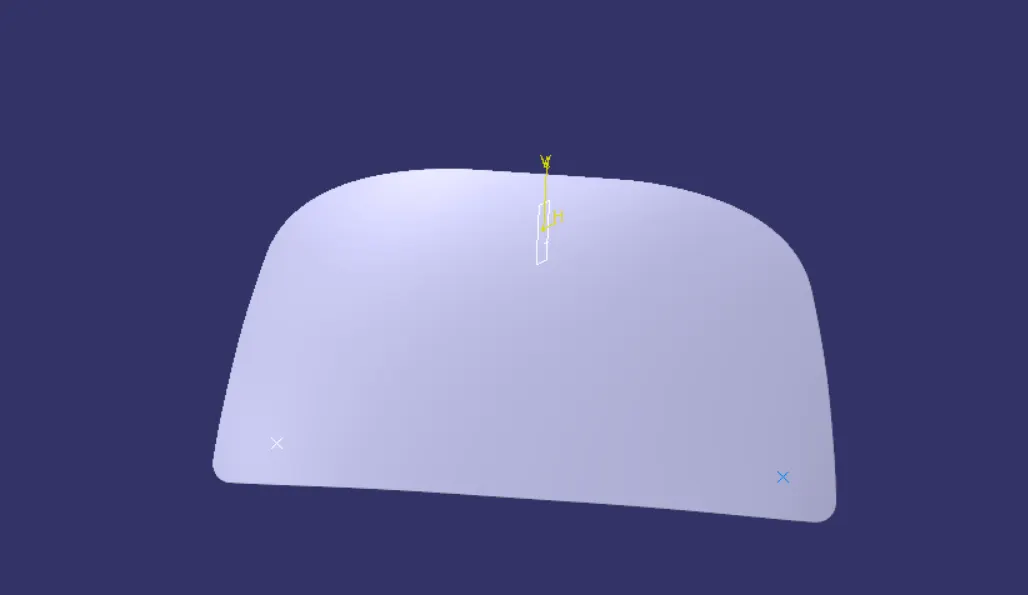
Outer panels are the aesthetic elements of a car. It is the styling team who provides the skin for the outer panel. The shape, position and size of the hood should satisfy the safety norms. So while designing the hood we should give more importance to pedestrian safety. The outer panel is attached to the inner panel by hemming. So, it is necessary to provide required hemming flange and reliefs for the hemming operation. We also provide mastic sealants between outer panel and inner panel to reduce vibration.
2.Hood inner panel
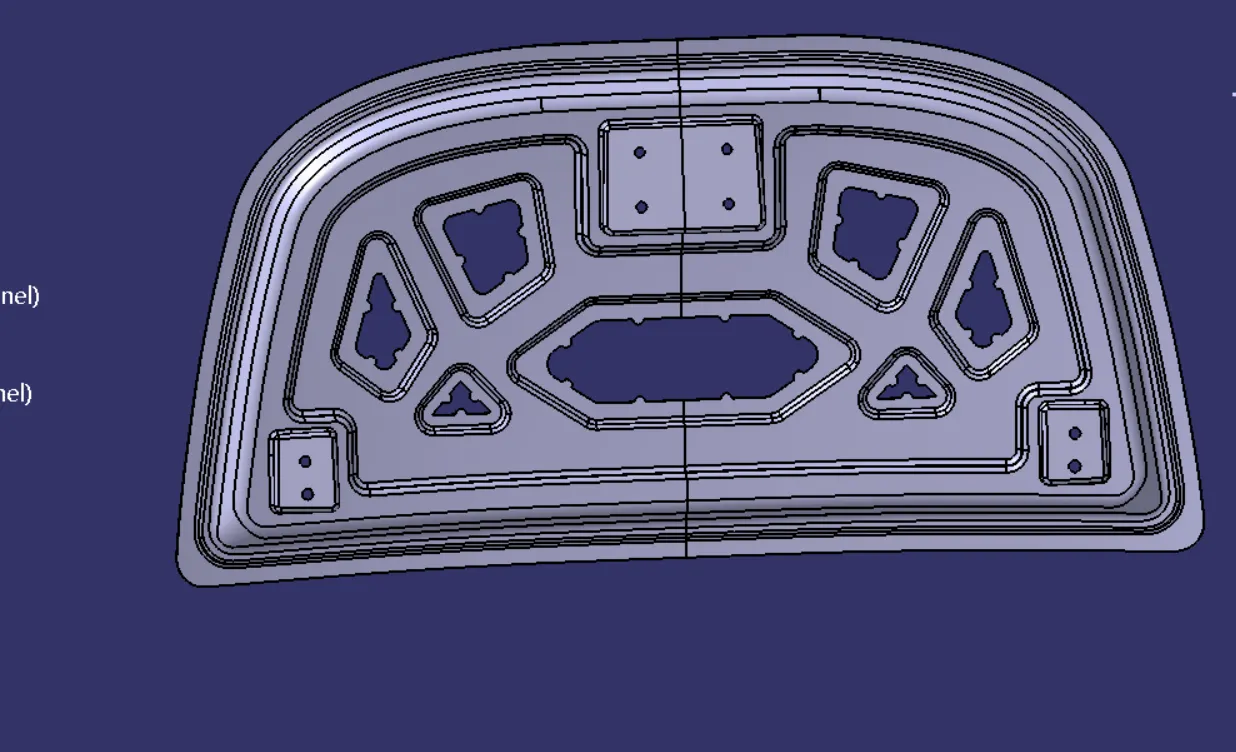
Inner panel is the part that gives strength and rigidity to the outer panel. The master section represents the initial emboss shape and size. Then we provide the emboss for the latch and hinge elements after fixing the location.
3.Reinforcement
Reinforcements are provided according to the design requirements. Mainly it is provided at the hinge and latch regions to improve the strength locally. Usually thickness of reinforcements will be higher than that of the inner panels and the value varies according to cost and requirement. According to the design requirement here it is given 1.5mm thickness to both hinge and latch reinforcements.
Latch Trajectory
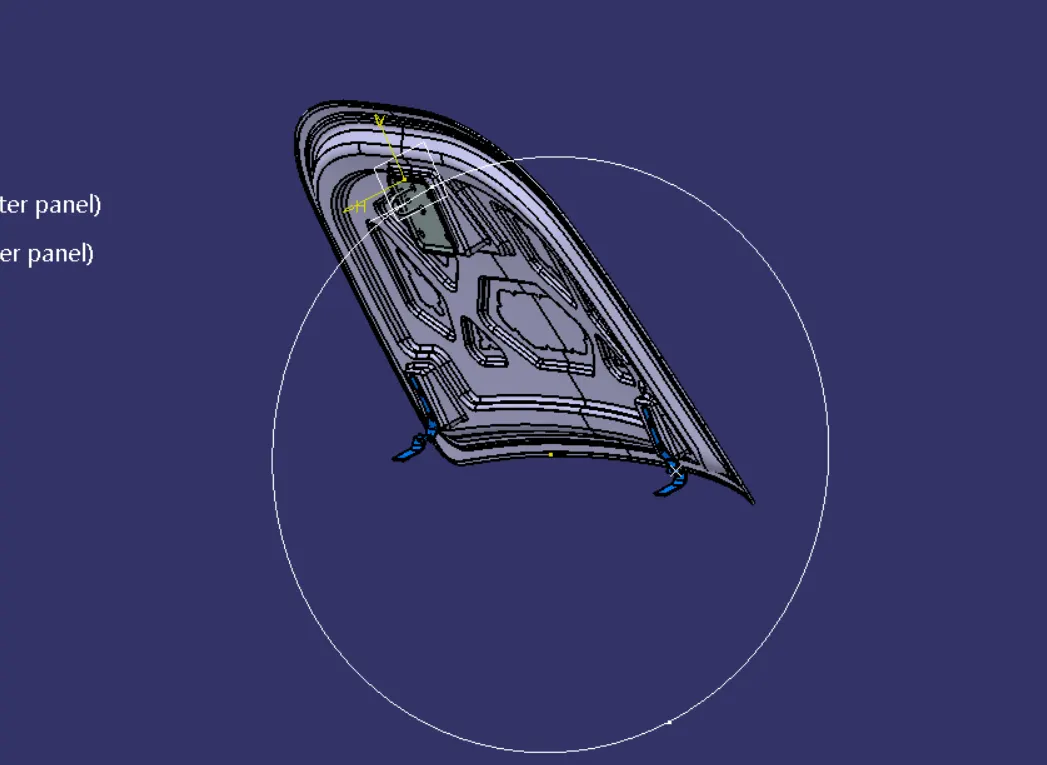
Latch trajectory is given by the circle drawn from the hinge axis point. Hinge axis point is the centre point of the hinge axis. First, we can fix either the latch or the hinge. If we have fixed the hinge position then we should plot the Trajectory circle for the latch. For proper mating condition the striker axis through the tip of the striker should be tangential to the latch trajectory.
Emboss definitions
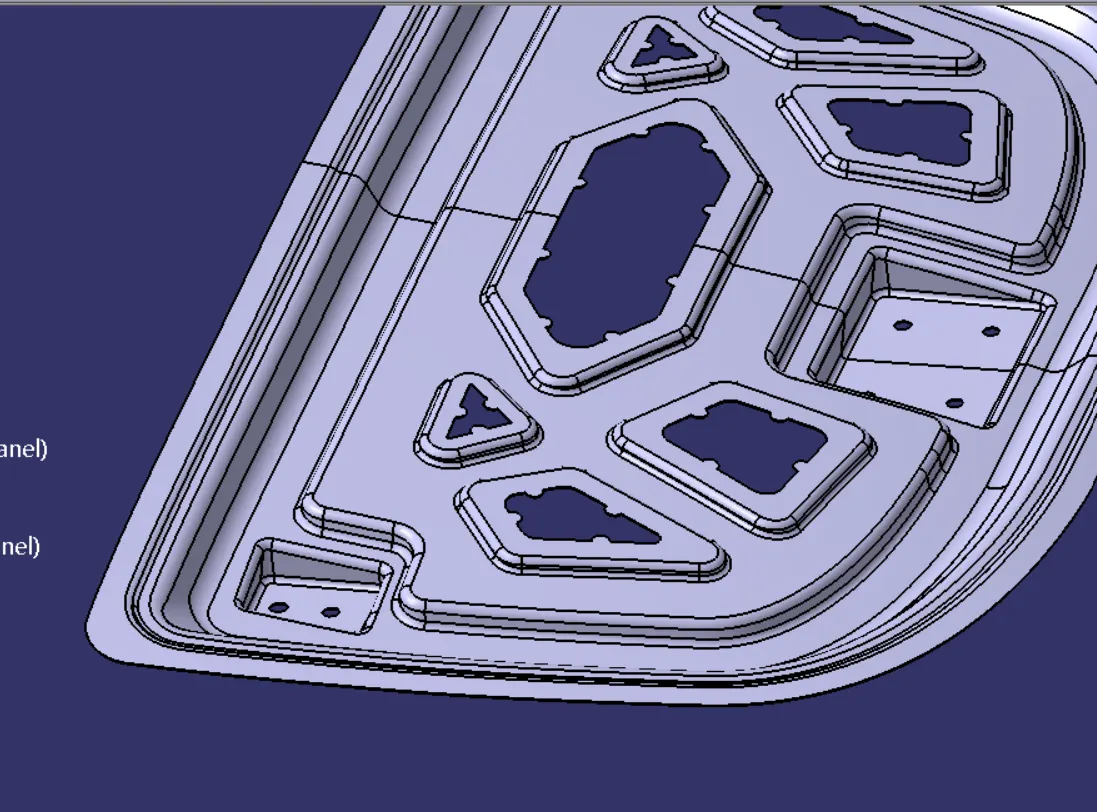
Throughout the inner panel we provide different embosses. We can increase the stiffness of the inner panel through these embosses. The shape and size of the embosses also determines the direction of the force distribution resulted from frontal collision. The force should be always distributed away from the passengers. Here in the figure the embosses are designed in such a way that the force is directed to either sides of the car.
Mastic Data
Hood commonly possess large surface area and hemming can only be provided through its boundary. We cannot use other joining techniques like welding, riveting etc because they leave marks on the outer panel which spoil its aesthetic appearance. So, mastic sealants are used to stick the inner surfaces of outer panel and inner panel. Mastic sealants are elastic compound that behave like rubber. It is applied between the inner and outer panels at specified spots. Each spot of mastic sealants has its effect around a circular region of 80mm diameter. Thus, the mastic points are arranged in such a way that it covers the areas away from the hemming which are more vulnerable to vibrate.
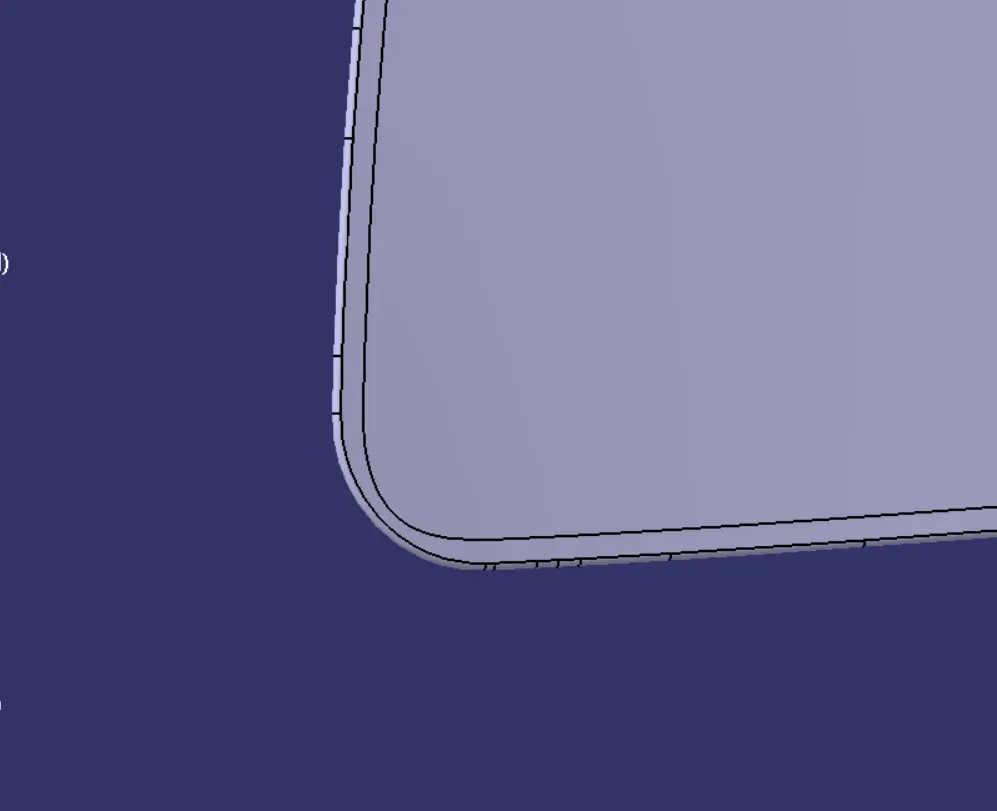
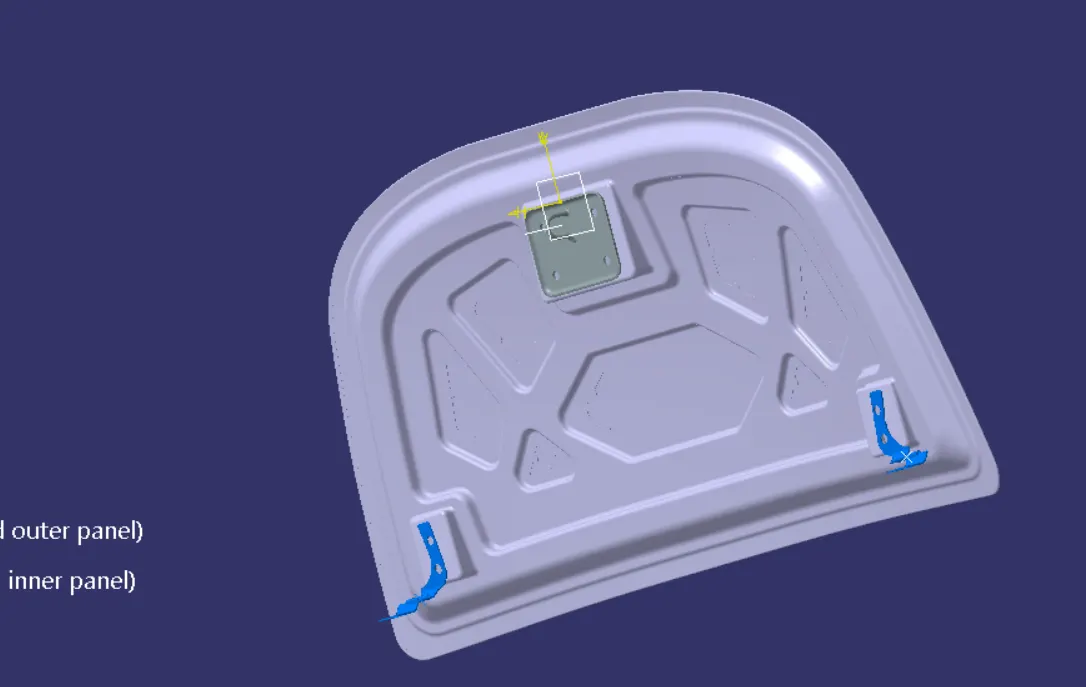
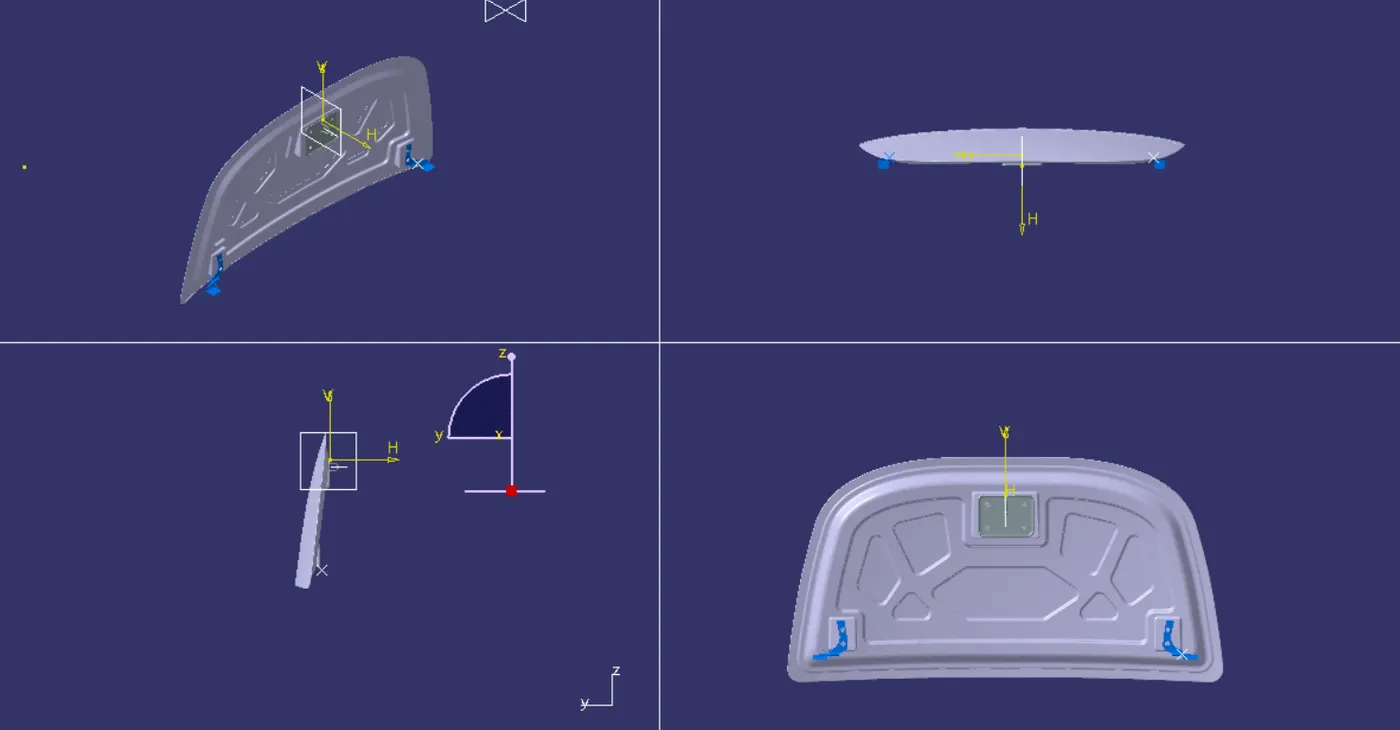
FINAL ASSEMBLY
CONCULASION:
Hood outer panel and inner panel are successfully created with the help of master section. Then created parts, hinge and striker are assembled by CATIA Software.