Hood design-Week 2
Objective: To design hood inner panel, hood outer panel, and the necessary reinforcements by following the master section provided in the design problem.
Hood:
In a front-engine car, the hood is an opening body component that covers the engine. Given that it has an outside panel and an inside panel, the hood is seen as another form of door in a car. While the outside panel serves as the metal cover, the inner panel offers strength.
There are two types of hood:
1. Active Hood: This structure adopts additional parts to improve the strength and reinforcements for safety.
2. Passive Hood: This type of hood gets strength improvement and safety targets from it's own inbuilt structure.
Hood Components and their explanations:
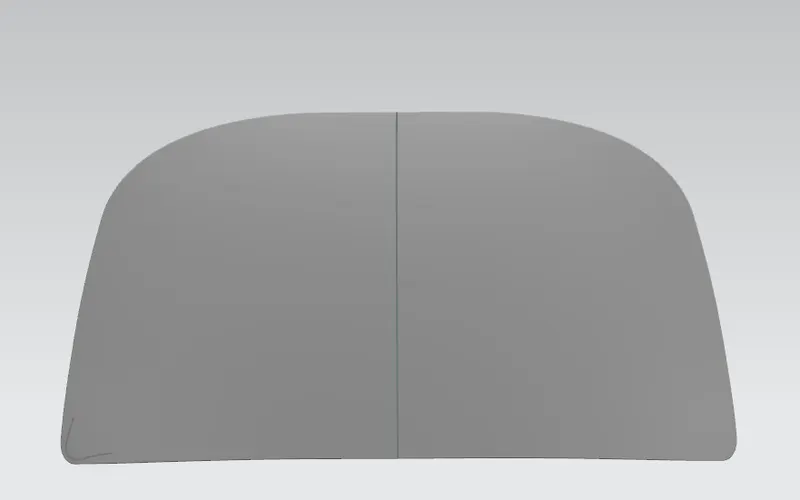
1. Hood Outer Panel: The outer panel as mentioned earlier is basically metal cover for inner panel. It's shape and size basically gets decided by the BIW sketch of car. It's design is decided by the Class A surface input. All the aesthetic shapes and boundaries of the hood is provided by this Class A surface input. We need to make sure that design and manufacturing processes don't hamper the outer shape of the hood.
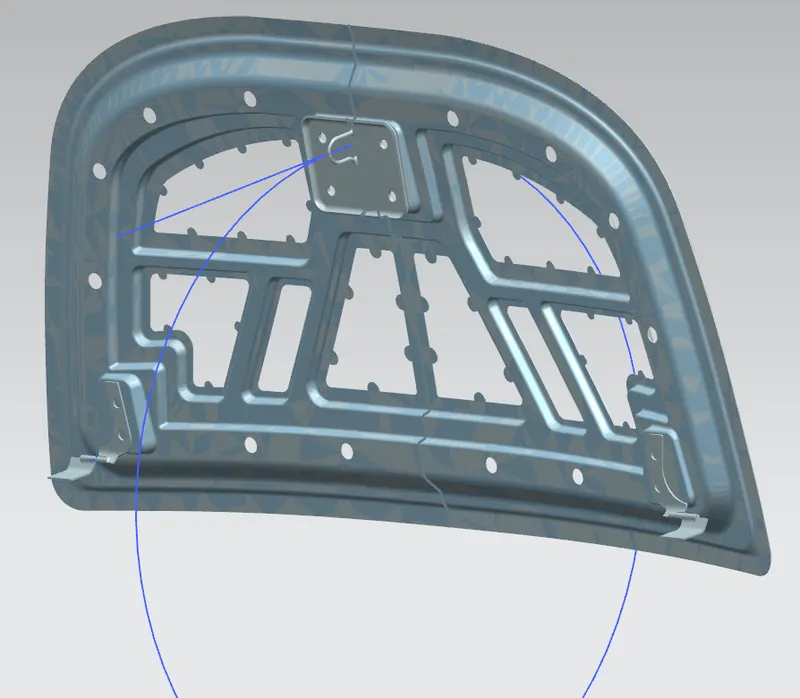
2. Inner Pannel: The inner panel is main component of the hood assembly. It's design basically can improve overall strength to the hood panels. It gives strength to outer panel and in the case of accidents, absorbs all the crushing energy and helps in minizing the damage to the vehicle and passenger as well. There are various embosses, reinforcements, and cutouts which aid to the complex design of the inner panel on the basis of various parameters which is explained further.
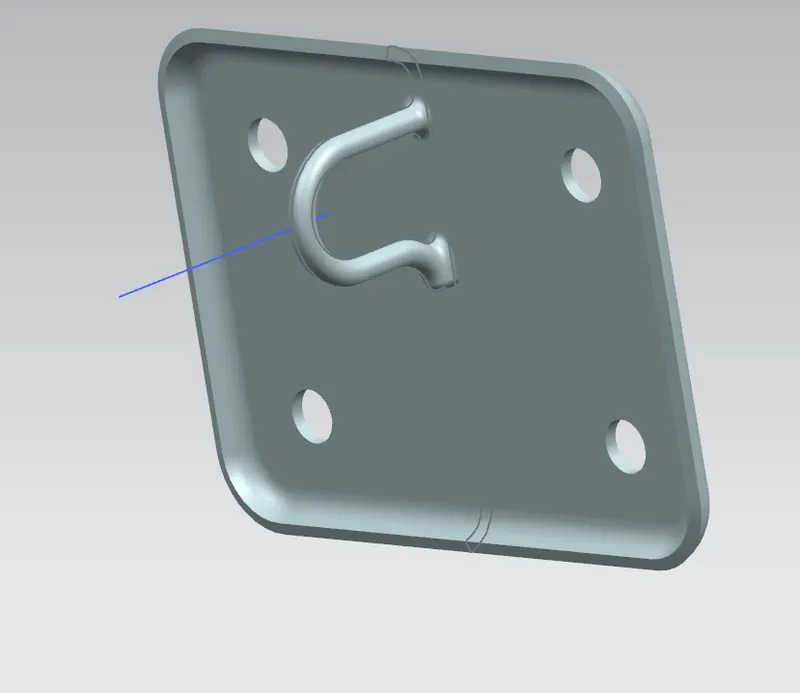
3. Striker: This is part of the locking mecchanism of the hood. It is mounted on the inner panel having constraints of its with the rotation curvature of the hood panel. The other part of the locking mechanism is mounted on the engine compartment bay. Emboss and reinforceents are provided to improve strength to the striker. It's trajectory is decided by the tangent perpendicular to the circle periphery whose centre is in coincidence with the hinge axis.
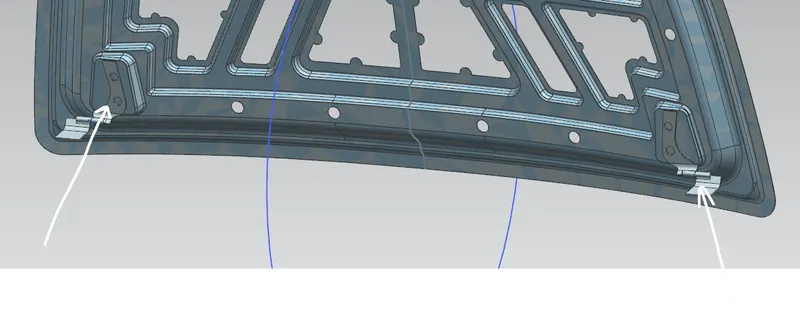
4. Hinge: It serves as rotational purpose for the hood panel to open and close. When a body needs to rotate around a certain axis, hinges are provide for rotational constraints. One components of the hood assembly is mounted on the inner panel and other on the engine compartment bay. The axes of the hinges must be coincident. Embosses and reinforcements are also provided to the hinges.
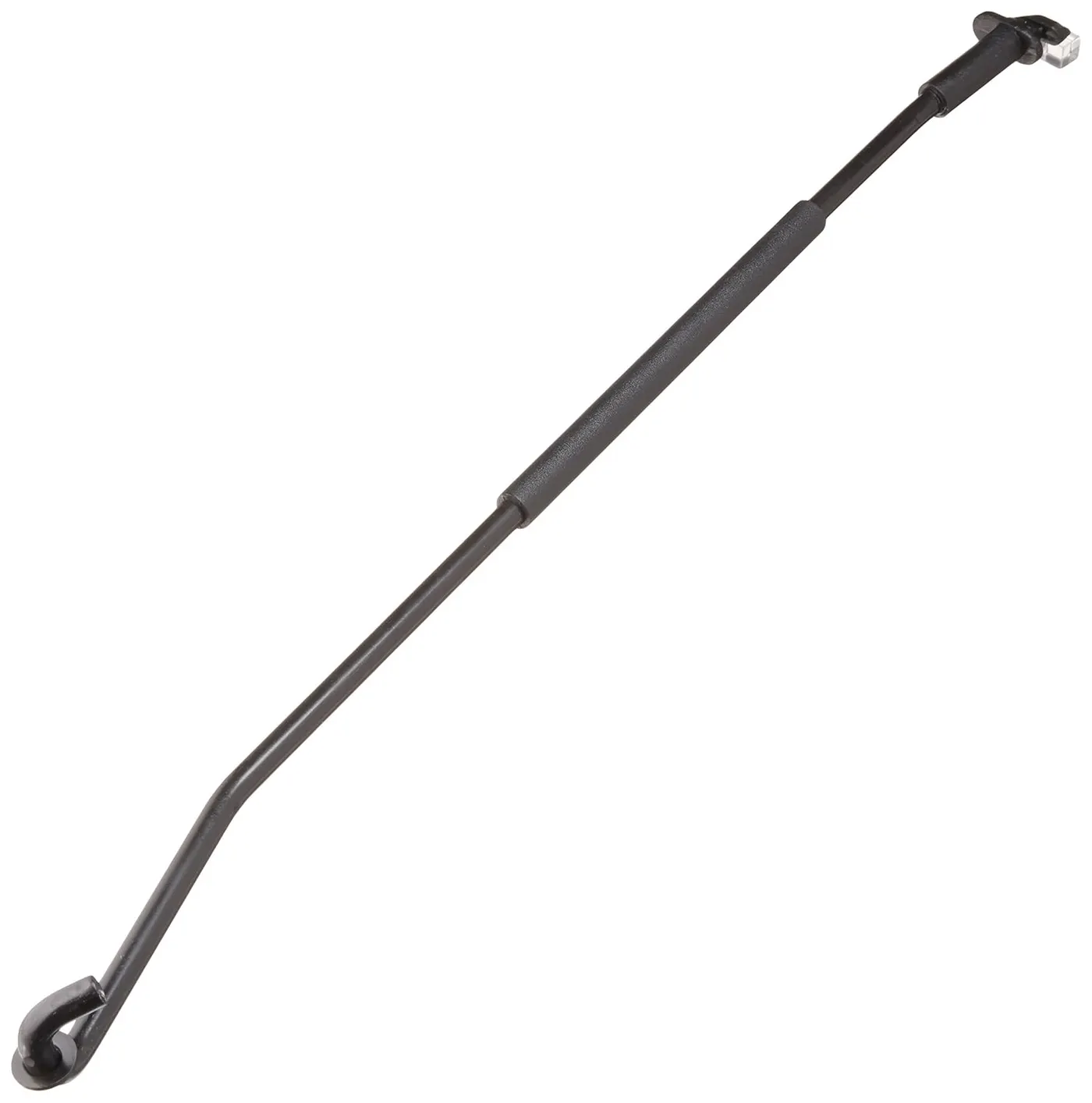
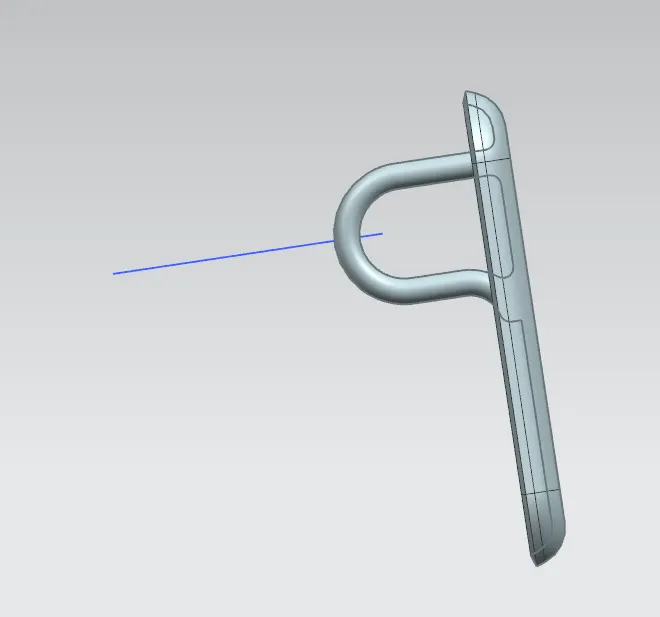
5. Support Rod: To hold the hood in open position supports are used. These rods are not straight. Little bends are provided to give strength to the support rod. The bend should not pass the axis of the support more than 35mm.
Stay Rod
Gas Stay
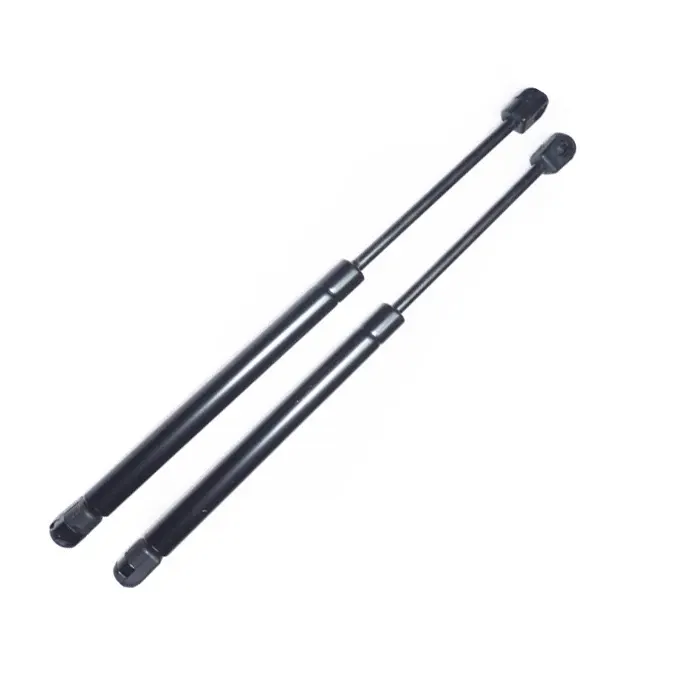
For hood pannels whose weight is more than 8kgf, gas stays are used. Gas stays are actuated from the driver end itself. It doesn't require effort as is needed in case of stay rods. Gas stays are like cylinder-piston assembly in which piston is moved because of gas pressure inside the cylinder. It is also used in case of frequent uses of back door panels.
6. Mastic Seals: Mastic sealants are rubber-like elastic materials. Between the outer and inner panel, it is situated. It starts off as a paste, but after being heated in a furnace, it hardens, uniting the outside and inner panels. These cover 80 mm dia area. These seals are provide to reduce noise and vibrations that may occur because of the gap between inner and outer panel.
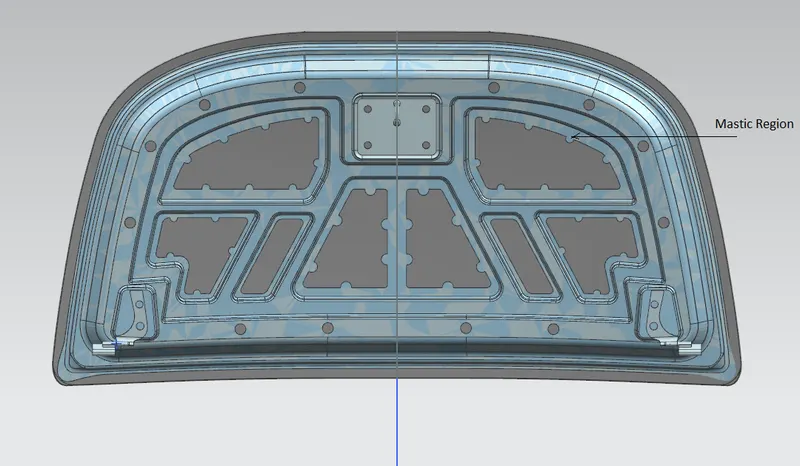
7. Reinforcements: These are provided to compensate for the cutouts made for the mounting purpose of the hinges and striker. These provide strength and compesnatory weight to the inner pannel as well.
Design Parameters for the Hood Design
Following parameters govern the design of hood panels.
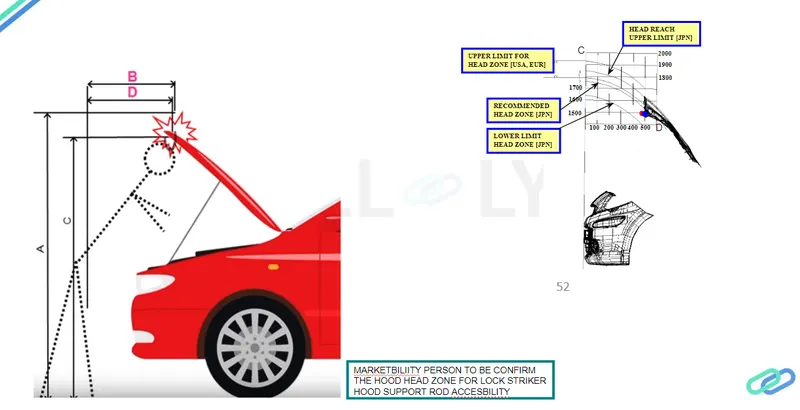
Hood Head Zone for lock striker/Hood Angle:
It is important for the lock striker to be in the zone such that it doesn't harm the user's head in open condition when panel is open condition. Head zone criteria is basically decided by the normal average height of the customers of the specific country. Different country have different average height of the people. This basically decides the length of the panel, the angle at which the hood is going to be opened and the position of the striker.
Manufacturing Method and Material:
The design of the hood will highly be influenced by the manufacturing method it is going to follow. The manufacturing process comprises the following steps: (1) blanking, (2) stretch forming, (3) trimming and punching, (4) deburring, (5) welding, (6) grinding, (7) painting, (8) baking, (9) polishing and waxing, and (10) coating. Mostly used materials are steel and aluminium for the hood panels. Aluminum is used when light weight is considered for the automotive body. However, titanium, boron steel(Tesla), kevlar etc. materials are being used nowadays.
Force Distribution in the Panel:
In the event of car crashes, it is important for the impact force to be absorbed by the panel as much as possible so that least impact reaches the person sitting inside the vehicle. This can be achieved by the proper force distribution in the panel which can be achieved by providing embosses in such a manner that the resulatant force distribution reaches hinges of the panel. This way, cutouts and embosses' pattern are designed for the same purpose.
Position of Support Rod:
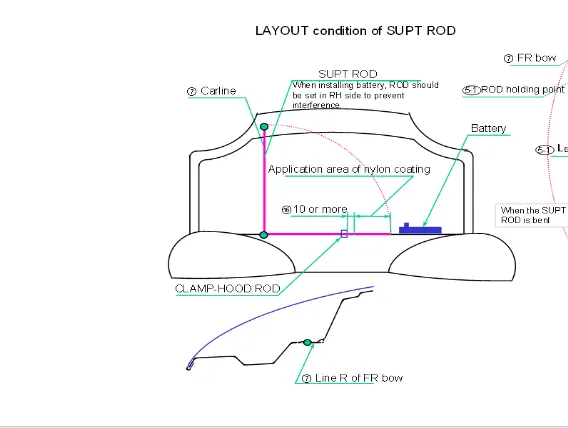
Positon of the support rod be in such a way that it doesn't hinder the battery access activities. Also the shape and position of the support rod influence the design of hood panel.
Pedestrian Safety:
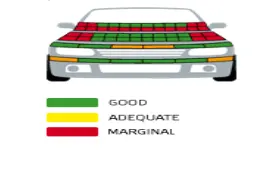
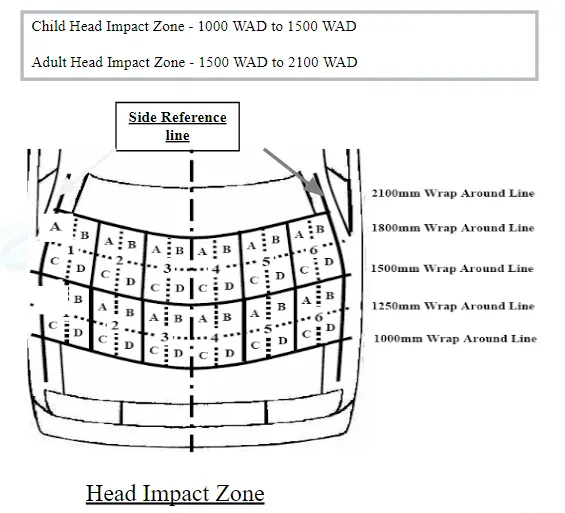
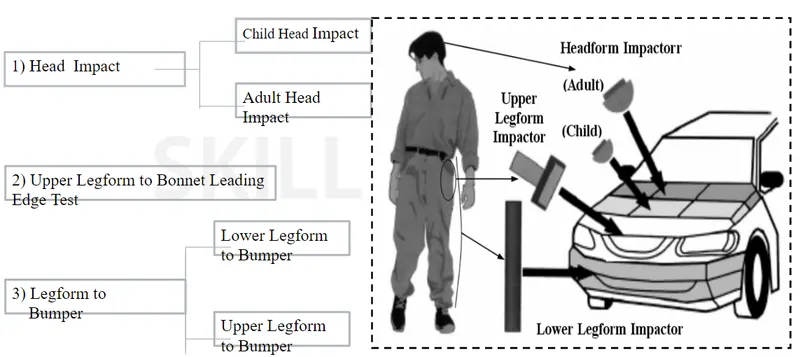
IHRA (International Harmonized Research Activity) data shows that a major source of child & adult Pedestrian head injuries is on the top surface of hood of the striking vehicle. So the hood area should be designed in a way which can decrease the fatal or serious injury. It is not necessary for the pedestrians to hit the colliding vehicle in normal position. Wrap Around Distance (WAD) is the criteria which decides the regions on the hood outer panel, where child impact or adult impact will occur. And in those regions, it is impiortant that cutouts are given in such a way that least impact is transferred to the pedestirian to minimise the head injury. According to WAD, various head impact zones are decided, goal is to minimize the red zones(as shown), to get the requred NCAP ratings.
NVH (Noise, Vibration and Hardness) :
Since there is gap between inner and outer panels, noise and vibrations occur during the drive. To reduce these noise and vibrations, mastic seals are provided such to reduce NVH rating. The lesser the NVH rating, better is the design of the hood.
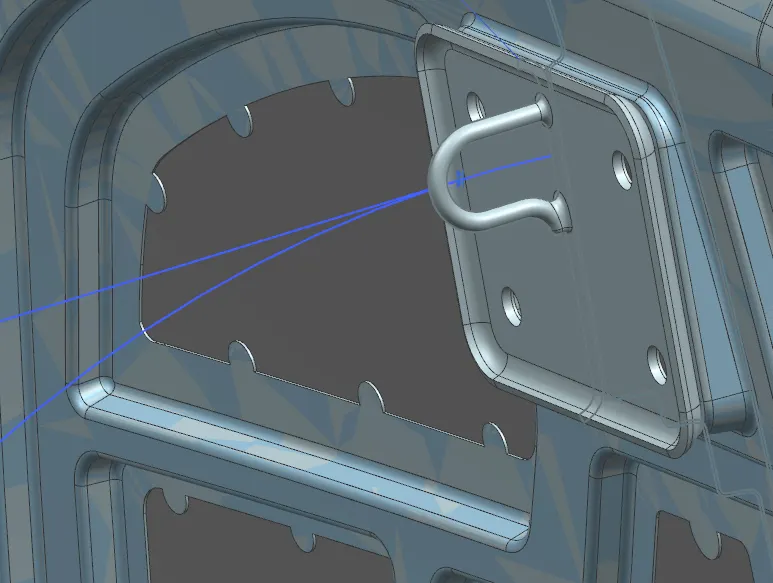
Latch Trajectory:
The trajectory is important for the mounting of the striker wrt to the hinge axis to for proper locking of the hood on the engine compartment.
Step 1: First draw the hinge axis and assign constraint to the axis parallel to the X-axis as shown in the figure.
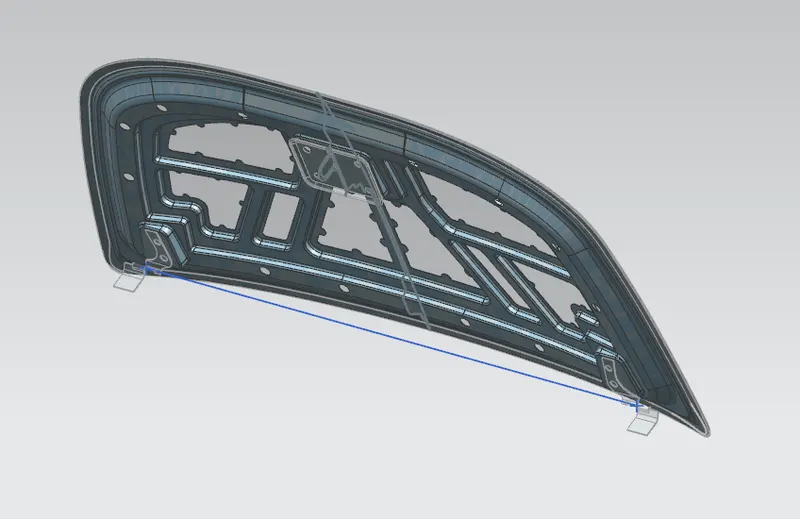
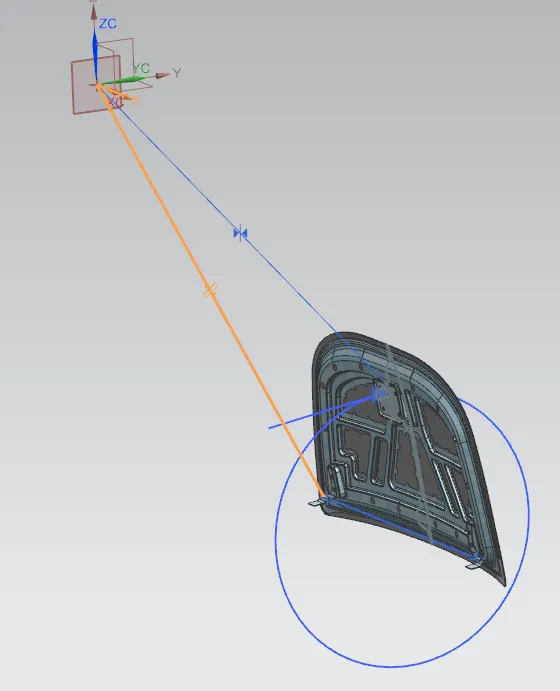
Step2: A circle is drawn with centre coincident with the hinge axis and at the middle of the axis. And a tangent line is drawn to the circle(as shown).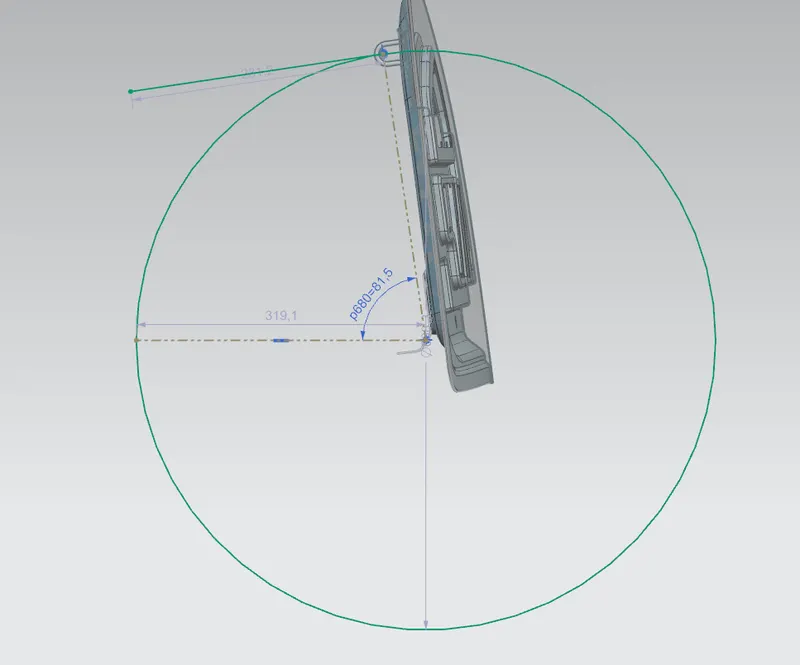
Step3: A centre line is drawn at the clamp of the striker as shown. Constraints are provided to this centre line wrt to the tangent line at the circle to correctly place the striker at the proper place.
Embossing:
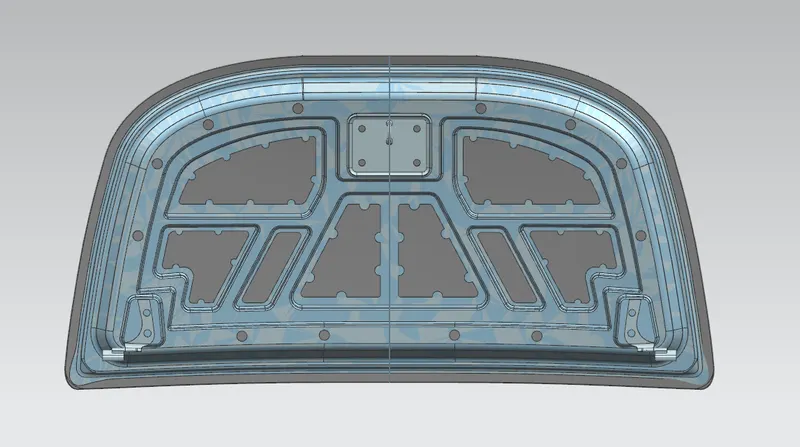
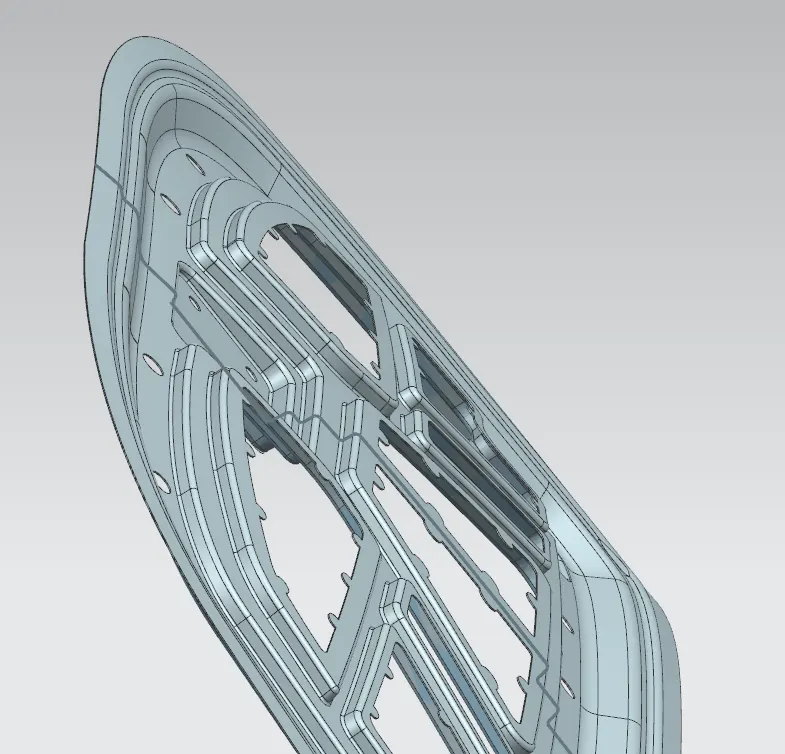
For the purpose of producing raised or sunken designs or relief in sheet metal, sheet metal embossing is done to increase stiffness to the sheet. It is a stamping process which can be achieved by passing a sheet or a strip of metal between rolls that have the appropriate pattern, or by using male and female roller dies that are matched. Depending on the type of embossing required, the metal sheet embossing procedure is frequently carried out using a combination of heat and pressure on the sheet metal. Embossing sheet metal can bolster metal panel stiffness and rigidity, increase metal surface area for acoustic or heat transfer and improve traction.
Deep Drawing:
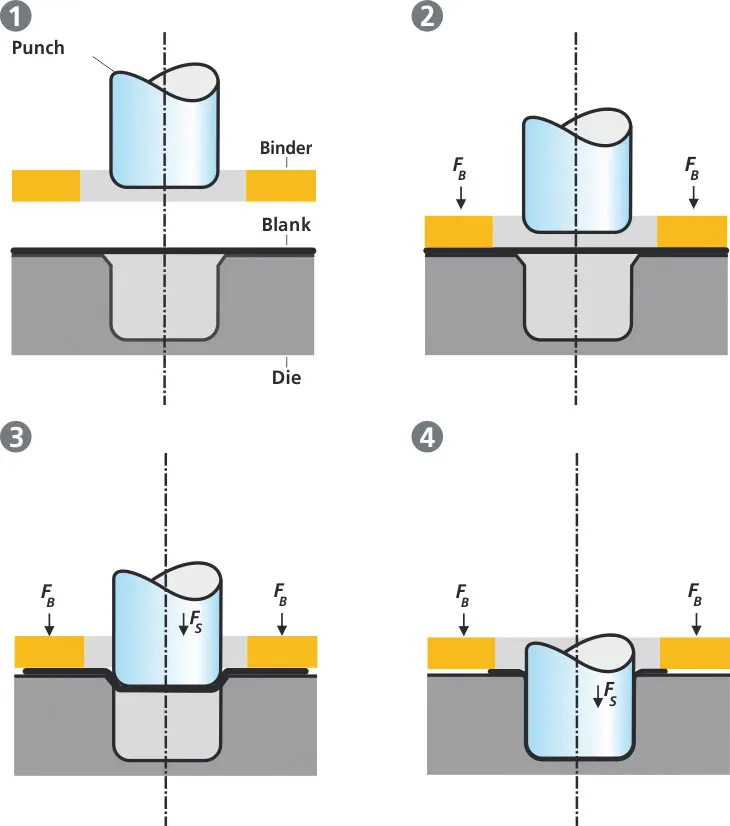
A sheet metal blank is radially dragged into a forming die during the deep drawing process by the mechanical action of a punch. It is thus a shape transformation process with material retention. When the drawn part's depth is more than its diameter, the procedure is referred to as "deep" drawing. Apart from its use in many other sectors, it is applied in the automotive industry for the manufacturing of car body parts. When drawing complex car body parts in practice, there is usually a combination of stretch and deep drawing involved. It is necessary that the sheet metal is stretched as well as possible without reaching the material’s limits. Blank holders are necessary to hold the blank to reduce wrinkling defects in the deep drawing process.
Hemming:
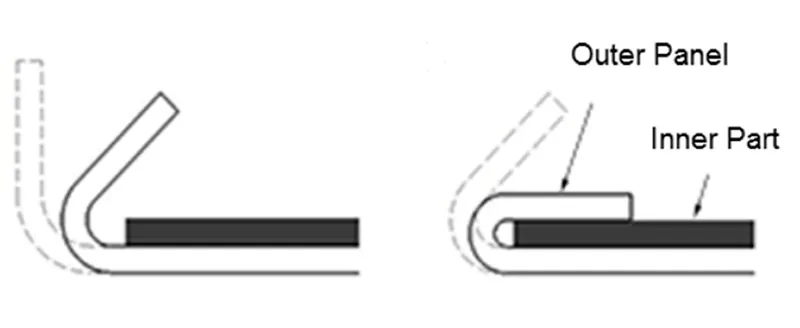
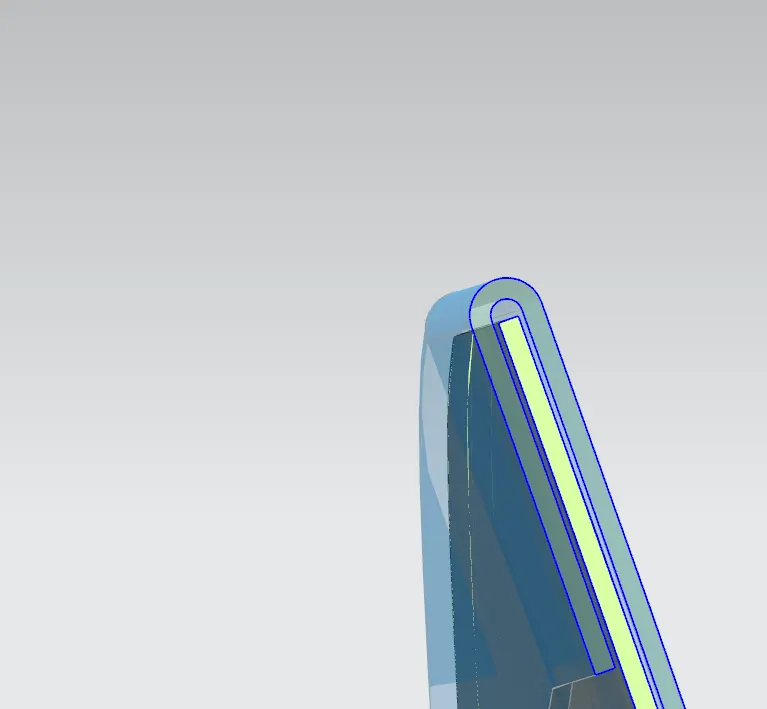
Hemming is a sheet metal forming process in which sheets are joined by bending it usually to 180°. Automotive body panels and automotive parts such as deck-lids, trunk-lids, doors, hoods and tailgates are formed by hemming process. In order to obtain a tight fit, the sheet's edges are folded or folded over another area during the hemming process. Hemming procedures are typically used to join components together, to enhance a part's appearance, and to reinforce part edges. The following image gives a basic understanding of the hemming process.
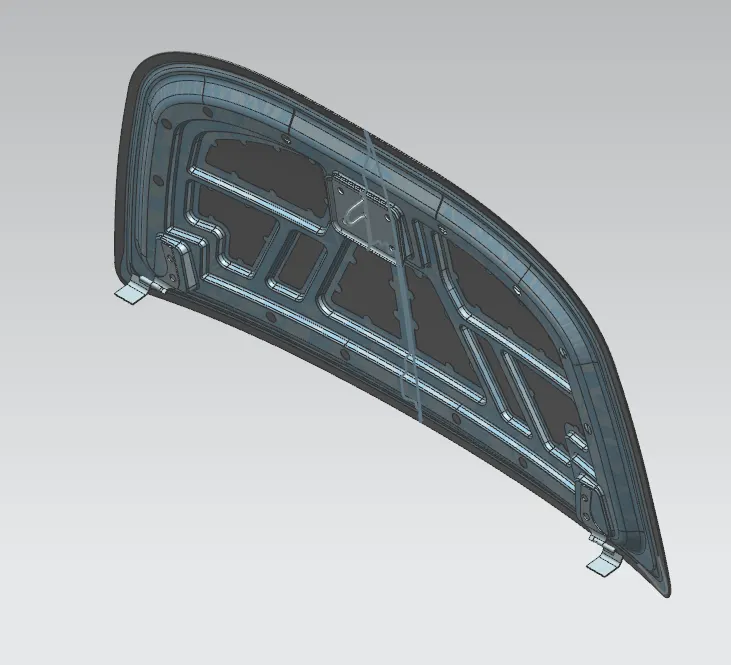
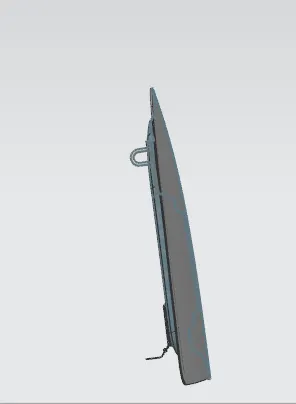
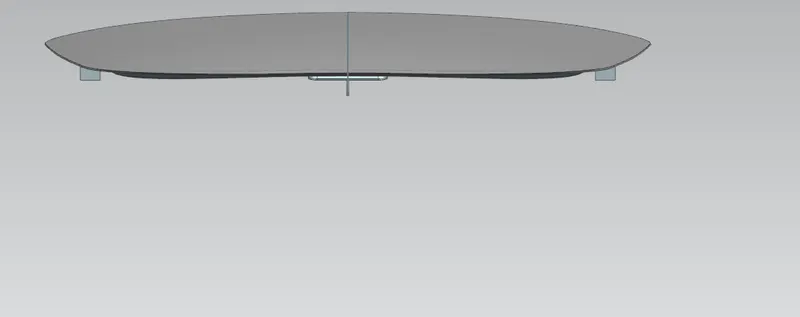
Standard Views of Hood Assembly
Front View
Isometric View
Side View
Top View
Conclusion:
This challenge helped me in understanding the design constraints involved in designing of the hood panel of the car. This challenge takes dig into the hemming process important for the assembly for inner and outer panel of the hood. Various design parameters involved in the design of the hood are also learned such as mastic seals, NVH, WAD etc.