Hood design-Week 2
HOOD
A car hood, also referred to as a bonnet in some other countries, is the hinged cover that rests over the engine of a vehicle. Its purpose is to provide access to the engine for repair and maintenance as well as acts as a protective covering for the engine from the enviroment. A concealed latch is typically used to hold down the hood.
Parts Of A Hood
There are mainly five parts of a hood
- Support
- Inner Panel
- Outer Panel
- Latch and Striker
- Hieng
Support
The part that helps the hood to stay in the condition are known as support
There aretwo types of supports are used in the industries are as follows
- Gas stay
- Support Rod
Gas Stay
These are the hydrolic springs used to hold the hood in opend position when the latch is just opened the gas stay opens the hood automaticaly.
Support Rod
This is widely used in many car, because this very easy and cheap. In this type we have to lift the hood by ourselves and place the support rod in the space provided either in the hood or engine component. This is mostly used for where the car bonnet weight is small.
Outter Panel
Outer panel is nothing but a outer skin of inner panel. Otherwise called as a cover of inner panel. It is the part, which gives luxurious look to the hood or bonnet. Outer panne! and inner panne! cannot join by any welding process like spot welding or rivet, which spoil the outer look of a car.The outer panne! is generally extracted model from the prototype design.
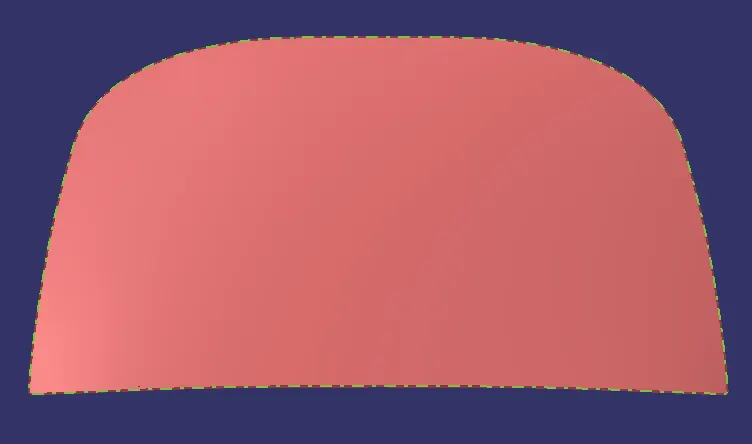
Inner panel
Inner panel supports outer panel. It consists of different embosses and hole at different places. Embosses provide stiffness as well as dissipate energy towards hinges. To determine the most effective position of hole, the method of modal stiffness is employed.lnner pannel is offset of the parent work surface.inner pannel thickness is 0.75mm.
Emboss
The geometry is created based on the master section that was designed above. After performing the initial stages of design, we will provide local embosses to strengthen the component. The component will be strengthened based on the master section. When a force impacts the hood from the front, it travels in an upward direction. The component is designed to divert the force away from the passengers into the hinges, as shown in the image belowThe embosses in the inner panel are made according to the diversion of the load path. The emboss depth is kept at a maximum of 5mm to be on the safer side so that the part is manufacturable. 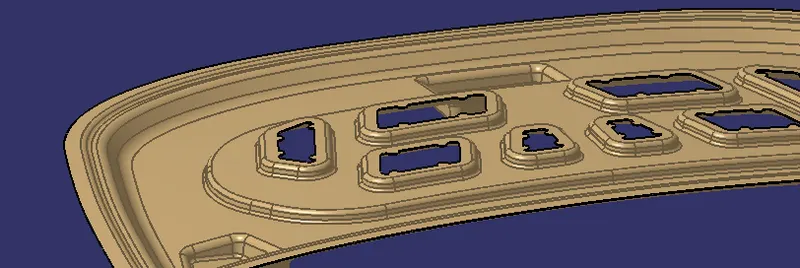
To provide strenth to the inner pannel and to distribute the force produced during the impact with pedstrian or other obstacles to ensure the saftey of the passengers.The forces are directed outwards through the embossing path.
HINGE, LATCH AND STRIKER
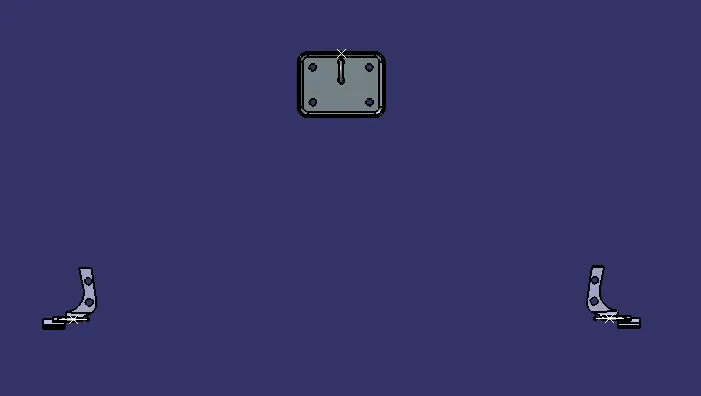
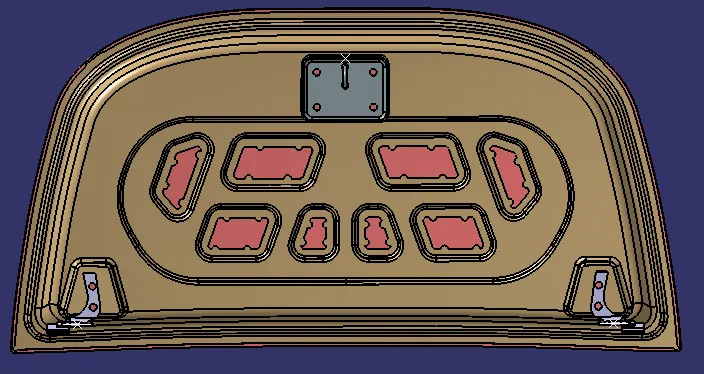
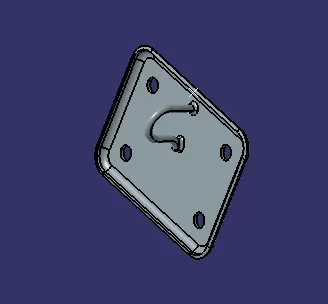
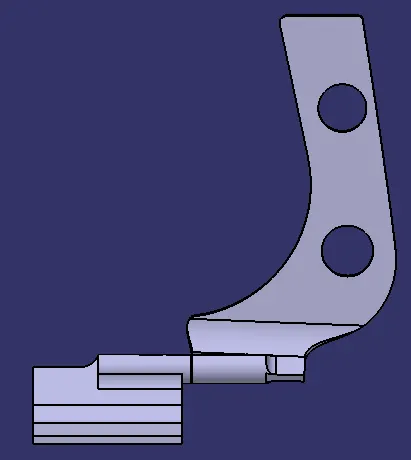
The hinges are the positioning part that are used to attach the hood with the body and the hood is locked in the closed position using latch and striker.
For postioning hinge and striker,we have to place hinge tantatively and take hine axis point and place position from data taken from the parent car or our own.The other major functional of the hood is the opening and closing of the hood. This is done with the help of the latch and striker. To position the latch and striker effectively, we position the hinge and draw the hinge axis. Now, using the hinge axis as the center we draw a big circle to the position where we need the latch to be placed. Then, we draw a tangent line to the circle at that point and place the latch in that region.
Mastic Sealant
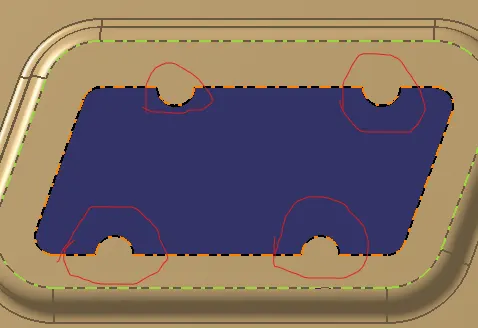
The Mastic sealant or the Mastic point is an elastic compound that behaves like a rubber. The mastic points are defined on the hood inner panel where the hood can easily deform. They help the hood outer panel to come back to its original shape after it gets deformed. The mastic has an influence area of 80mm.
Hemming
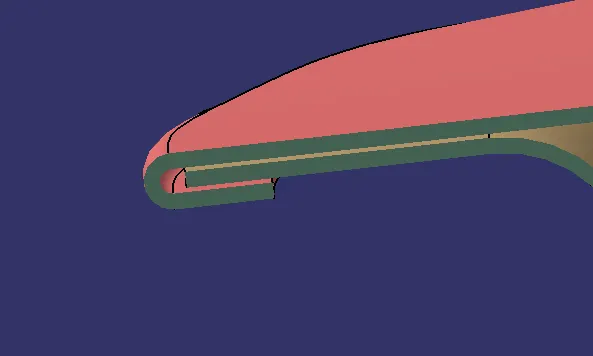
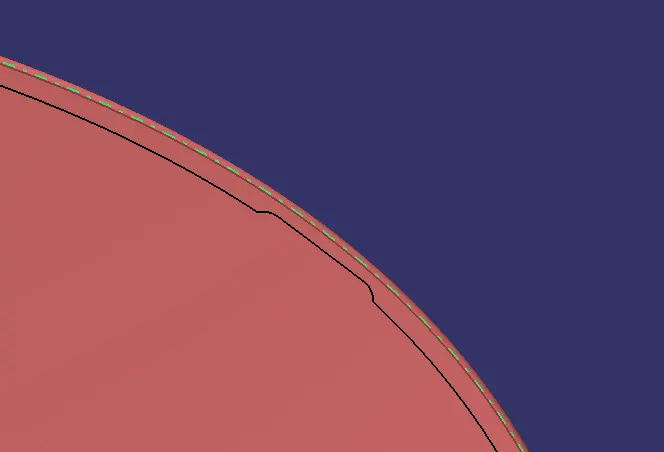
Hemming is a process of joining inner and outter panel together. In this process the outter panel roled and wraped around the inner panel and hplds it tightly together.
Hemmng DATA
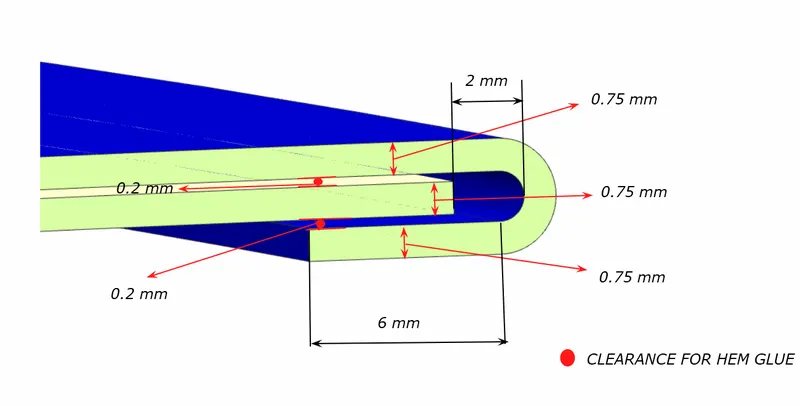
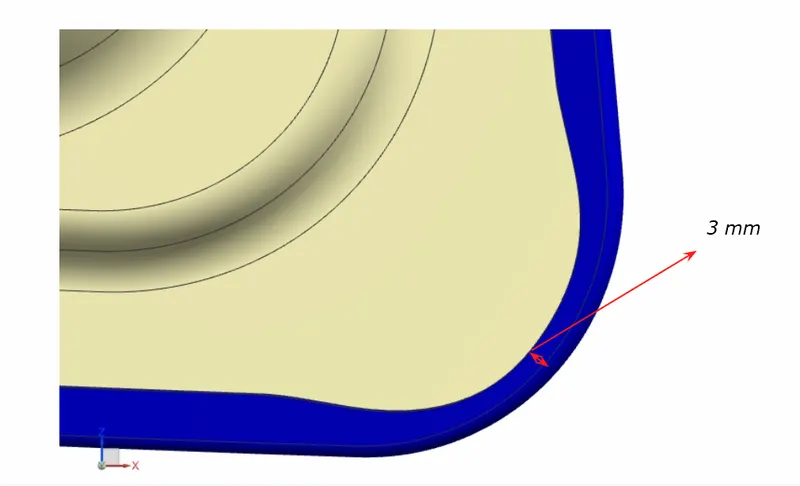
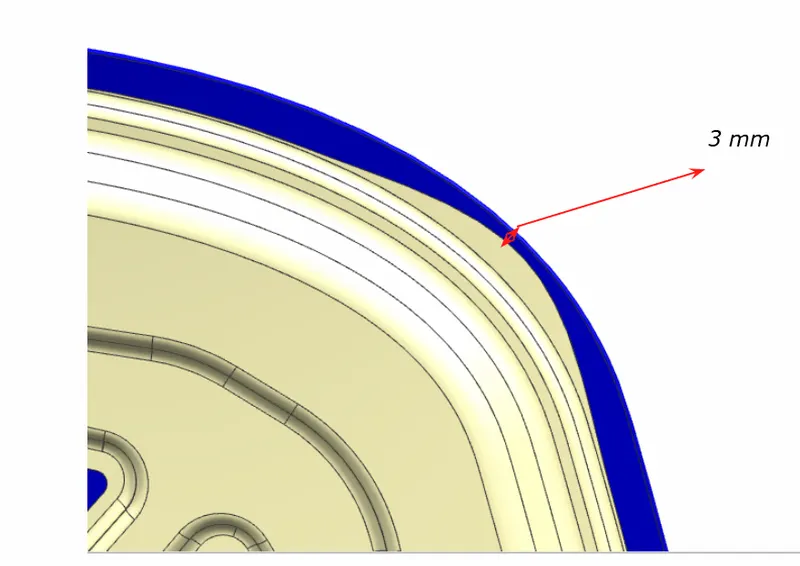
The criterias that are cosidered before the designing of Hood
- Hood Openning Angle
- Support Requirements
- Force Distribution During Collision
- Trajectory of Latch & Striker
- Pedestrian Safety
- NVH(Noise Vibration & Harness)
- Side Reffernce Line
Hood Openning Angle
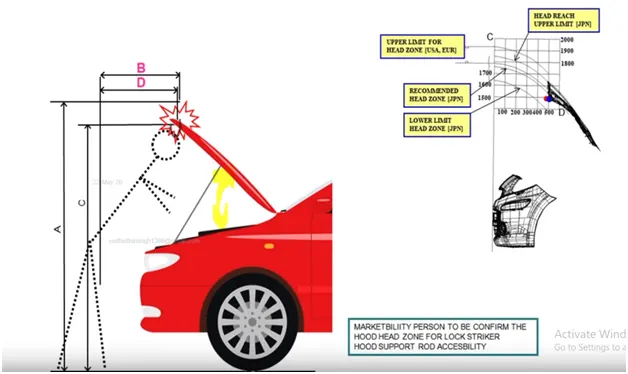
It is major criteria cocidered differently in diifferent contries deppending the average hight of the people.
Support Requirements
The support is to be designed based on the height and weight of the hood. Some of the design consideration for the hood such as curvature of the rod and it is to be mounted opposite to the battery mountings.
Force Distribution During Collision
The inner panel is designed in such a way that the force produced during the collision is delivered on the outward direction so that the damage to the passenger and the driver is to be reduced.
Trajactory of Latch & Striker
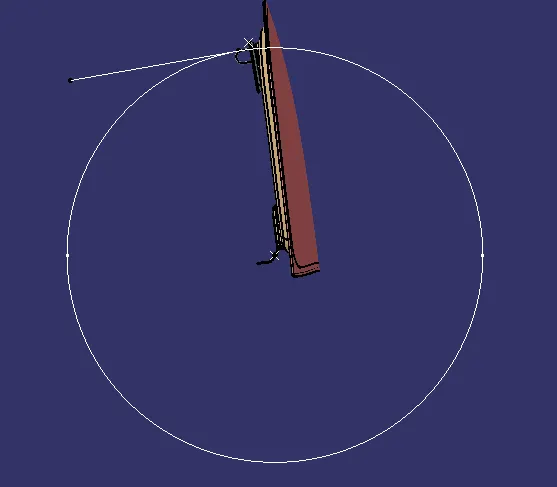
The striker must follow a circular patch whose center in present on the axis joining both the hinges and also striker must be always perpendicular to the line joining the striker and the axis joining hinges
Pedestrian Safety
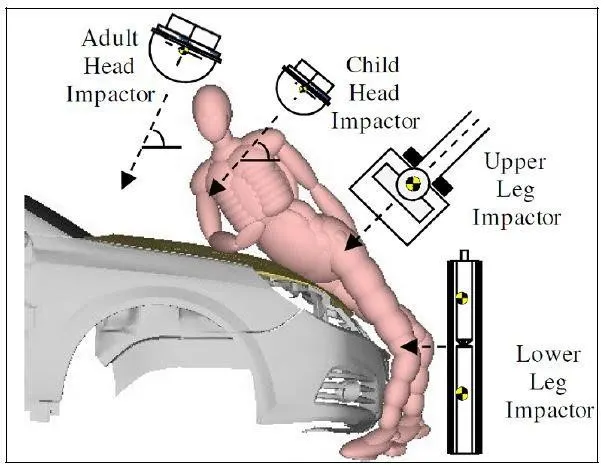
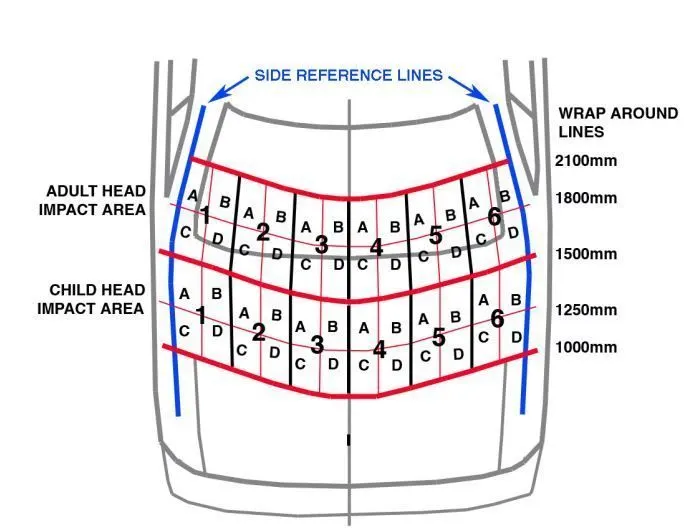
Pedestrian safety is one of the important criteria which must be taken into consideration during designing a hood. Based on the wrap around distance and pedestrian head impact zone, hood is designed so that during a collision impact on the person must be reduced. Around the impact zone the hood is made softer by removing material. There are two main zones in the hood that are considered while designing it. The Child head impact zone (1000mm to 1500mm) and the Adult head impact zone (1500mm to 2100mm) as shown above. The wrap around distance is the distance from the ground level to the end of the hood. The side reference line and the wrap around distance is related to each other. If the side reference line is on the fender, the wrap around distance will be more and impact zone will be less and vice versa. Pedestrian safety is to avoid severe injuries to the head, the high impact area for adults and children are subjected to less thickness. In addition, no reinforcement should be provided in that area as during the head collision, the hood will absorb the head impact energy leading to collapse of the hood and thus protecting severe head injury. To protect the occupants inside the car during the front collision, the design of the hood should be in such a way that the force should travel in the upward direction through the embosses and directed towards the body of the car during the collision. Thus, protecting the occupants inside the car. Mastic sealants and embosses helps to meet the pedestrian safety standards. The adult and child impact zone are taken into consideration, and the deformation zone considered with respect to the engine compartment and outer panel there by determining the interference. This generated deformation is considered as critical and needs to be relocated or tuned to fill. Relocating or tuning leads to reduce the force exerted on pedestrians especially in heat during collision Generally, inner and outer panels are made of 0.65 to 0.75 mm thick and reinforcements are made of 1.5mm thick. Adding more reinforcement improves the strength but it also increases the cost and weight of the car.
NVH
Noise, vibration, and harshness (NVH) is the study and modification of the noise and vibration characteristics of vehicles, particularly cars and trucks. While noise and vibration can be readily measured, harshness is a subjective quality. Many problems are generated as either vibration or noise, transmitted via a variety of paths, and then radiated acoustically into the cabinill These are classified as "structure-borne" noise. Others are generated acoustically and propagated by airborne paths. Structure-borne noise is attenuated by isolation, while airborne noise is reduced by absorption or through the use of barrier materials. Vibrations are sensed at the steering wheel, the seat, armrests, or the floor and pedals. Some problems are sensed visually - such as the vibration of the rear-view mirror or header rail on open-topped cars.
Given
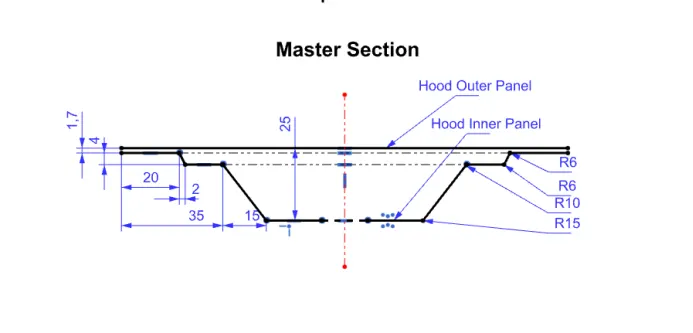
Master Section
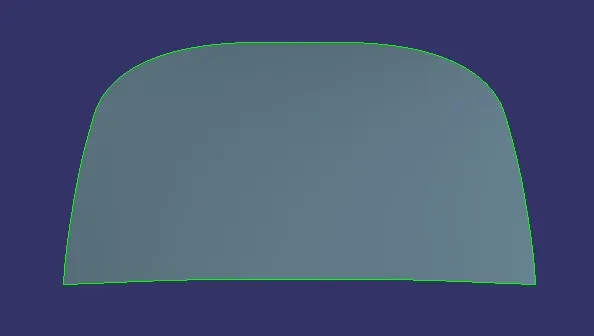
Outter Surface
Striker
Hienge
Final Hood Assembly