Hood design-Week 2
Aim:
This challenge aims to create a hood with its components and their reinforcements using Catia V5.
Hood:
The Hood is a part of a car that covers the top of the front portion. The hood adds protection to the engine and its components, it also covers the boot space if present. The Hood also provides a clean look to the front of the vehicle.
Safety features in HOOD.
In Japan and Europe, regulations have come into effect that places a limit on the severity of pedestrian head injury when struck by a motor vehicle. This is leading to more advanced hood designs. Other changes are being made to use the hood as an active structure and push its surface several centimeters away from the hard motor components during a pedestrian crash. The hoods are tested with dummies to find the impact regions of different parts of the pedestrians at different positions and zones. The data are obtained, examined, and with the result, they decide whether to alter the design or continue with the same design.
A support is used to hold the hood while it’s open. Either a Gas stay or a support rod is used. The head zone of the hood is designed based on the regulations of the country.
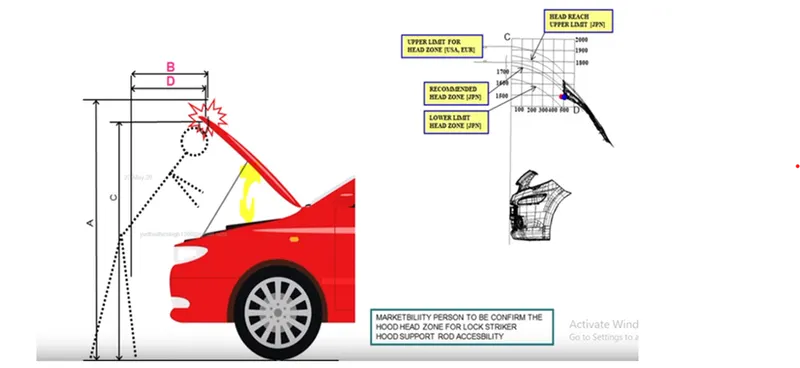
Components of Hood to be created:
1) Hood outer panel.
2) Hood inner panel.
3) Hinges.
4) Latch and
5) Reinforcements.
HOOD OUTER PANEL:
The hood outer panel in the region of the hood that is visible to the outside, the main function of the outer panel is to create a clear and good look for the viewers while covering the inner structure of the hood. The outer panel is attached to the inner panel by a process called hemming.
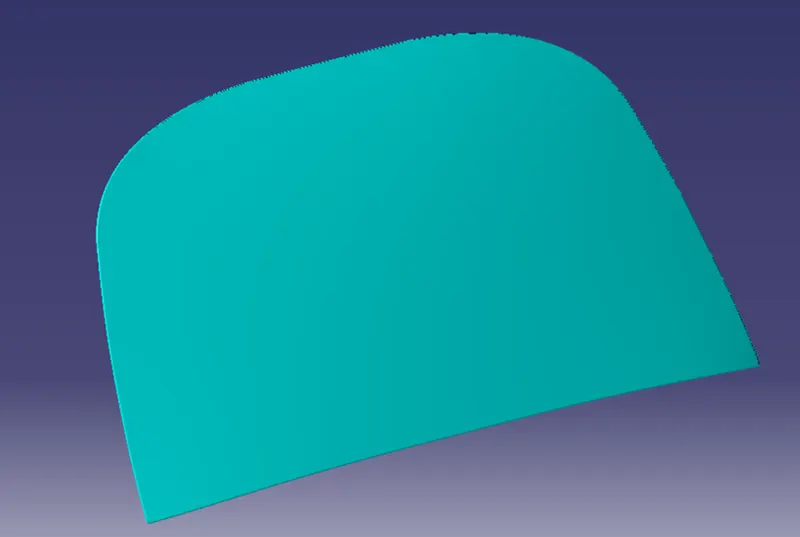
HOOD INNER PANEL:
The hood inner panel is the part of the hood that gives structure and strength. It is designed with embosses to create strength while using less material. Embosses, are raised or sunken sheet metals present on the inner panel which facilitates mastic points and surface area for hinges and latches. It also has mastic points where mastic sealant is applied which helps in attaching the inner panel to the outer panel. These mastic points are created a specific distance between each other while covering the entire center portion of the hood. It helps in reducing noise and vibrations. The inner panel also accounts for holding hinges and latches.
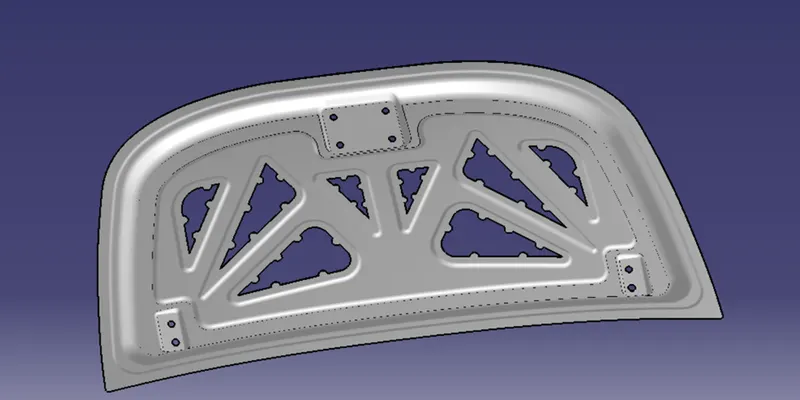
HINGES:
A hinge is a component that attaches two different parts together while enabling angular movement of the two components with respect to an axis. Hinges have one side attached to a stable part and the other to a part that moves. The hinges are attached to the inner hood panel and the body of the car. This allows the hood to move in an angular direction.
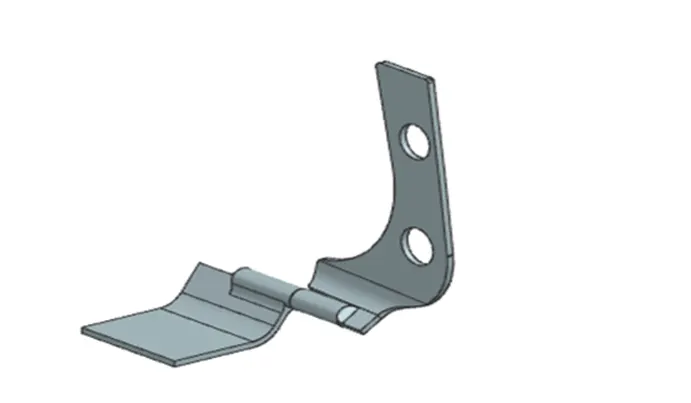
LATCH:
Latches are components that are used to fasten doors and keep them shut. It acts as a fastener that holds the door when it’s shut and allows the door to swing or move when opened. In hood helps in fastening the hood to the body of the vehicle. Latches are placed while considering the striker’s trajectory with respect to the axis of the hinge. The angle at which the striker is placed is by having it tangent with the latch’s trajectory.
REINFORCEMENTS:
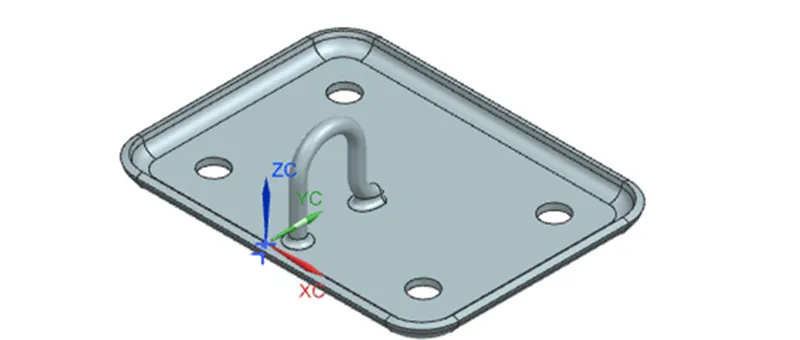
Reinforcements are additional sheet metal parts that are attached to the main component to provide strength and support. In the case of reinforcements are provided for the latch and the hinges. They are attached to the embosses of the hinge and latch.
Methods to manufacture Hood:
1)Deep-Drawing
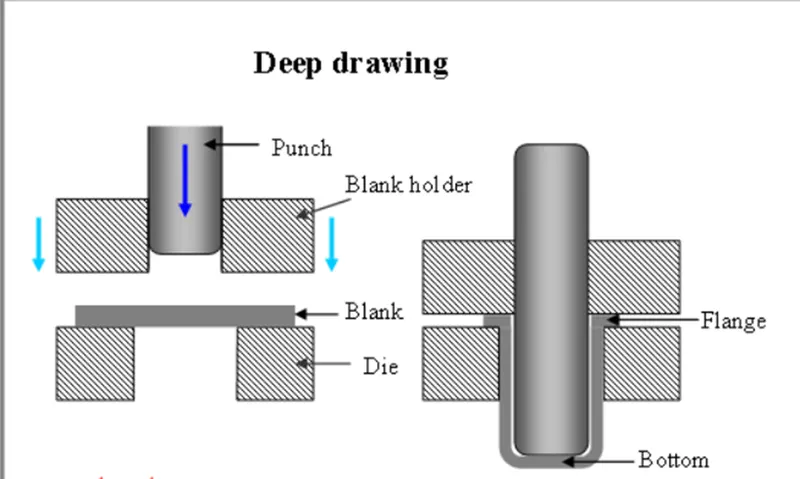
Deep drawing is a sheet metal forming process in which sheet metal is radially drawn into a forming die by the mechanical action of a punch. It is thus a shape transformation process with material retention. The process is considered "deep" drawing when the depth of the drawn part exceeds its diameter. This process is used to create embosses on the hood.
2) Hemming
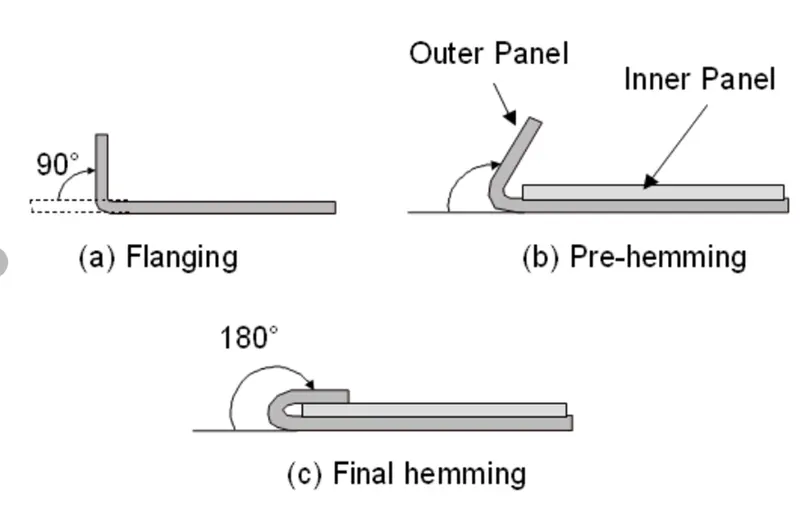
Hemming is a forming process in which the edges of the sheet are folded or folded over another part to achieve a tight fit. Hemming is used in places where appearance is vital.
Conclusion:
Thus the Hood has been designed with respect to the regulation and as per the master section.