Hood design-Week 2
HOOD
What is hood?
- A car hood is also referred to as a bonnet. It is the hinged cover that rests over the engine of a front-engine vehicle. Its purpose is to provide access to the engine for repair and maintenance. A concealed latch is typically used to hold down the hood.
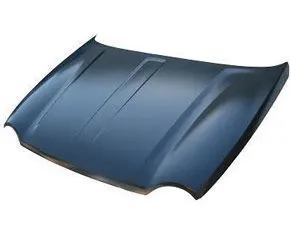
Fig: Car Hood
Hood Head Zone
Hood head zone is one of the design criteria for opening of a hood also known as hood angle. It is a safety criteria given to hood opening angle to avoid crashing of head and striker of the hood.
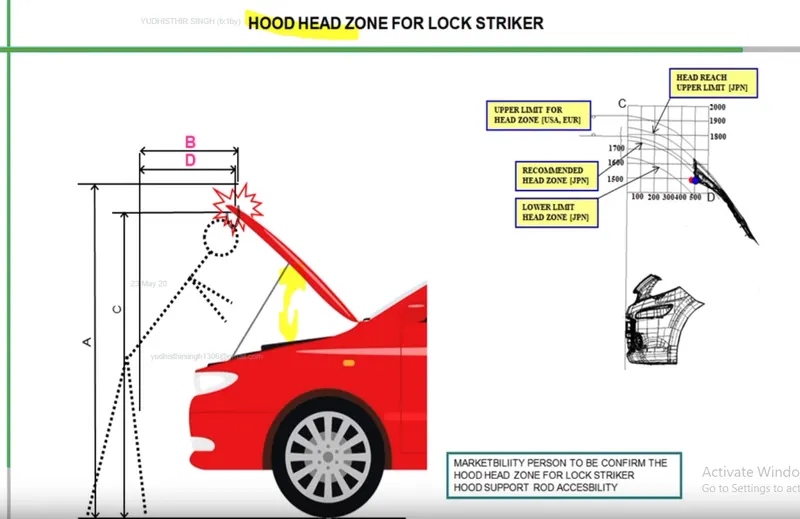
Fig: Hood Head Zone
Wrap Around Distance:
WAD (Wrap-Around Distance) is the geometrically traced distance from the contact point with the Ground Reference Plane, vertically below the front face of the bumper, to any point on the vehicle front structure.
It is calculated when the car is crashed with pedestrian the hood and head contact area of the pedestrian and hood is calculated.
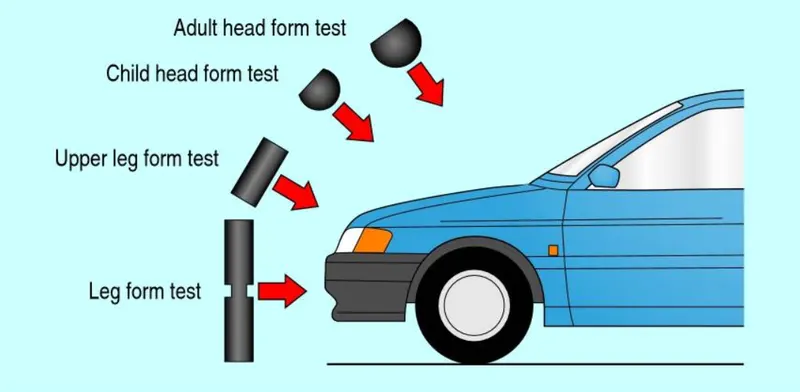
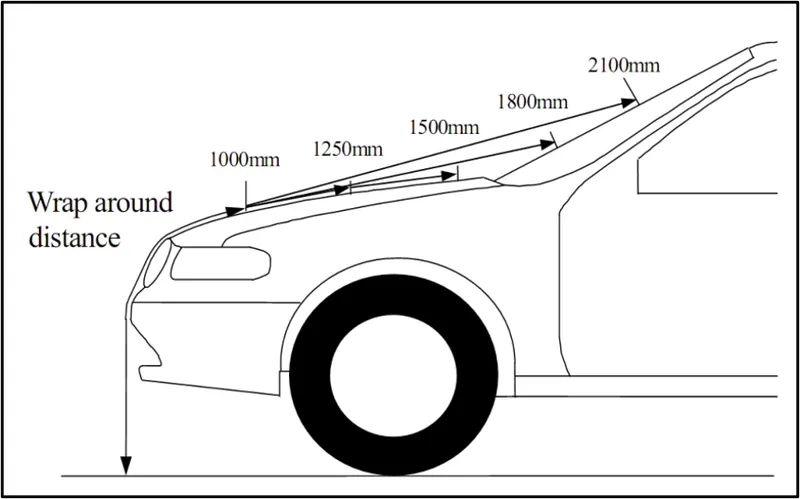
Fig: Wrap Around Distance
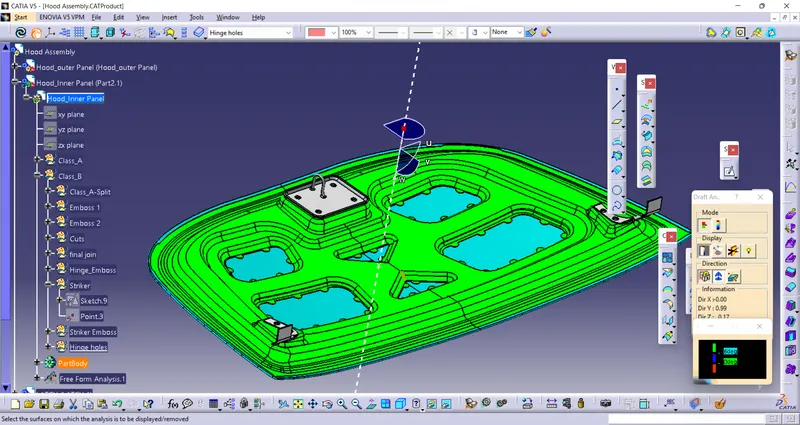
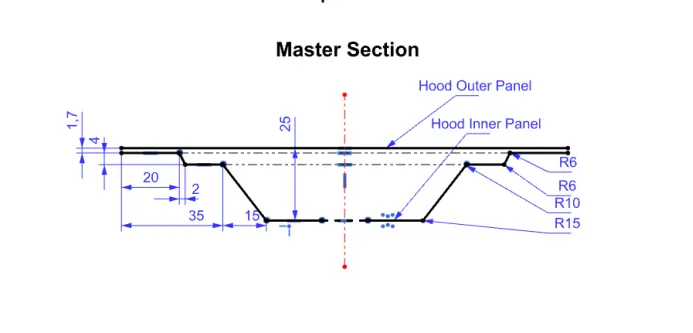
To create Hood we have been proviede with a class A surface and Master section to develop hood inner panel.
Master Section:
The Master Section is a cross-sectional view which gives a brief understanding of the structure of the component.
Hood Inner Pannel:
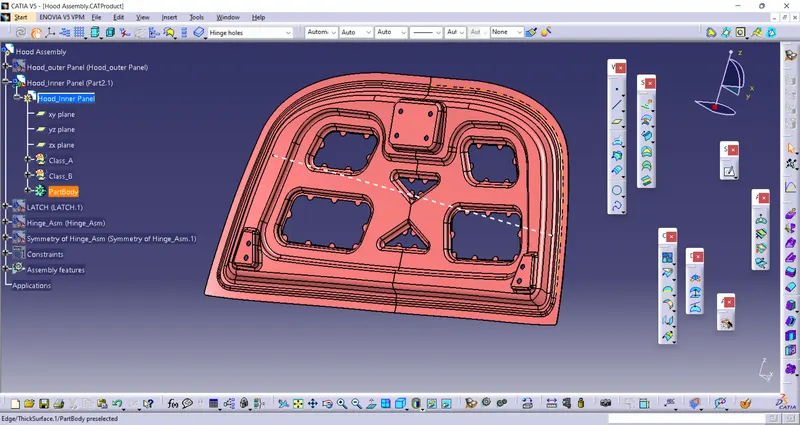
Fig: Hood Inner Pannel
The inner pannel follows with few design criterias those are:
Inner pannel Embosse: The embosses are provided in inner pannel of the hood to increase the stiffeness of the inner pannel and also decreases the vibration of the inner pannel.
Mastic Points: The Mastic points are given as per the mastic sealent to which is used to join both inner pannel and outer pannel of the Hood and it also helps to deacrease the vibration generated while the vehicle is moving.
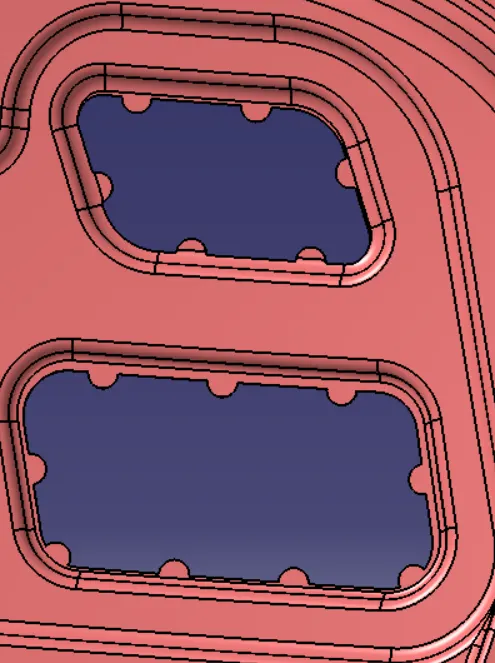
Fig: Mastic points
Supports: The supports are given to hinges and striker on inner pannel to have proper fixation of the components to inner pannel.
Hemming: Hemming is a forming operation in which the edges of the sheet are folded or folded over another part in order to achieve a tight fit. Normally hemming operations are used to connect parts together, to improve the appearance of a part and to reinforce part edges.
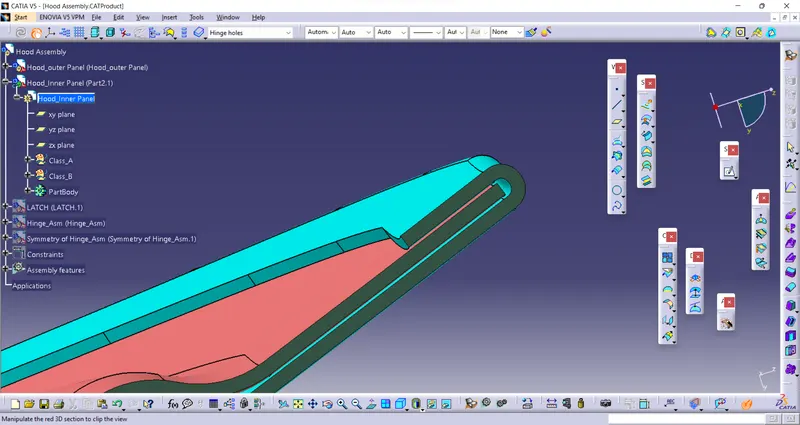
Fig: Hemming
Corner relief: Corner Relief is given in the corners of the hood to avoind foldings that can be caused during hemming. Which will further cause irregular surface and notches on the edges.
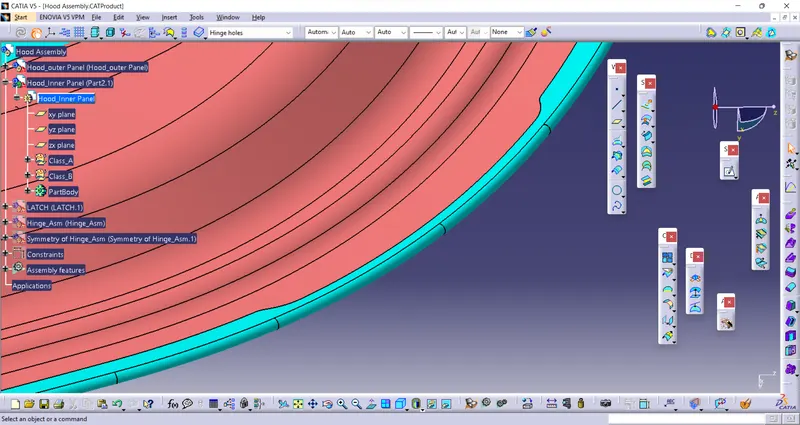
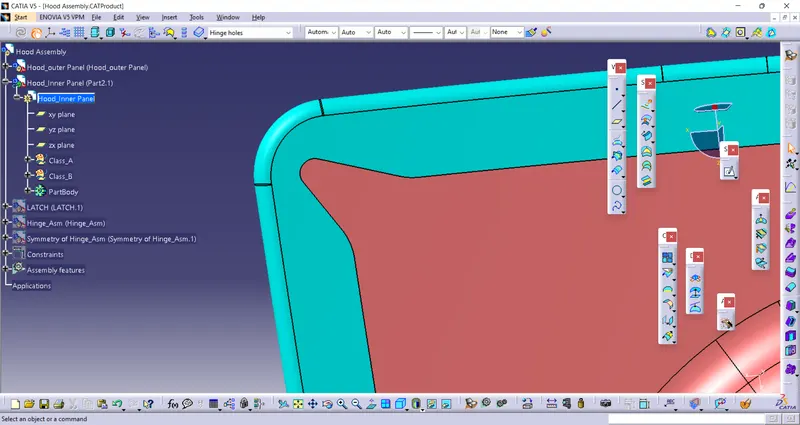
Fig: Corner Relief
Latch Trajectory: The Latch trajectory is given to decide and restrict the movement and angle of hood opening and closing.
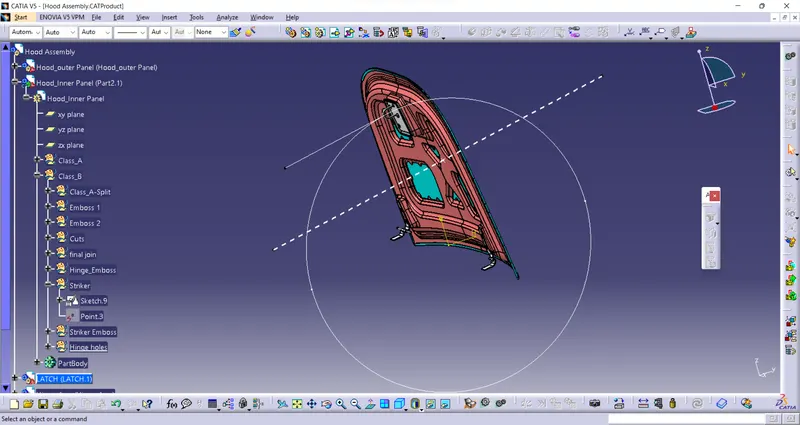
Fig: Latch Trajectory
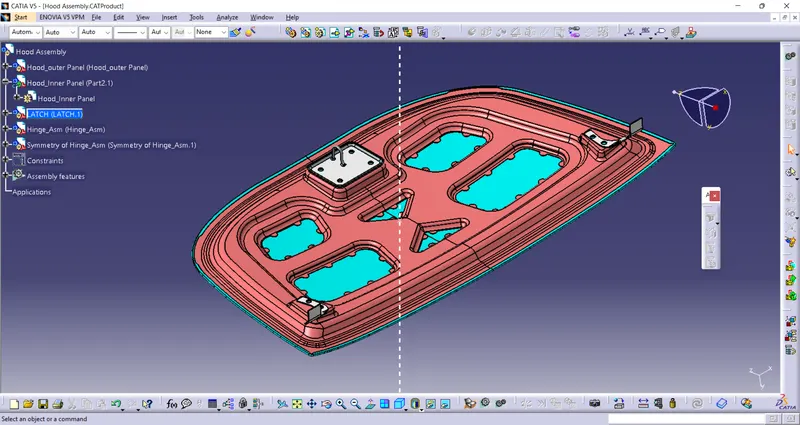
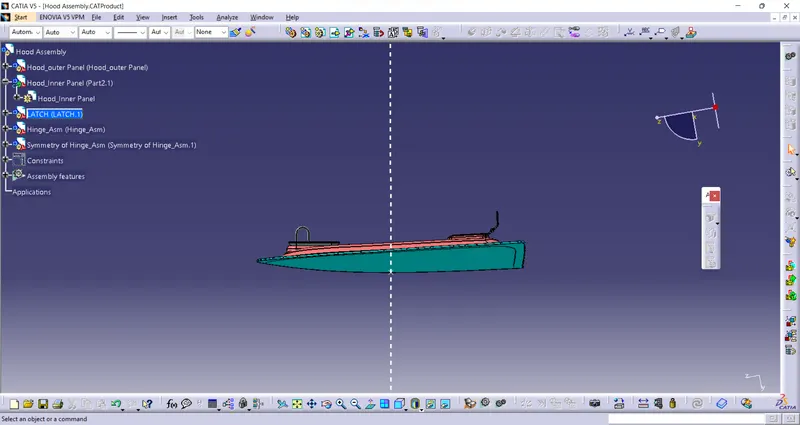
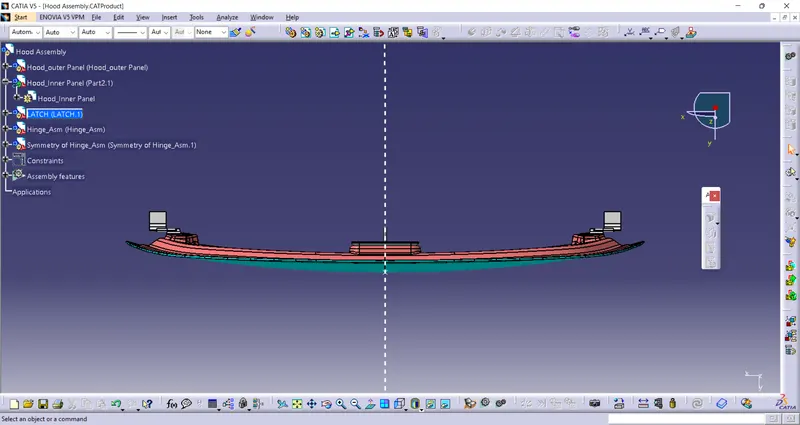
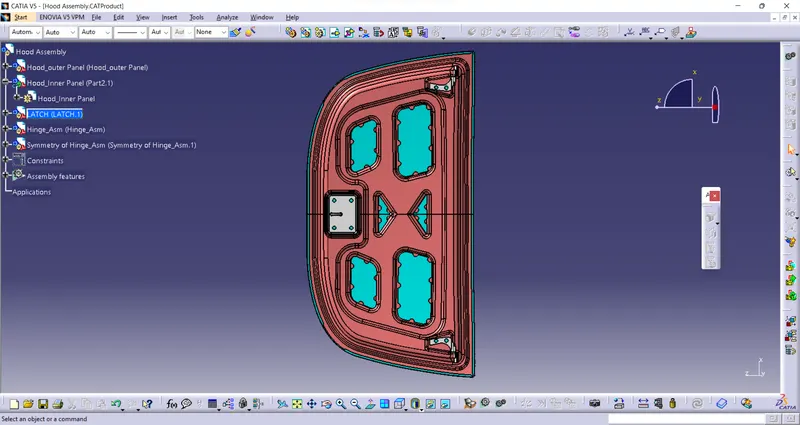
VIEWS
Draft Analysis