Hood design-Week 2
AIM
To Design Hood (Inner and Outer Panel) panel using input surface, master section data using NX CAD Surface modelling work bench
HOOD
Hood is a hinged component made up of metal (Usually sheet metal) which covers engine compartment, and also capable of opening at an angle which allows the access to the user to carry out the repair and maintenance activities, in present age and day hood is a very important part of vehicle from aesthetics, styling and safety point of view.
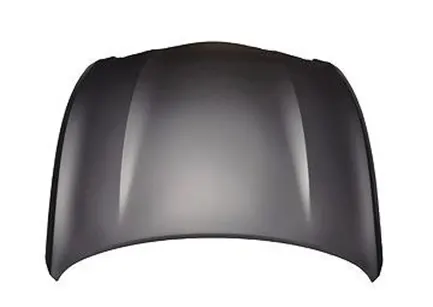
DESIGN CONSIDERATION
Outer panel thickness- 0.75mm
Inner panel thickness- 0.75
Master Sketch
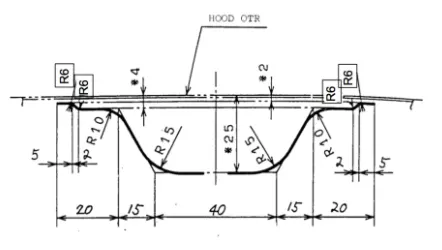
HOOD COMPONENTS
1.Hood inner panel
2.Hood outer panel
3.Hinge
4.Latch
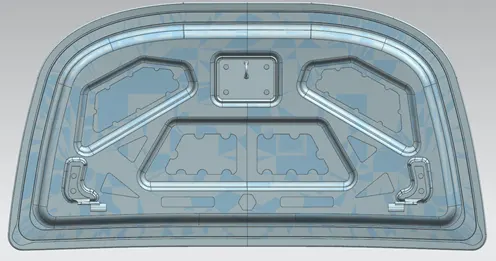
As mentioned above Hood is made up of an inner panel and outer panel, Hood is manufactured in such a way that there is no visible manufacturing trail is left for e.g. Fasteners, rivets, or spot weld on top of the outer side. It’s done in order to give an attractive and spotless look to the outer panel. Hood inner panel is designed to give strength to the entire panel and also to direct the forces outward in crash condition it also has hinge and latch mounted on it, hinges to connect the hood with car body and latch to lock the hood in its place when its closed.
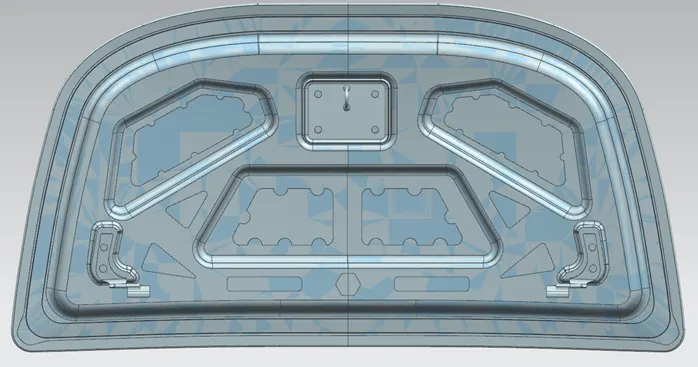
Hood outer Panel
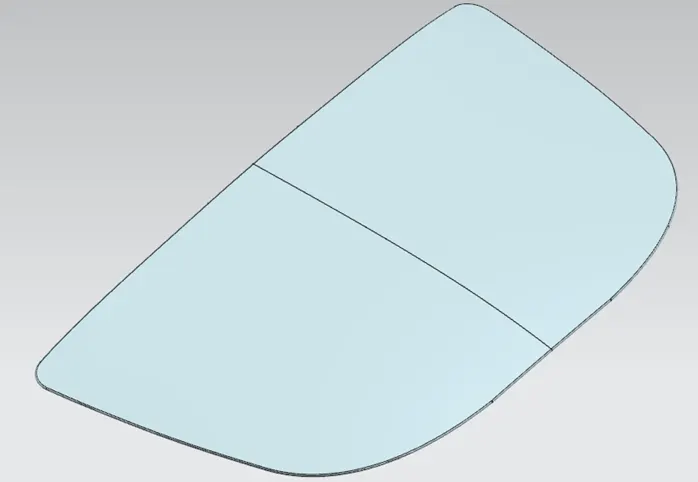
Hood Inner Panel
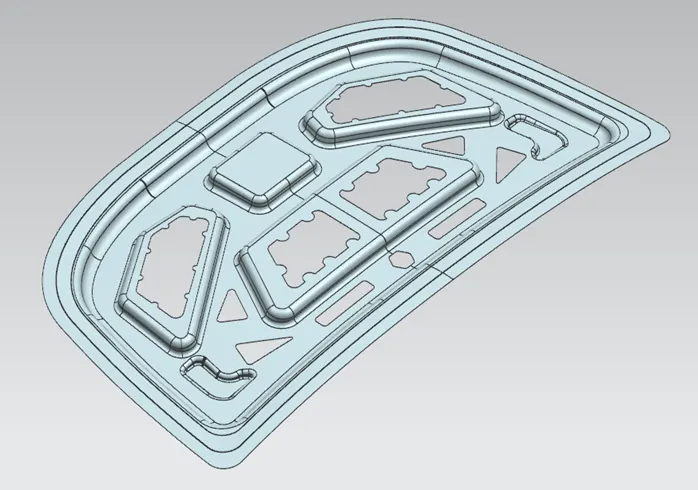
Mastic Point
Mastic is a pre mixed sealing component used to seal (or attach) Hood inner and outer panel using mastic points provided on the Hood inner panel.
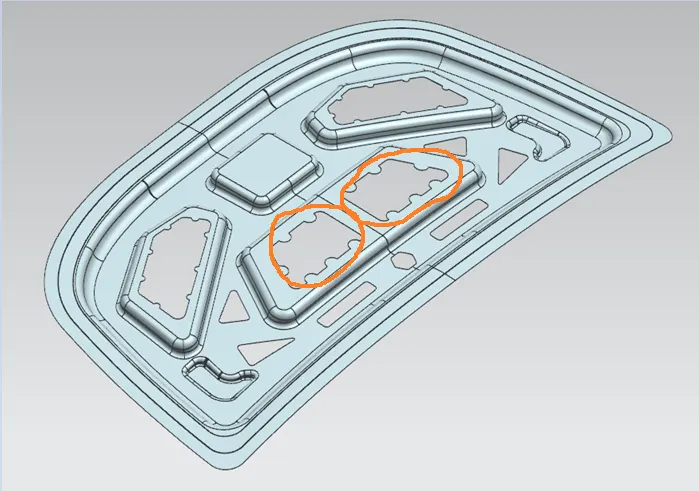
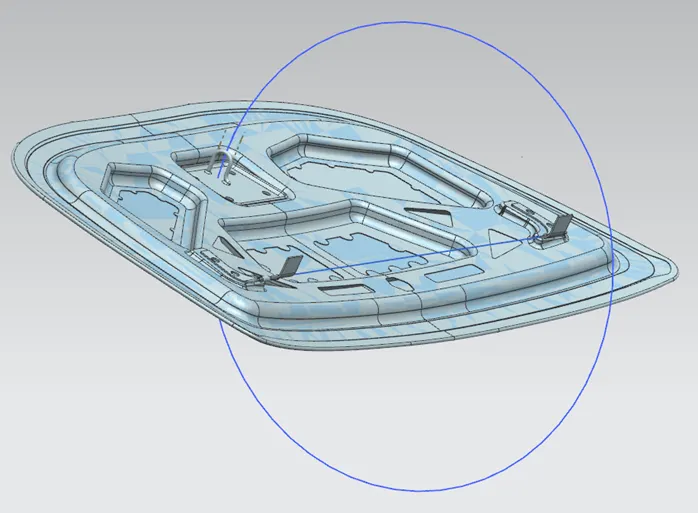
Latch Trajectory
The position of the latch should be in such a way that it should be perpendicular to the Hood trajectory it’s one of the important design parameters.
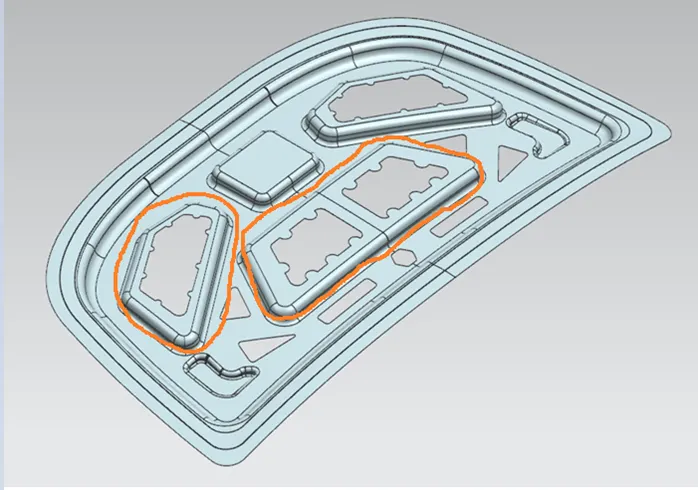
Embosses
Embosses are created on the inner panel as reinforcements to give additional strength
And then material removed in such a way that in crash condition impact forces are directed outward than inwards and also to make it lighter.
Manufacturing Operation of Hood
Deep drawing
Deep drawing is a forming process which occurs under tensile and compressive stress, a flat sheet metal is taken and using punch and die (essentials tool used in drawing) the sheet metal blank is clamped between punch and die then hydraulic force is applied and the required shape is formed.
Hemming
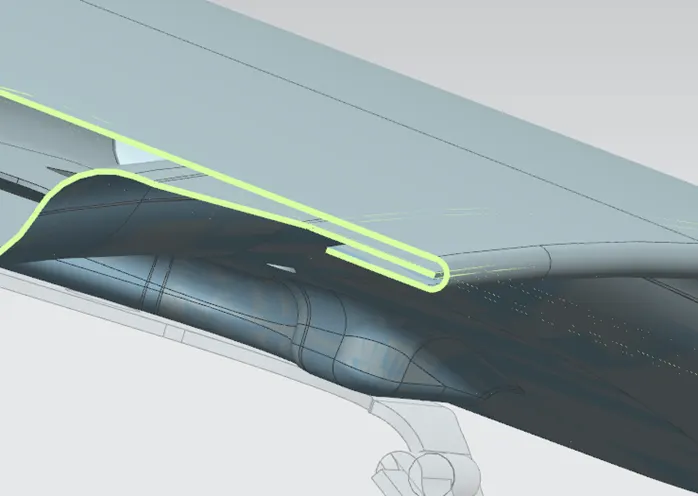
Hemming is also a forming process in which edges of a sheet is folded over another sheet in order to achieve a tight fit, at corners a relief is given
Conclusion
Thus by using input surface and master section data Hood is designed in NX CAD Surface modelling workbench.