Assembly of Yacht
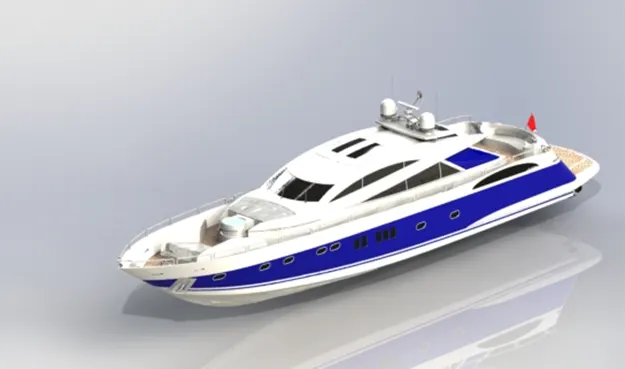
3D Modelling and Assembly of Sunseeker Predator Yacht
A Project Report
Submitted as a course Project for
Design Engineer Master’s Certification program
By
Akash Sanjay Suryawanshi
Content
- Aim
- Objective
- Introduction
- Design Methodology
- Part Description
- Assembly
- Rendering
- Rendered images
Aim
To learn the essential skill set and methodology required to understand the design process through Solidworks.
Objective
To learn the 3D modelling and Assembly of Sunseeker Predator Yacht using Solidworks along with it, also acquiring the theoretical knowledge in order to create an assembly.
Introduction
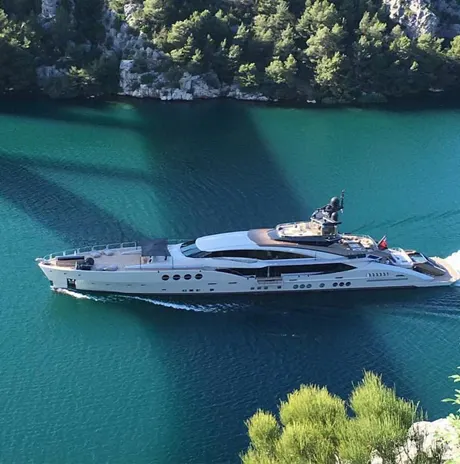
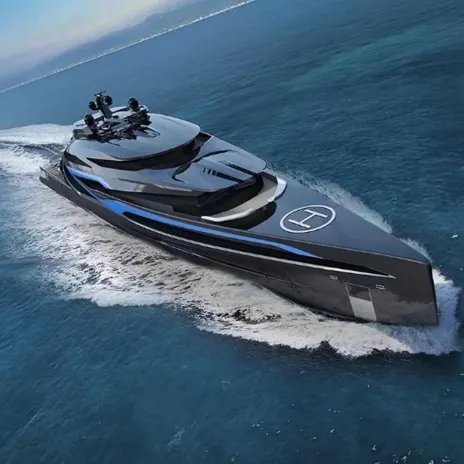
Yacht is an watercraft, specifically carved as luxurious vessel capable of cruising world waters with all the amenities and one can travel with extra comfort, a yacht can be powered or non-powered it can be used for racing or to just cruise in comfort, hence most of the yachts are tailor made to suits its owners requirement.
As per Royal Yacht Association Yachts are classified as
- AYachts are fit for conditions that exceed wind force 8—40 knots (21 m/s)—and 13-foot (4 m) maximum wave heights, encountered in ocean passages and extended voyages.
- Byachts are fit for conditions that are less than wind force 8—40 knots (21 m/s)—and 13-foot (4 m) maximum wave heights, encountered in ocean passages and extended voyages.
- Cyachts are fit for wind force 6—27 knots (14 m/s)—and 6.6-foot (2 m) maximum wave heights, encountered in exposed coastal waters, bays inlets, lakes and rivers.
- Dyachts are fit for wind force 4—16 knots (8.2 m/s)—and 1.6-foot (0.5 m) maximum wave heights, encountered in sheltered coastal waters, bays inlets, lakes and rivers.
Design Methodology
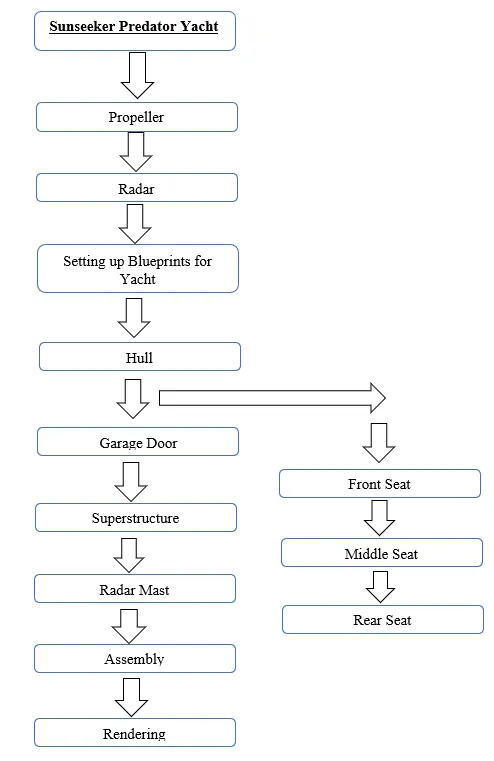
Parts modelled for Sunseeker Predator Yacht
- Propeller
- Radar
- Setting up Blueprint
- Hull
- Garage Door
- Superstructure
- Radar Mast
- Front Seat
- Middle Seat
- Rear Seat
1.Propeller
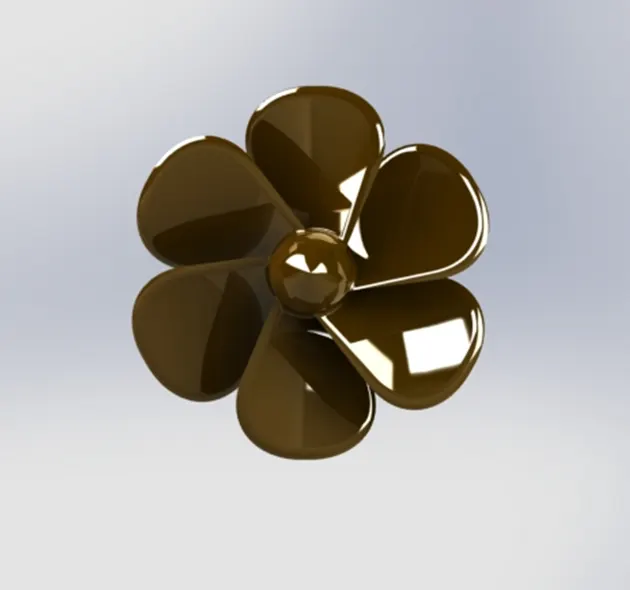
Propeller is a rotating mechanical fan like structure which uses power generated by ships engine, the rotating power generated by propeller is converted into thrust which propels the ship.
Propeller of the ship works on the of Bernoulli’s principle and Newtons third law, a pressure difference is created in the forward and rear side of the blade and because of which water is accelerated from behind the Blades.
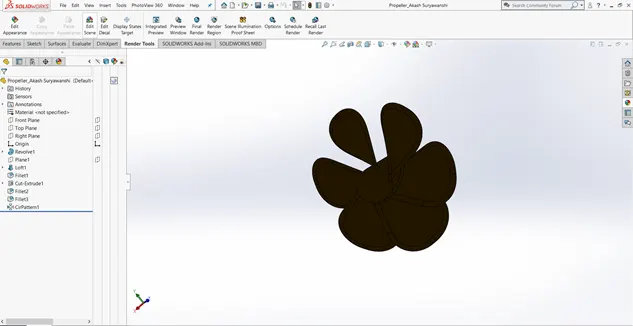
As propeller is made up of Hub and fan like structure, First basic structure of hub is created by sketching and using Revolve command, to create fan like structure a new plane is created, on Top plane a rectangle at a angle is created and another rectangle at new plane is created by using Lofted boss command single structure of the fan is created by using fillet edges made fan like, then using mirror command fan is created, by using extrude command circular cavity is created for mounting.
2.Radar
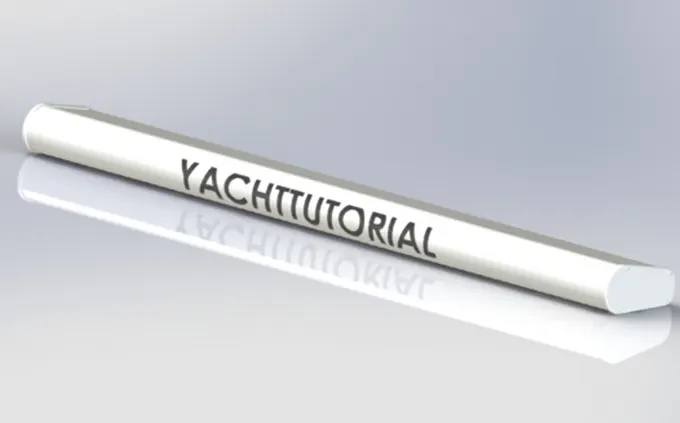
Radar is detection system that uses Radio waves to determine range, angle, or velocity of objects.it is widely used in Ships, Aircraft, Guided missiles, Weather information etc.
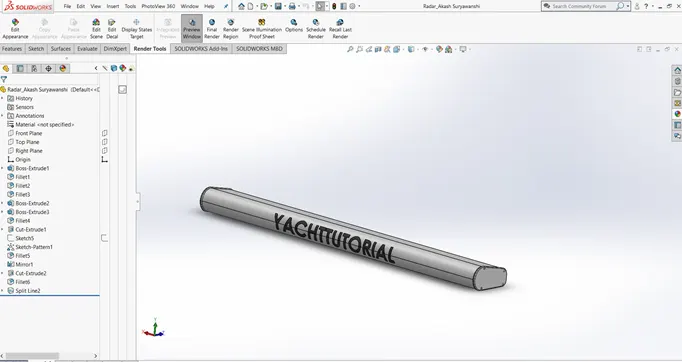
By using Boss extrude and sketch basic structure of Radar is created, fillet and cut extrude commands are used to give more details to the main structure by using text and split line command texts are projected on to the Radar.
3.Setting up Blueprints
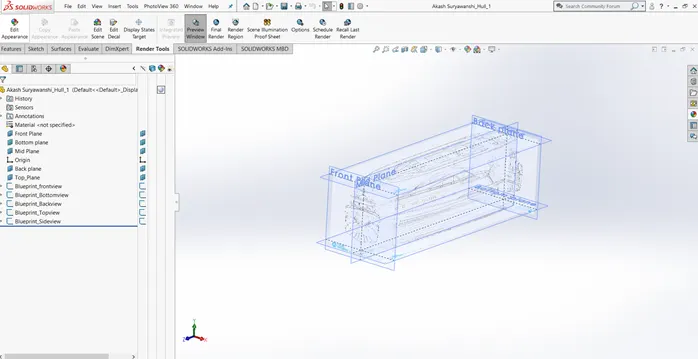
To create Hull and Superstructure which is crucial parts of Yacht blueprints of Top view, side view, Front view, Back view and Bottom view are inserted in stepwise and by using pre calculated distances they are properly set up in the design environment.
4.Hull
Hull is a backbone of all the watercraft, Hull is an watertight body which may be partially or fully covered with deck, in our Sunseeker Predator Yacht it also houses Superstructure.
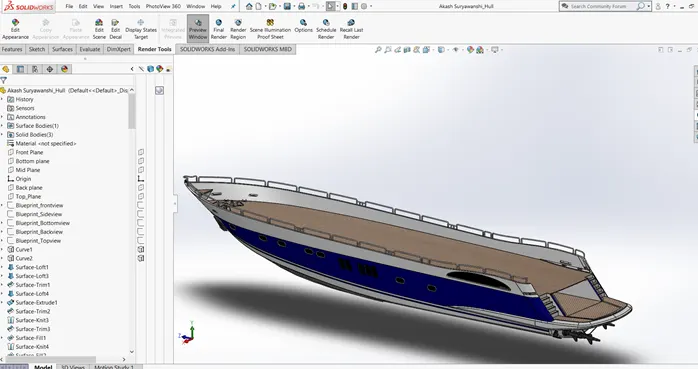
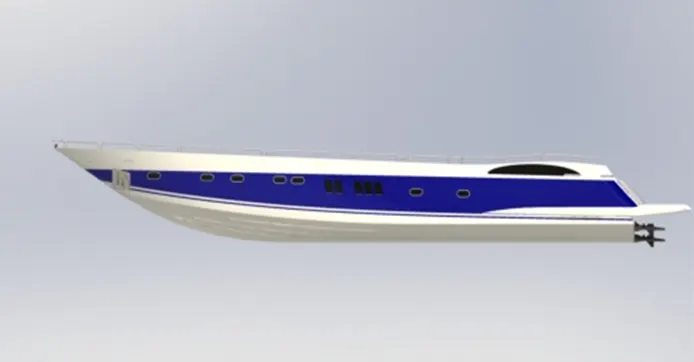
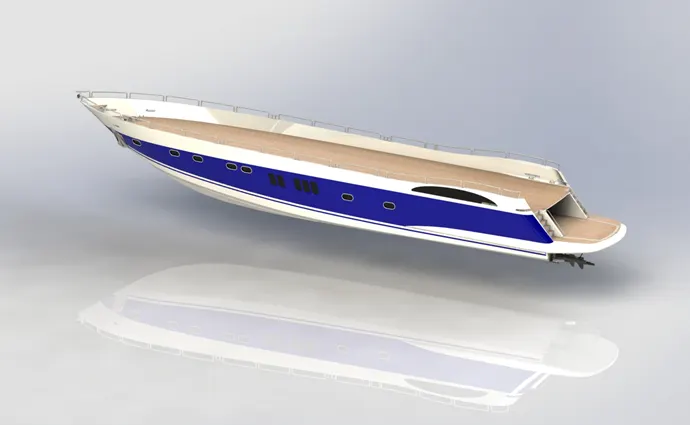
In order to create the surfaces of the hull, sequentially splines are drawn on different planes as per requirement, then using projected curves command curves are projected, using those curves and different commands such as lofted surface, surface fill and surface trim command- surfaces are created, then its converted into solid and mirror command is used to create the entire hull, by using boss extrude, cut extrude, fillet, chamfer, fillet, revolve and creating different planes all the other structures which are integrated part of hull is created.
To give more realistic view, appearance command is used to impart necessary colours and material properties.
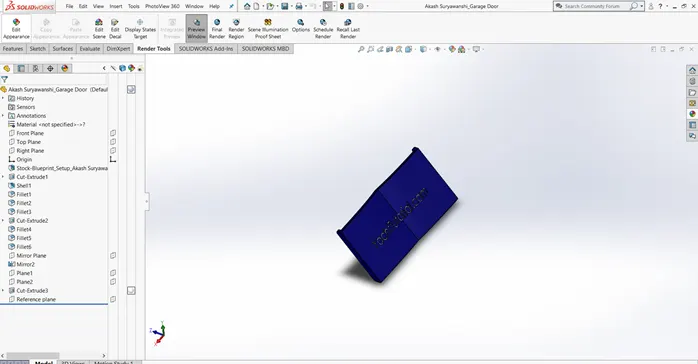
5.Garage Door
In order to cover the garage (which is housed in the Hull) a garage is necessary.
Garage is prepared by using commands- Cut extrude, shell and using mirror command to create the entire garage door, to give necessary appearance fillets command is used.
6.Superstructure
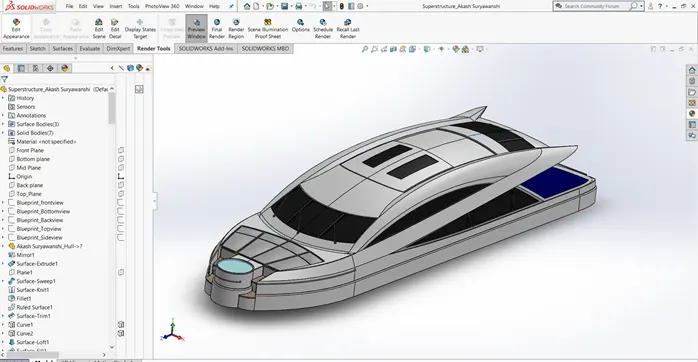
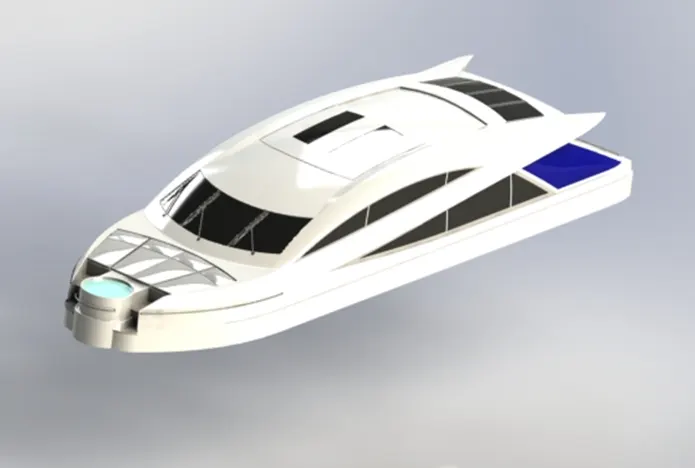
A superstructure is an extended construction of an platform that rises above the rest of the platform in a distinct manner, in most of the superstructure is unique which gives a ship its uniqueness.
Like Hull, superstructure is also an important and integral part of the Yacht and also created in similar fashion, blueprints act as a foundation.
Modelling begins with creating splines (sketches) on different planes then by using projected curves, curves are created then using surface commands such as lofted surface, extruded surfaces, boundary fill, surface fill, surface trim & Knit by using this command in a systematic manner the structure takes it shapes, then converting the surface model into solid is a difficult task, (to make sure there are no gaps) after that by using mirror entire superstructure is created, as per the blueprints other structure which part of superstructure are created by using extruded boss, extrude cut, fillet and chamfer.
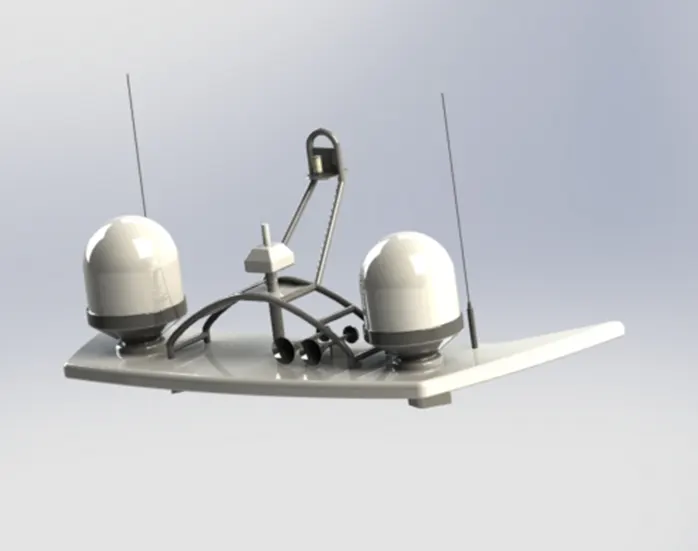
- Radar Mast
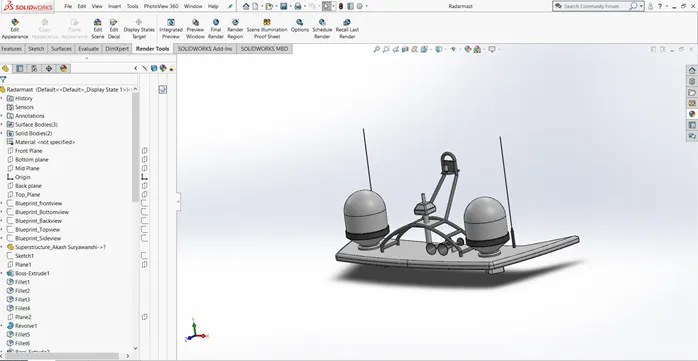
It is spar or structure rising above the hull and upper portion of a ship or boat to hold sails, radar, rigging, booms etc.
To create radar, mast a reference surface from superstructure is imported,
Then by using commands boss extrude, fillet, revolve, creating new plane, creating projected curves and by using blueprint Radar mast is created.
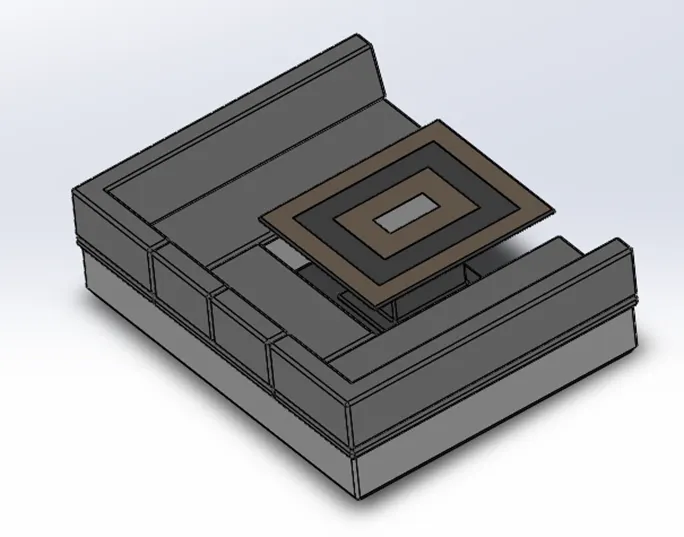
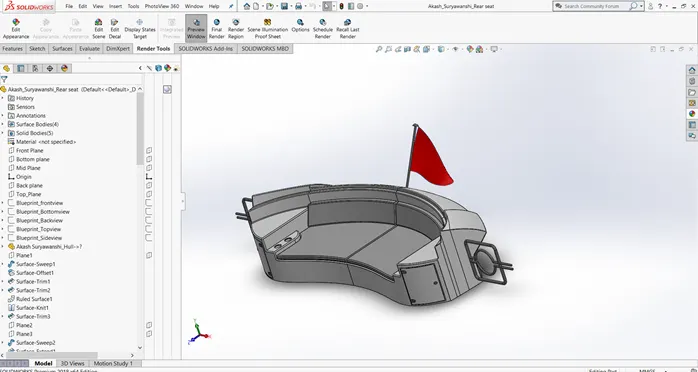
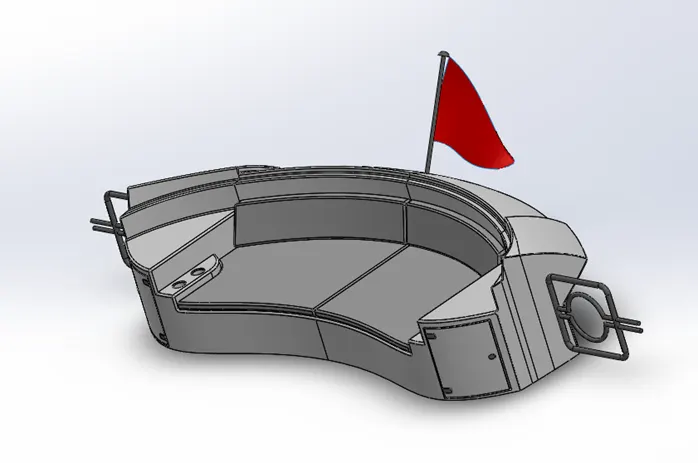
08.Front Seat/ 09.Middle Seat/ 10.Rear Seat
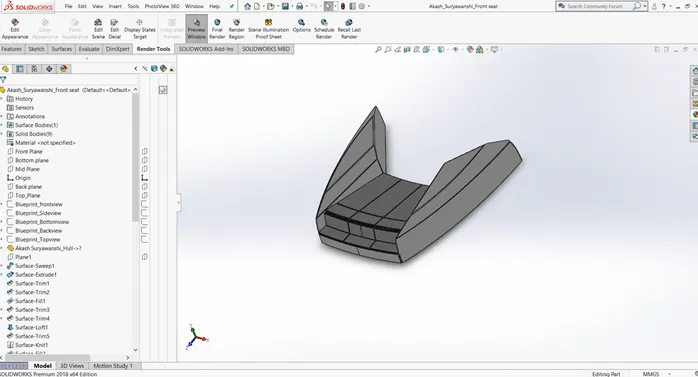
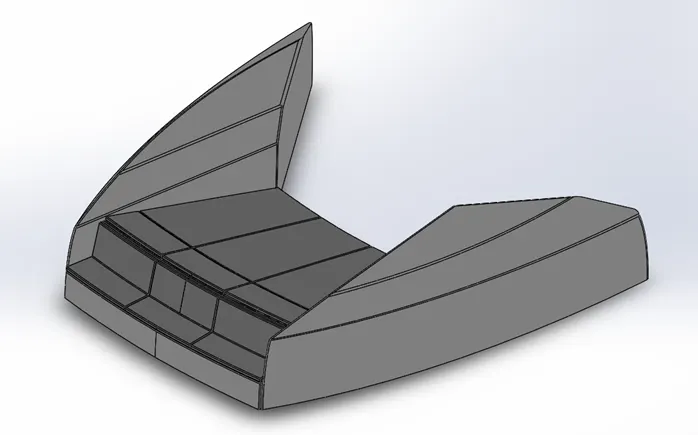
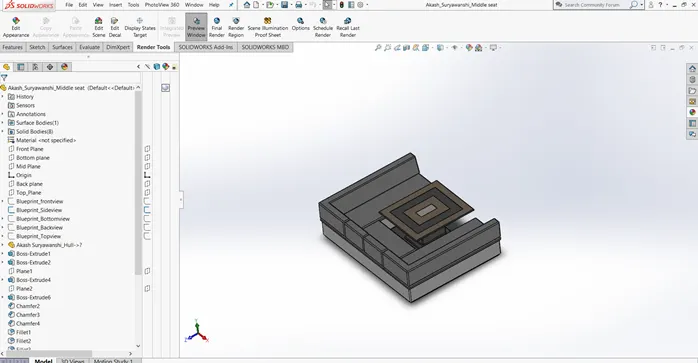
Front seat, Middle seat and Rear seat of the Yacht is created by importing Hull in the respective modelling files of the seat, and selecting only surface, we surface as reference for the positioning, and then by using Blueprints and modelling command as creating projected curves by drawing sketches on the requires planes, using lofted surface, surface fill, sweep surface and knitting option surfaces of the Seats is created, then closing all the faces the surface model is converted into Solid model, using fillet and appearance options more realistic properties are imparted to the seats.
Front Seat
Middle Seat
Rear Seat
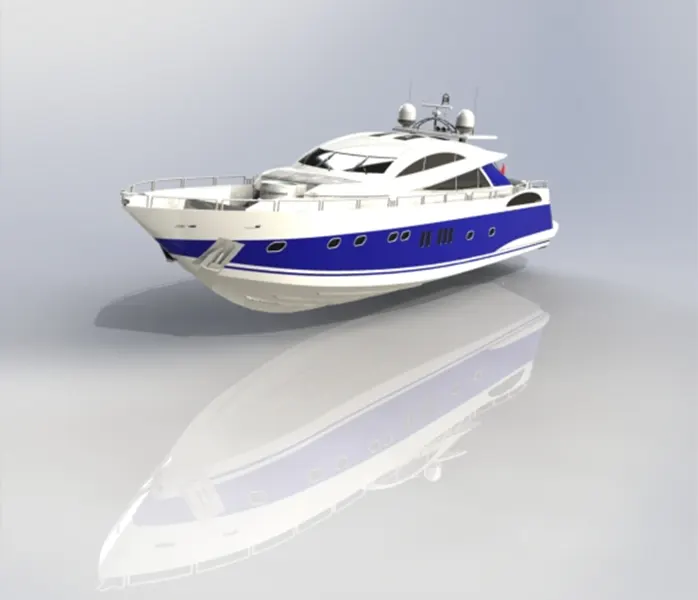
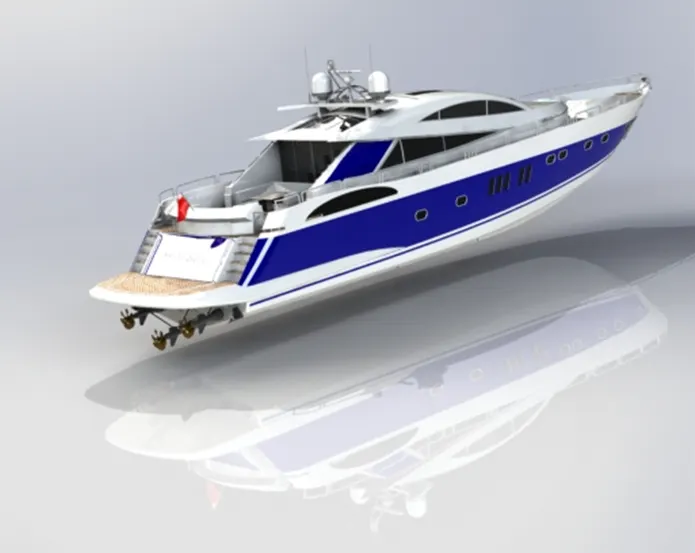
Assembly of Sunseeker Predator Yacht
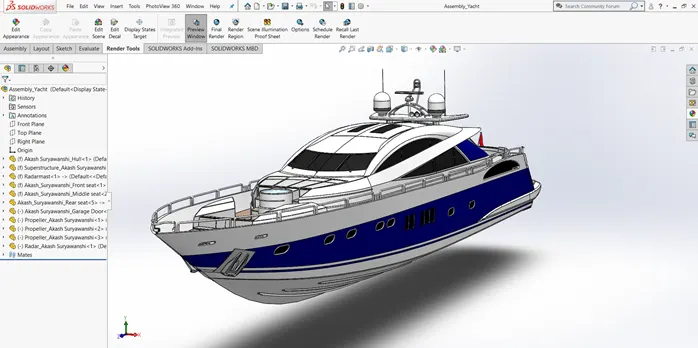
Create a assembly file and import Hull, fix it (drop in the environment it will get fixed since its first part), then insert Superstructure, since we have used hull as a reference for other part it will get assembled without any constraint, similarly insert radar mast, in similar manner insert front seat and middle seat, to assemble Rear seat use coincidence and distance mate to in order to assemble at right distance, assemble garage door using coincidence command it will not be completely defined because it rotate about that axis to give an impression of opening and closing of garage door, now assembly three propeller on the shaft bu using coincidence mates, and finally assembly Radar on Radar mast by using coincidence mate.
Rendered Images
Isometric view
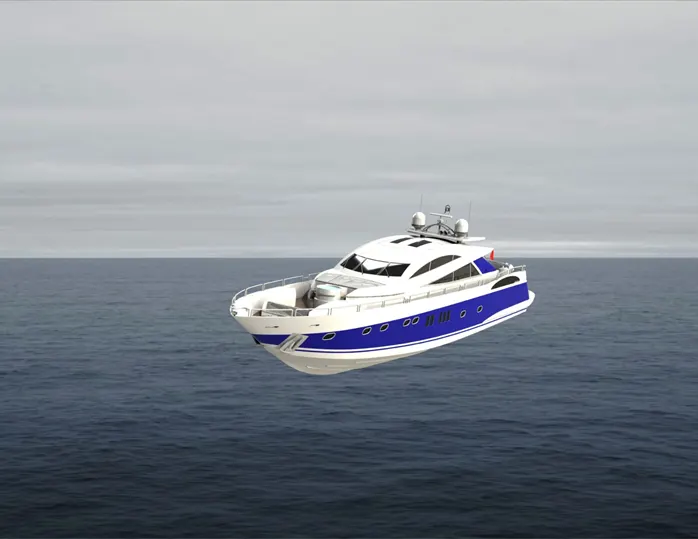
Front View
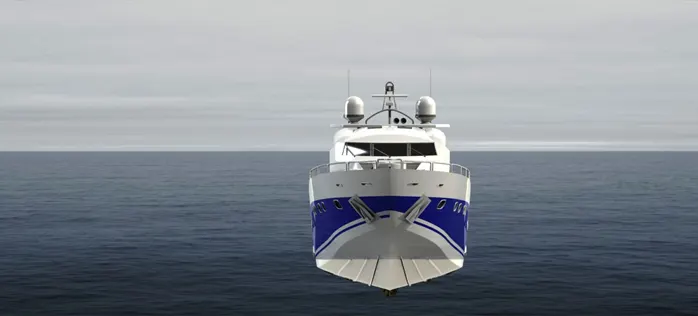
Side View
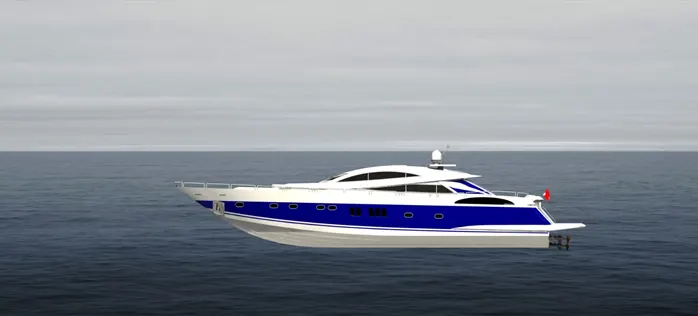
Top View
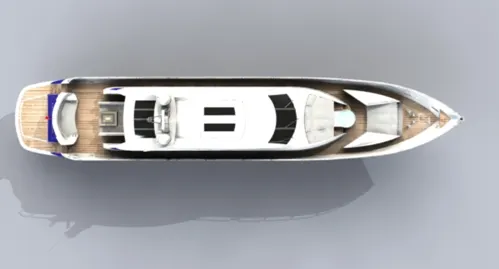
Other Rendered Images
Reference
- Wikipedia
- https://www.marineinsight.com
- https://www.seaviewglobal.com