Hood design-Week 2
Automotive Hood Design Using NX CAD
What Is Hood Of The Car?
A car hood also referred to as a bonnet in some other countries is the hinged cover that rests over the engine of a front-engine vehicle. Its purpose is to provide access to the engine for repair and maintenance. Car hoods are typically constructed from steel and sometimes from aluminium. Hoods are usually made from the same material as the rest of the body. This can be steel, aluminium, fibreglass, or carbon fibre. However, some after market companies produce fibreglass or carbon fibre steel hood replacements to make the vehicle lighter.
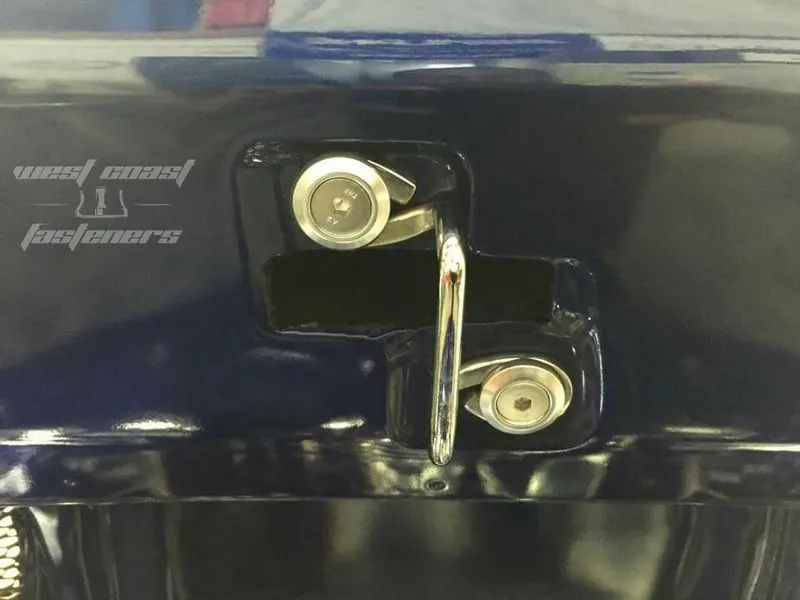
The hood release system is common on most vehicles and typically consists of an inner hood latch/lock handle, a hood release cable, and a hood lock assembly. The hood lock handle is usually located under the steering wheel, next to the driver’s seat, or in the door frame.
For racing cars or vehicles with after market hoods (that do not use the factory latch system) the hood can be held down by hood pins. Some after market hoods that have a latch system still have hood pins to keep the hood buttoned down if the latch fails.
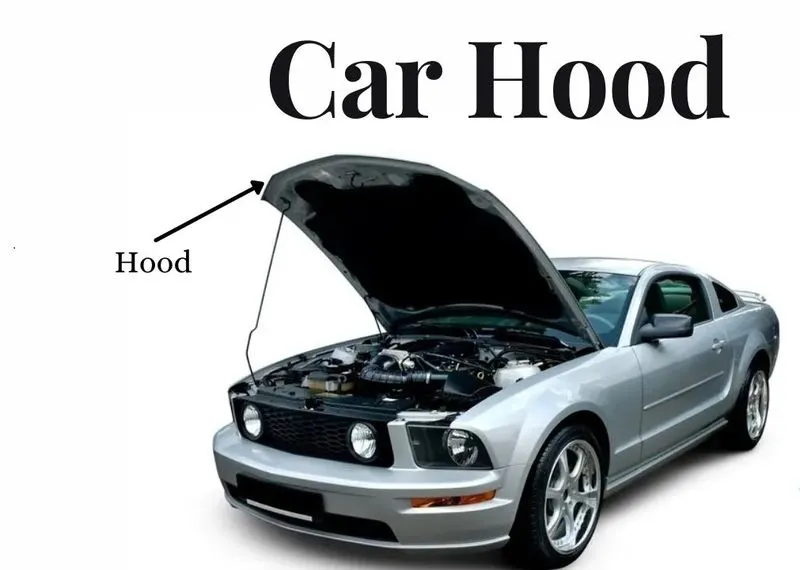
Hood Components:-
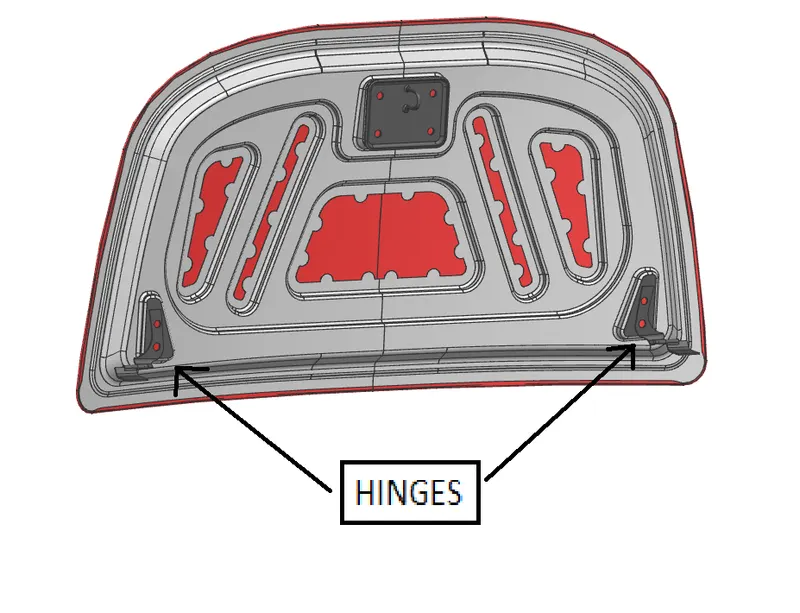
1)Hinges of the Hood:-
Hinges are generally pivot and bracket mechanism which are use to ensure proper open close rotation of the hood smoothly and exactly take the striker tangent to the latch to provide proper alignment to close and open the Hood.
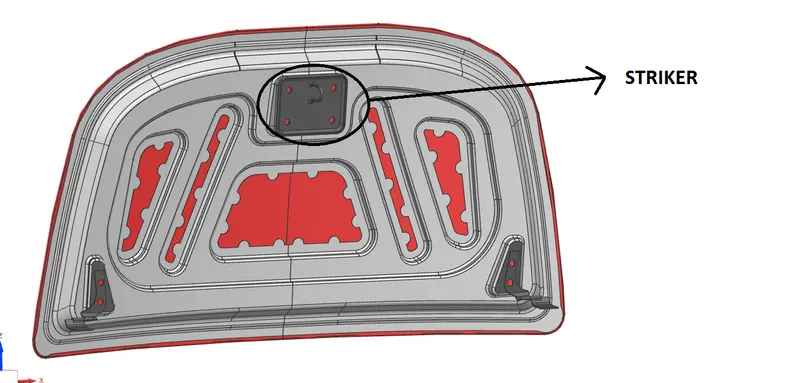
2) Striker And Latch Mechanism:-
latch system ensures that the hood stays locked, therefore protecting the engine and the many other parts that reside within the hood of the car. hood should not swing open at once, and therefore, a safety hook must be present to catch the unlocked hood and keep it closed.
3)Hood Outer Panel:-Hood Outer panel is the outer most part of the component and it is open and visible is it the covering for the inner panel of the hood, So as it the outer most part and is visible so it needed to be given a good and a smooth appearance without dents,marks and embosses. So as to keep it smooth all over ,it is not spot welded with the inner panel, it is joined with the inner panel through the help of the hemming process and the mastic sealants which i will be discussing ahead in the report. It it the first part which is designed for the car and with the help of the outer panel the inner panel is designed.
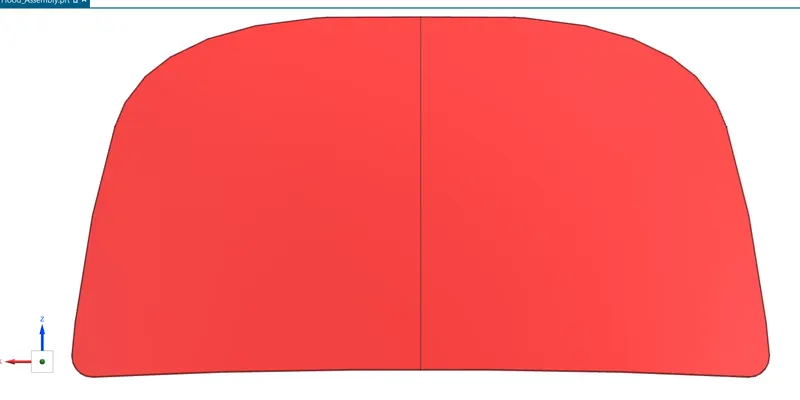
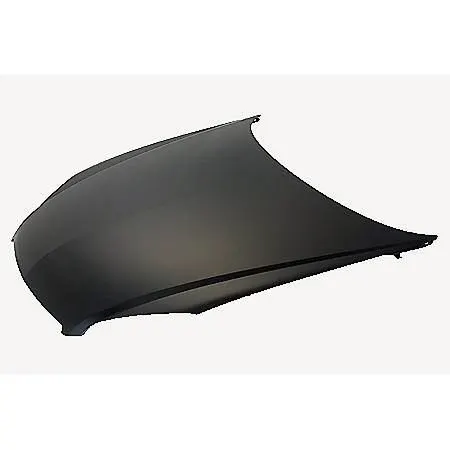
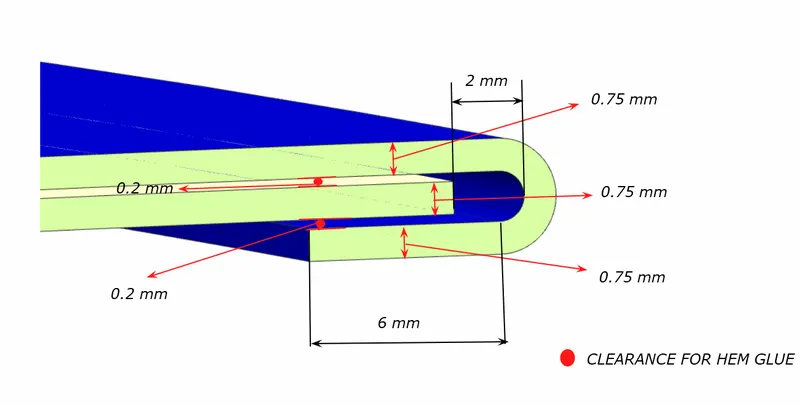
Alloted thickness:-For Outer Panel=0.75mm
4)Hood Inner Panel:-Hood inner panel is the most important, complicated and the main part of the hood because it contains all the important design consideration and aspects like the force dissipation embosses, the mounting space for all the components like hinges and striker and the space and embosses for the weight reduction and the most important pedestrian safety.
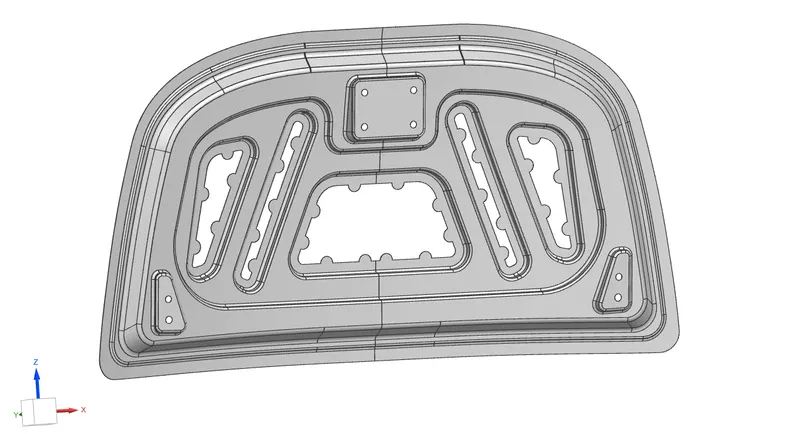
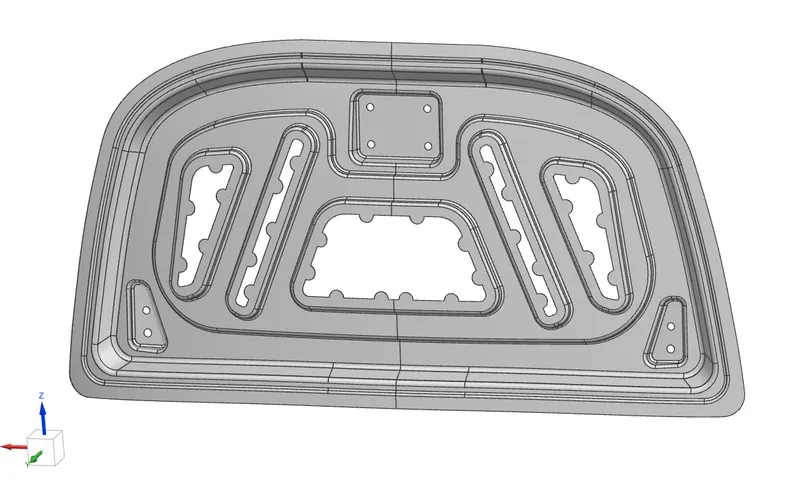
Alloted thickness:-For Inner Panel=0.75mm
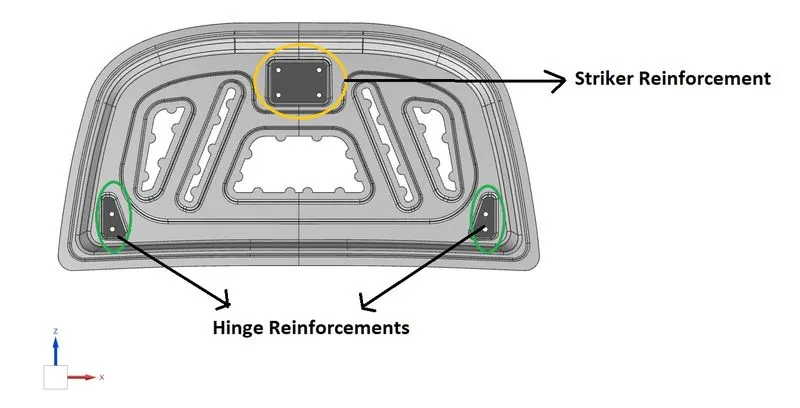
5)Hinge and Striker Reinforcement:-These reinforcement are given to strengthen the placement positions of the striker and the hinges as the positions are more prone to generate more stresses due to the placement of the hinges and the striker.
Alloted thickness:- For Striker Reinforcement=1.0mm
For Hinge Refinforcement=1.5mm
Design Considerations for the Hood Design:-
Pedestrian Safety:
The latest data released by the World Health Organization (WHO) showed that India ranks first country with the highest number of deaths caused by traffic accidents, while Indonesia was reported to have an increase in the number of traffic accidents by more than 80 precents, where the death toll from traffic accidents reached 120 people per day.
A pedestrian can be defined as a vulnerable road user that is at risk when it comes to roads. Thus the safety of such being is essential. The pedestrian safety and protection norms are aimed to do so. It will ensure that the new cars meet a minimum requirement of safety for the pedestrians.
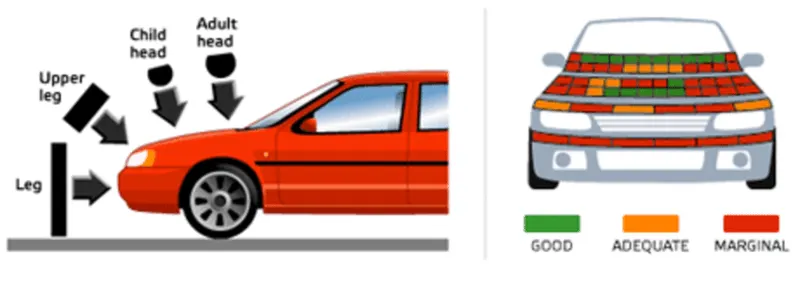
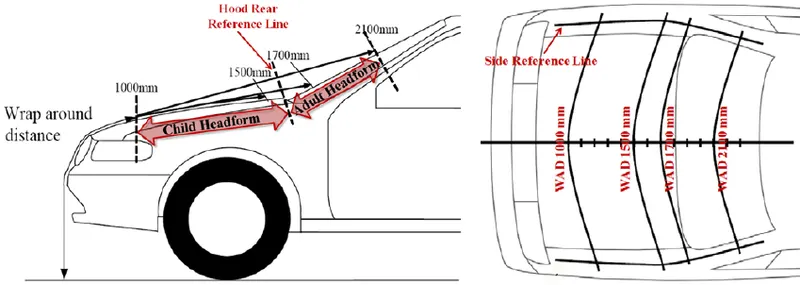
Euro NCAP pedestrian protection tests
A series of tests are carried out to replicate accidents involving child and adult pedestrians where impacts occur at 40 kph (25 mph). Impact sites are then assessed and rated fair, weak and poor. As with other tests, these are based on European Enhanced Vehicle-safety Committee guidelines.
Position of Hinge & Striker:-
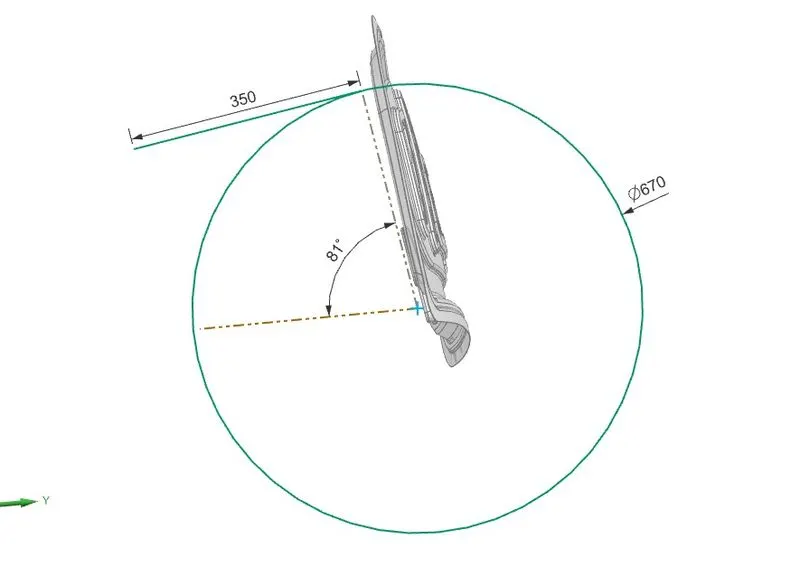
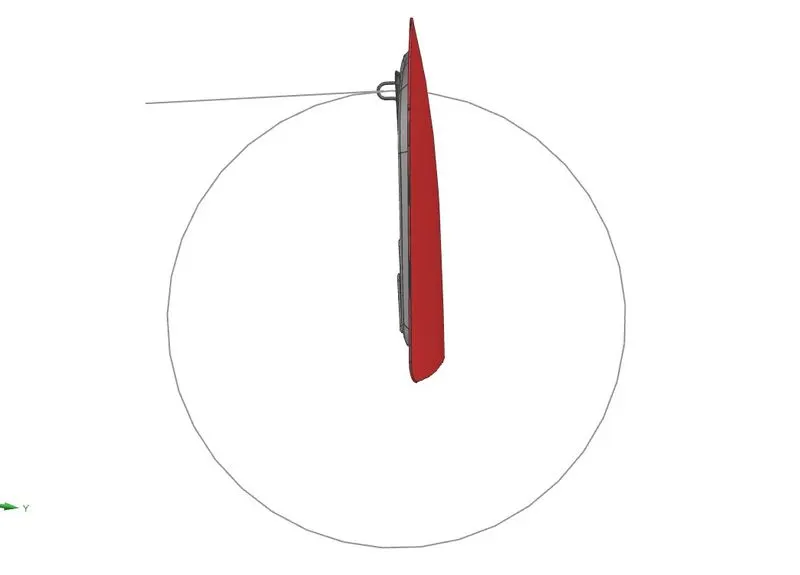
The hinges should be usually placed on both sides of the hood in such a way that the strike fits exactly into the hole provided.
To ensure this the following conditions are follow:-
1. Both the hinges should be on the same axis.
2. The centre of the striker's circular trajectory should be always perpendicular to the hinge axis.
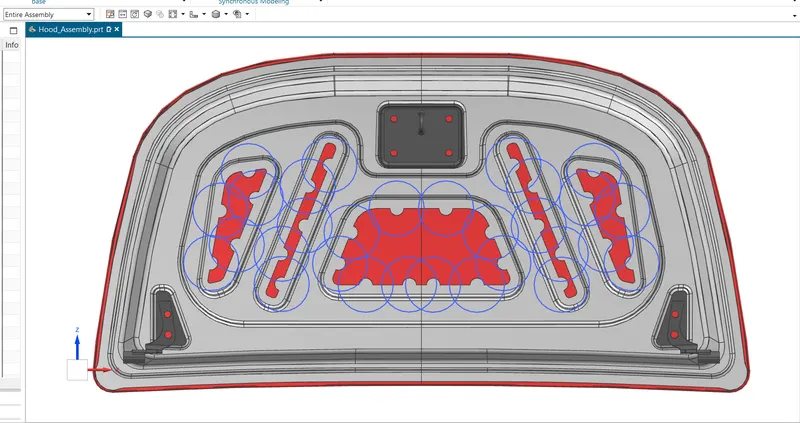
Positions for Mastic Sealants:-The designed inner hood panel has been given different semicircles shaped mastic points which are 5-6mm apart from the outer hood panel. These are the points which are used to apply the mastic sealants between the outer hood and the inner hood panel the following image will show the sections where these points are provided in the panel.
Each point has its effect or influence of 80mm circle diameter from the mid point.
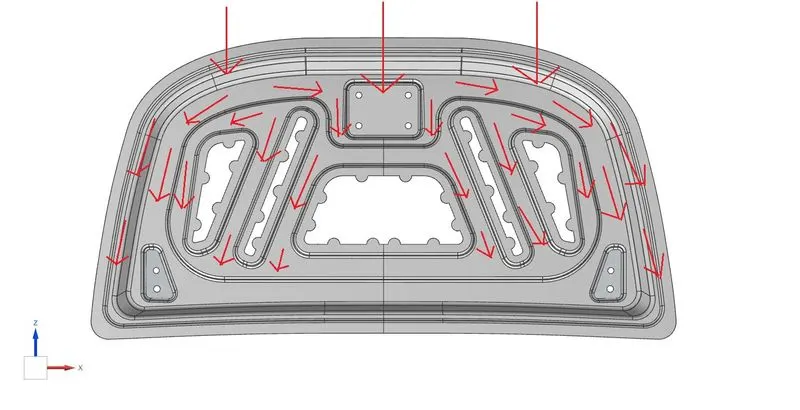
Force Distribution Along the body:-
The inner panel and the embossed cut-outs are designed in such a way that in any condition if an impact occurred in the front side of the vehicle then the force is distributed in such a way that that that the effect is minimized around the driver and the passenger area and hence causing them less or minimum injury in case of an accidental impact
Providing Minimum Weight:-
The Hood is designed in such a way that it has a minimum of the weight with all the consideration, strength and safety. If the weight of the hood is more it will increase the weight of the car and it will result in the cost increment and the performance of the car will be reduced and will not give good fuel economy for the users.
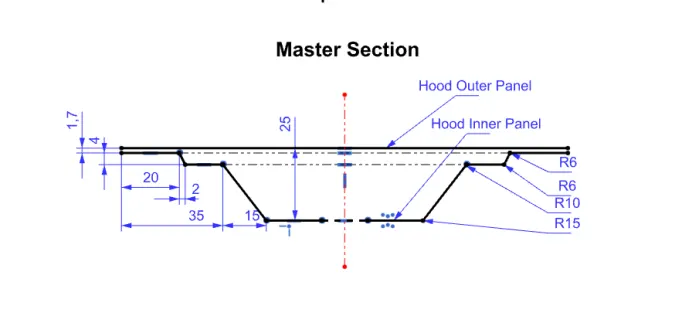
Master Section:- Inner hood has been designed strictly according to the given master section all the thickness and the maintained gaps are provided as per this Master section.
Manufacturing Process which will be used:-
Hemming: Hemming is a forming operation in which the edges of the sheet are folded or folded over another part in order to achieve a tight fit. Normally hemming operations are used to connect parts together, to improve the appearance of a part and to reinforce part edges.
In car part production, hemming is used in assembly as a secondary operation after deep drawing, trimming and flanging operations to join two sheet metal parts (outer and inner) together. Typical parts for this type of assembly are hoods, doors, trunk lids and fenders.
The accuracy of the hemming operation is very important since it affects the appearance of the surface and surface quality. Material deformations, which occur during the hemming process, can lead to dimensional variations and other defects in parts. Typical hemming defects are splits or wrinkles in the flange, material overlaps in the corner areas or material roll-in. This is why it is important to use simulation tools in order to, on the one hand, better understand the hemming process and, on the other hand, significantly reduce the number of “trial and error” loops during tryout and production.
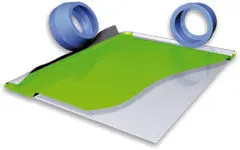
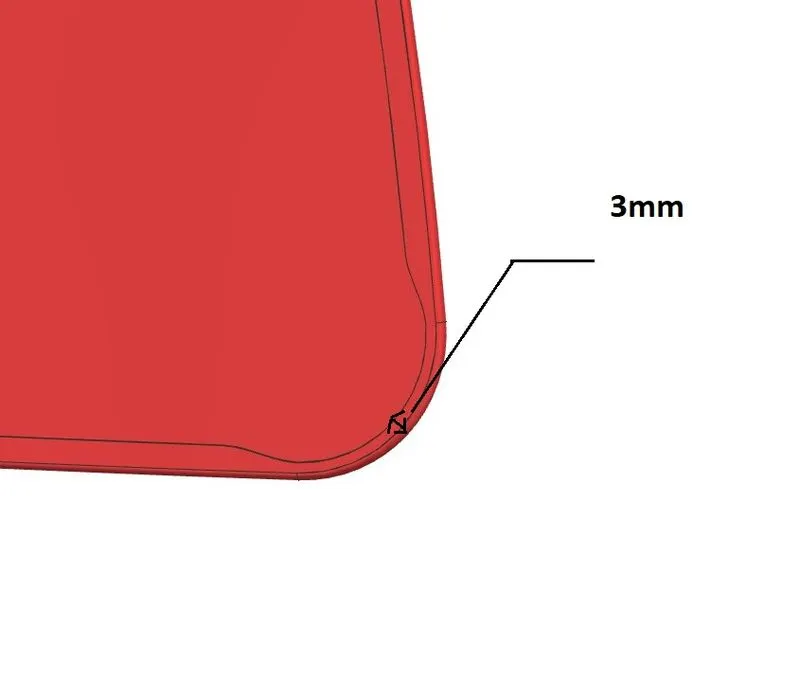
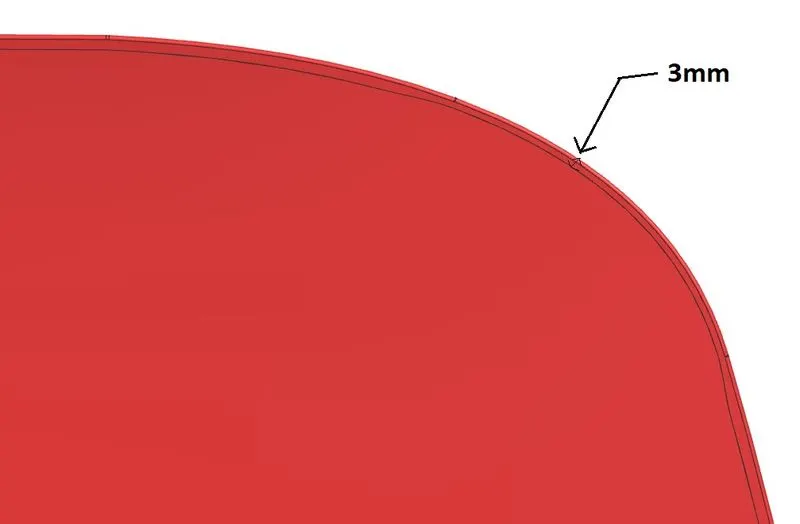
Hemming relief is also provided in the sharp corners and curves to eliminate any surface stresses which are generated after the hemming process and to minimise the spring-back effect.
Deep Drawing:-
Deep drawing is a sheet metal forming process in which a sheet metal blank is radially drawn into a forming die by the mechanical action of a punch. It is thus a shape transformation process with material retention. The process is considered "deep" drawing when the depth of the drawn part exceeds its diameter. This is achieved by redrawing the part through a series of dies. The flange region (sheet metal in the die shoulder area) experiences a radial drawing stress and a tangential compressive stress due to the material retention property. These compressive stresses (hoop stresses) result in flange wrinkles (wrinkles of the first order). Wrinkles can be prevented by using a blank holder, the function of which is to facilitate controlled material flow into the die radius.
Embossed Faces in the panel with deep drawing operation
The above report shows how the hood of the car in designed and fabricated and how it is modified for the safety and economic consideration.
Report Created By
Rishabh Soni