Hood design-Week 2
AUTOMOBILE HOOD DESIGN
Here we are going to understand and design the concept of front-mounted engine's hood according to the standards. The hood or bonnet is the hinged cover over the engine of motor vehicles that allows access to the engine compartment, or trunk for maintenance and repair.
On front-mounted engine cars,the hood may be hinged at either the front or the rear edge, or in earlier models, it may be split into two sections, one each side, each hinged along the centerline. A further variant combines the bonnet and wheel arches into one section and allows the entire front bodywork to tilt forwards around a pivot near the front of the vehicle.
Materials :-
Hoods are typically made of the same material as the rest of the bodywork. This may include
steel, aluminum, f iberglass, or carbon fiber. However, some aftermarket companies produce replacements for steel hoods in fiberglass or carbon fiber to make the vehicle lighter.
Before we dive into the design, let us understand the rules and regulation standards for designing the hood.
- A perfect hood design means it should have a great impact distribution angled outside the car.
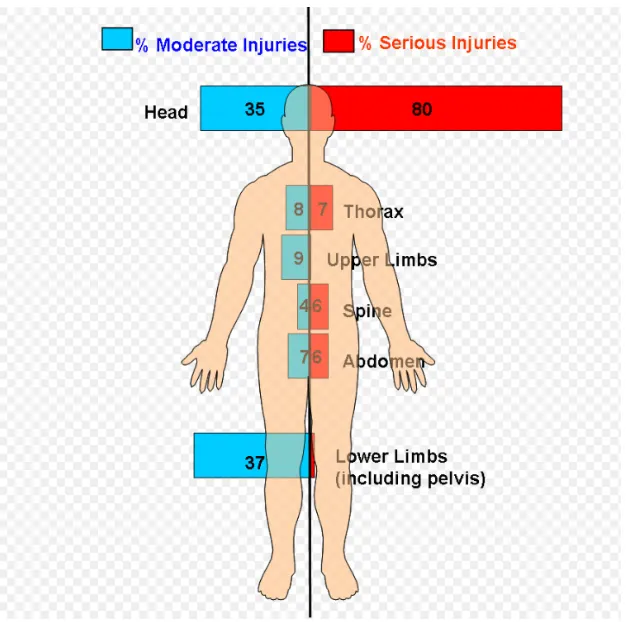
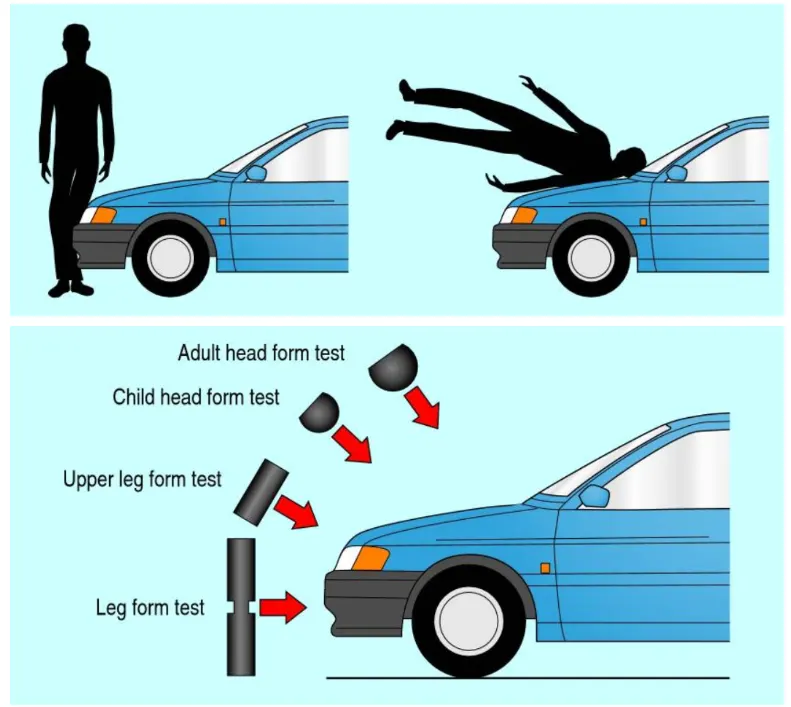
- In Japan and Europe, regulations have come into effect that places a limit on the severity of pedestrian head injury when struck by a motor vehicle. This is leading to more advanced hood designs, as evidenced by multicore hood inner panel desi
- European Enhanced Vehicle-Safety Committee (EEVC), European New Car Assessment Program (euro NCAP)
Pedestrain-Vehical Collision :-
- India, however, ranks 1 in the number of road accident deaths across the 199 countries reported in the World Road Statistics,2018 followed by China and the US. As per the WHO Global Report on Road Safety 2018,India accounts for almost 11% of the acc ident-related deaths in the World.
- Road transport remains the most favored mode of transport for both freight and passenger movement in India. The fast-growing population, exceptional rate of motorizat ion coupled with the ever-growing urbanization has made people vulnerable to frequent road accidents resulting in fatalit ies, injuries/disabilities.
- the sequence of injuries and events in a pedestrian collision images are mentioned below.
Design Parameters :-
Hood Thickness Information
- Outer Panel Thickness = 0.75mm
- Inner Panel Thickness = 0.75mm
- Reinforcement Thickness = 1.5mm
COMMAND USED:-
- Offset surface
- Offset curve on surface
- Trim sheet
- Through curves
- Law extension
- Emboss
- Face blend
- Edge blend
DESIGN CONSIDERATION TO BE FOLLOWED:-
- Passenger safety
- Pedestrian safety
- Manufacturing Feasibility
- Positioning the striker along the trajectory of the centre of Hinge Axis
- Joining techniques of inner and outer panel
Components :-
- Hood Outer Panel.
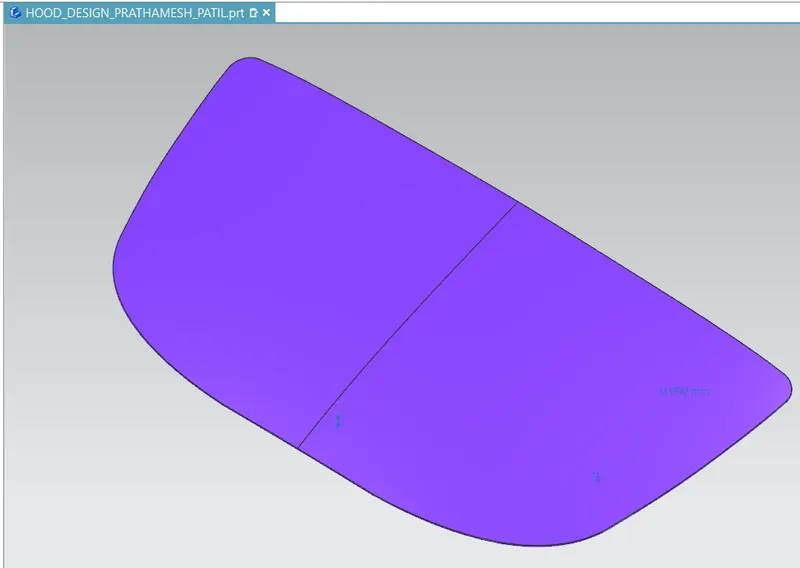
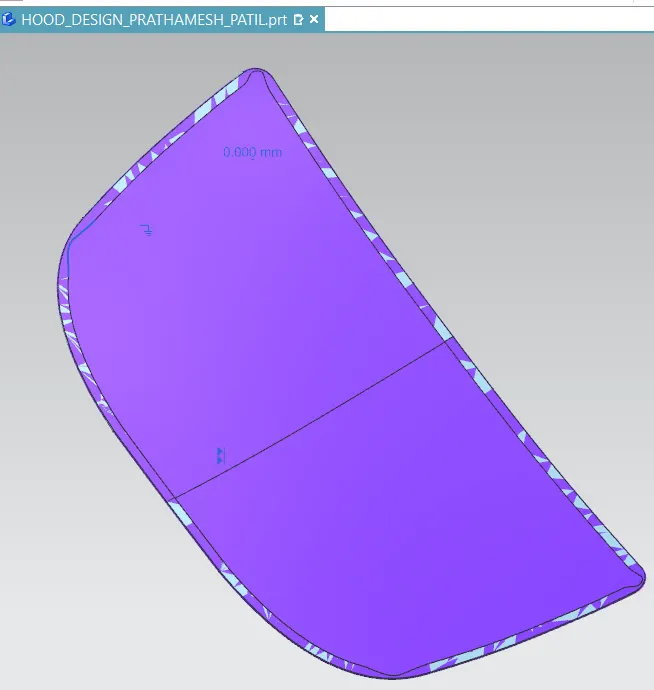
Outer panels are the asethetic elements of a car . It is the styling team who provides the skin the outer panel. The shape, position and size of the hood should satisfy the safety norms. So while desigining the hood we should give more importance to pedestration safety . The outer panel is attached to the inner panel by hemming. So , it is necessary to provide required hemming flange & relifs for the hemming operation. We also provide mastic seamlants between oter panel & inner panel to rduce vibration.
2.) Hood Inner Panel :-
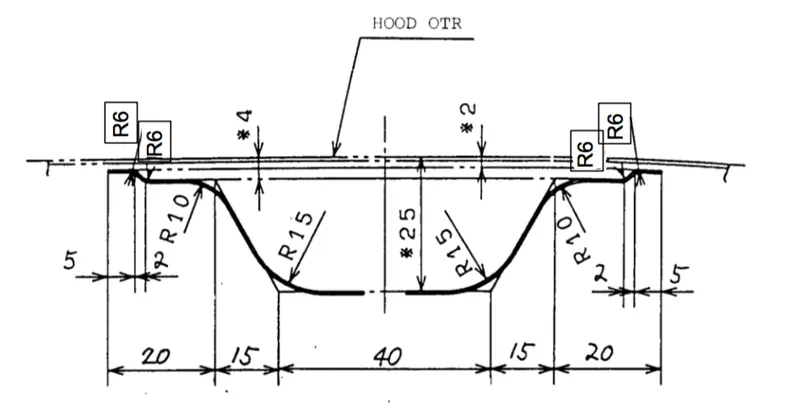
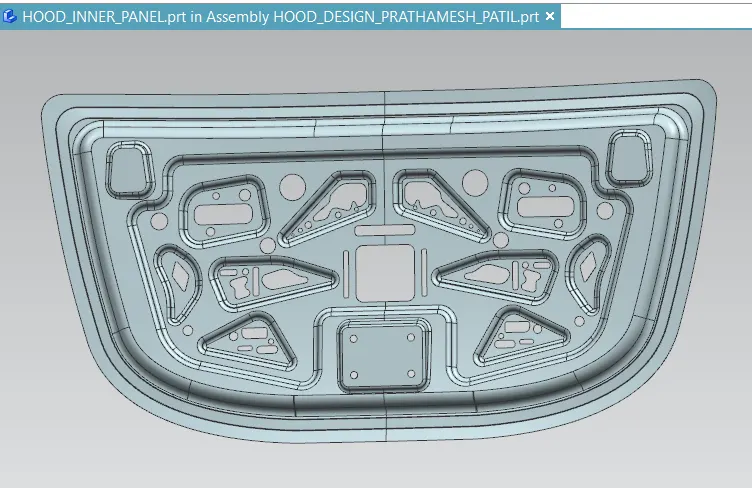
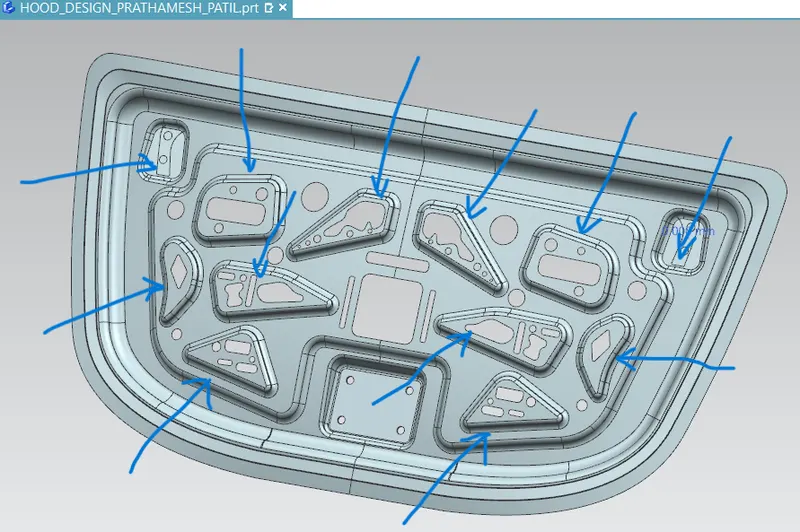
Inner panel is the part that gives strength & rgidity to the outer panel. The master section represent the initial emboss shape & size . Then we provide the emboss for the latch & hinge elements after fixing the location.
3.) Reinforcement :-
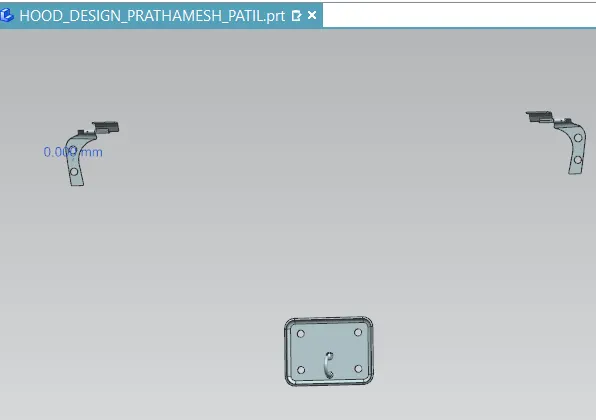
Reinforcements are provided accordingly to the design requirements. Mainly it is provided at the hinge & latch regions to improve the strength locally. Usually thickness of reinforcements will be higher than the inner panels & the value varies accordingly to cost & requrements. Accordingly to the design requirement here it is given 1.5mm thickness to both hinge & latch reinforcements.
4.) Latch Trajectory :-
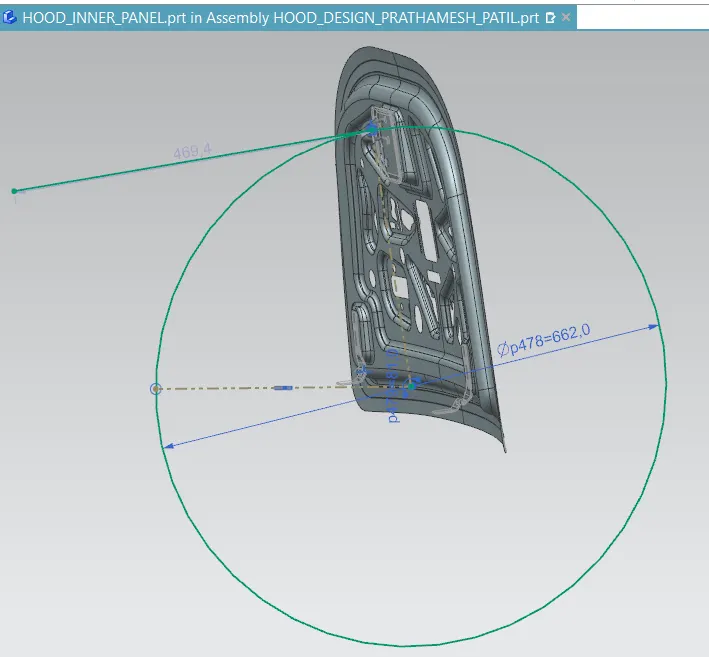
Latch trajectory is given by the circle drwan from the hinge axis point. Hinge axis is the centre point of the hinge axis . First , We can fix either the latch or the hinge. If we have fixed the hinge position then we shoulde plot the trajectory circle for the latch. For proper matinge condition the striker axis through the tip of the striker should be tangential to the latch trajectory.
5.) Embossing :-
Throghout the inner panel we provide different embosses. We can increase the stiffness of the inner panel through these embosses. The shape & size of the embosses also detrmines the direction of the force distribution resulted from frontal collision. The force should be always distributed away from the passengers. Here in the fig. the embosses are designed in such a way that the force is directed to either sides of the car.
6.)Mastic Data:-
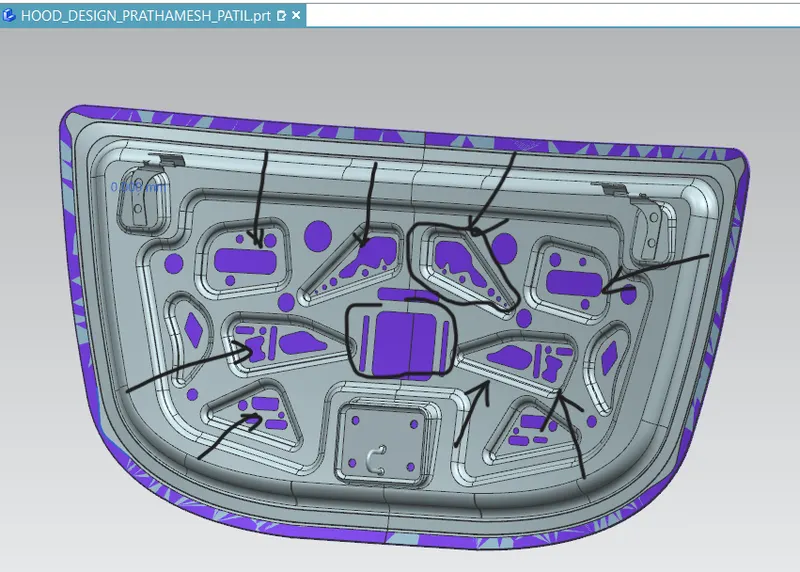
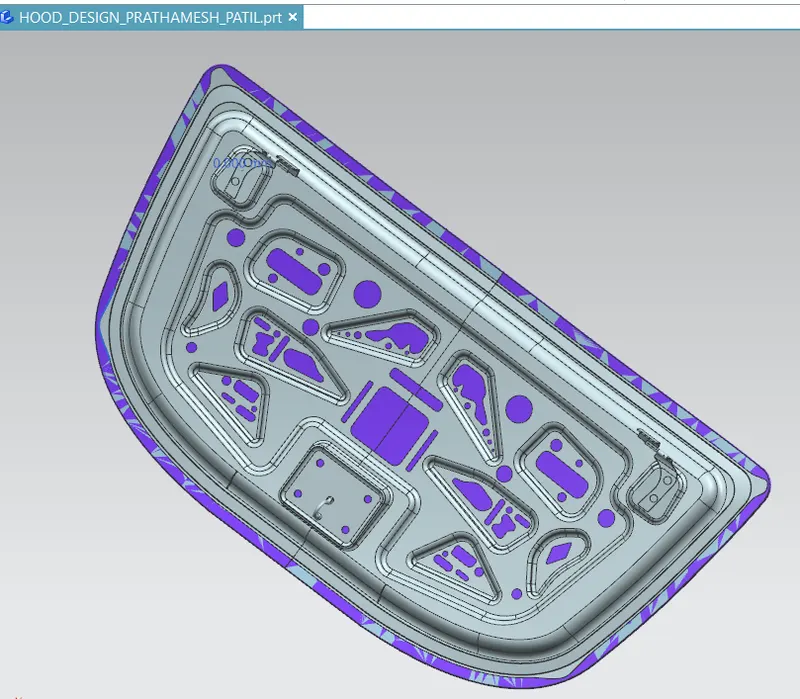
A sealant is sunstance used to block the passage of fluids through the surface or joints or opening in materials.Mastic sealants are elastic compound that behaves like rubber.Its placed between the outer and inner panels.Initially is it paste form,but after the hot furnace bath,it gets hardened thus joining the outer and inner panels.
Final Assembly :-
CONCLUSION:-
Creating a hood panel with given dimensions and provide hemming data id done successfully.