Hood design-Week 2
HOOD DESIGN REPORT
1. HOOD :
Hood is an open body panel that covers the engine in a front-engine vehicle. The hood is also considered as another type of door in a vehicle it consists of an outer panel and inner panel. The inner panel provides strength while the outer panel function as the metal cover.
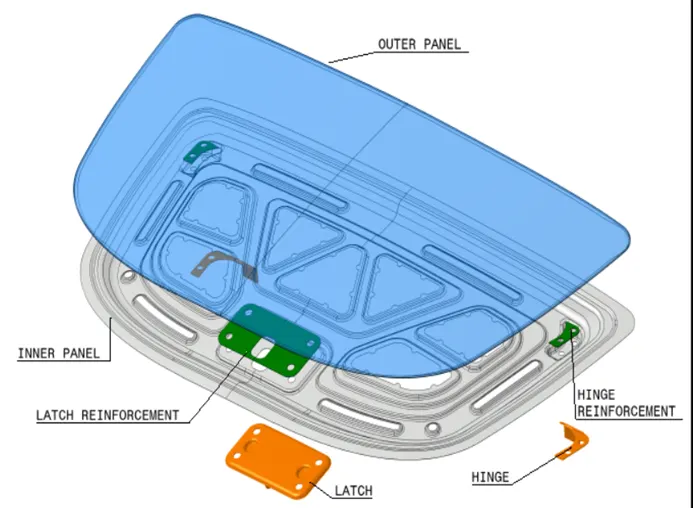
In this session, we will be learning in detail about the following.
- The design requirement for the HOOD and its components.
- Functional Requirements.
- Important Regulations.
- Hood Balancer(A device for supporting the engine hood of a motor vehicle in its open position) and its function.
- Hood Hinge and its function.
- Gap and Flushness Requirements.
- Joining operations followed:
- Hemming Spot Welding, Glueing and Revetting
Design Requirement for Car Hood
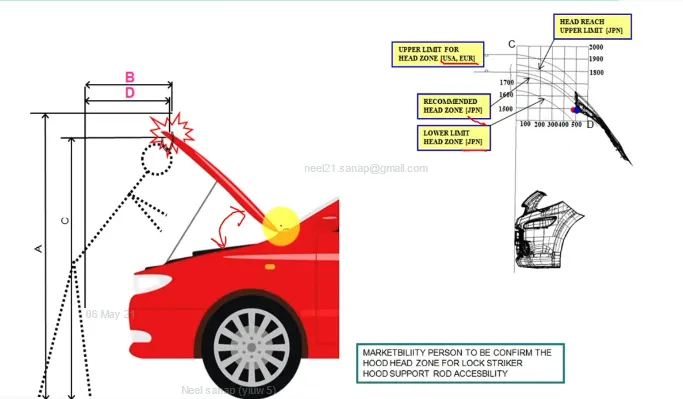
1. Hood Head Zone for Lock Striker:
- The opening angle of the hood will give A, B, C and D with respect to the ground.
- Those A, B, C and D are decided in the head zone.
- The opening angle varies from region to region depending on average human weight.
- Depending on standards we are deciding the angle.
Types of Hood Support (or) Hood Stay:
Car hoods are two types. They are:
- Gas Stay Rod
- Support Rod
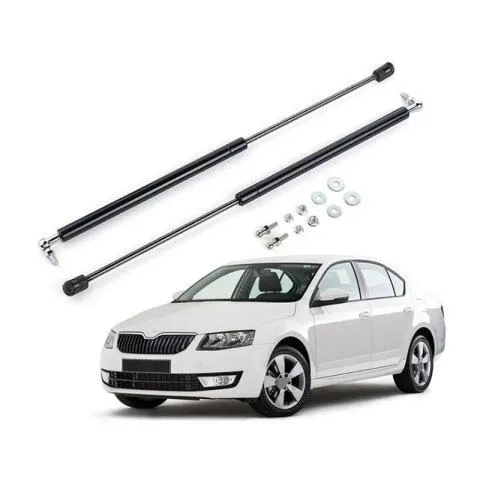
Gas Stay Rod:
A device for supporting the engine hood of a motor vehicle in its open position by means of an actuator that is activated by gas.
Advantages:
- Cost-effective
- simple
Disadvantages:
- When striking with automotive body panel
- To leave scars that are very likely to cause rust.
- The metal rod is often too hot to be gripped by hand when one attempts to keep the engine hood open for inspecting the engine room immediately after the vehicle has been stopped.
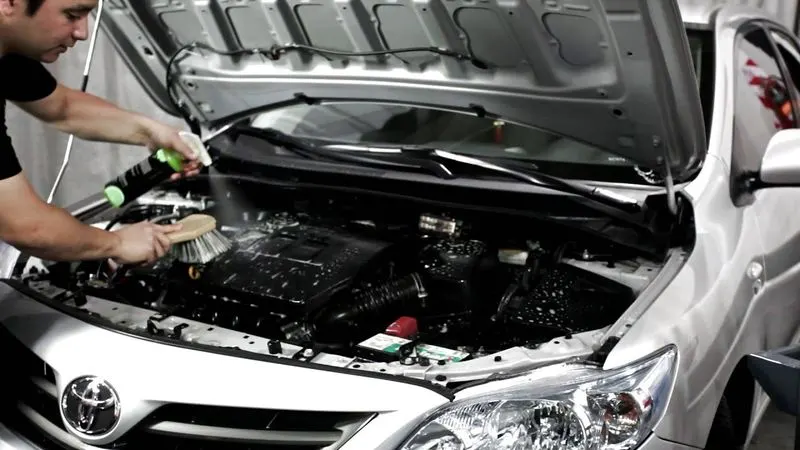
Support Rod:
A device for supporting the engine hood of a motor vehicle in its open position by means of a rod
Advantages:
- No manpower is required.
Disadvantages:
- Costlier
2. DATA:
Inner Panel has been designed by following the master data as shown in the picture.
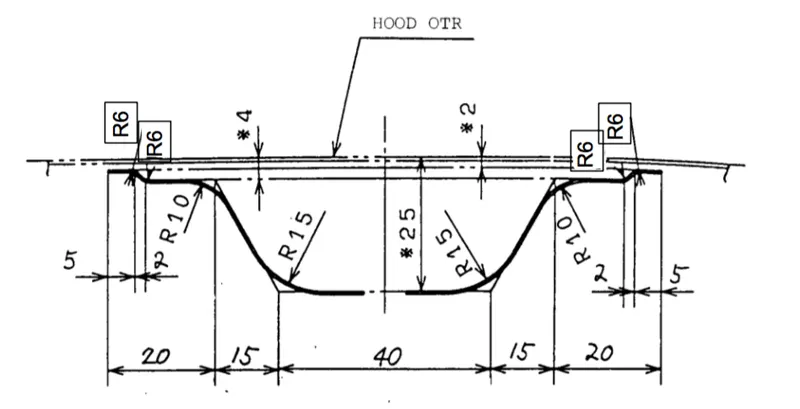
Hood Thickness Data:
- Inner Panel Thickness = 0.75 mm.
- Outer Panel Thickness = 0.75 mm.
- Reinforcement Thickness = 0.75 mm.
3. HOOD DESIGN:
Hood designs are divided into two panels. They are:
- Inner Panel
- Outer Panel
Inner panel:
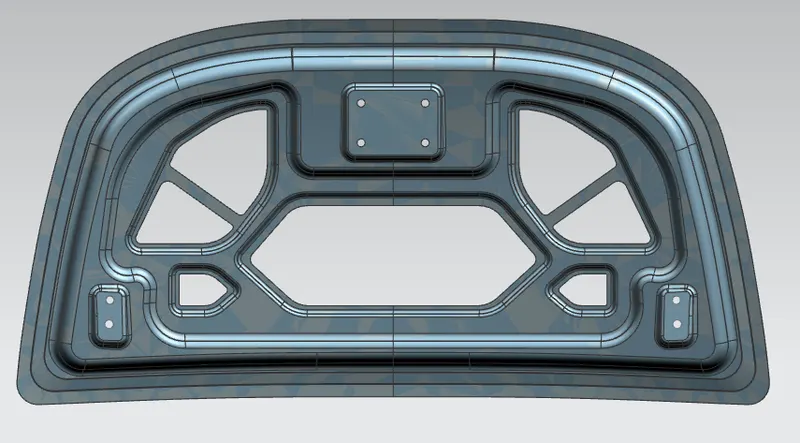
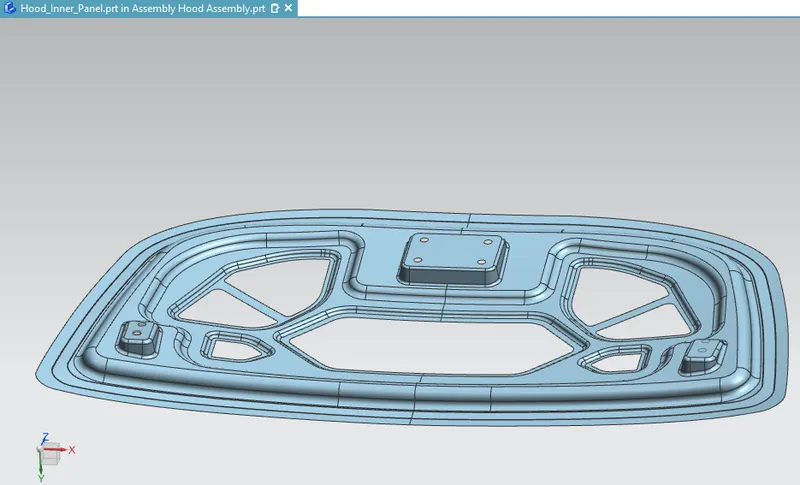
- The inner panel support the outer panel. It consists of embossing and holes.
- Emboss provides stiffness as well as dissipates energy towards reinforcement.
- Create the embosses to dissipate the crash force towards the hinge reinforcement.
- Placing the hinges and striker by provides the appropriate emboss.
- In the inner panel only we can research and implement the safety of pedestrians.
- In this panel, we can attach the reinforcement, embossed, mastic points etc.
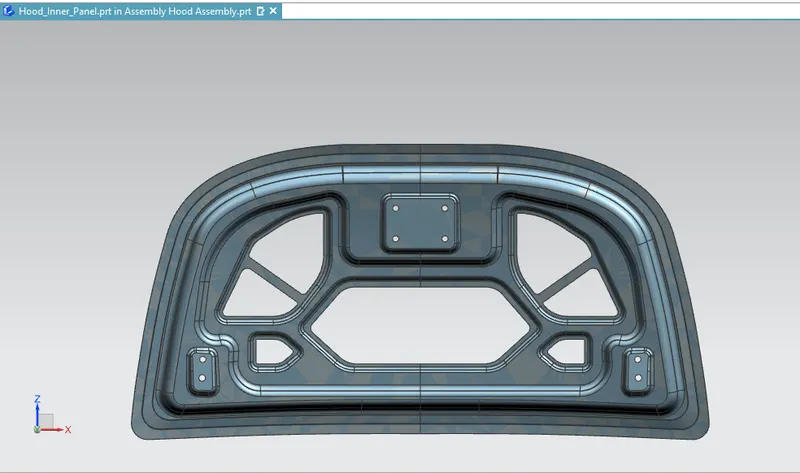
Emboss:
Emboss command is used to create an embossing by modifying a body with faces made by projecting a section along a vector, with options for end cap location and shape.
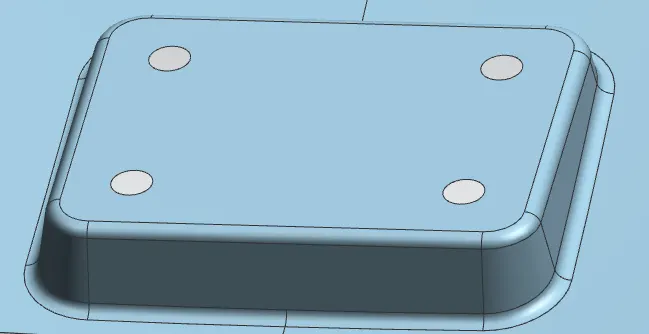
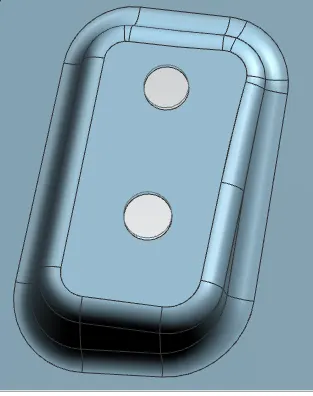
Shock Flow:
Emboss was designed to dissipate the crash force outside the structure toward the hinges
Deep Drawing:
- Deep drawing is a manufacturing process that is used extensively in the form of sheet metal into cup or box-like structures.
- Deep drawing is mostly used in automobile parts such as panels and gas tanks are among a few items manufactured by sheet metal deep drawing.
- Many calculations for design requirements, the sheet metal thickness is assumed to remain constant.
- However, there are changes in thickness in certain areas, due to the forces involved.
Hemming Data:
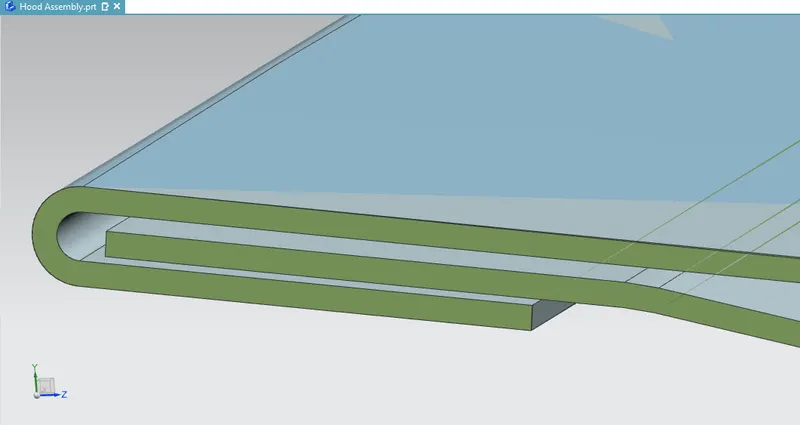
- The outer panel and inner panel can't join by the welding process if we did it will leave a spot on the outer panel and it will spoil the look of a car.
- To join inner and outer closure panels together we use the hemming process.
- It is the process of bending/folding the flange of the outer panel over the inner panel one.
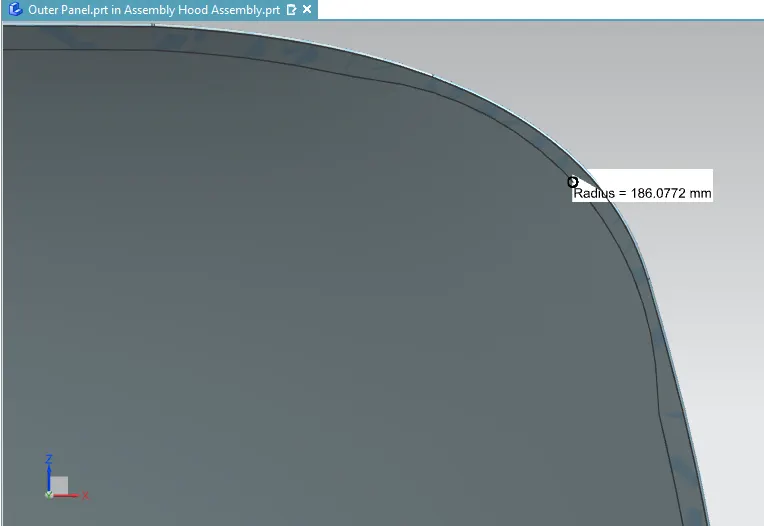
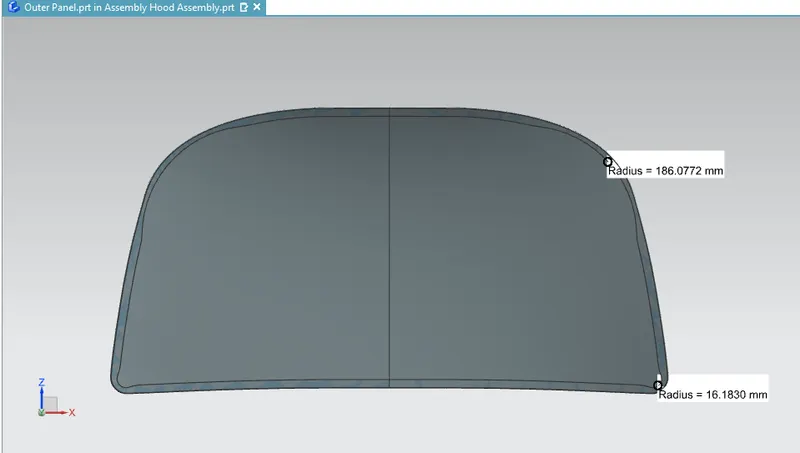
Corner Relief Rear Section:
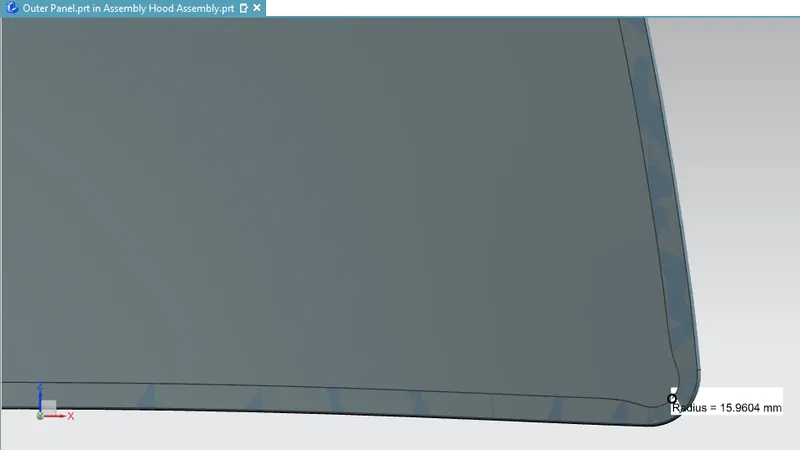
- Corner relief has to be provided for sheet metal bends free moving in the air gap.
- In this case, before the hemming process to control the deformation of the sheet metal.
- To avoid any tear of the sheet metal during bending.
Corner Relief Front Section:
- Corner relief has to be provided for sheet metal bends free moving in the air gap.
- In this case, before the hemming process to control the deformation of the sheet metal.
- To avoid any tear of the sheet metal during bending.
Corner Relief:
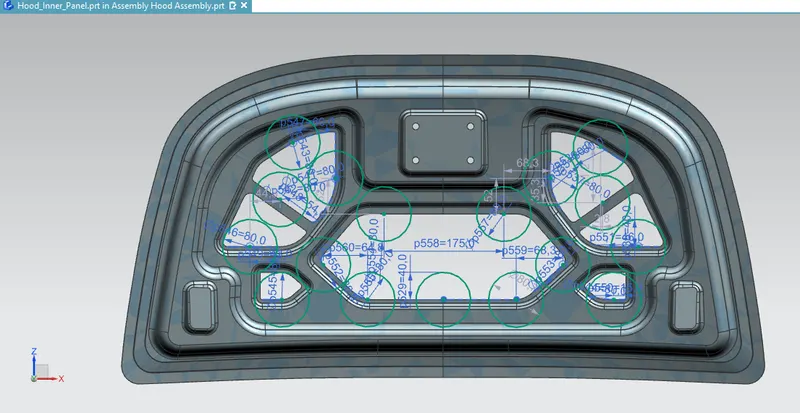
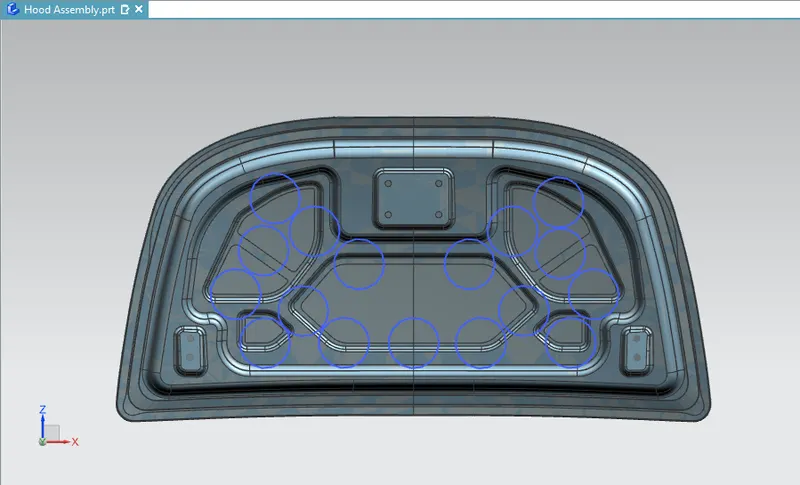
Mastic data:
- Mastic data or mastic points is an elastic compound that behaves like rubber.
- It is applied between the hood's outer panel and inner panel.
- It has an influence area of diameter is 80 mm.
Reinforcements:
Reinforcements are provides more strength to the assembly.
- Latch and striker
- Hinges
Latch & Skriker:
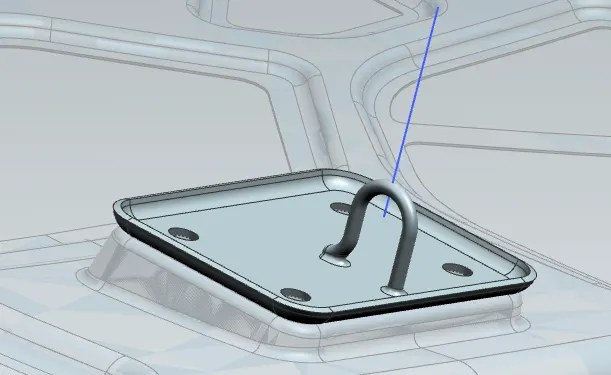
- Latch and Skriker are used for locking the hood with a car.
- It's usually placed in the space provided on the inner panel.
Hinges:
- Hinges are used to connect the hood & cowl panel of an automobile.
- It enables the opening and closing operation of the hood.
- The hinge should be made strong enough to handle the weight of the hood and it also handles the force acting on it during the crash.
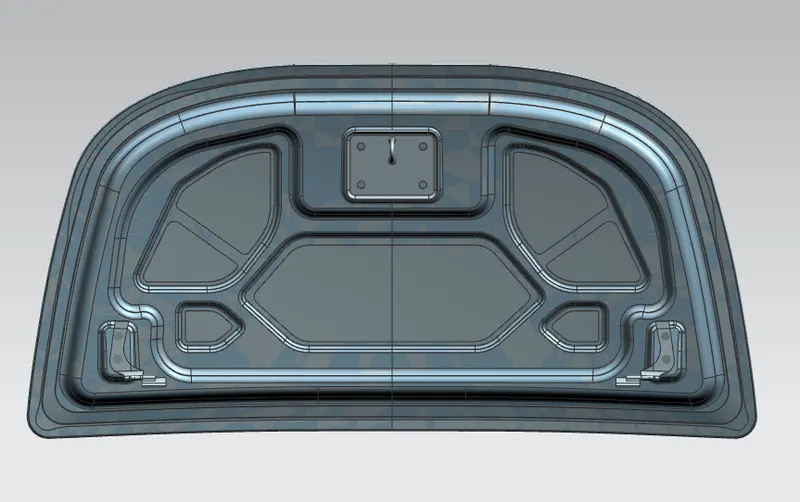
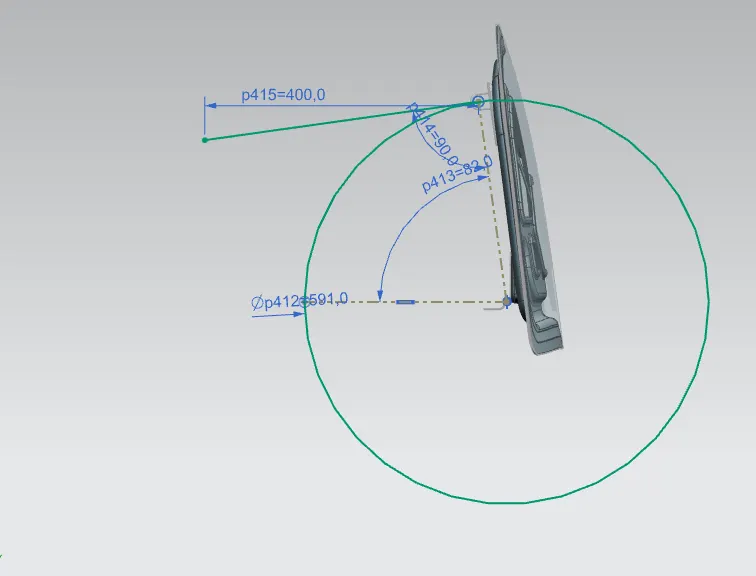
Position of hinges & Striker:
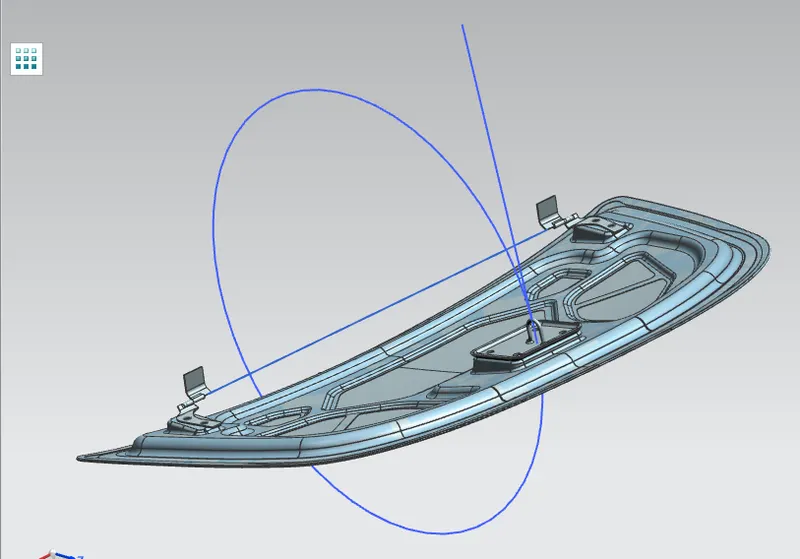
The hinge should be placed on both sides of the hood in such a way that the striker fits exactly into the inner panel provided.
It must be followed by conditions mentioned below:
- Both the hinges should be on the same axis.
- The centre of the striker circular trajectory should be always perpendicular to the hinge axis.
Outer Panel:
- The outer panel is nothing but an outside cover for the engine.
- The outer panel is used to make the car looks nice.
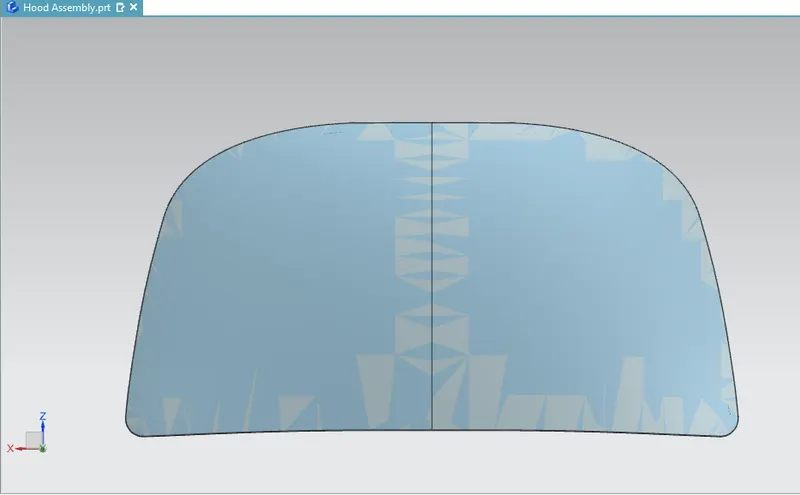
Draft Analysis:
- Once the design was ready, the inner panel of the hood was analyzed for manufacturability.
- Draft analysis shows that all the parts are clears when core is removed from the cavity.
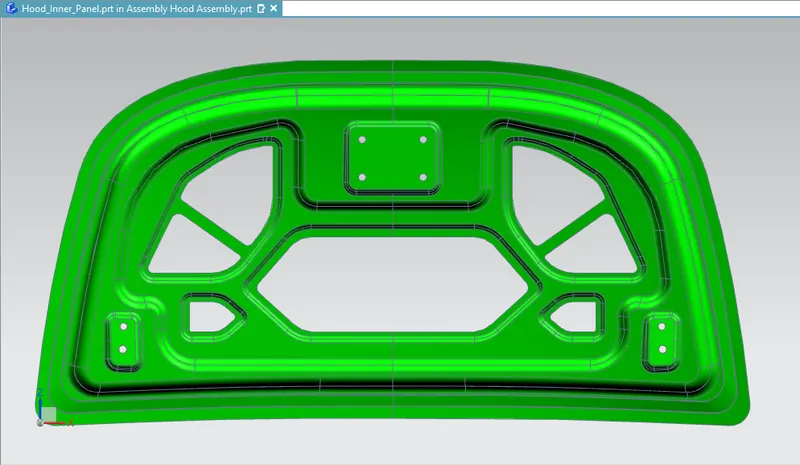
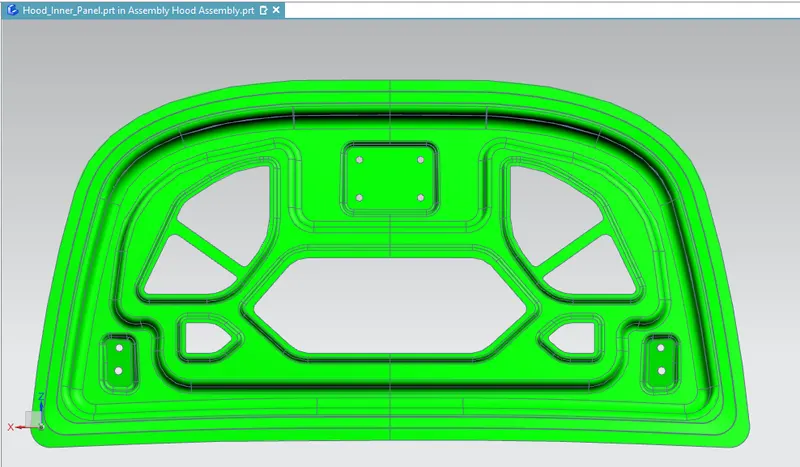
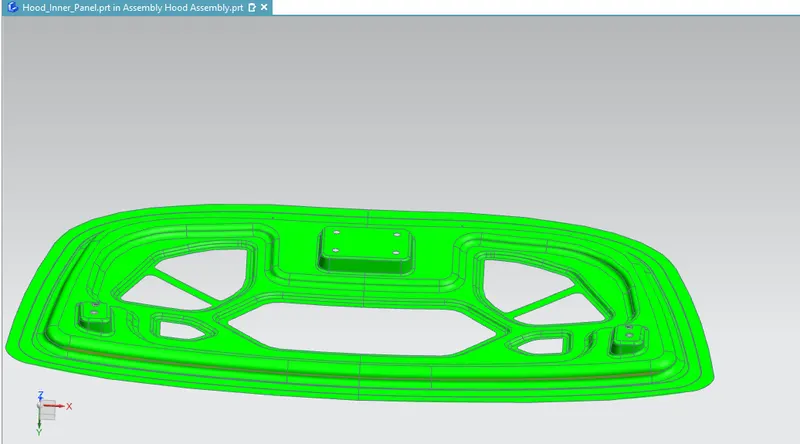
Conclusion:
All parts of the hood are designed based on the required conditions and given dimensions. The completion of the hood design and analysis for successful manufacturability. we can decide that the hood can be utilized for the vehicle.
It also considers the safety of occupants and pedestrians the hood has been designed under EuroNCAP styling safety regulations.