Hood design-Week 2
HOOD DESIGN :
Styles and materials
On front-engined cars, the hood may be hinged at either the front or the rear edge, or in earlier models (e.g. the Ford model T) it may be split into two sections, one each side, each hinged along the centre line. A further variant combines the bonnet and wheelarches into one section and allows the entire front bodywork to tilt forwards around a pivot near the front of the vehicle.Hoods are typically made out of the same material as the rest of the body work. This may include steel, aluminium, fiberglass or carbon fiber However, some aftermarket companies produce replacements for steel hoods in fiberglass or carbon fiber to make the vehicle lighter.
Release/ safety and security mechanisms
The hood release system is common on most vehicles and usually consists of an interior hood latch handle, hood release cable and hood latch assembly. The hood latch handle is usually located below the steering wheel, beside the driver's seat or set into the door frame. On race cars or cars with aftermarket hoods (that do not use the factory latch system) the hood may be held down by hood pins. Some aftermarket hoods that have a latch system are still equipped with hood pins to hold the hood buttoned down if the latch fails.
Features
A hood may contain a hood ornament, hood scoop, and/or wiper jets. A portion of the hood may be raised in a power bulge, to fit a large engine or air filters.
Pedestrian safety
In Japan and Europe, regulations have come into effect that place a limit on the severity of pedestrian head injury when struck by a motor vehicle. This is leading to more advanced hood designs, as evidenced by multicone hood inner panel designs as found on the Mazda RX-8 and other vehicles. Other changes are being made to use the hood as an active structure and push its surface several centimeters away from the hard motor components during a pedestrian crash. This may be achieved by mechanical (spring force) or pyrotrchnic devices.
(Some hoods may need a power bulge to fit over the engine and air filters, or enhance the aesthetic appearance of the hood)
COMPONENTS USED IN HOOD DESIGN
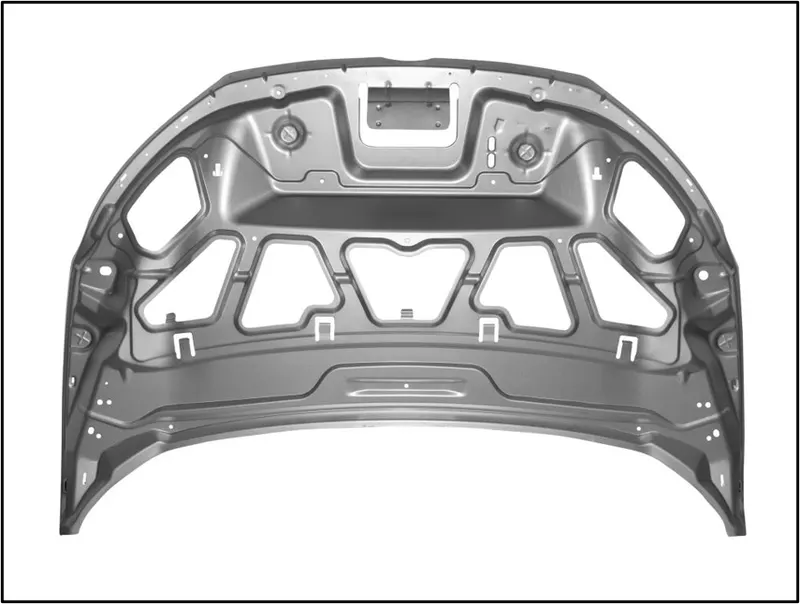
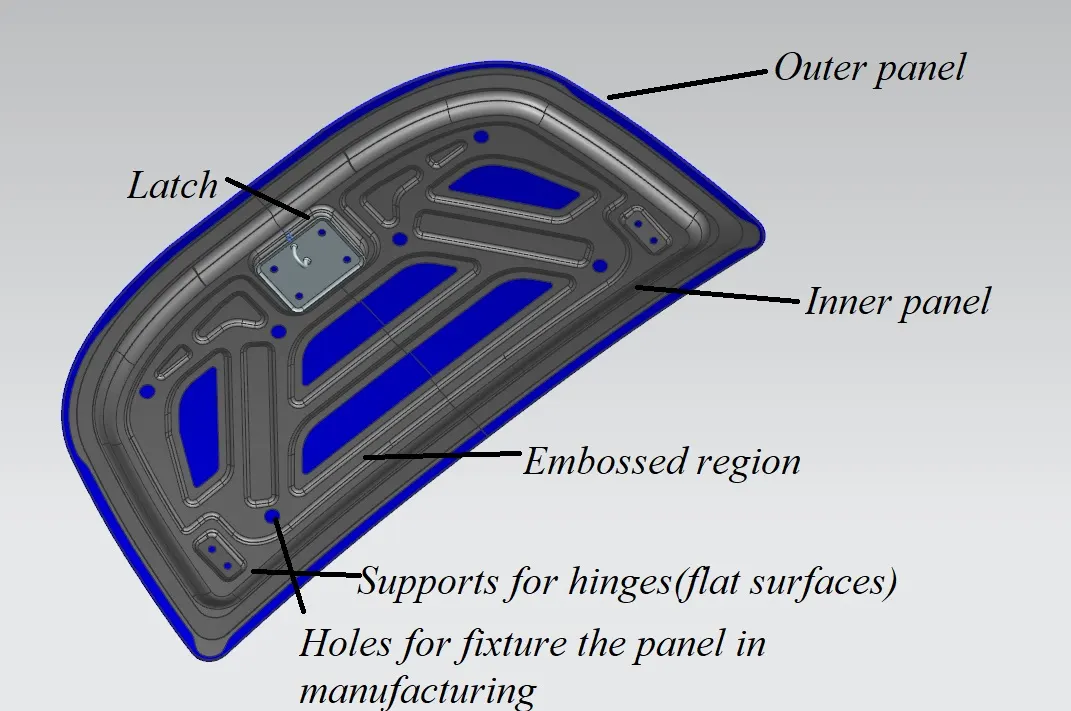
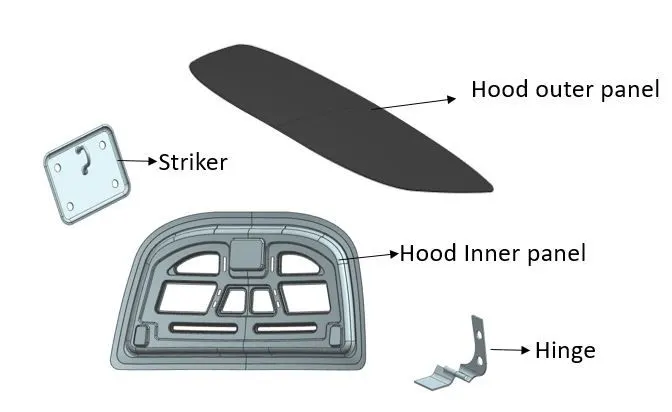
Basically the hood has the inner pannel, outer panel and reinforcement (it will provide the strength) and emboss. Latch and striker mechanism is used to open and close the hood whenever is needed. Latch and hinge is needed some reinforcement for strength.
HOOD INNER PANEL
Hood inner panel of the present invention comprise the hood for forming vehicle inner panel main body, be arranged at inner panel main body and along overall width direction extend front side strengthening rib and be arranged at inner panel main body and be positioned at front side strengthening rib rear view of vehicle side and along overall width direction extend rear side strengthening rib.And front side strengthening rib bends than the mode of end, overall width direction by vehicle front with overall width direction central portion, and rear side strengthening rib bends than the mode of end, overall width direction by rear view of vehicle with overall width direction central portion.
LATCH
The hood latch is an extremely simple latch. When the hood is closed, the latch slides over what is called a catch, and a spring covers the latch to keep it snug. When you pull the knob inside the car to open the hood, the hood latch cable opens the latch, allowing it to bypass the catch and open.
EMBOSSING
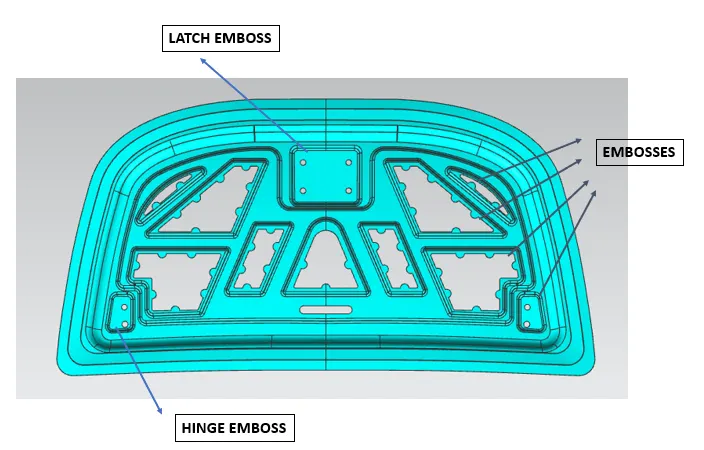
Embossing is done to add more stiffeness to the panel. Adding emboss will add more strength and stiffeness to the part.The embossing value should be more optimum to ensure the all parts requirement such as manufacturing feasiblity, frontal crash requirement and pedistrian crash requirement.
HINGE
Drivers can raise and lower their vehicle's hood thanks to the hood hinges that serve as the body panel's pivoting point. These hinges also hold the hood closed on their end, and most vehicles have two hood hinges, one for each side.
STRIKER
Our Hood Latch Striker is designed for long-lasting use. It's durable steel construction safeguards against body damage, ensuring the vehicle hood won't unexpectedly open while driving. Easy to install - latch restores proper hood functionality.
HOOD OUTER PANEL
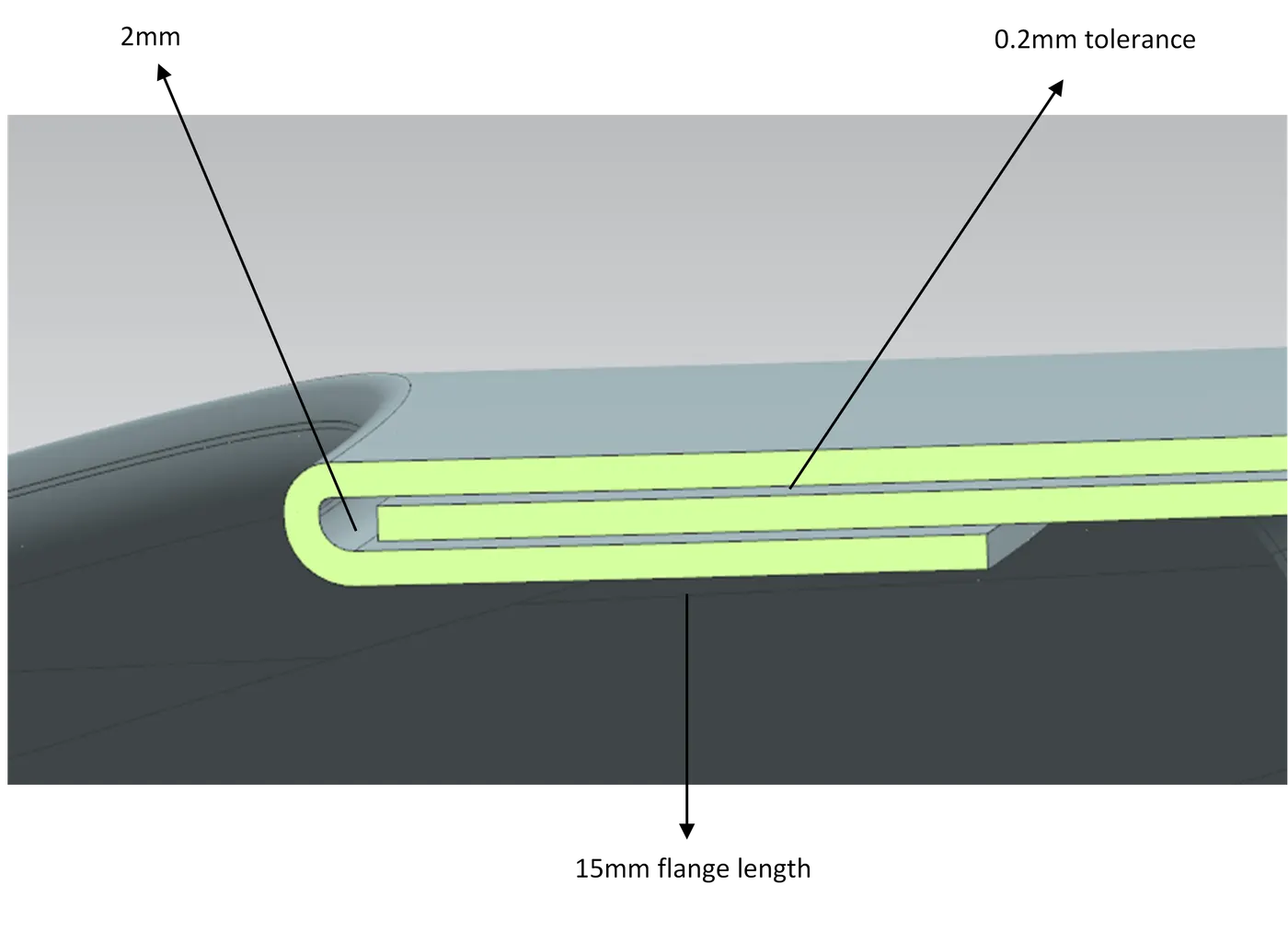
A car hood panel is one of the most important components of the BIW (body in white), it is considered as the closure sheet-metal component. A hood panel consists of two panels that are hemmed together to form the automotive hood assembly.
HEMMING
Hemming is a process by which that edge is bent. It gives a neat and a compact joint. However, it is less strong than a welded joint. It is on the other hand possible to combine hemming with other additional joining methods, for instance gluing, in order to increase the strength of the joint.