Hood design-Week 2
AIM DESIGN & DEVELOP THE HOOD INNER & OUTER PANEL CONSIDERING THE SAFETY FUNCTIONAL & MANUFACTURIING RULES AS PER THE OEM STANDARDS.
DESCRIPTION Design od hood & assembly of latch & stricker & hinge assembly to the hood as given as input.
firstly the hood is also called as bonnet
Body in white (BIW) is the stage in automobile manufacturing in which a car body's frame has been joined together, that is before painting and before the motor, chassis sub-assemblies, or trim (glass, door locks/handles, seats, upholstery, electronics, etc.) have been integrated into the structure. Assembly involves different techniques such as welding (spot, MIG/MAG), riveting, clinching bonding & lazer brazing .
In car design, the body in white phase refers to the phase in which the final contours of the car body are worked out, in preparation for ordering of the expensive production stamping die
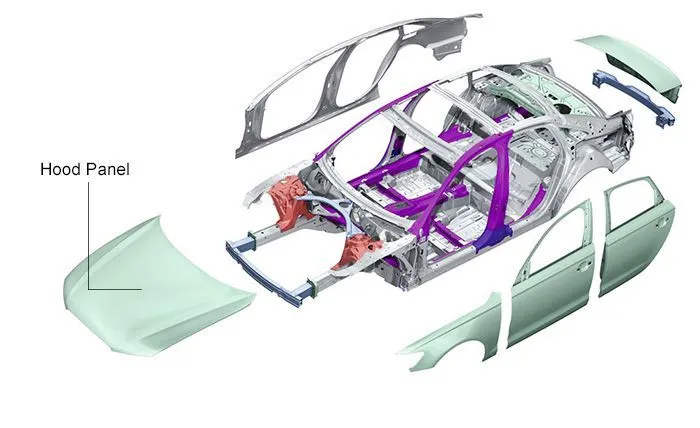
HOOD
MATERIAL USED FOR HOOD
Steel and Aluminum. Most cars intended for mass production and consumer use have bodies made from either steel or aluminum.Plastic.
Plastics are being used more frequently in modern car manufacturing. ...
Carbon Fiber. Carbon fiber is very light and very strong, meaning that fast cars can get the best out of their engines
The hood (North American English) or bonnet (Commonwealth English) is the hinged cover over the engine of motor vehicles. Hoods can open to allow access to the engine compartment, or trunk (boot in Commonwealth English) on rear-engine and some mid-engine vehicles) for maintenance and repair
A car hood panel is one of the most important components of the BIW (body in white), it is considered as the closure sheet-metal component. A hood panel consists of two panels that are hemmed together to form the automotive hood assembly.
The inner panel of the hood is not visible to the customer but this is the engineering feature of the outer panel. The outer panel has the aesthetic look to it but on its own is very weak and not capable of handling force during impact.
Most automobile hood outer panels are made of traditional steel plates, and their quality does not meet the needs of lightweight development. For this reason, it is necessary to obtain lightweight effects through the application of the automotive aluminum sheets. The most widely used car aluminum alloys in the market are deformed aluminum alloys of 6111, 6016, and 5182.
The production process of the outer panel of the hood mainly includes blanking, deep drawing, trimming, turnup, and side turnup. Among them, deep drawing is a key process to ensure the quality of parts.
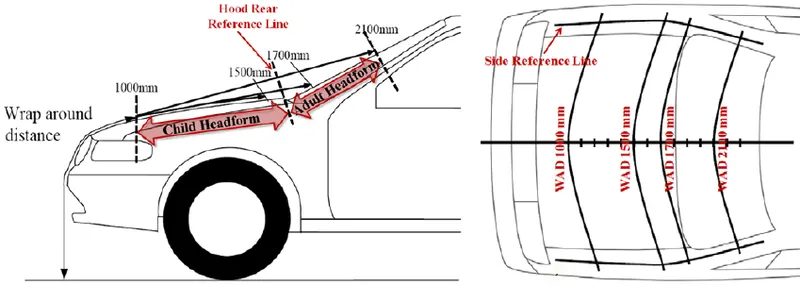
Wrap Around Distance (WAD)
When a cr crashes on a pedestrian thw whole human body wrapps around the front shape of the car & head impacts on the bonnet or winf screen. the distance impacts on the car the distance from the ground is called the wrap around distance
during the crash analysis based on the wrap around distance two test areas were created namely child impact & adult impoact zone the child imapct zone is between 100 mm to 1700 mm WAD.the adult impact zone is between 1700 to 2100 mm WAD.
The so called Wrap Around Distance WAD is one of the important measurements for the assessment of protection of pedestrians and of bicyclists as well because the kinematic of bicyclists is similar to that of pedestrians.
THE RULES TO BE FOLLOWED WHILE DESIGN THE HOOD
Pedestrain safety
vehicle quality
stlying
manufacturability
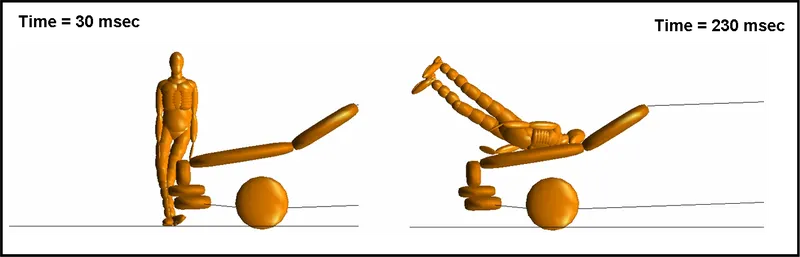
Many pedestrian crashes involve a forward moving car (as opposed to buses and other vehicles with a vertical hood/bonnet). In such a crash, a standing or walking pedestrian is struck and accelerated to the speed of the car and then continues forward as the car brakes to a halt. The pedestrian is impacted twice, first by the car and then by the ground, but most of the fatal injuries occur due to interaction with the car. Vehicle designers usually focus on understanding the car-pedestrian interaction, which is characterized by the following sequence of events: the vehicle bumper first contacts the lower limbs of the pedestrian, the leading edge of the hood hits the upper thigh & pelvis and the head and upper tosko are struck by the top surface of the hood and/or windshield
DRAWING OPERATION
It is a forming process by pushing a punch against a flat sheet and forcing it into a die to take the required shape. Or in other words drawing is the operation of producing thin walled, hollow shaped parts from sheet metal. Both the die and the punch have shape of the part to be manufactured . Classifications of drawing operations could be cupping, redrawing and deep drawing. Components like cups, shells, household utensils etc. can be made by drawing.
BENDING
It is a forming operation performed on a press to bend a sheet metal or a strip through required angle.
BLANKING
Blanking is an operation of cutting an object of given shape from sheet metal strip. It may or may not be necessary to perform further operations on the blank. Piece detached from the metal strip is called blank.
PIERCING
It is a distinct process of making a hole in sheet metals.
It is characterized by:
The punch is sharp and pointed tool which is able to penetrate or pierce through the sheet metal.
There is no scrap from the hole.
The hole has rough flanges around the hole.
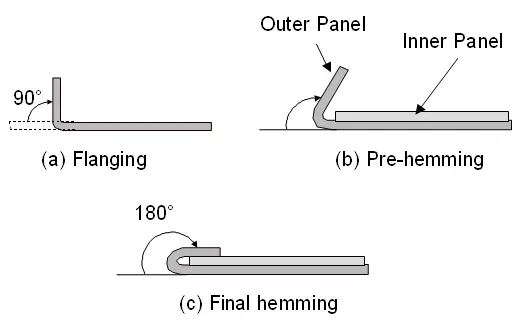
HEMMING
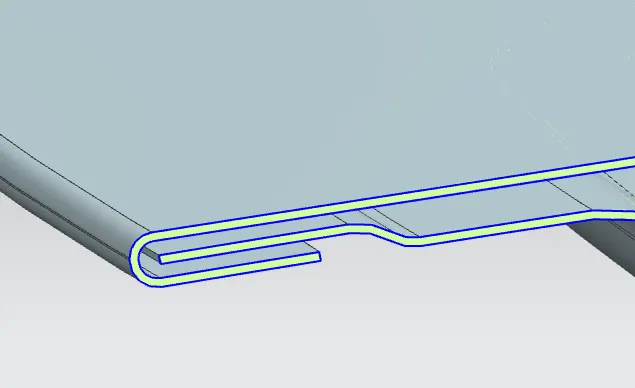
Hemming is a sheet metal forming process in which sheets are joined by bending it usually to 180°. Automotive body panels and automotive parts such as deck-lids, trunk-lids, doors, hoods and tailgates are formed by hemming process.
Hood Thickness Information
- Outer Panel Thickness = 0.75mm
- Inner Panel Thickness = 0.75mm
- Reinforcement Thickness = 1.5mm
DESIGN OF HOOD AS PER THE GIVEN MASTER SECTION
HOOD INNER PANEL OF 0.75 mm thickness.
IT IS DESIGN WITH THE GIVEN SURFACE . BY USING VARIOUS REQUIRED COMMANDS.THE HOOD INNER PANEL IS DESIGNED BY FOLLOWING THE SAFETY REQUIREMENTS & WITH MASTER SECTION AS PER THE OEM STANDARDS.
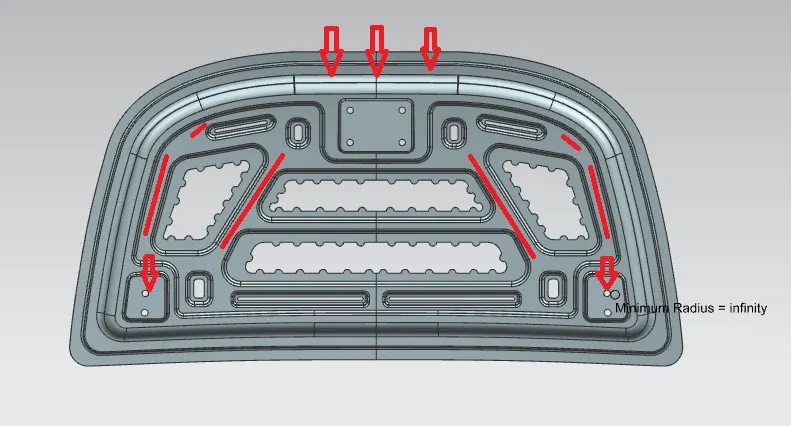
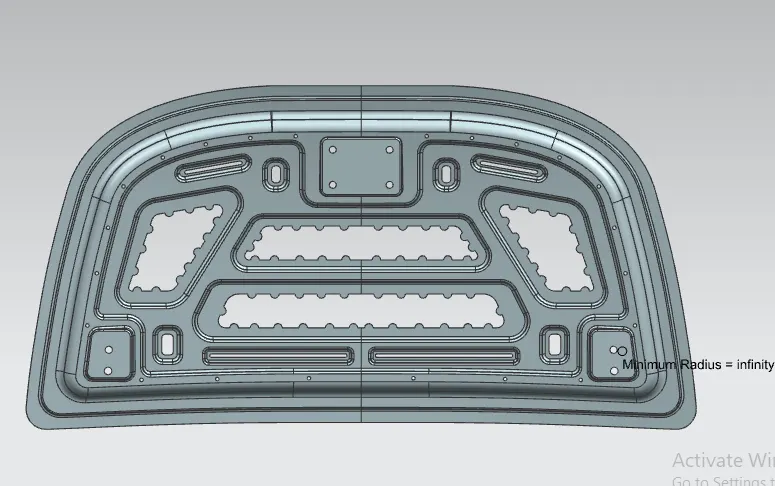
the hood inner panel consists of emboss,mastics ,& blends to reduce the weight of the component & does't effect the pedastrian when hits to the front of the car.
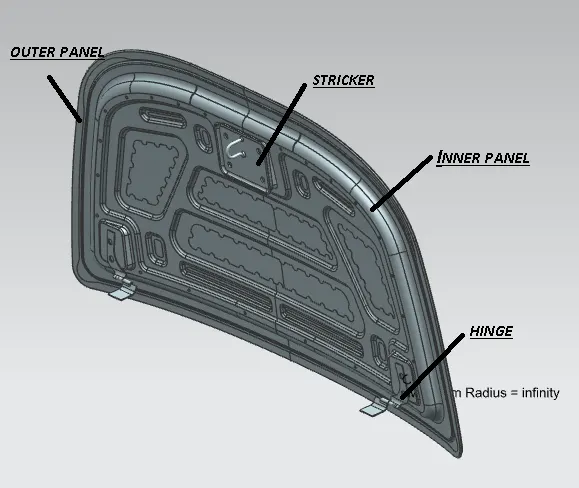
required cuts holes were provided for sufficient deformation of the outerpanel with out any restrictions caused by the innerpanel in case of pedestrian impact. mastic sealent points were created on the inner panel hinge & stricker holes wer created.inner panel image.
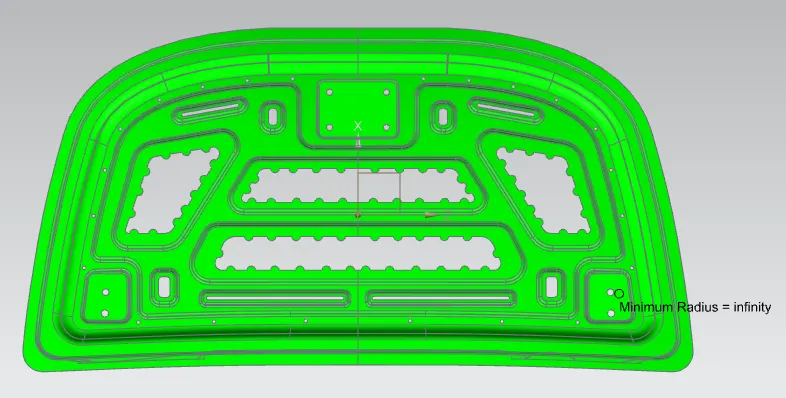
DRAFT ANALYSIS PERFORMED ON HOOD INNER PANEL . with an angle of 5 deg with respect to the datum csys.(along vector)
draft analysis is performed on the compeleted component so the the design ed component is manufacturable or not & to check the feasibility.
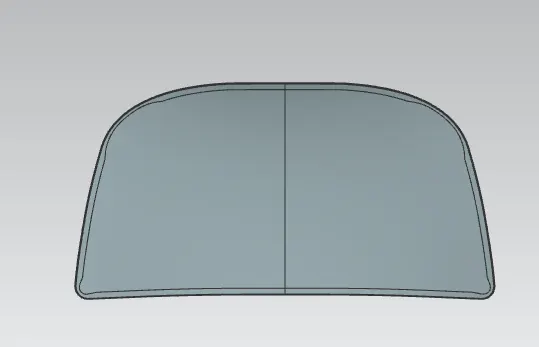
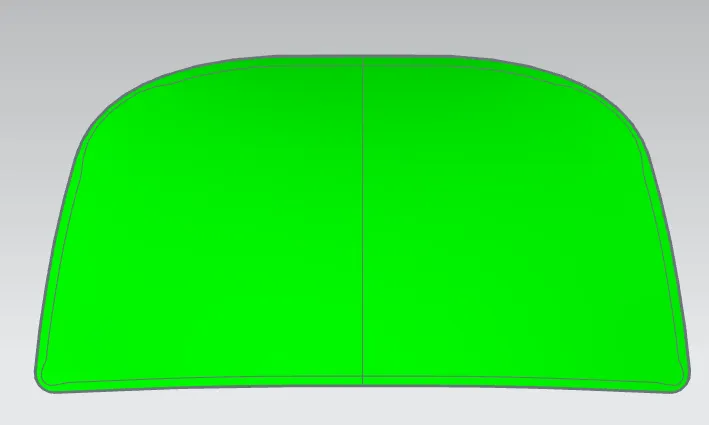
HOOD OUTER PANEL
It acts as stlying of the hood .
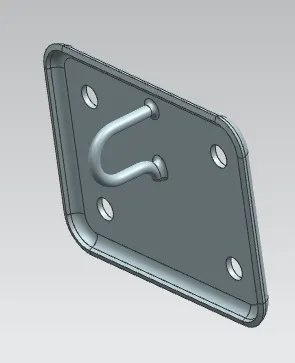
STRICKER
It acts as the lock the hood assembly attached to the inner panel
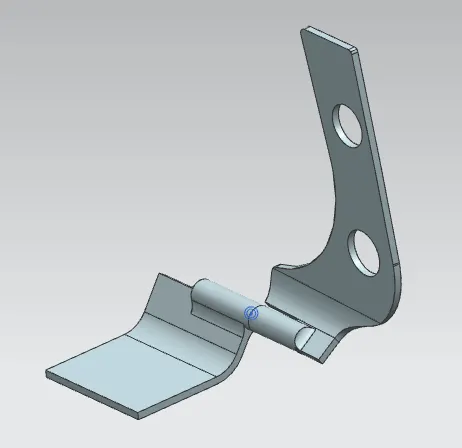
HINGE
It acts as the open & close of the hood assembly at an angle .it is attached to the inner panel.
ASSEMBLY OF HOOD
INNER PANEL
OUTER PANEL
LATCH & STRICKER
HINGE
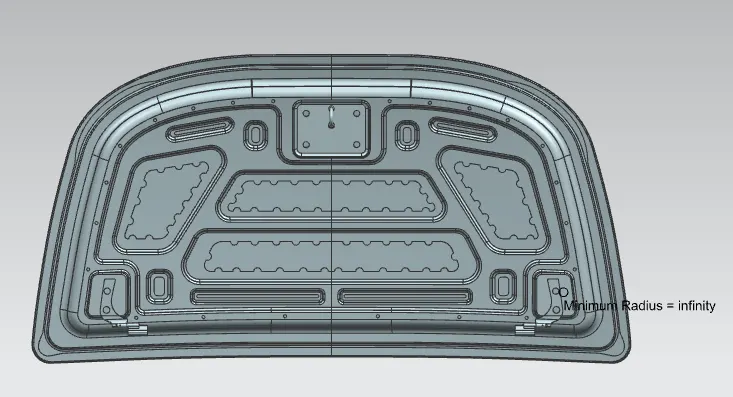
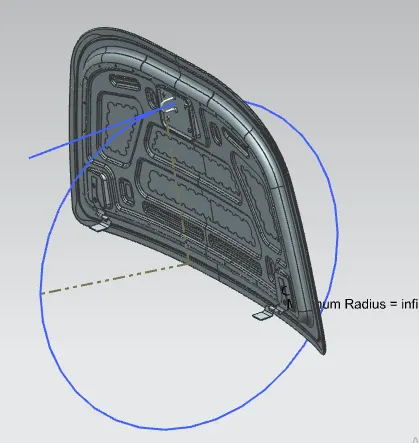
STRICKER POSITION METHOD
THE CIRCLE DRAWN WITH THE REFERANCE POINT BETWEEN THE TWO HINGES ASSEMBLED, & BY NEW SKETCH COINCIDE THE CIRCLE TO THE CENTRE OF THE TWO POINTS & DIMENSION THE CIRCLE RADIUS BY ADJUSTING THE REQUIRED POSITION AS PER MINE IS R-81 MM
SECTION VEIW
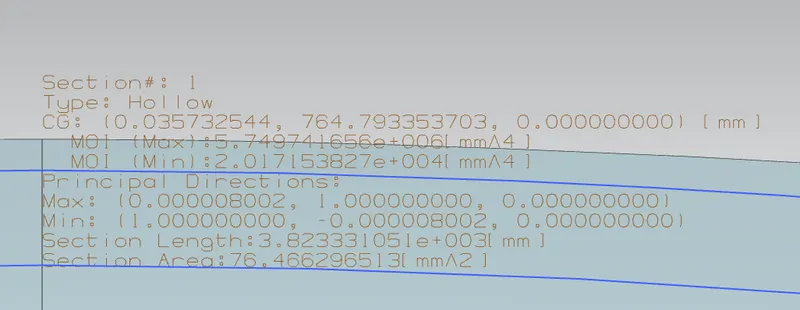
MOMENT OF INERTIA OF THE HOOD
CONCLUTION
DESIGN OF HOOD INNER PANEL ,OUTER PANEL FOLLOWING THE DESIGN RULES & SAFETY REQUIREMENTS AS PER THE OEM STANDARDS. & ASSEMBLED THE INNER,OUTER ,HINGE & STRICKER & ALSO PERFORMED DRAFT ANALYSIS ON IT IS CLEAR.