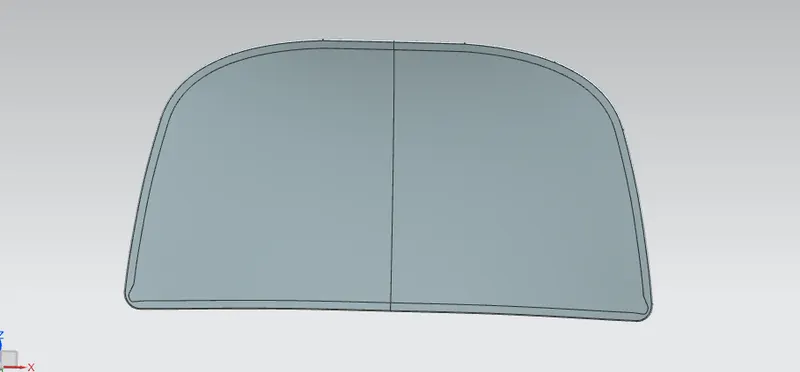
Hood design-Week 2
Aim:
To design a hood of a Car based on Engineering inputs, Design considerations & Safety Factors that satisfies industry's manufacturing requirements and functional requirements using NX CAD.
INTRODUCTION:
The hood which is also known as bonnet is the hinged cover over the engine of a car that allows access to the engine compartment.
The hood release system is common on most vehiclyes and usually consists of an interior hood latch handle, hood release cable and hood latch assembly. The hood latch handle is usually located below the steering wheel, beside the driver's seat or set into the door frame.
In this project we will be focussing on designing the Inner Panel & Outer Panel of the hood & finally assembling them with the given hinge assembled part and the Latch & Striker Reinforcement.
Since we are initially dealing with sheet metal of infinitely small thickness, the hood is predominantly designed using Surface Modelling tools.
HOOD ASSEMBLY:
The Hood is basically a sheet metal assembly of various paers such as the Outer Panel, Inner Panel, Latch & Striker and the Hinge. Finally, the hemming is done in order to roll the outer panel over the inner pannel.
The Inner Panel ptovides strength while the outer panel functions as the metal cover. They both are held together by mastic seals.
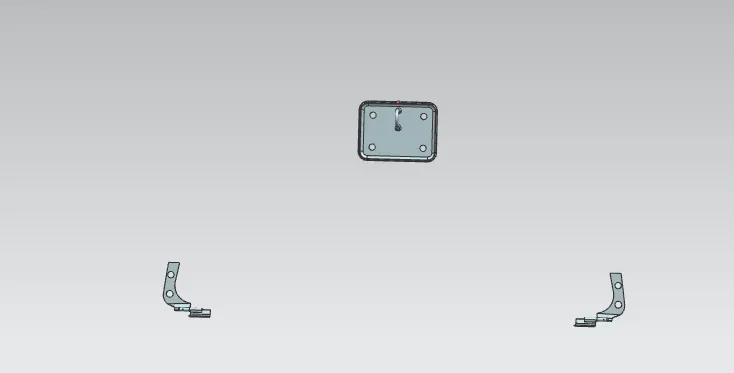
The Latch & Striker is primarily responsible for precise and flush car door closure and also for keeping the door securely closed. Subsequently, the striker, as the decisive counterpart for the latch, is a central element with enormous importance for flawless function of the entire closure system.
The hinge is a movable joint or mechanism on which the hood swings as is opens and closes, while connectig the hood.
INNER PANEL DESIGN:
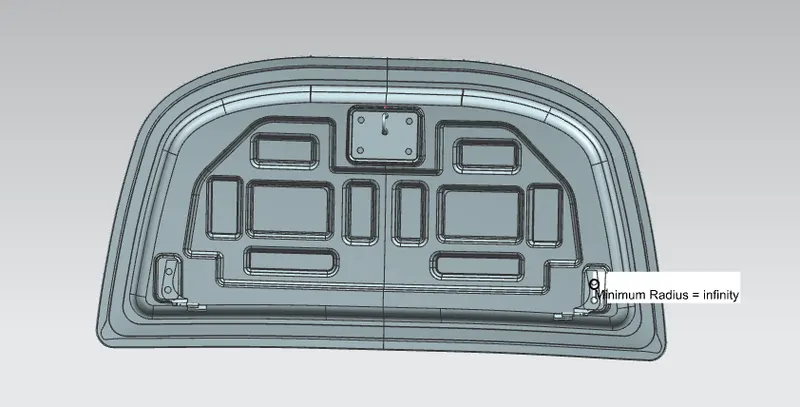
The inner panel master sectio was designed based on the master sketch. The inner panel isthe critical part of the hood which acts asa force redirecting medium during fromtal crash. Hence, it becomes very important to ensure that the inner pannel is designed in such a way that the damage caused to the passenger as well as the pedestrian is minimum.
The inner panel consists of different contours known as Emboss & various cutouts made on the emboss which reduces the weight of the hood. It also consists of the mastic sealants extruded from the cutout edges.
The embosses are projected sections from the inner panel surface that are created in order to redirect or dissipate the forces away from the centre of the hood, towards the hinge to avoid passenger damage.
The embosses with varying depths (5mm, 7mm, 9mm, 13mm) are provided on the hood for reinforcement & to add strength to theiner panel.
LATCH & STRIKER AND HINGE ASSEMBLY:
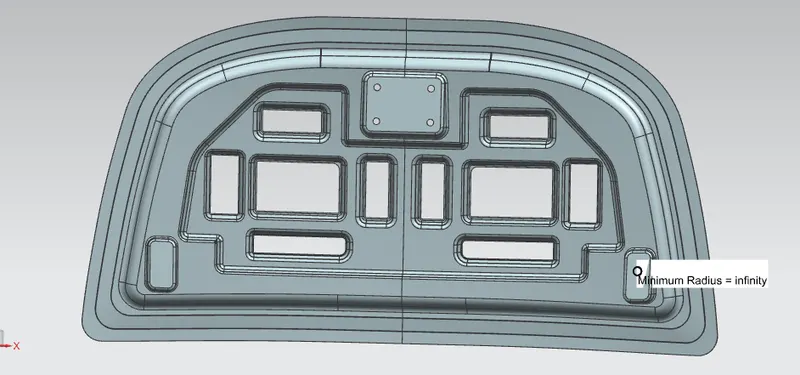
This is a critical stage i Hood Design as it plays an important role in the opening & closing of the Hood.
The Positionig is done as shown below concerning the Hinge axis so that the circle is passing through thecenter of the striker with the Hinge axis as its center. Also, The Striker must be perpendicular to the trajectory to achieve the correct position and thus enables it to close with the Latch.
hemming:
it is process of joining both outer panel and inner panel.