Hood design-Week 2
Automobile Hood Design
Hood is basically a hinged cover on the front side of the car. Most of the times it is mounted over the engine and sometimes the inner region under the hood is also used as boot space, based upon the model of the car. A hood enables access to the inner parts like engine, battery, belt drive etc.. by opening it. it uses latch and a striker for the lock and unlock mechanism. Heavy design work goes into the designing process of hood which need to follow some rules and regulations implemented by concerned authorities. Hood, also needs to be designed according to pedestrian safety, depending upon the range of impact due the hood on the injury prone regions of human body. The guidelines provided by GLOBAL ENCAP and EURO ENCAP need to be followed respective manufacturers.
The guidelines given by ENCAP determines the design of hood in terms of length, angle etc. This ensures less risk when a pedestrian hits the hood. The more, less impact zones a hood have the more safety rating the car gets.
fig.1 adult and child head impact zones
fig.2 impact and damage due to impact on human body
As shown in the above picture the head impact zones of adult and child has been marked on the hood, child has an impact region at 1000 to 1500 mm from the front and adult has an impact region at 1800 mm from the front.
Rigid materials inside the hood are avoided at the impact regions to avoid heavy damage to a pedestrian.
As shown in fig.1 the blocks i.e (A,B,C,D) represents the coloured blocks in fig.2 ,more number of blocks coloured green on the car's hood, more safety rating the car gets.
Materials used and components of Hood
Materials generally used in cars are sheet steel, aluminium etc. Both inner and outer panel of the hood are made of the same material as well. Hood is also made of carbon fibre to reduce the weight. The components like hinges and latch and striker mechanism are made of steel to maintain their structural performance.
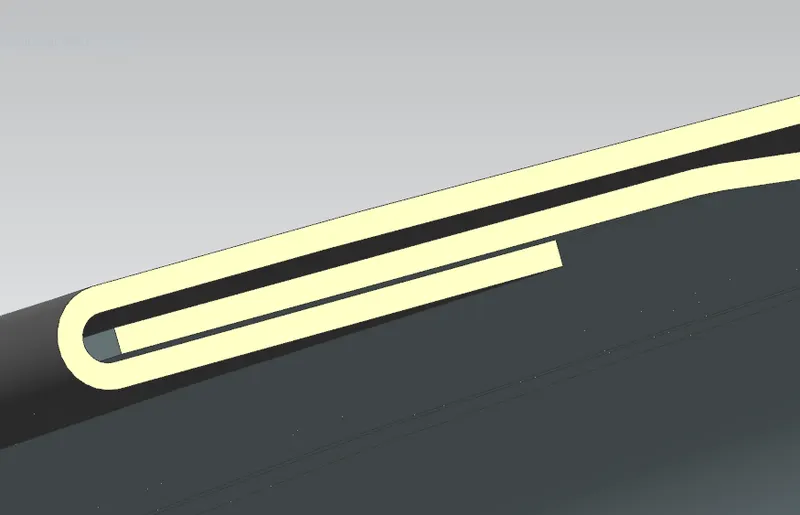
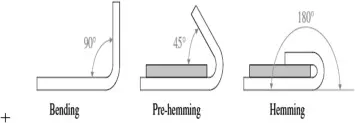
Hood has inner and outer panels which are joined by the process of hemming that combines both of them together.
The inner panel is designed with many punches cuts and embosses to sustain and minimize the impact of stress and spread it all over the panel.
Mastic sealants are introduced between hood outer and inner panels to sustain the vibrations and noise due to the collision of panels and inner parts.
Design Methadology of Car Hood
Hood outer panel thickness - 0.75mm
Hood inner panel thickness - 0.75mm
Hinge thickness - 1.5mm
Hood master sketch
Hood outer panel hem cross section view
Hemming
Hemming is a sheet metal forming process in which sheets are joined by bending it to 180°.
Hem Relief on Hood outer panel
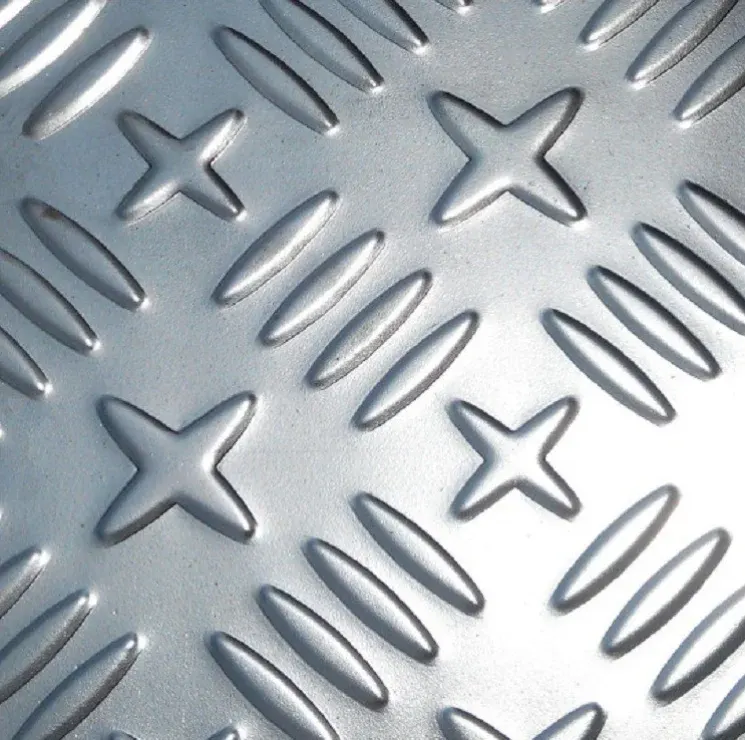
Embossing
Embossing is a stamping process for producing raised or sunken designs or relief in sheet metal. This process can be made by means of matched male and female roller dies, or by passing sheet or a strip of metal between rolls of the desired pattern.
Deep Drawing
Deep drawing is a sheet metal forming process in which a sheet metal blank is radially drawn into a forming die by the mechanical action of a punch.
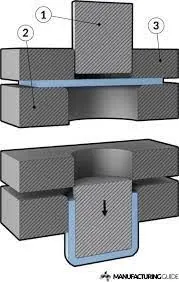
Punching
punching is a cutting process in which material is removed from a piece of sheet metal by applying a great enough shearing force.
Hood inner panel
Manufacturing of hood inner panel is a challenging task involving many complicated processes like punching, deep drawing, embossing etc..
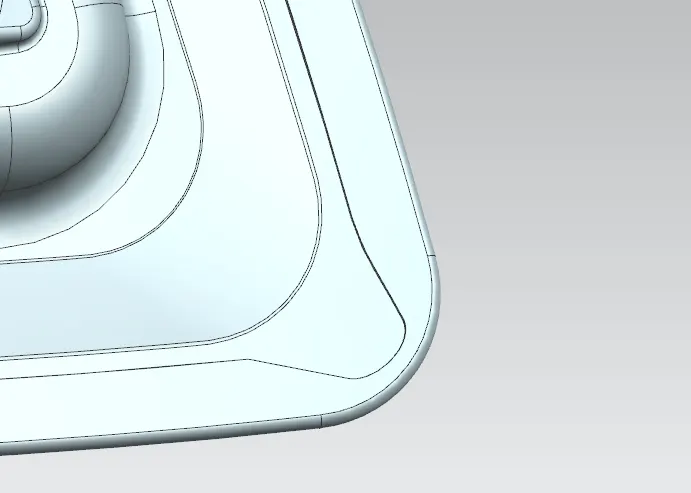
Combining outer and inner panel involves a process called Hemming which is basically joining both the panels by folding the outer panel over inner panel with relieves at the corners.
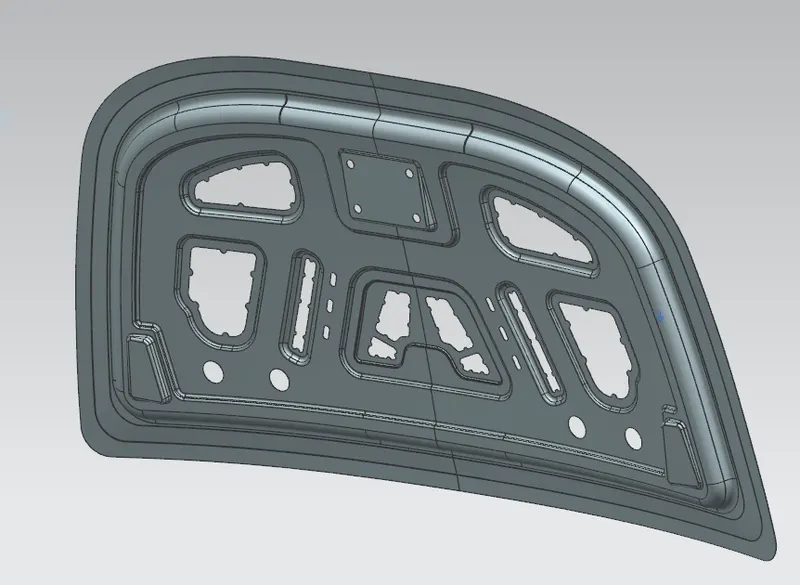
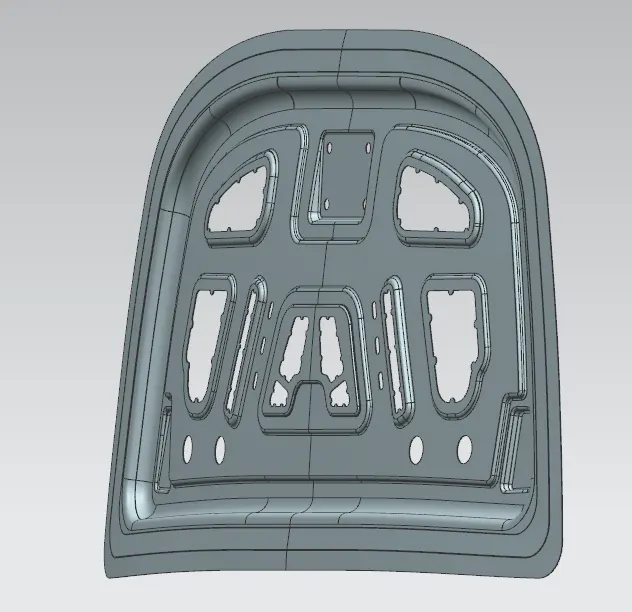
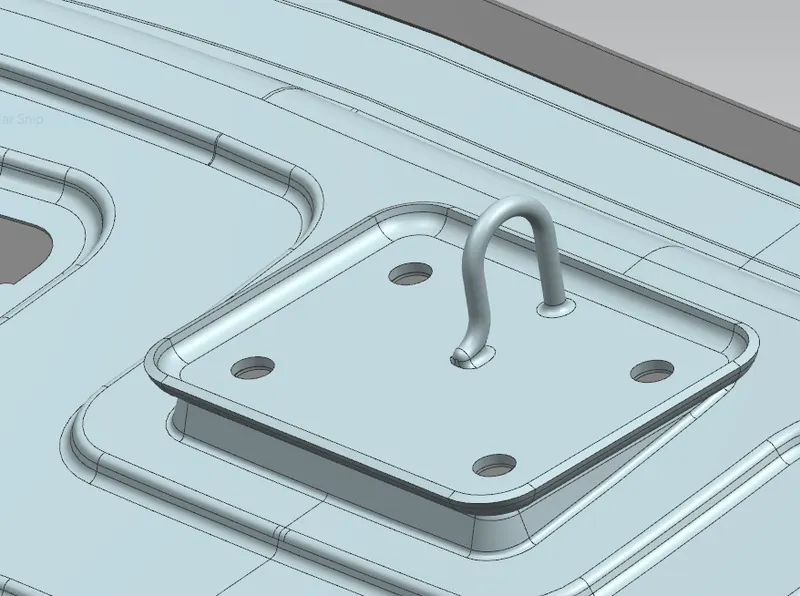
Striker Base on inner panel
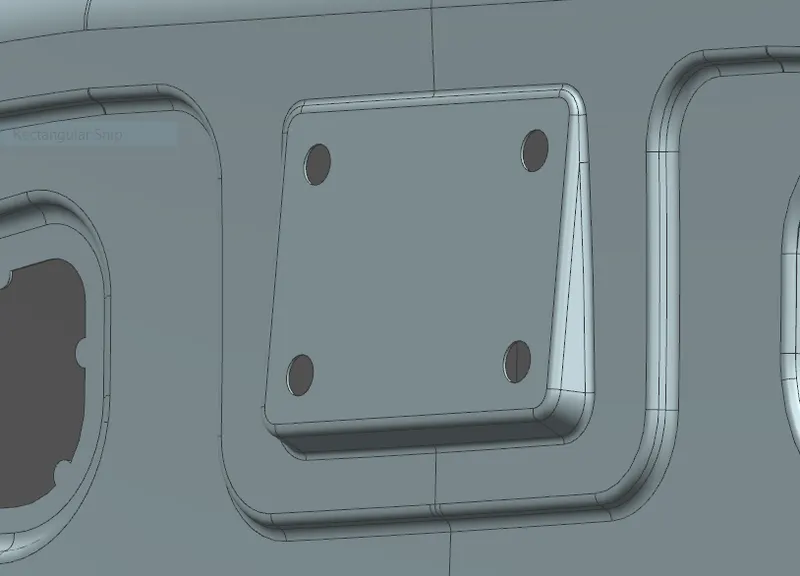
Striker alignment on inner panel
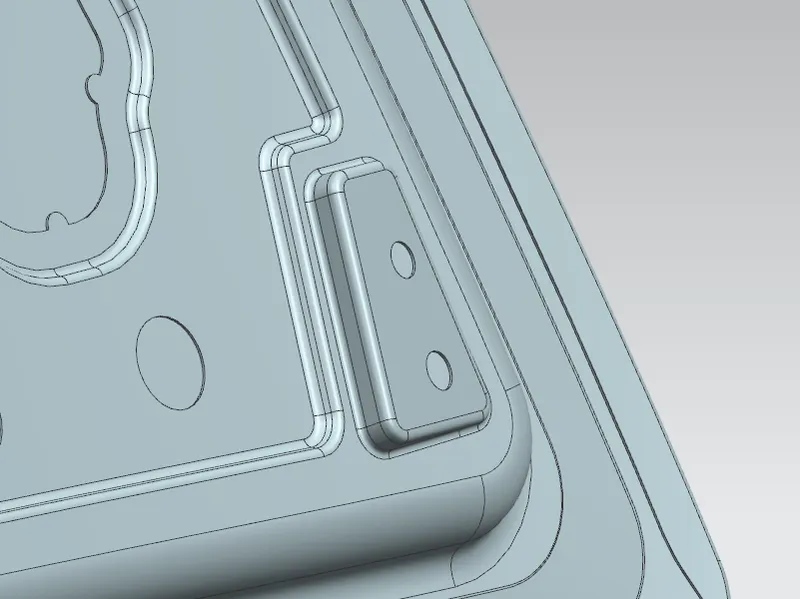
Hinge base on inner panel
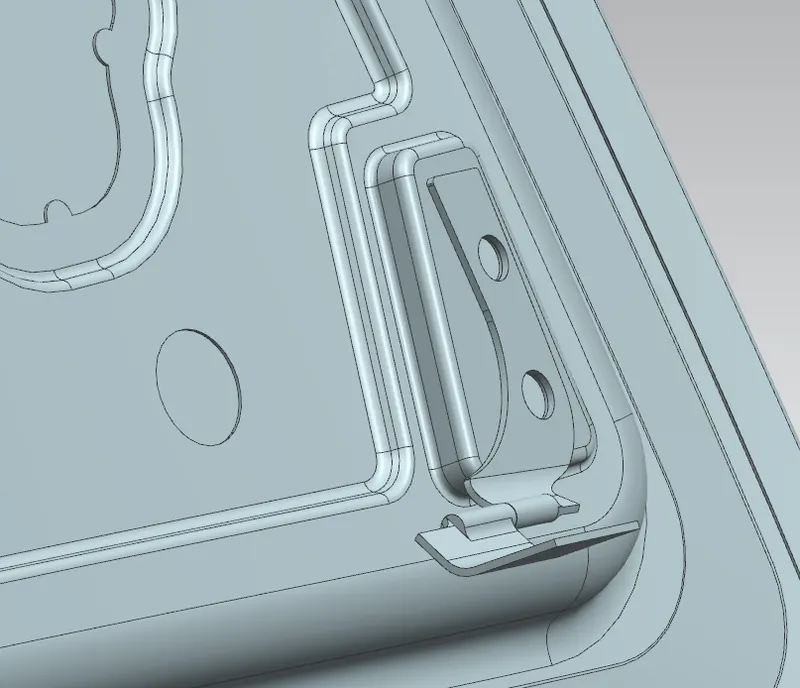
Hinge alignment
Stress/Force distribution in hood inner panel due to impact
The below fig shows us the equivalent force distribution during the impact on the hood.
Mastic data of inner panel
Mastic sealants are introduced in between the outer and inner panel which have an impact radius of 80mm around them.
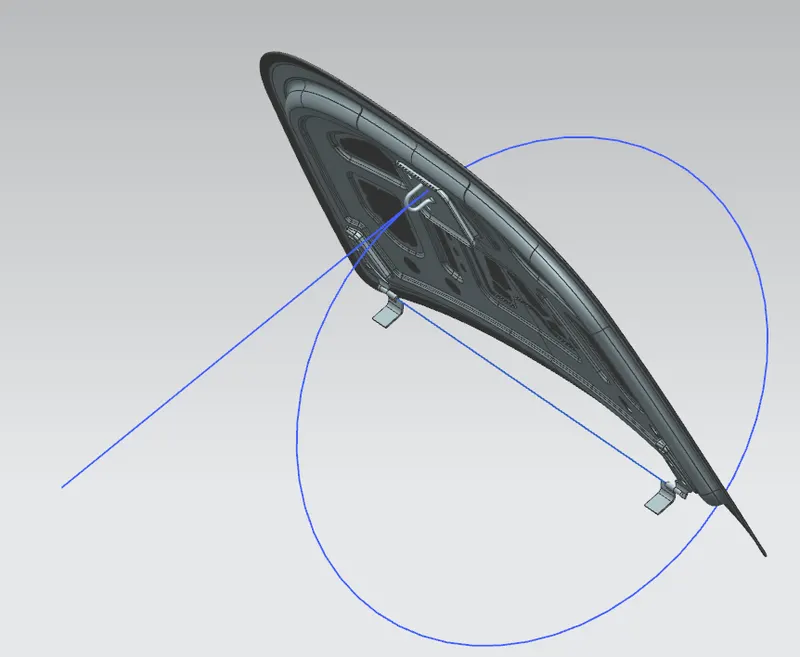
Latch trajectory
Latch trajectory is nothing but the circular path in which the latch moves about the hinge axis to get locked with the striker
Conclusion
The Hood is designed as per the Master sketches,safety requirements and guidelines with good force absorption inner panel. All the manufacturing processes have been elaborated.