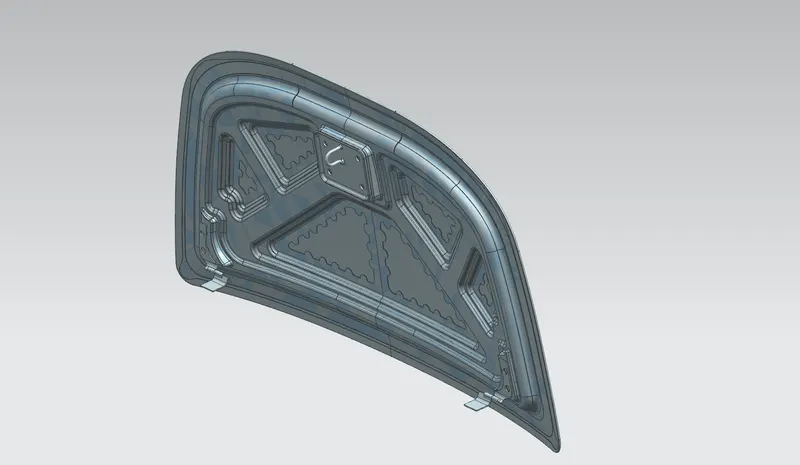
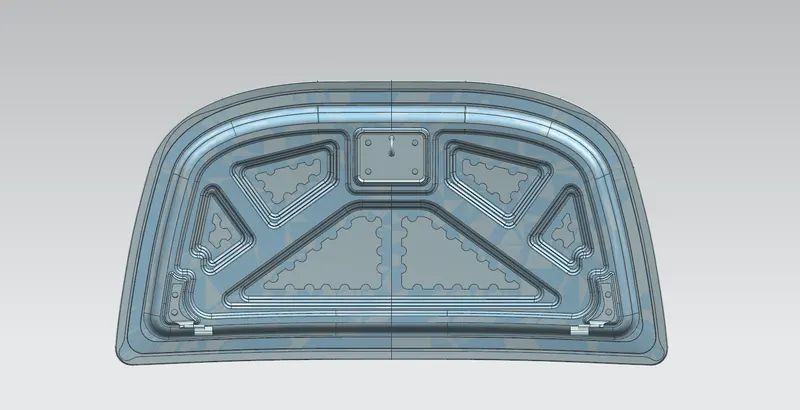
Hood design-Week 2
HOOD DESIGNING
Objective:-
Designing of hood inner panel, Outer panel, Position hinges and striker. And create emboss and mastic point.
Design Data
- Outer Panel Thickness = 0.75mm
- Inner Panel Thickness = 0.75mm
- Reinforcement Thickness = 1.75mm
Introduction-
Hood is also called as a Bonat. It covers the engine over top. The advantage of this is that the engine is not in touch with the direct environment. That is, protects from water and sunlight, allows the sound to come out less. The well design hood adds the beauty of the vehicle.
Hood is made by Combining several parts. Which is mainly
- Hood Outer Panel
- Hood Inner panel
- Hing
- Latch and Striker Mechanism
We will understand the design consideration of all in this report –
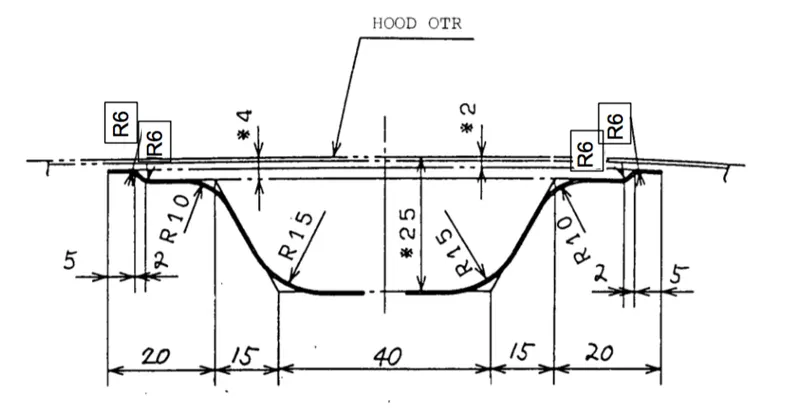
Master Sketch:
Master sketch will be given. We will understand with master sketch that how will be thickness of inner panel and outer panel, how will be size in mm of fillet, how will be gapping between inner panel and outer panel, how will be depth, tilt and width of embossing.
Emboss:
Sheet metal embossing is a stamping process for producing raised or sunken designs or relief in sheet metal. This process can be made by means of matched male and female roller dies, or by passing sheet or a strip of metal between rolls of desired patter.
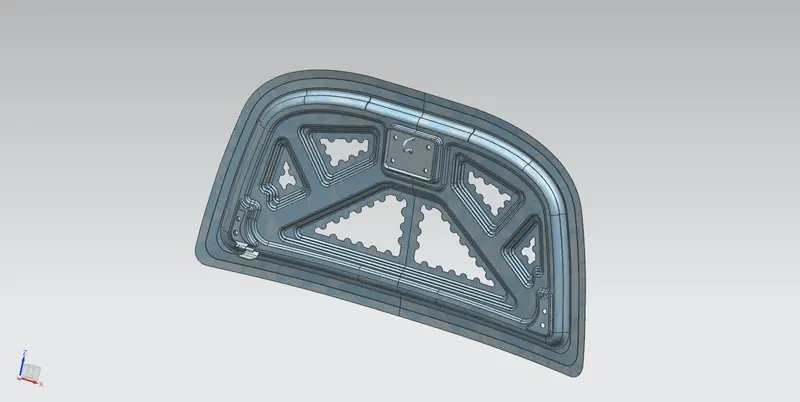
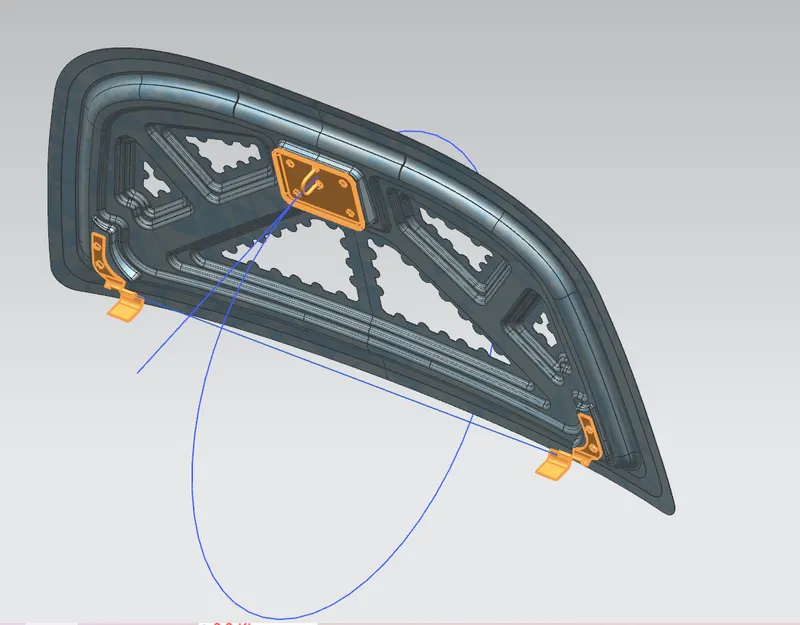
Many emboss have been created keeping in mind the design considerations-
- Frontal crash keeping in mind of pedestrian,
- Keeping in mind the strength of body and stiffness,
- Where and how much emboss will give strength,
- Giving the emboss just enough that hood is easily picked up, don’t weight too much,
- To make hinge, emboss and striker keeping in mind axis correlation,
- Where to give emboss, so that in crash the force splits outwards,
Mastic Data:
Mastic seal is kind of hard rubber glue added between outer and inner panel of hood to join them at different points called mastic points. It is locally around 80mm diameter. There should be minimum 2mm gap outer and inner panel to make a constant joint.
Following are the design consideration for mastic points-
- Diameter of the mastic points was taken as 5mm.
- Distance between the mastic points and hood outer panel is 5mm.
- The distance between two mastic points was kept in such a way so as to minimise the vibrational effect.
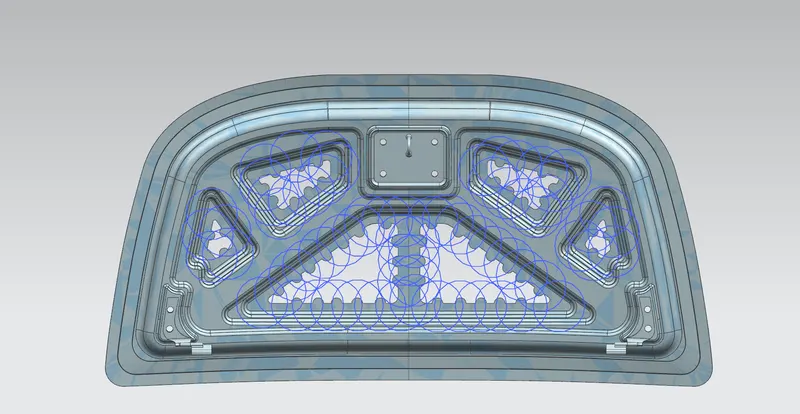
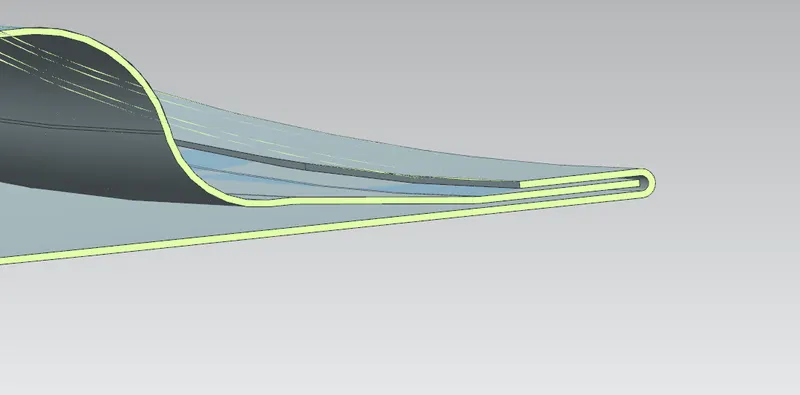
Hemming:
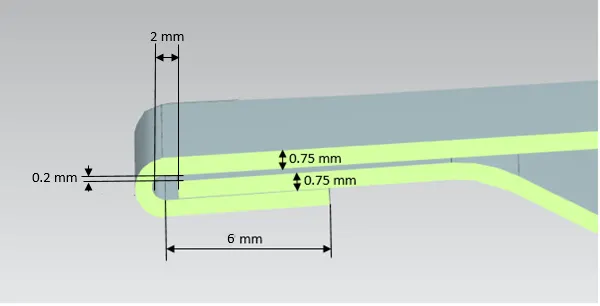
Hemming is such a joining process in which one sheet is stacked on top of the other and rolled from side to side. Hemming for hood is done with the help of hemming data as shown-
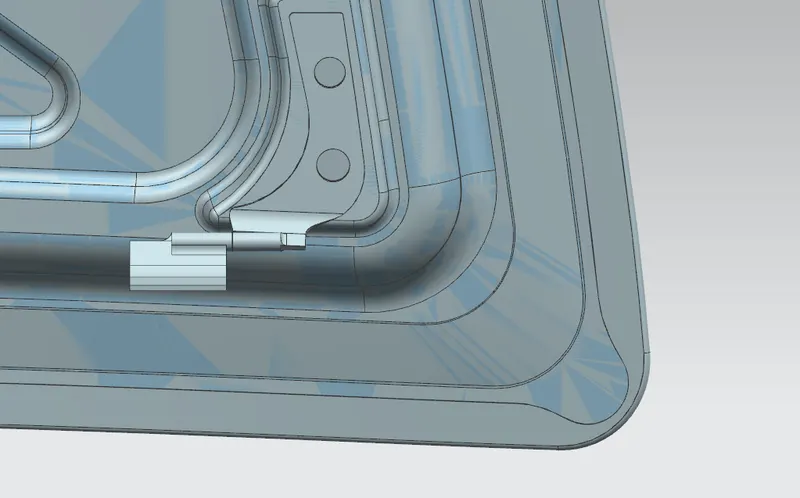
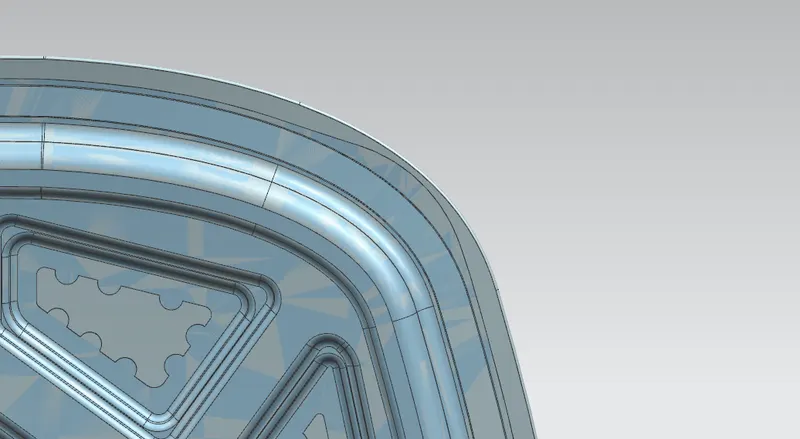
In corners relief is to be provided during hemming and for this relief following data is used.
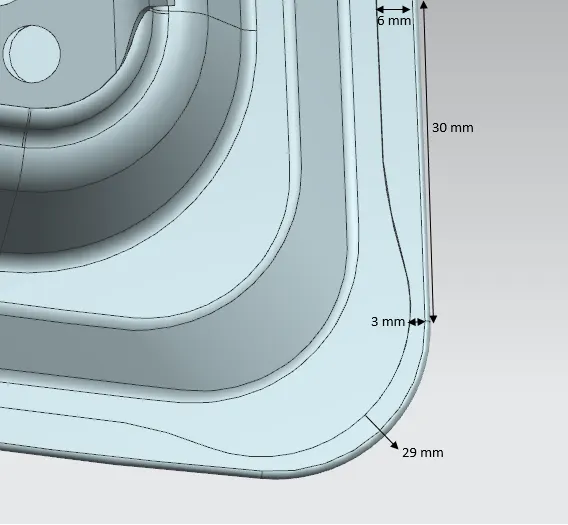
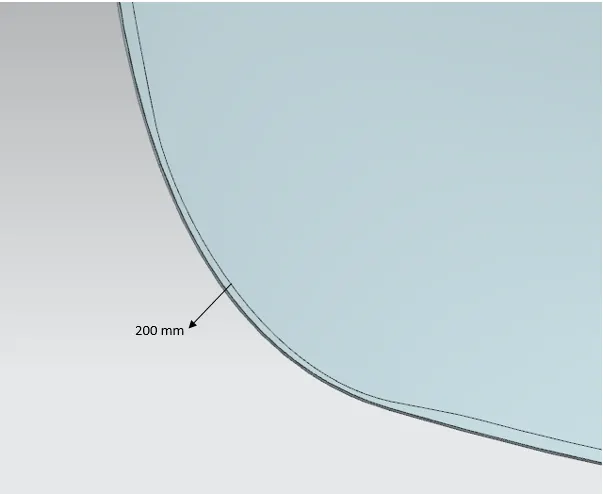
The figure below shown the hemming and relief points is designed model.
Assembly :