Hood design-Week 2
AUTOMOTIVE HOOD DESIGN
Introduction:- This project involves the design and fundamental theoreries of designing an automotive hood. Hood or bonnet is hinged mechanism that act as a cover for front engine and all their components. However design of a hood consists of various theoratical functional studies and multiple design considerations.
As well as the other components in the front of a vehicle, Hood is also made by following proper safety aspects. It is considered as an area of main impact region during a collition. So the design of hood must pass the requirements by government regulatory authorities.
Software used : SIEMENS NX 12.0
List of various design considerations of hood design:-
- Functional requirements including opening and closing of hood and proper alignment
- Design of hood balancer / Gas stay mounting
- Aesthetics and ergonomic factors
- Latch and striker mechanism
- Noise vibration hardness (NVH) level
- Deformability of bracket
- Hood hinge assembly
- Joining operations
- Gap and flushness
- Pedestrian ratings
- Euro- NCAP regulations
Basically a hood is made up of 2 main components that are Outer panel and Inner panel, other parts are joined to hood inner panel for functional applications.
- Outer panel is an aesthetic part which is visible to outside. Its a class A surface that are designed during the concept generation stage by sketching engineers. The importance of a design engineer is to turn the aesthetic design into a functional part. Inner panels and other geometrical parameters are made to support the outer panel also enabling the safety parameters.
- Outer panel thickness is 0.75mm
- Inner panel is the inside section of outer panel that provides strength and support to the hood structure. and also the pedestrial protection.
- The design of Inner panel itself acts as a force ditribution mechanism that deflects the force of collision to the hinge sides.
- Proper structural details are included in the inner panel for diffrent functional aspects including cut sections, embosses, attachment features, mastic seal sections...
- inner panel thickness for this project is taken as 0.75 mm
- Stiffner pads are provided between inner panel and outer panel.
- Hood panels are generally made up of steel or aluminium sheets. Material is selected depending on the vehicle segment and performence/usage parameters.
Manufacturing processes used in hood fabrication:
- Blanking
- hemming
- punching
- deep drawing
- embossing
Deep drawing:- Deep drawing is a process in sheet metal forming by the mechanical action of a punch. A flat sheet metal blank is formed over a single, rigid, shape defning tool half by a flexible rubber diaphragm under uniform hydrostatic pressure.
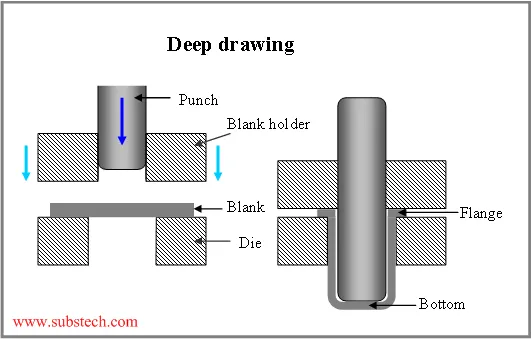
Design methodology:-
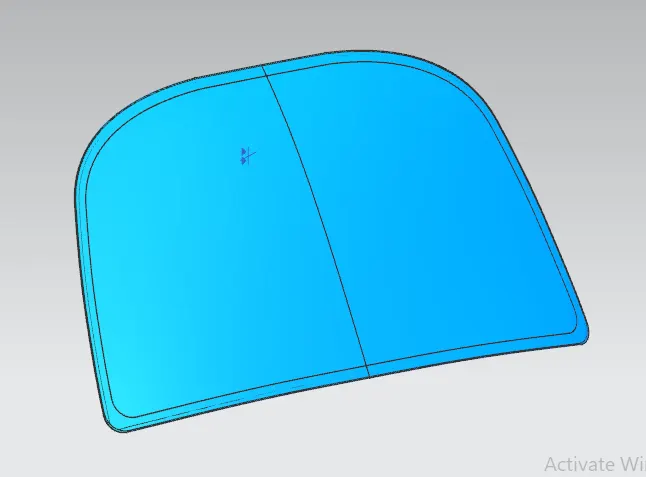
Outer panel class A surface provided:
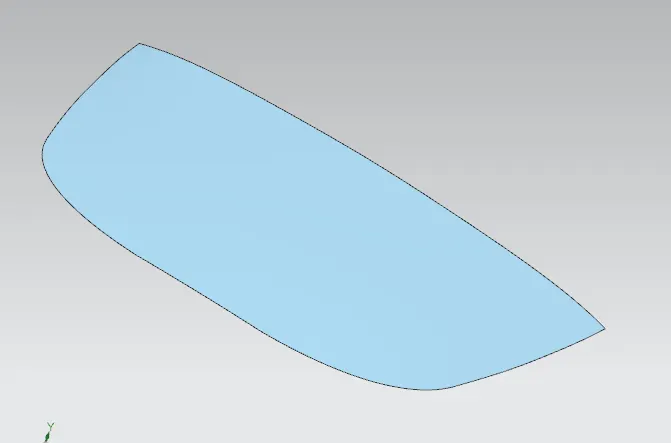
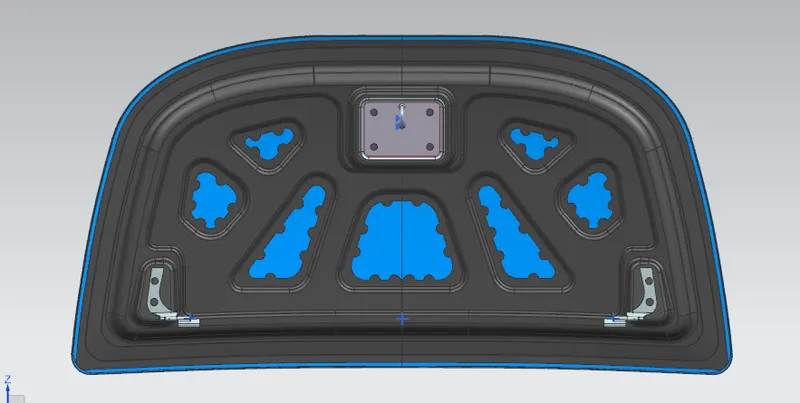
All inner panel structures are designed by taking references from outer panel. It mainly includes offseting the surface multiple times and joining the section with blends and fillets.
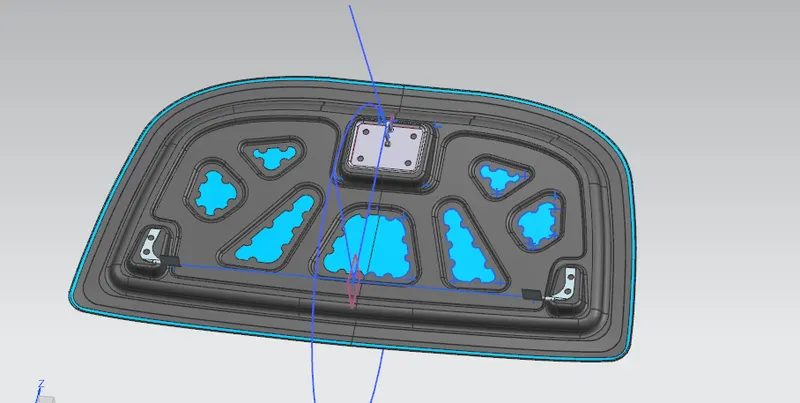
Design of inner panel:-
master section data:-
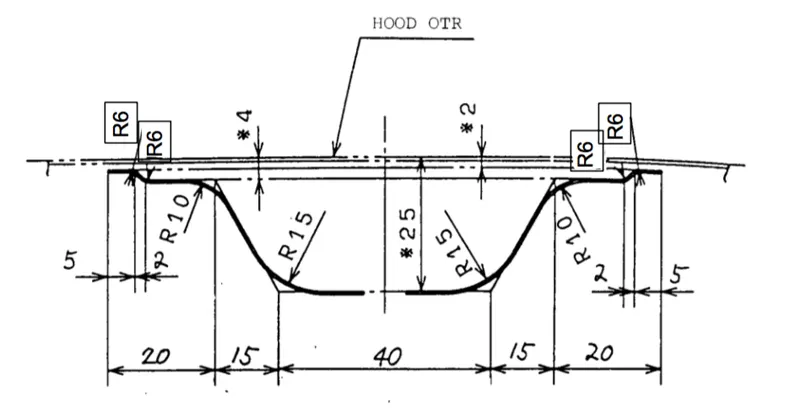
Since the hood is a symmetrical elements, we only make one side and other will be mirrored and sewed with respect to the joining axis.
Initial surface preperation:-
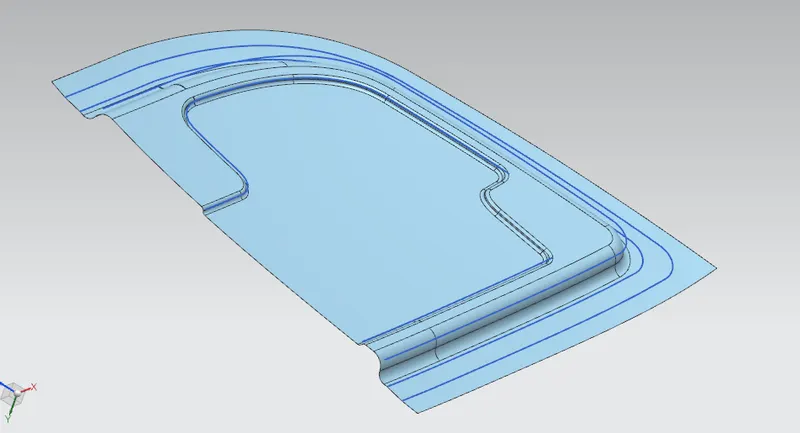
You can see that the provision for joining the striker and hinges are provided at proper areas.
Generating section datas for embosses:-
Inner panel embosses are provided for structural integrity for the supporting parts and to dessipate the forces during a collision.
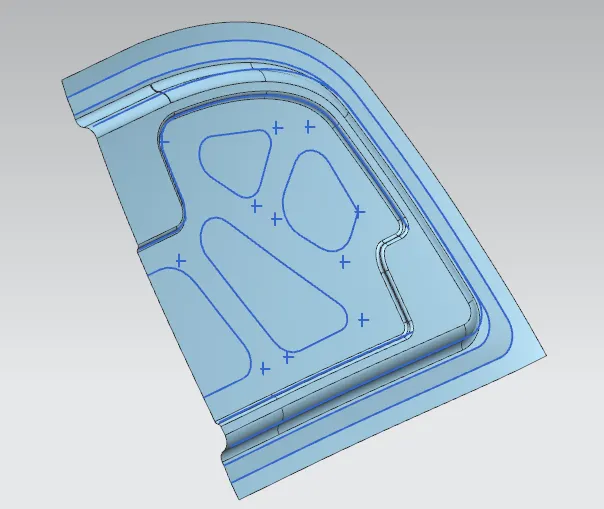
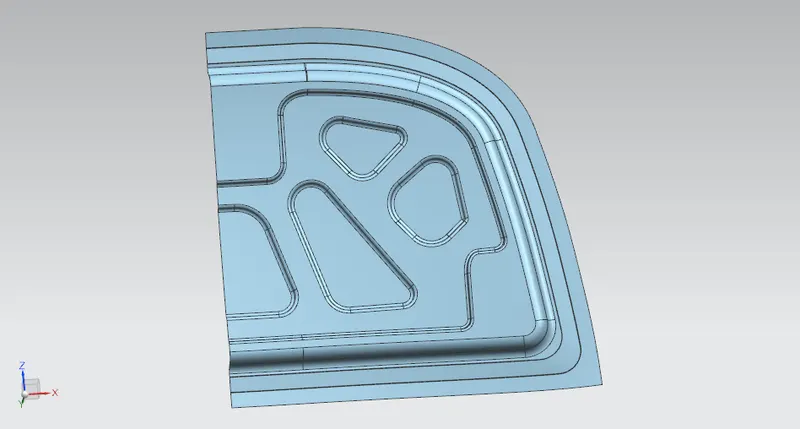
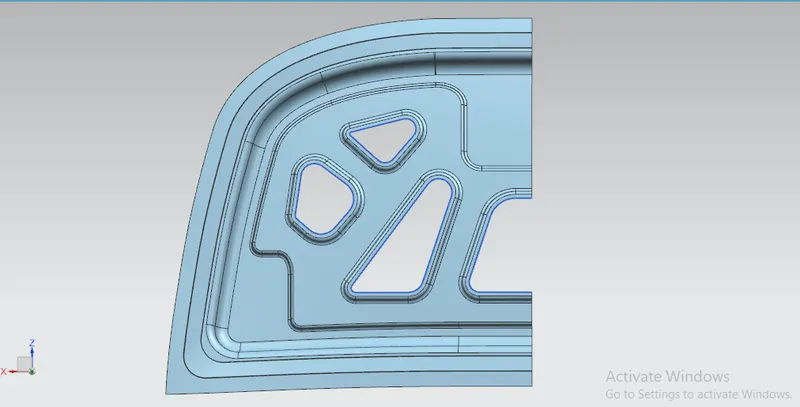
Also the provisions of mastic seals will be added later to the panel at their respective points.
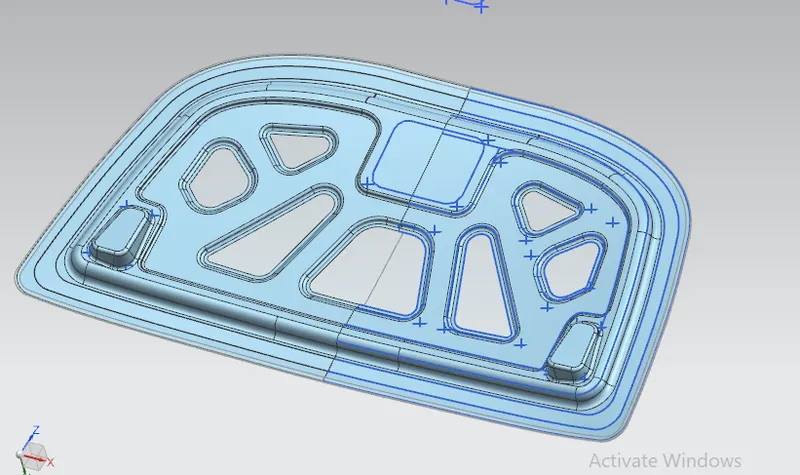
Creation of embosses:-
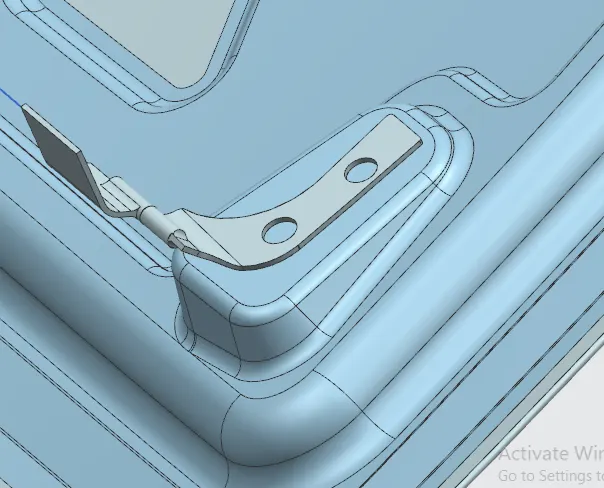
- To position and support the striker and hinge assembly, we provide embosses at proper areas. The design of embosses must be made as per the positioning of the parts. So the parts need to moved initially.
- For the design procedure, we make linked faces of the parts on the inner panel.
- We need to make datum planes from the linked faces which can be be used as the end point of the emboss.
- It results in a flat face of emboss even the base of emboss have a curvature.
Emboss for hinge assembly:-
Emboss for striker:-
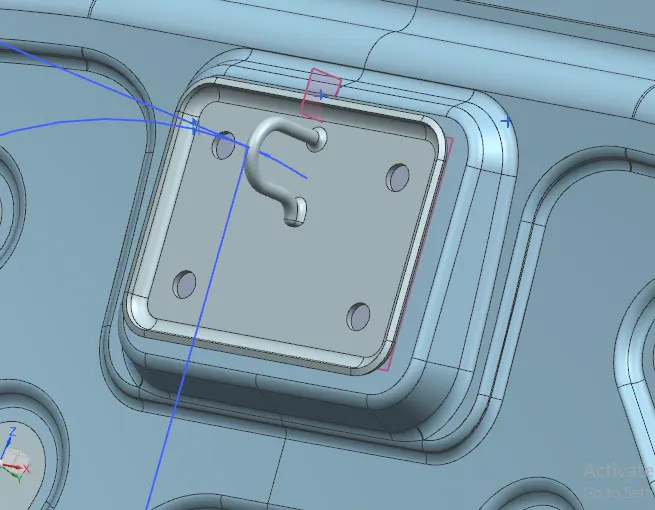
To create the emboss for striker, it is important to know the positioning of striker in a hood panel.
Striker needs to aligned as when the hood closes, it should be directly locks with the latchet mechanism provided inside the engine bay.
procedure for positioning the striker on the hood inner panel;
- Move the striker to the section provided on the inner panel
- Create an axis between the 2 hinge assembles combining their respective center points of the hinge mechanism.
- Draw a circle from the midpoint of hinge axis to the distance where the locking position of latchet in arranged.
- The striker need to be aligned as whereever the position of the hood is, the lock must be aligned as tangent to this circle.
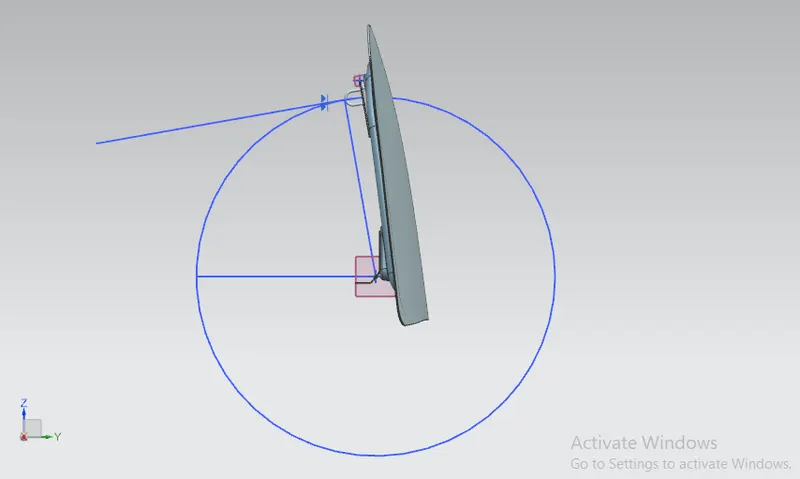
- So to position the striker, we have to make a line on the lock hook and another line as tangent to this circle.
- Coincide these lines using assembly constraints and the required guides and position of the striker.
After positioned the striker the emboss can be created by the same method as the hinge assembly.
Mastic seal sections:
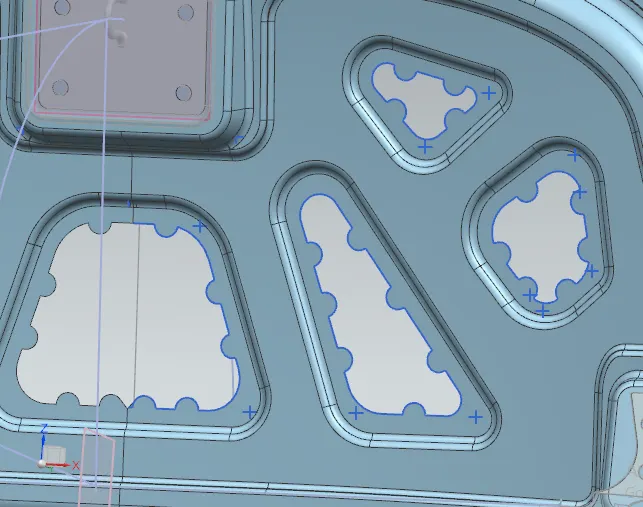
- Mastic seals are used to provide cushioning between inner and outer panels.
- those are installed on the inner panel at specific points provided. we need to add mastic sections to the opened edges of structure.
- it is achieved by sketching half circles at the edges and project- trimming them with the inner panel.
Outer panel manufacturing datas:-
Hemming flanges:-
- Hemming is a sheet metal joining procedure in which sheets are formed by bending the exessive flanges at usually, 180 degrees inwards.
- Hems created will reinforce the edges to make them stronger and it provides good appearance.
- It helps achieve stronger joints without any additional materials involved
specification for creating hemming:-
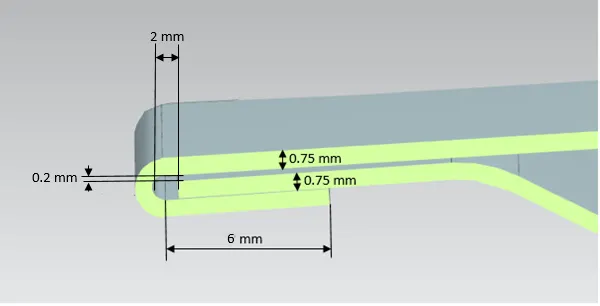
- Roll hemming is the method commonly used in automotive hood hemmings. It ivolves an automated system that folds the flanges of outer panel and rolls a weighted cylindrical tool over the folds.
- Hemming operations have to be done multiple times to achieve proper joints.
In case of designing, we provide surface blends to get the curved edges.
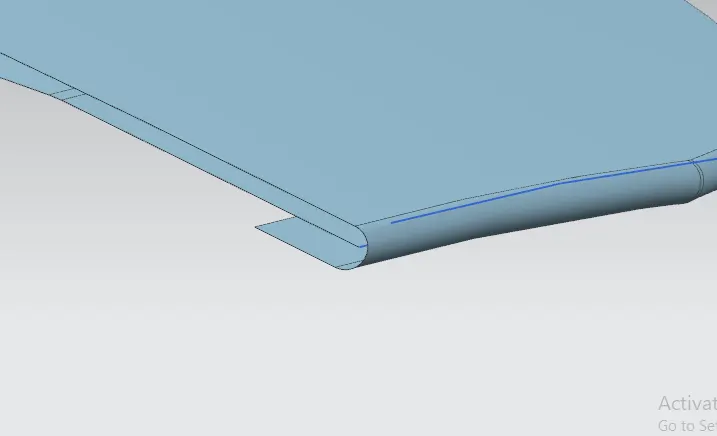
Section data of hem:-
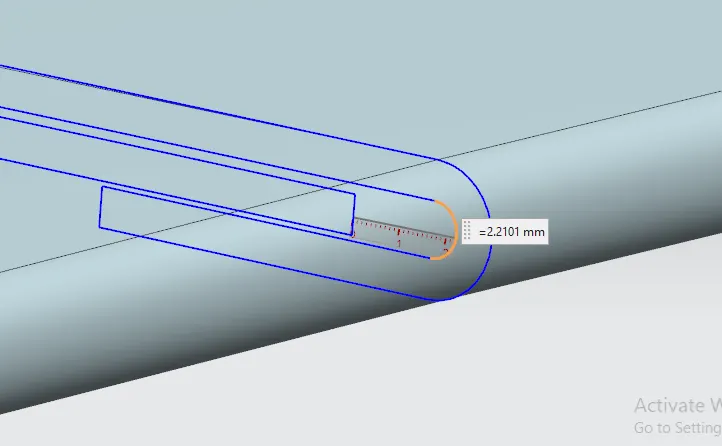
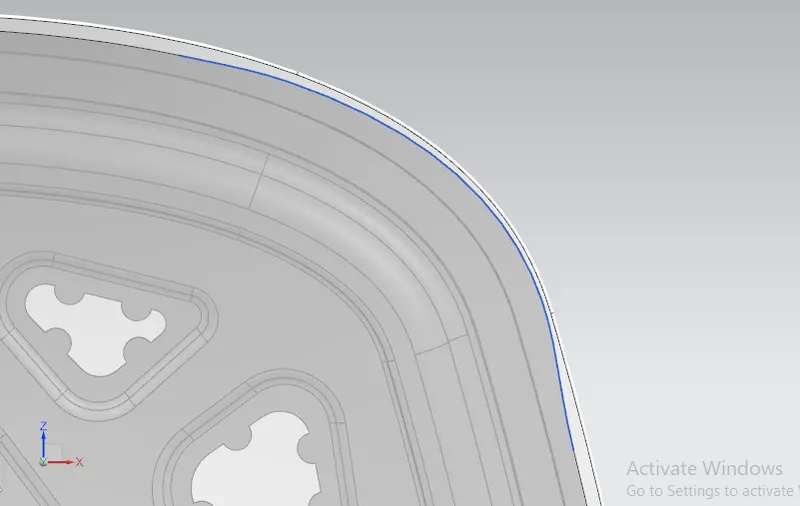
- At the corners of the hem, we provide a relief angle region to avoid overlaping of the hem flanges and ensuring the full closing of the hem.
Relief angle at hinge side corner:
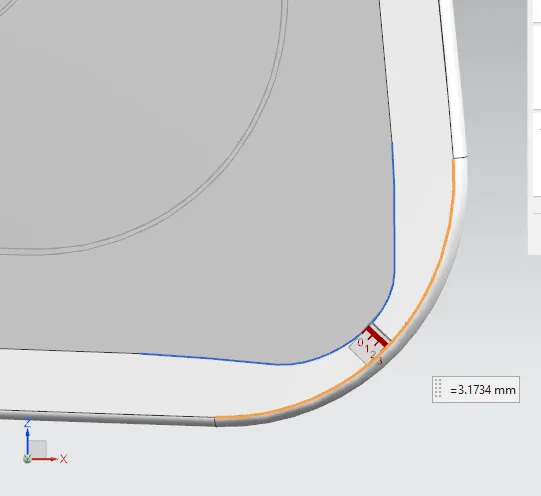
Relief angle at front corner:
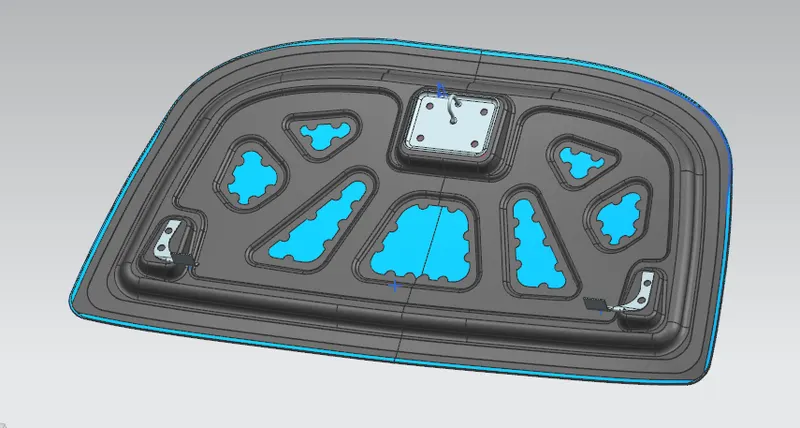
Finished design: