Hood design-Week 2
AIM
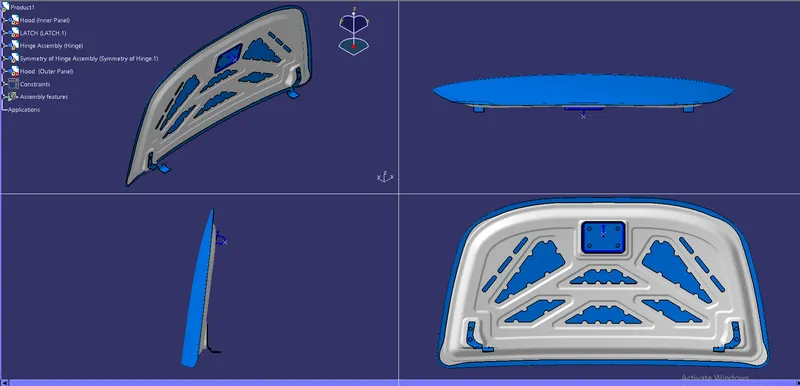
Design Hood outer panel, inner panel and the necessary reinforcements by following the Master section mentioned with the design parameter. An assembly of Hood inner panel, outer panel, latch, hinge and the reinforcements.
INTRODUCTION
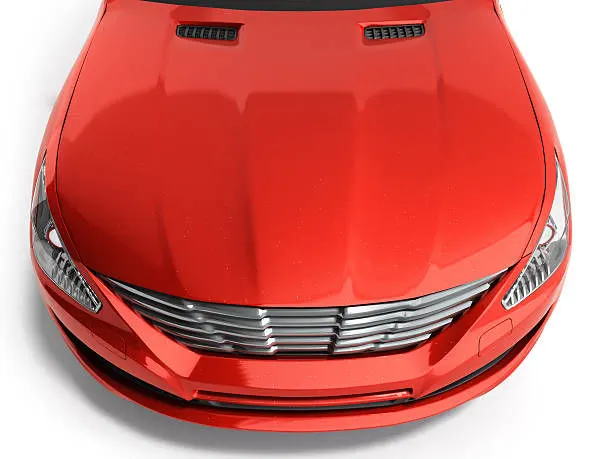
- A car hood, also referred to as a bonnet in some other countries, is the hinged cover that rests over the engine of a front-engine vehicle. Its purpose is to provide access to the engine for repair and maintenance.
- A concealed latch is typically used to hold down the hood. On vehicles with an aftermarket hood and on racecars, hood pins may be used to hold down the car hood. Hoods sometimes also contain a hood scoop, wiper jets, power bulge, and/or hood ornament.
- On front-mounted engine cars, the hood may be hinged at either the front or the rear edge, or in earlier models, it may be split into two sections, one each side, each hinged along the centerline. A further variant combines the bonnet and wheel arches into one section and allows the entire front bodywork to tilt forwards around a pivot near the front of the vehicle.
Materials
- Car hoods are typically constructed from steel and sometimes from aluminum. Aftermarket car hoods may be constructed from various other materials, including carbon fiber, fiberglass, or dry carbon. The hood design may vary from one make and model to another.
PEDESTRIAN SAFETY
- In Japan and Europe, regulations have come into effect that place a limit on the severity of pedestrian head injury when struck by a motor vehicle.This is leading to more advanced hood designs, as evidenced by multicone hood inner panel designs as found on the Mazda RX-8 and other vehicles. Other changes are being made to use the hood as an active structure and push its surface several centimeters away from the hard motor components during a pedestrian crash. This may be achieved by mechanical (spring force) or pyrotechnic devices.
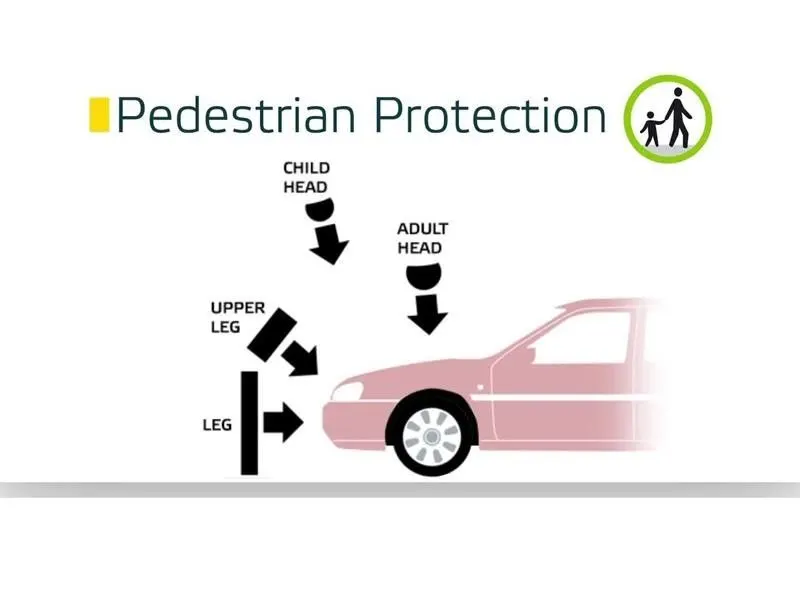
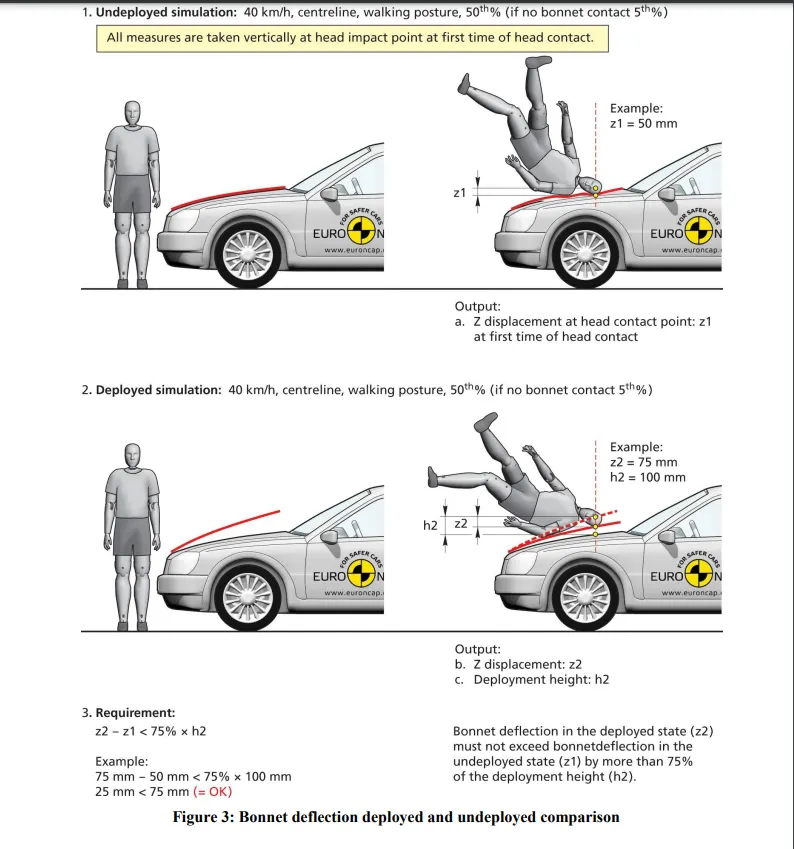
- Euro NCAP the European car assessment program is European car safety performance assessment program based in Leuven and founded in 1997.
- They published safety reports on new cars and awards star ratings based on the performance of the vehicle in a variety of crash test including front side and pole impacts and impacts with pedestrian. The top rating is 5 star
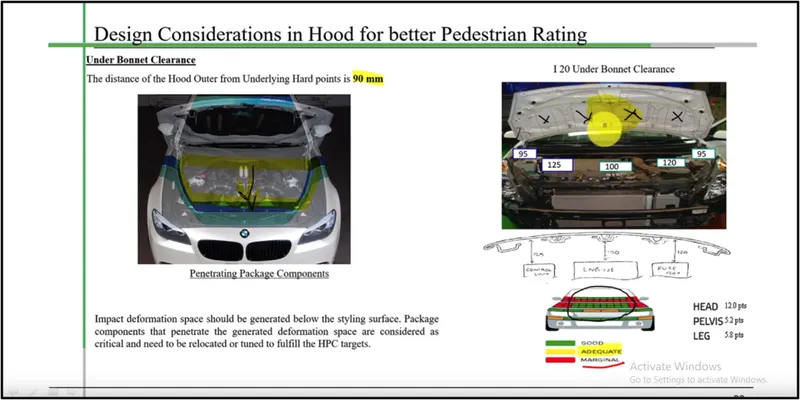
- So here in Hood we separate the whole area of hood into several small part / region during frontal crash. Hood is the major portion a person is gonna come in contact with. So Euro NCAP specified some guidelines under which we distribute hood region into several parts and try to get more green region.
Here below I have pasted an image to get an overview.
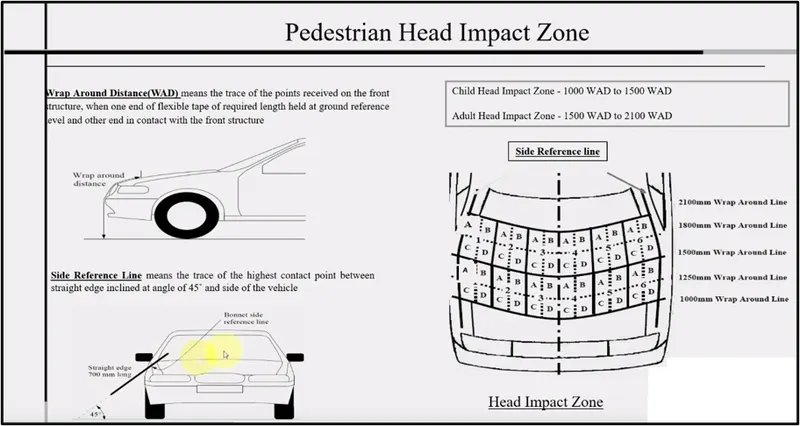
This region is basically distributed in relation to the height of children and adults who come in contact from front while accident. So, here the main motto is to achieve more green region and for that we provide splits in embosses so that during head impact the consequences of collision come less effective. So here I have given splits accordingly to improve head impact zone effectiveness in providing less damage to the person who hit it.
Design and Manufacturing of the Car Hood
The front hood has been cut from general assembly shapes of an electric prototype vehicle. The design of this it was done using CATIA V5 software program using surface design and composite design modules. It was performed behind it based on the shape of the external surface of the model .The hood are some fixing points and reinforcement zone for its hardening, this element was modelled in according with similar element from actual cars.
- Head Clearance criteria:
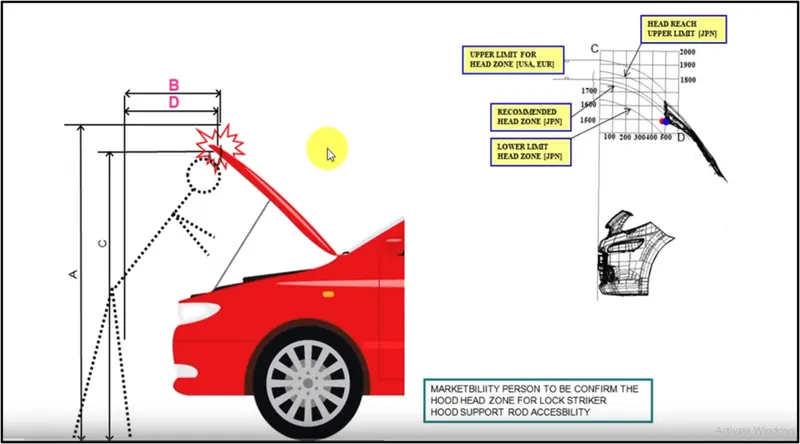
Head clearance is decided upon the zone or country. So same car if it is made for different country will have different opening angle depending on the country or region.
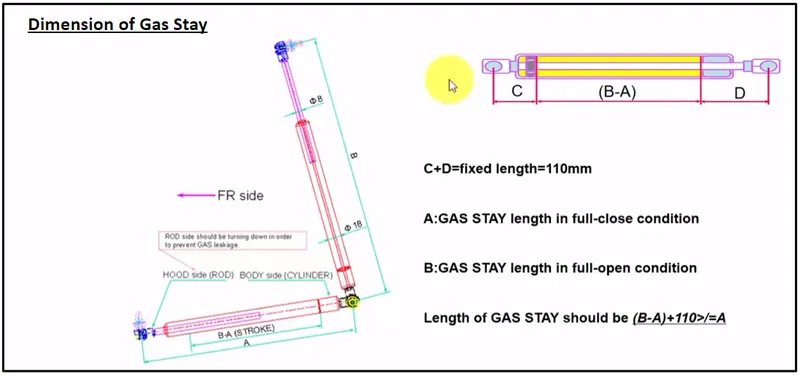
The distance C and D shown in the image is represented as graph in the upper right corner of the image. Choosing the right head zone position will decide upon the angle of the hood opening.
Product engineers will also get input from the marketing team for deciding head zone.
When a car crashes on the pedestrian, the whole human body wraps around the front shape of the car and the head impacts on the bonnet or the windscreen. The distance on which the head impacts on the car from the ground is called as the Wrap Around Distance (WAD).
To be specific the Wrap Around Distance is a measurement of distance from the ground to the head impact zone over the outer surface of the car. The wrap around distance is measured longitudinally in the center of the vehicle from the ground.
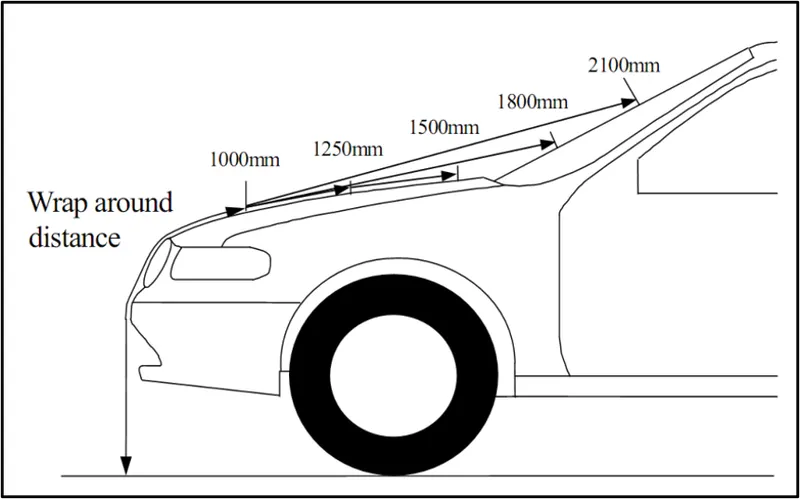
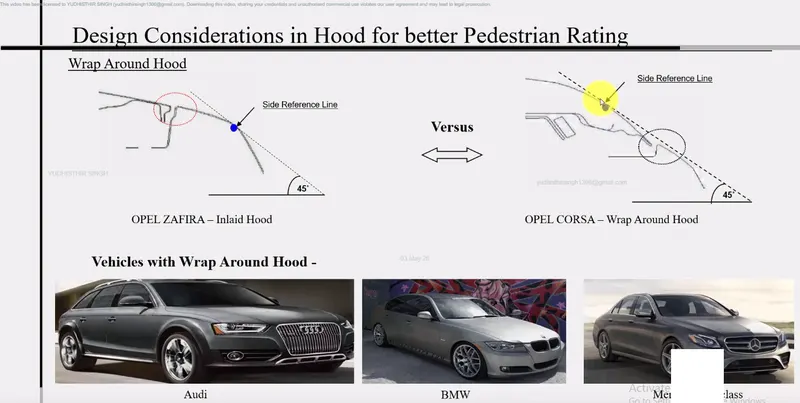
The severity of the injury caused by the frontal crash depends on the type and shape of the vehicle, speed of the vehicle and the movement of the pedestrian relative to the vehicle. In addition to these parameters, the wrap around distance plays a major role in the safety measurement of a pedestrian. During the crash analysis, based on the Wrap Around Distance(WAD), two test areas will be created namely Child head impact zone and the Adult head impact zone. The child head impact zone is between 1000 to 1700 mm WAD and the adult head impact zone ranges between 1700 to 2100 mm WAD.
- Support Rod And Gas Stay
There are two types of support is there,
- Gas stay
- Support rod
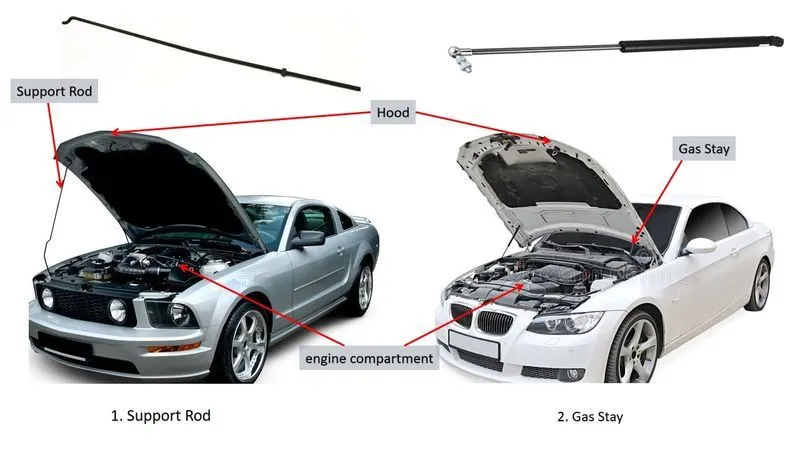
Gas Stay-
spring stays are designed to be used on upward lifting doors, once you have opened the door slightly the spring will push the door to the fully open position, Euro fit stock various size springs depending on the door size requirements. This is mostly used for where the car bonnet weight is heavy.Struts contain nitrogen gas under pressure and some oil to damp movement and to lubricate the seals.
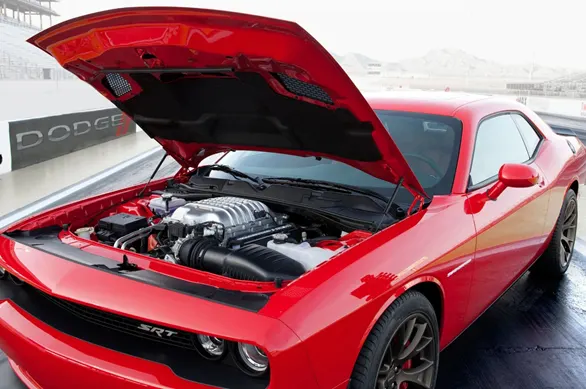
Support Rod-
1)Support Rod can be mounted with grommet side on the engine compartment of Body and rod locking hole on hood or vice versa.
2)Grommet and the clip of the rod are standard parts.
Support rod is used to increase the support force, automatic buffering, stable and reliable, strong load-bearing capacity, safe use, not easy to fall, avoid hot hands, support the engine more easily, and balance the force without shaking

Deep Drawing
Design specifications for the automotive hood component
Master section data was already provided by the support instructors of the course.
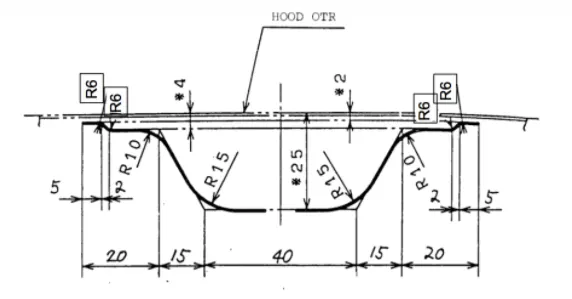
Hood Thickness Information
- Outer Panel Thickness = 0.75mm
- Inner Panel Thickness = 0.75mm
- Reinforcement Thickness = 1.5mm
The process involved in designing hood as a sheet metal operation is
- Blanking
- hemming
- Punch cutting or piercing
- Deep drawing
- Embossing
DESIGN OF HOOD
Inner Panel Design
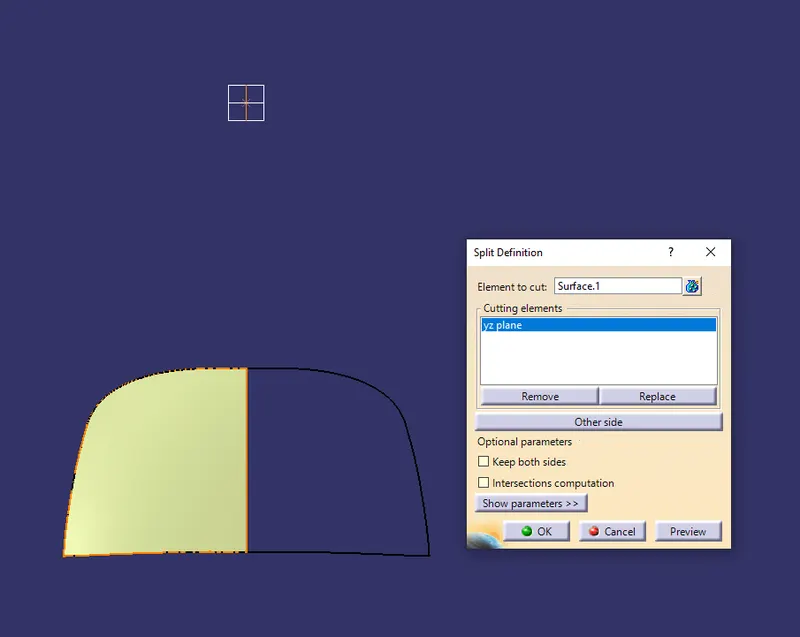
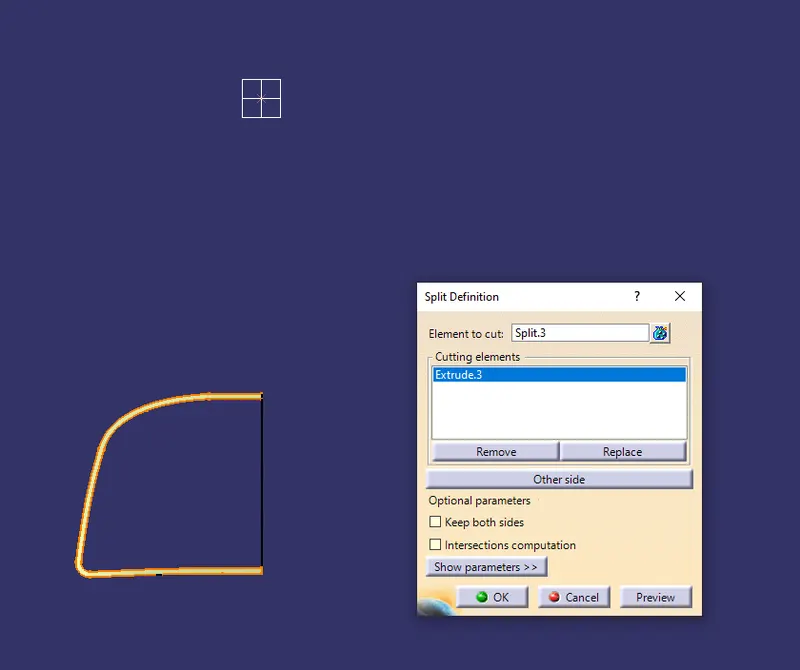


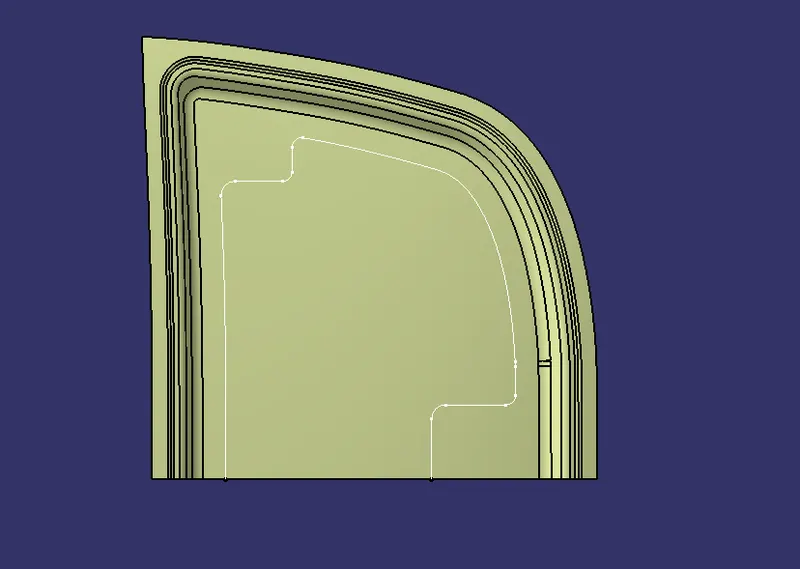
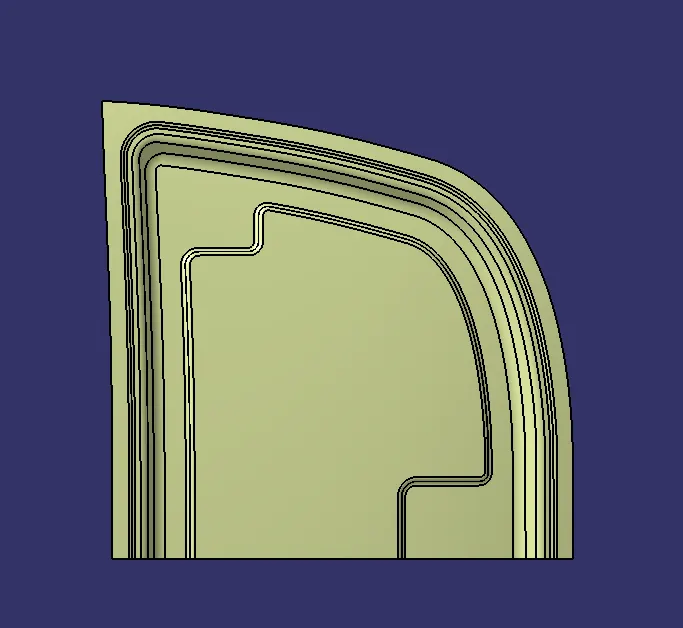
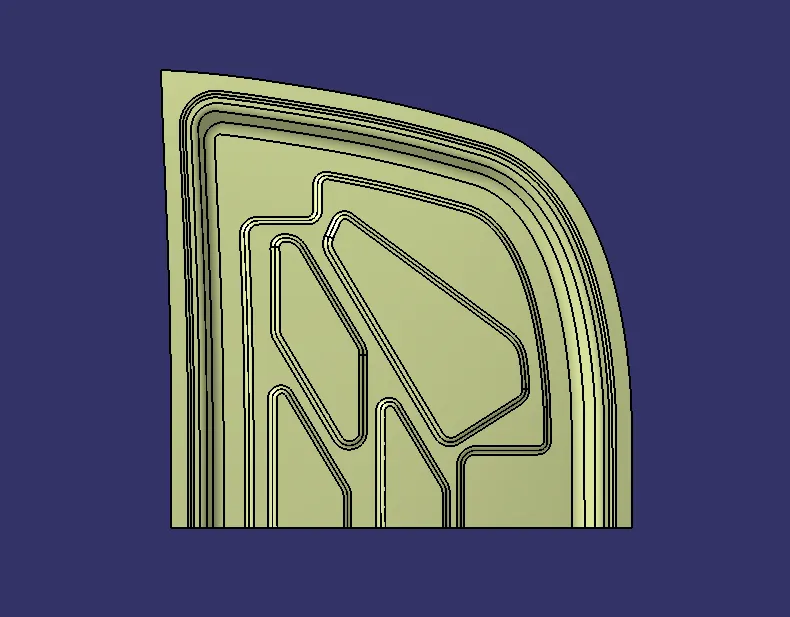
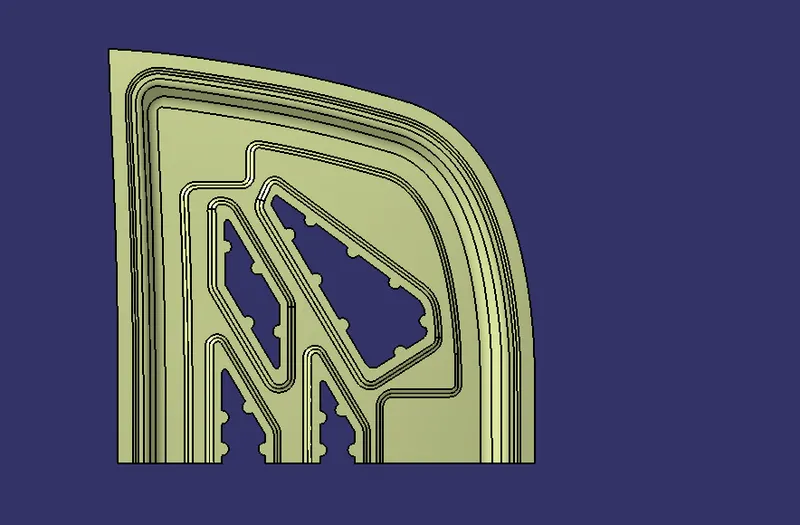
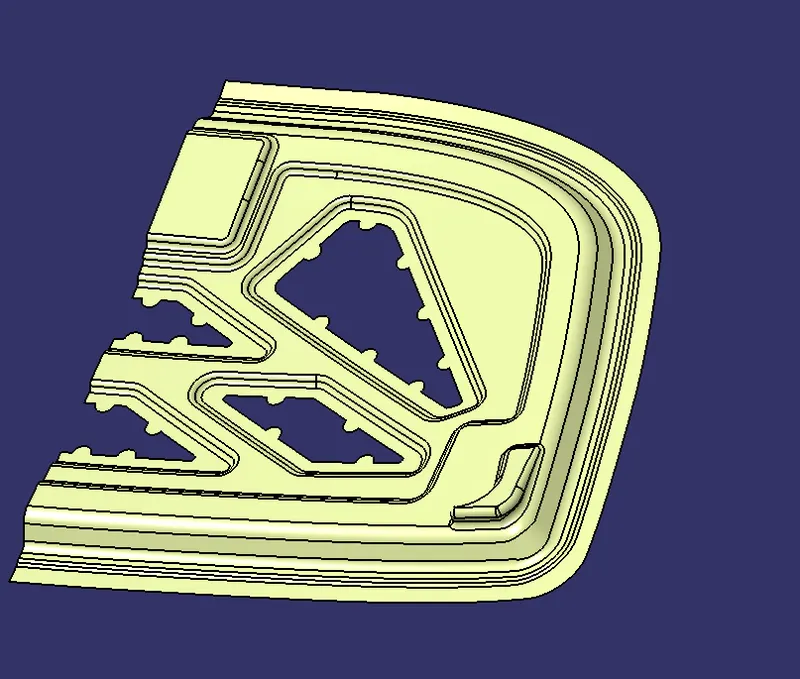
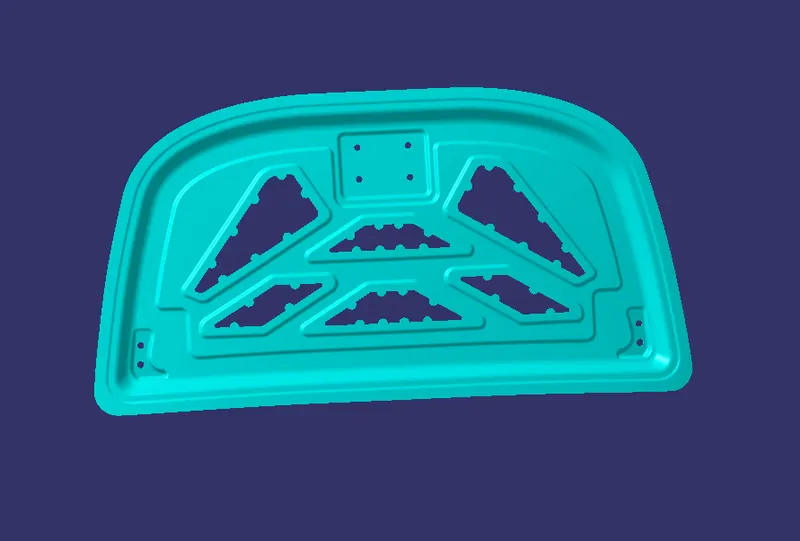
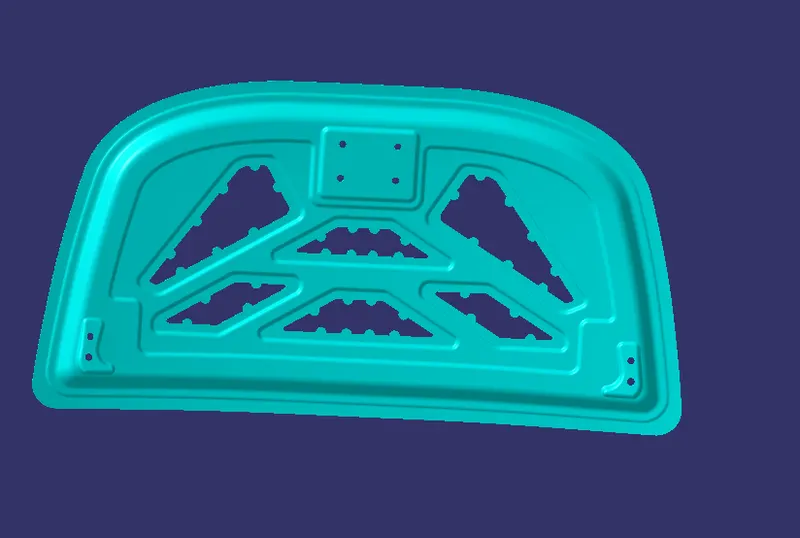
- The hood inner panel is required to have a high initial reaction force against the impact exerted on the hood to enhance the energy absorption capacity. The hood is further required to minimize a reduction of a reaction force by deformation in a collision.
- It is an object of the present invention to provide a hood inner panel capable of reduction of a reaction force of the hood inner panel even if a level of deformation of a hood of a vehicle increases, and ensuring a sufficient energy absorption capacity.
- In the inner panel only we can research and implement the safety of pedestrians and as well as the driver.in this panel only we can attach the reinforcement, embossed, mastic points, etc
EMBOSSING
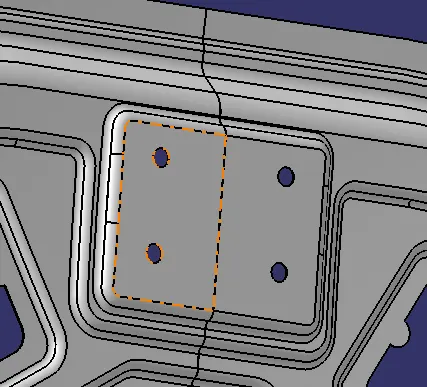
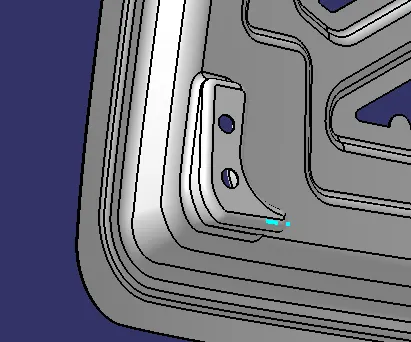
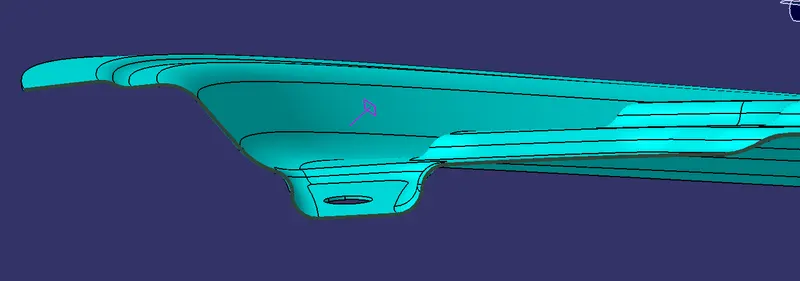
- The metal sheet embossing operation is commonly accomplished with a combination of heat and pressure on the sheet metal, depending on what type of embossing is required. Theoretically, with any of these procedures, the metal thickness is changed in its composition.
- A metal sheet is drawn through the male and female roller dies, producing a pattern or design on the metal sheet. Depending on the roller dies used, different patterns can be produced on the metal sheet. The pressure and a combination of heat actually "irons" while raising the level of the image higher than the substrate to make it smooth. The term "impressing" refers to an image lowered into the surface of a material, in distinction to an image raised out of the surface of a material.\
DEEP DRAWING
Conventional Deep Drawing
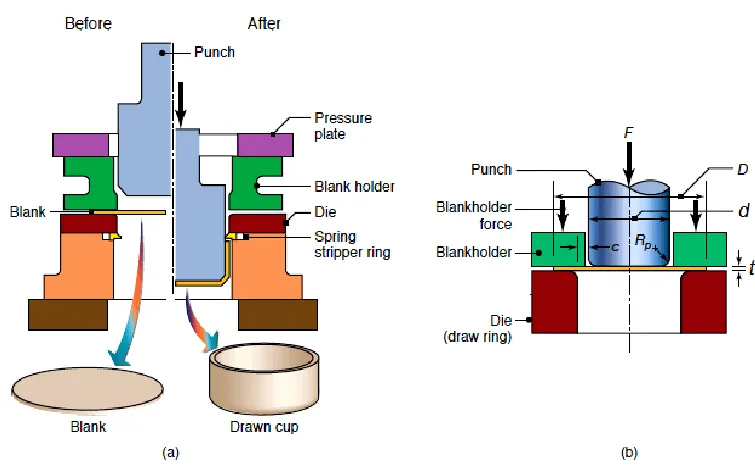
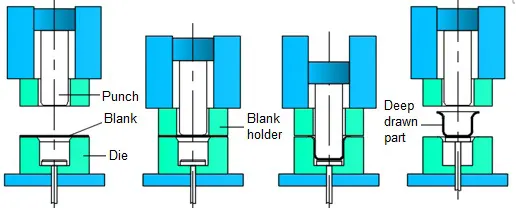
Deep drawing is a sheet metal forming process in which a sheet metal blank is radially drawn into a forming die by the mechanical action of a punch. It is thus a shape transformation process with material retention.
The process is considered "deep" drawing when the depth of the drawn part exceeds its diameter. This is achieved by redrawing the part through a series of dies. The flange region (sheet metal in the die shoulder area) experiences a radial drawing stress and a tangential compressive stress due to the material retention property.
Other Process Of Deep Drawing
Die-Set Transfer Press: Part is transferred via transfer fingers as the part progresses through the forming process. Tooling components attached to die plates enable the die to be installed in the press as one unit. Deep drawing has been classified into conventional and unconventional deep drawing. The main aim of any unconventional deep drawing process is to extend the formability limits of the process.
Incremental Deep Drawing
Incremental deep drawing or Incremental sheet forming (or ISF, also known as Single Point Forming) is a sheet metal forming technique where a sheet is formed into the final workpiece by a series of small incremental deformations. However, studies have shown that it can be applied to polymer and composite sheets too. Generally, the sheet is formed by a round tipped tool, typically 5 to 20mm in diameter. The tool, which can be attached to a CNC machine, a robot arm or similar, indents into the sheet by about 1 mm and follows a contour for the desired part
HEMING IN SHEET METAL
- Hemming is a forming operation in which the edges of the sheet are folded or folded over another part in order to achieve a tight fit. Normally hemming operations are used to connect parts together, to improve the appearance of a part and to reinforce part edges.
- In car part production, hemming is used in assembly as a secondary operation after deep drawing, trimming and flanging operations to join two sheet metal parts (outer and inner) together. Typical parts for this type of assembly are hoods, doors, trunk lids and fenders.
There are various types of hemming such as:-
- Conventional Hemming
Conventional die hemming is suitable for mass production. In die hemming, the flange is folded over the entire length with a hemming tool. Normally the actual hemming is a result of a forming operation in which the flange is formed with a hemming tool after the drawing and trimming operations have been completed. The formed flange is then hemmed in several process steps.
- Roll Hemming
Roll hemming is carried out incrementally with a hemming roller. An industrial robot guides the hemming roller and forms the flange. Roll hemming operation can also be divided into several pre-hemming and final hemming process steps. Roll hemming is very flexible to use and tool costs are significantly lower as compared to those of conventional die hemming. However, the cycle times are much higher since the hemming is realized using a hemming roller which follows a defined path.
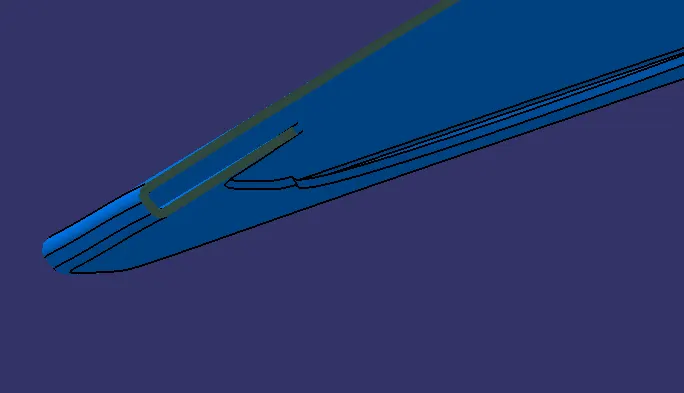
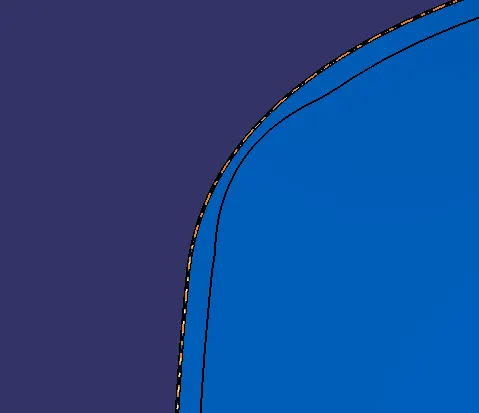
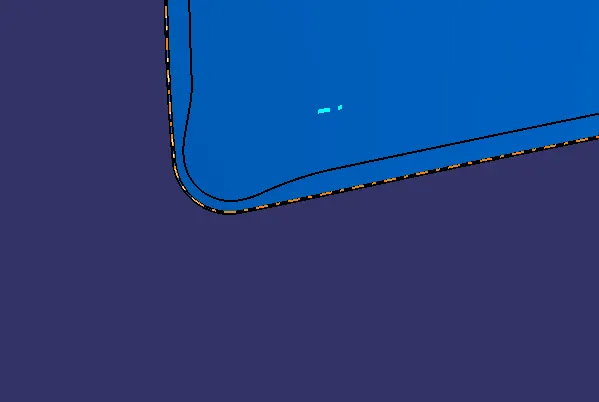
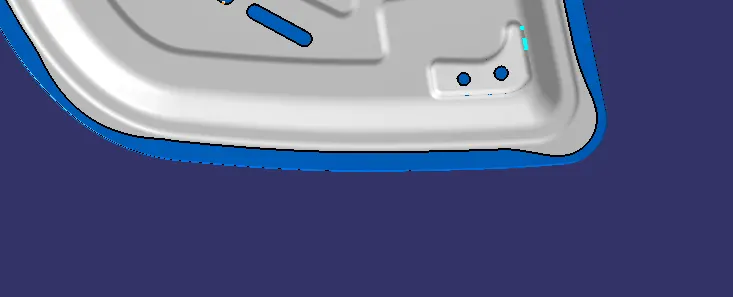
- While doing hemming process there is certain relief given at the corner of the sheet metals the reason being Relief helps to control sheet metal material behavior and to prevent unwanted deformation during unbend operations.
MASTIC ADHESIVE AREA
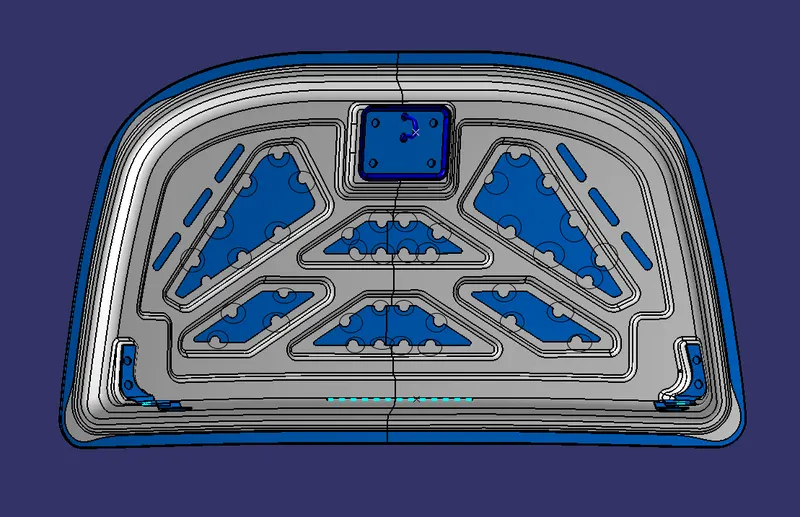
- Mastic adhesive was developed specifically to bond exterior automotive panels to the vehicle’s inner panel structure, such as on roofs, doors, and hoods. This one‐component synthetic rubber sealer remains elastic after curing to reduce panel flapping and to prevent panel distortion.
- With minimal stringing effect, our mastic adhesive provides controlled application for consistent performance during robotic application. The easy‐ to‐handle formula can also be applied with a handgun or pump.
- Mastic adhesive can be applied directly to oily steel plates without pre‐treating the metal, creating a strong and permanent bond.
HOOD ASSEMBLY COMPONENTS
Latch
- The hood latch is an extremely simple latch. When the hood is closed, the latch slides over what is called a catch, and a spring covers the latch to keep it snug. When you pull the knob inside the car to open the hood, the hood latch cable opens the latch, allowing it to bypass the catch and open.
- There is, however, a second hood latch, to keep the hood from flying up if accidentally unlatched. That latch will need to be opened with your hand to get the hood fully open.
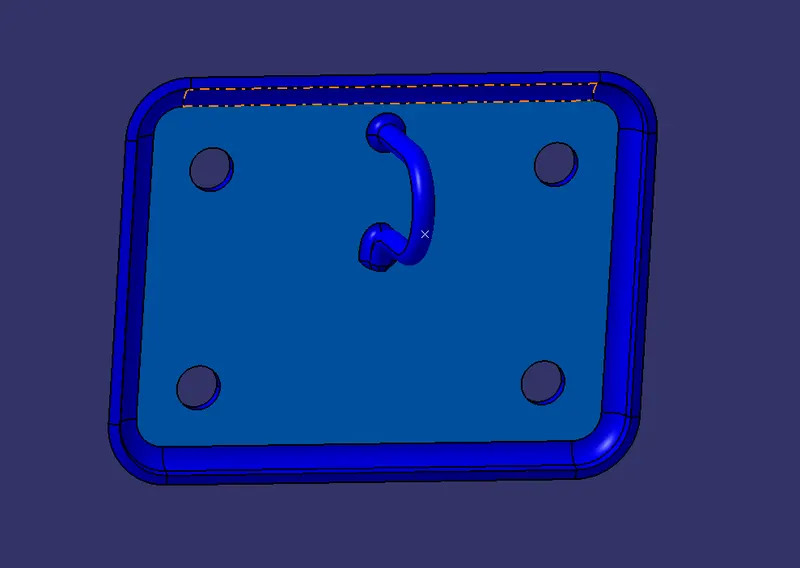
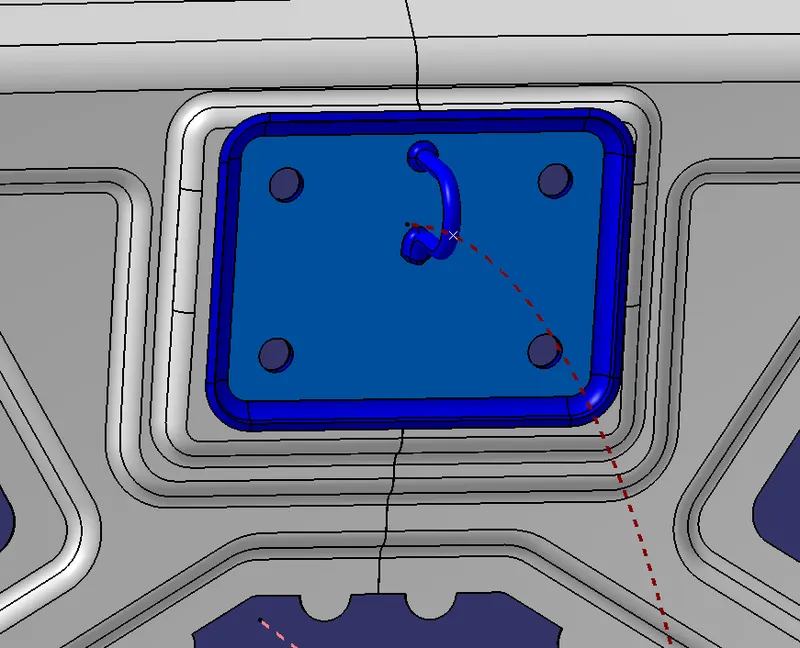
Hinge
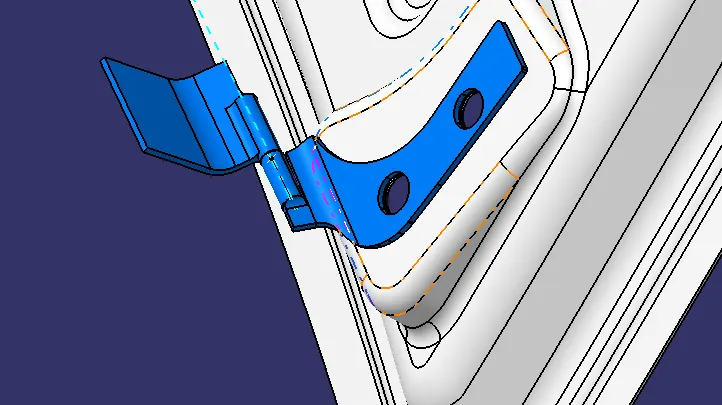
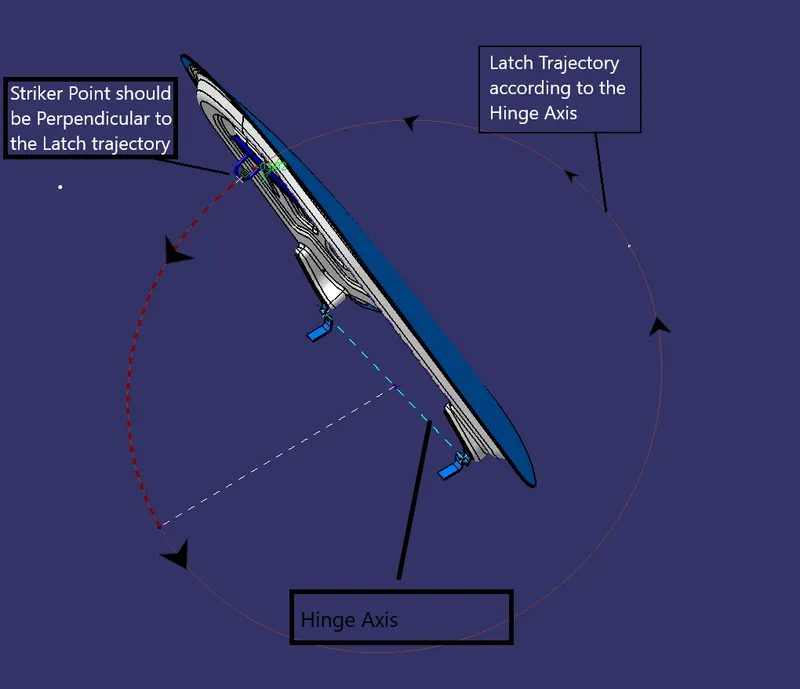
Hinge is a component that fixes the hood to the fenders of the car. The latch must be fixed perpendicular to the hinge axis so that the hood opens or closes properly.
Latch Trajectory
Latch trajectory created from the center point of the hinge axis which are placed tanetively on the hinge emboss on the inner panel. According this trajectory the striker will be placed on the Striker emboss where Striker point should be perpendicular at the local area to the Trajectory. Also while opening or closing the hood, the latch must be perfectly aligned to the fixing or striker point. For that, the latches trajectory must be perpendicular to the hinge axis.
COLLISION FORCE DISTRIBUTION
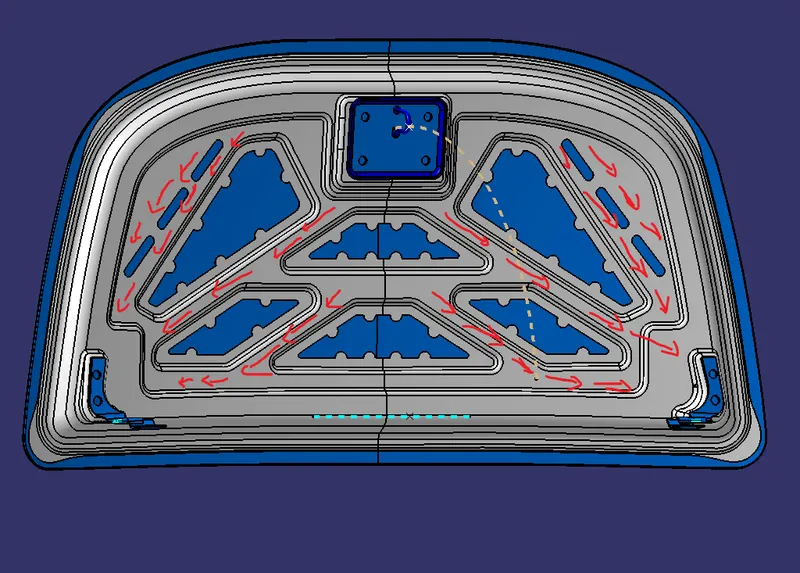
- A hood design must be made in such a way that when a force is impacted in the front of the hood, all the force must be directed outwards from the vehicle. And the distribution of the force must be controlled along with the hood.
DRAFT ANALYSIS
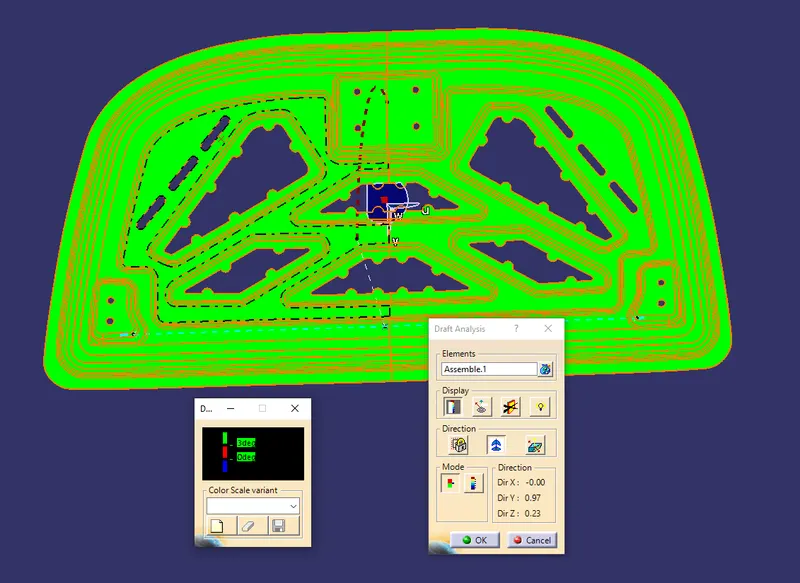
- 5 degrees of draft analysis is made to the inner panel to find any negative draft. this process is done because we need to develop and submit a positive design to the manufacturers.
- we can see that there are no negative drafts by the inner panel, hence the design is positive and ready to manufactured
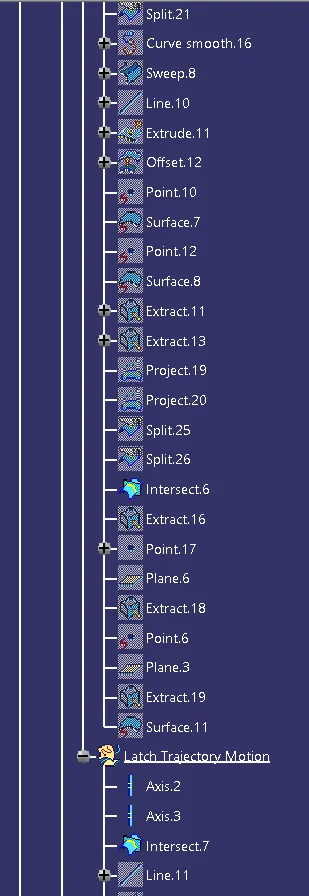
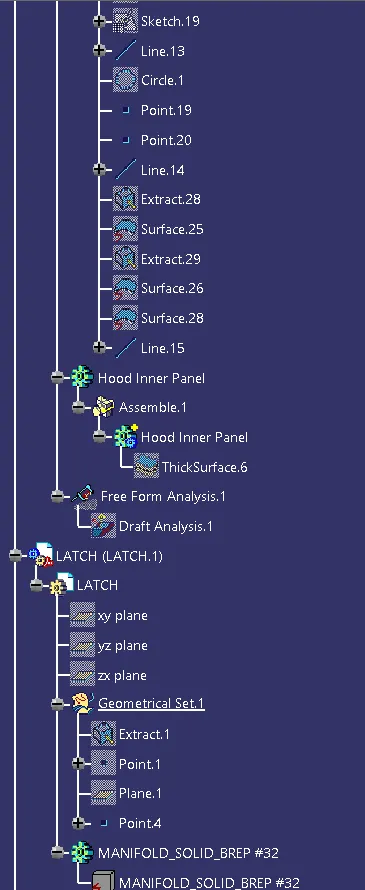
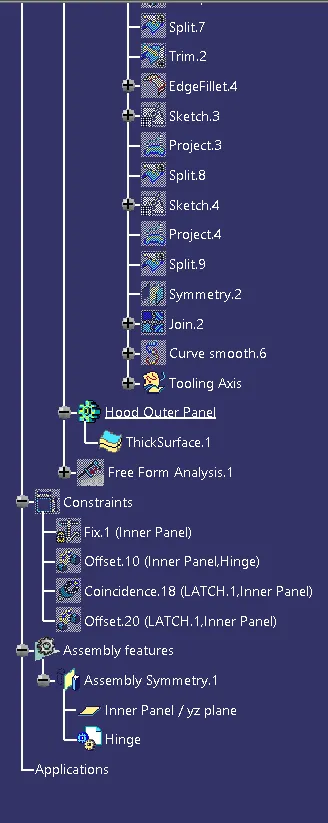
TREE STRUCTURE
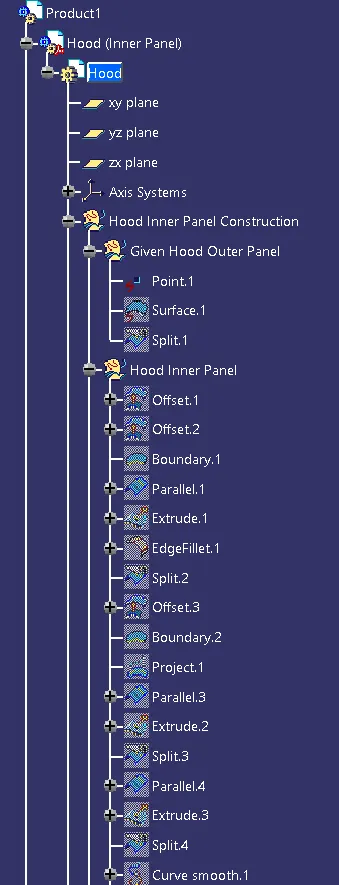
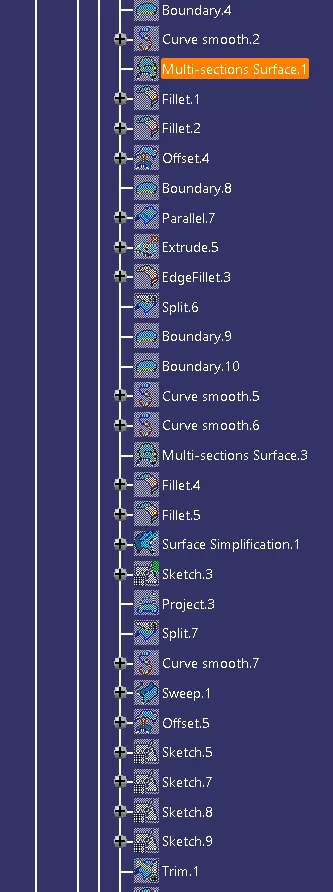
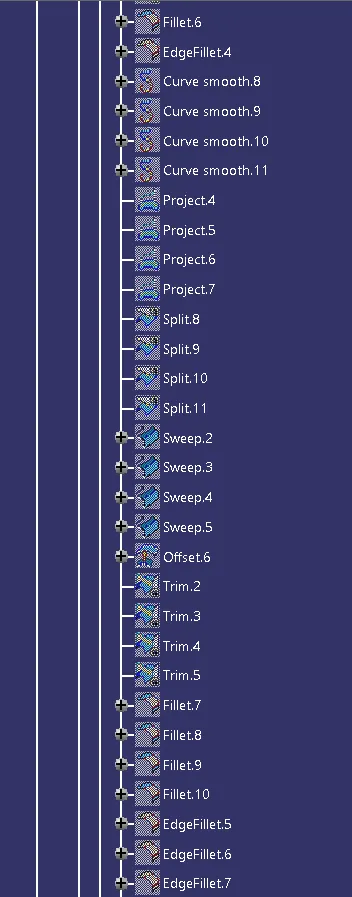
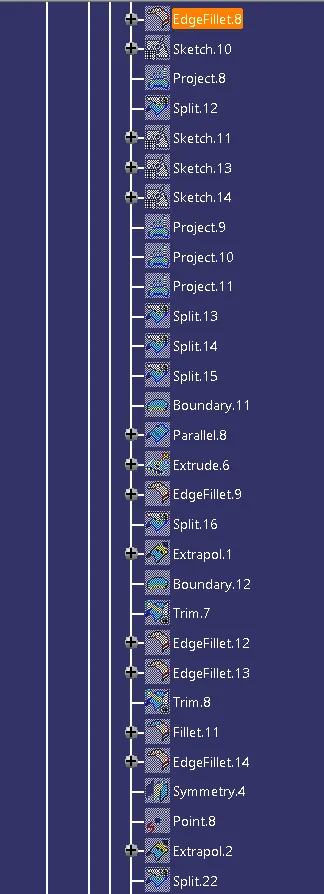
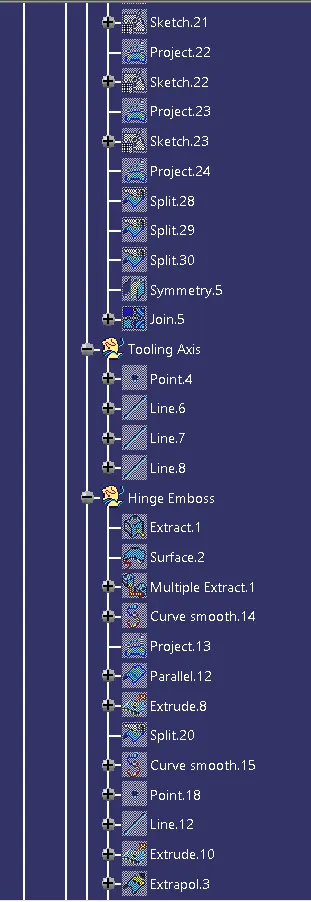
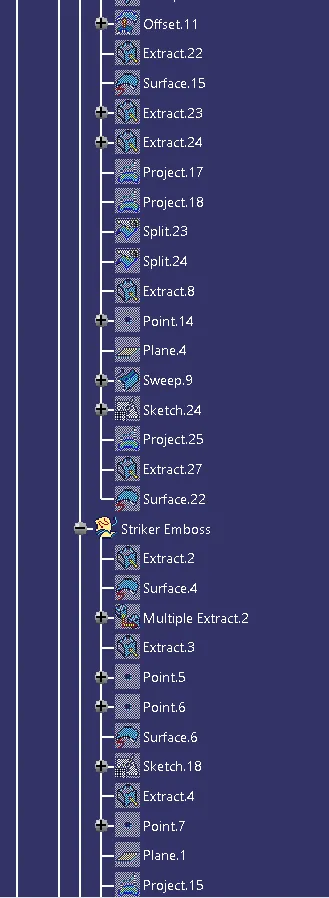

HOOD DESIGN VIEWS
CONCLUSION
We have completed designing of Hood with assembly of all the components following design rules of the sheet metal according to manufacturing standard.