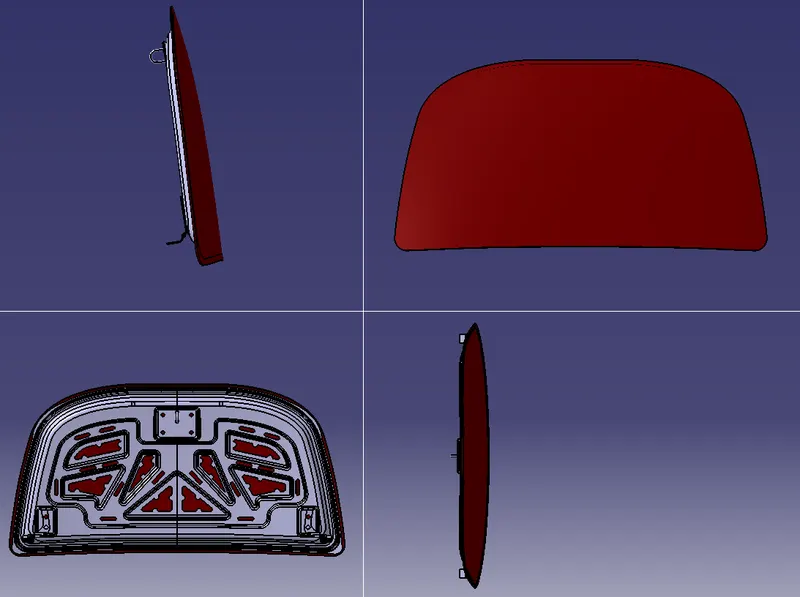
Hood design-Week 2
AIM:
The hood or bonnet is the cover over the engine of Motor Vehicle. Hoods can open to allow access to the engine compartment, or trunk on rear-engine and some mid-engine vehicles for maintenance and repair.
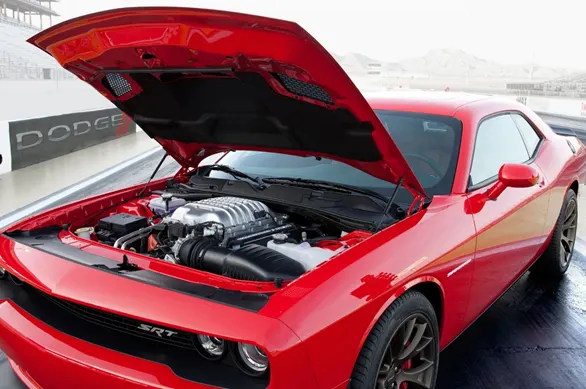
A car hood, also referred to as a bonnet in some other countries, is the hinged cover that rests over the engine of a front-engine vehicle. Its purpose is to provide access to the engine for repair and maintenance
Car hoods are typically constructed from steel and sometimes from aluminum. Aftermarket car hoods may be constructed from various other materials, including carbon fiber, fiberglass, or dry carbon.
The main function of the car hood is to protect the components underneath it for example, the engine. Without this protection, small stones kicked up by other cars could puncture a fluid container or damage the engine. In addition, most engines are not supposed to be exposed to excess water.
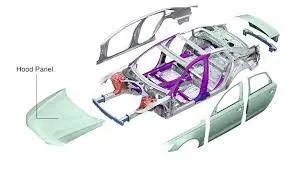
Body in white (BIW) is the stage in Automobile manufacturing in which a car body's frame has been joined together, that is before painting and before the motor, chassis sub-assemblies, or trim (glass, door locks/handles, seats, upholstery, electronics, etc.) have been integrated into the structure. Assembly involves different techniques such as welding (spot, MIG/MAG), riveting, clinching, bonding and laser brazing.
PEDESTRAIN SAFETY:
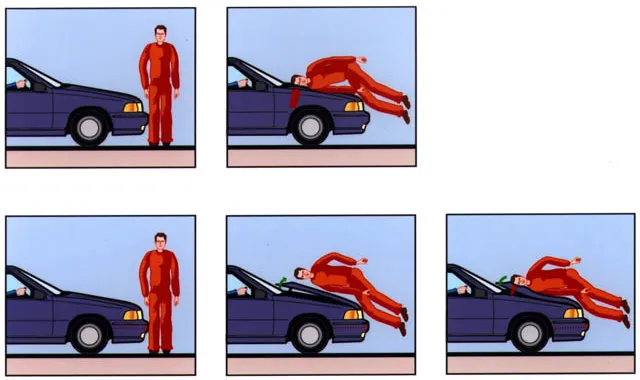
About 14 percent of all road fatalities in Europe are pedestrians, with children and the elderly being at greatest risk. Pedestrians comprise one of the main categories of vulnerable road users, which also include cyclists and motorcyclists
Head Impact:
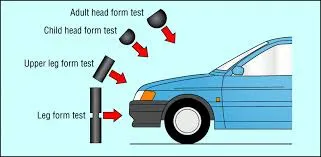
Most pedestrian accidents occur within city areas where speeds are moderate. The head, the lower body and the legs are amongst the most frequently injured body regions. To estimate the potential risk of head injury in the event of a vehicle striking an adult or a child, a series of impact tests is carried out at 40 km/h using an adult or child head form impactor. Impact sites are then assessed and the protection offered is rated as good, adequate, marginal, weak or poor.
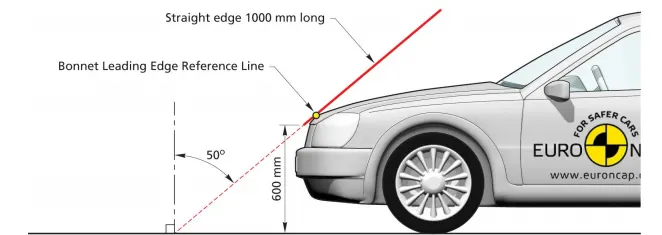
The procedure promotes energy absorbing structures, deformation clearance and deployable protection systems such as pop-up bonnets and external airbags.
Support rod:
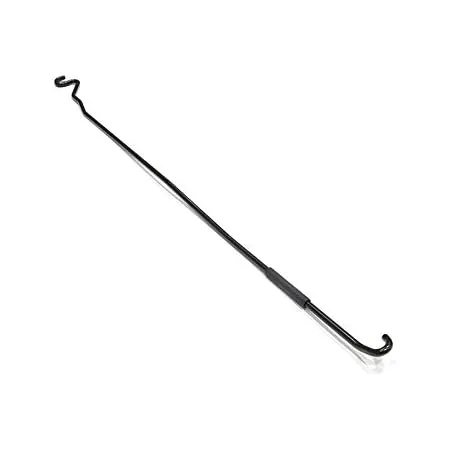
A hood rod is designed to hold your hood propped open whenever you need to do some work in your car's engine bay. When used, it must be firmly secured to ensure that it provides a stable hold on the hood. Meanwhile, when not in use, it must be kept stable in place and must not move around. The hood rod clip is the part assigned with that function. This clip clamps onto the rod and ensures that it is firm in its place when not in use. It keeps the rod from moving around under the hood and from causing trouble.
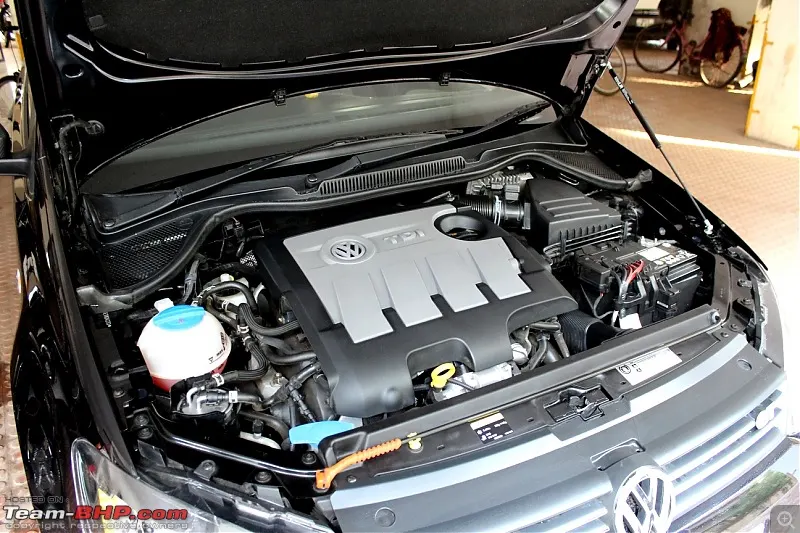
The hood support struts hold up the hood of your vehicle. This allows you to access the engine compartment without holding the hood up by hand or with a prop rod. Failed hood struts can be both dangerous and annoying as they could allow the hood to fall on your head.
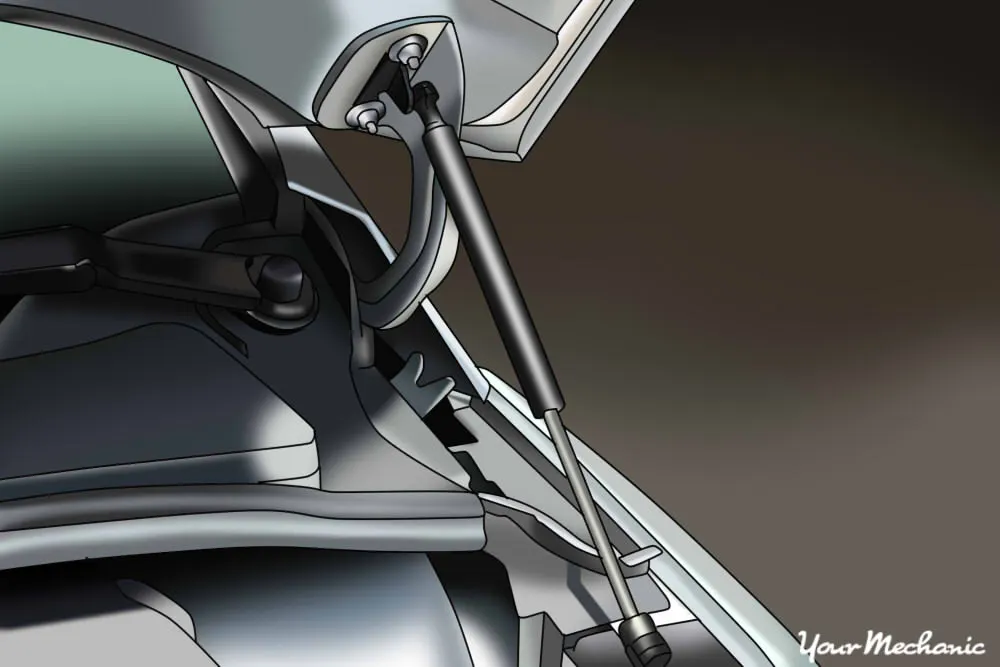
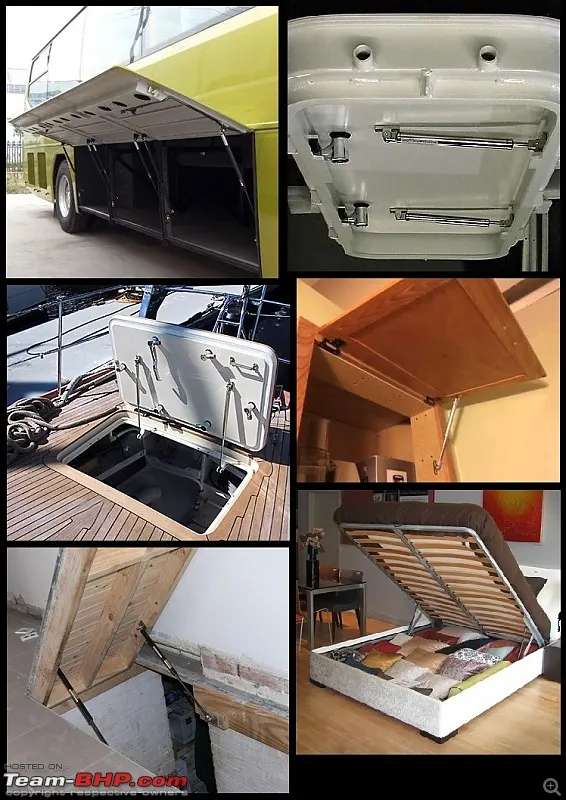
A Gas strut (also referred to as a gas spring) is a spring that operates due to the force exerted by the compressed gas (usually Nitrogen) stored inside the cylinder. Luxury carmakers provide a gas strut to lift the hood and hold it in place. It takes minimal efforts to lift an otherwise heavy hood and lends that upmarket feel to the car. I wouldn't want to go into the technicalities of gas struts and post much about it here
other uses of gas strut.
Hemming:
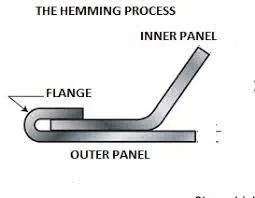
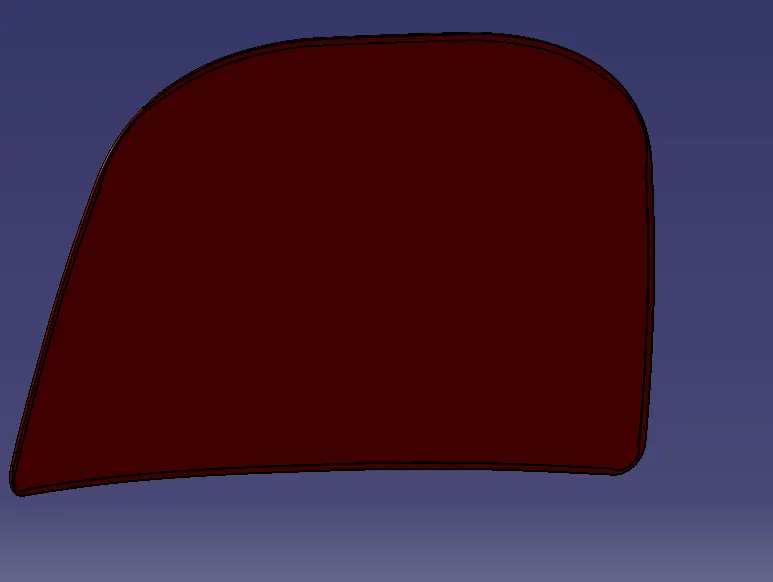
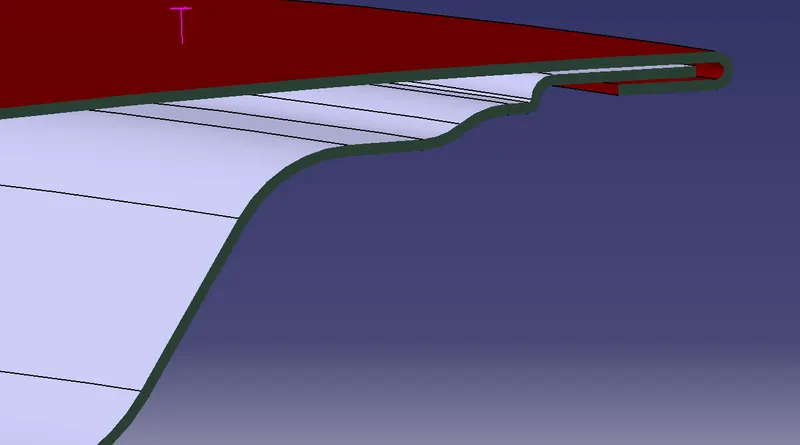
Hemming is the process in which the edge is rolled flush to itself, while a seam joins the edges of two materials. Hems are commonly used to reinforce an edge, hide burrs and rough edges, and improve appearance.
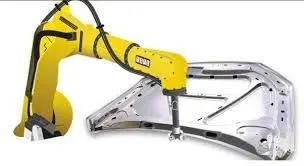
It is a technology used in the automotive industry to join inner and outer closure panels together (hoods, doors, tailgates, etc.). It is the process of bending/folding the flange of the outer panel over the inner one. The accuracy of the operation significantly affects the appearance of the car’s outer surfaces and is therefore a critical factor in the final quality of a finished vehicle.
Benifits of hemming
- Die storage systems
- Fully automatic die-changing systems with parameters that change with each die
- Pressing capacity typically 60 to 180 tons
- Large panel-size capacity
- More than one part can be produced on same line
- Electric hemmers do not need hydraulic oil, are quiet and eco-friendly
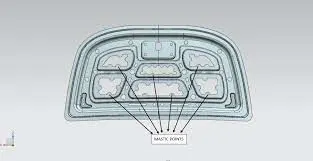
Mastic points in hood:
Mastic Sealer is a synthetic rubber based sealer material which has a good filling properties and corrosion resistance. It is designed to applied at doors, roof, hood, in specific, the gaps between inner & outer panel.
design of hood:
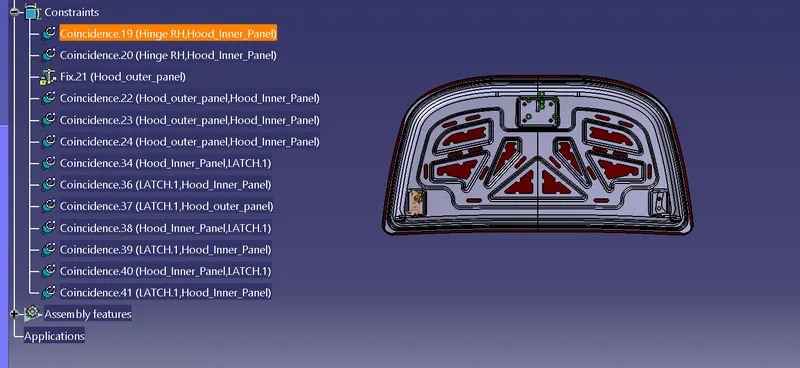
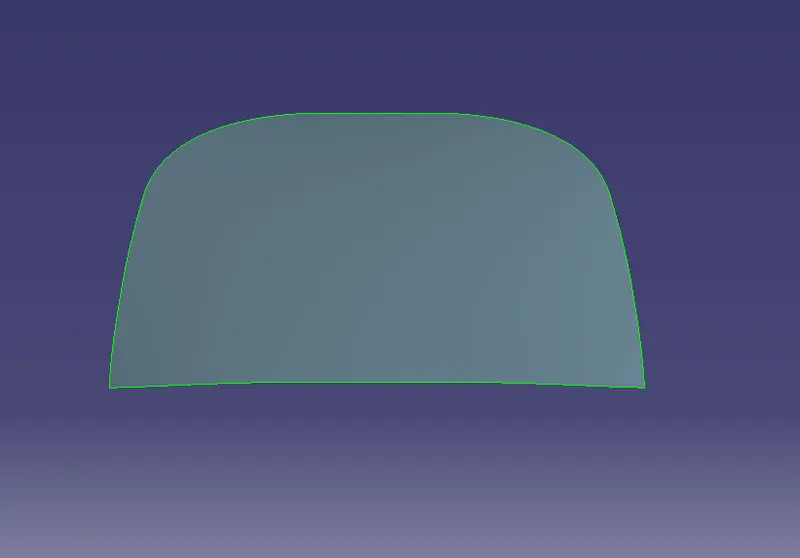
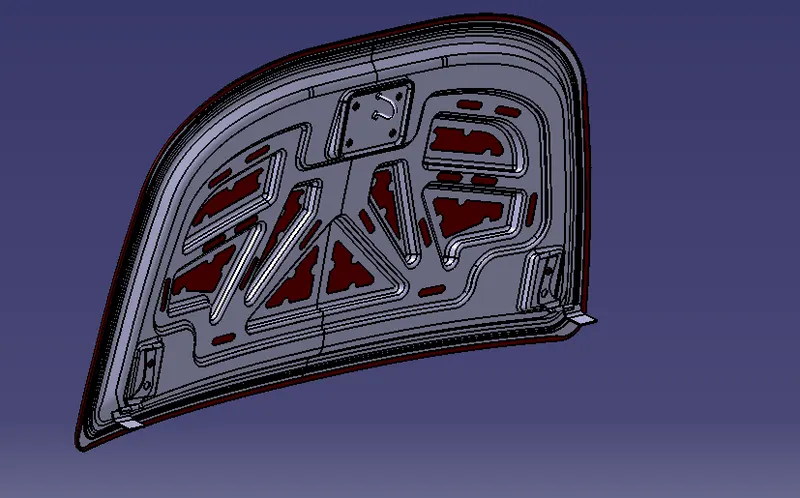
Master sections are the guides for design requirements which decide the component packaging after technical (Styling, Concept or Class-A) surfaces.
In automotive design, a class A surface is any of a set of freeform surfaces of high efficiency and quality. Although, strictly, it is nothing more than saying the surfaces have curvature and tangency alignment – to ideal aesthetical reflection quality, many people interpret class A surfaces to have G2 (or even G3) curvature continuity to one another (see free form surface modelling). Class A surfacing is done using computer-aided industrial design applications. Class A surface modellers are also called "digital sculptors" in the industry. Industrial designers develop their design styling through the A-Surface, the physical surface the end user can feel, touch, see etc.
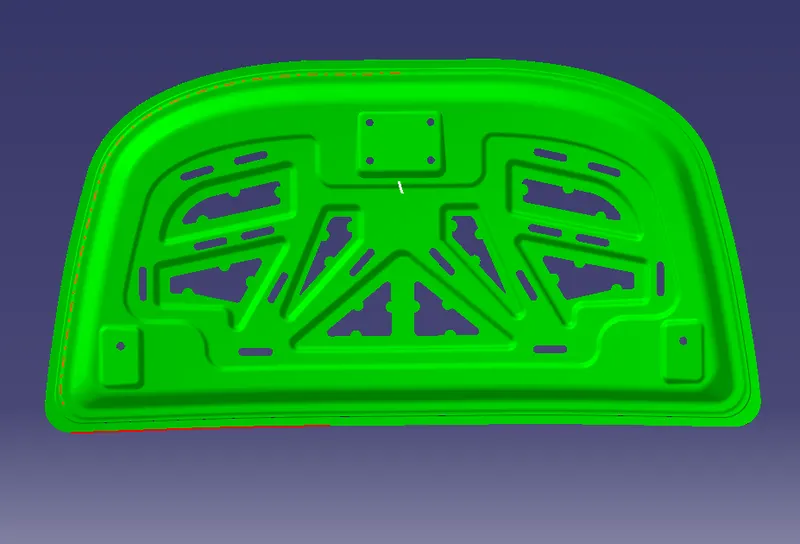
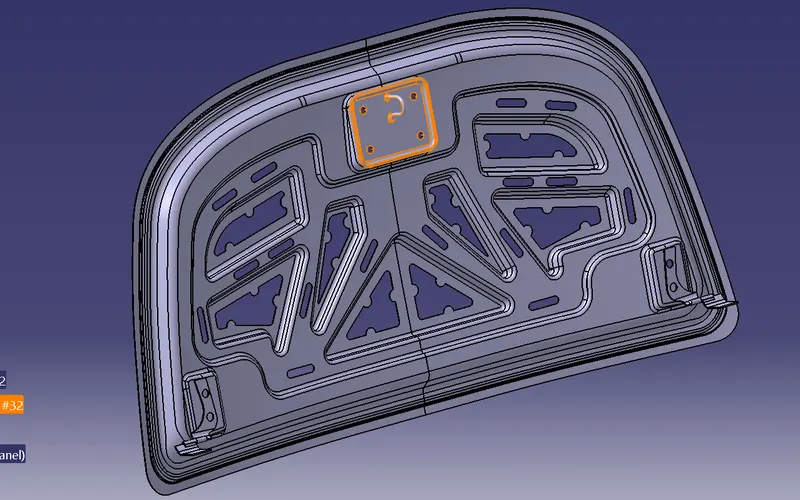
Inner Panel:
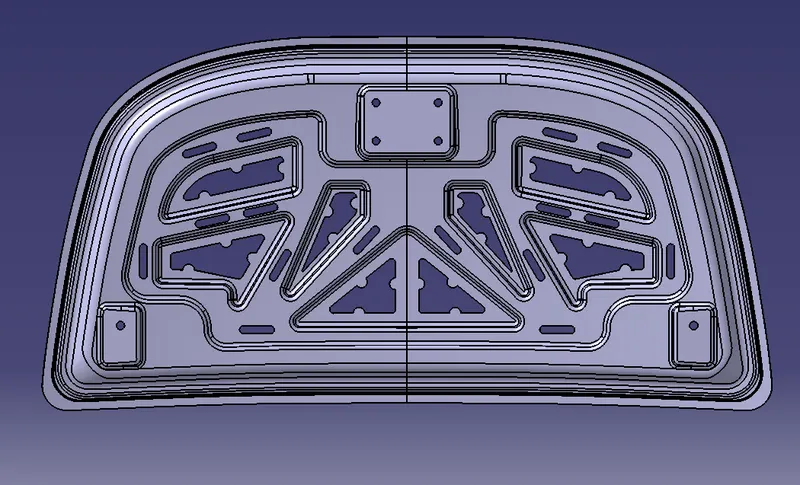
with respect to draft angle.
HINGE ASSEMBLY :
Hinges is the assembly of components connected to the door and body of the vehicle, linked to each other and capable of rotating around the same axis. Conventional system consists of two hinges for each door, an upper hinge and a lower hinge.
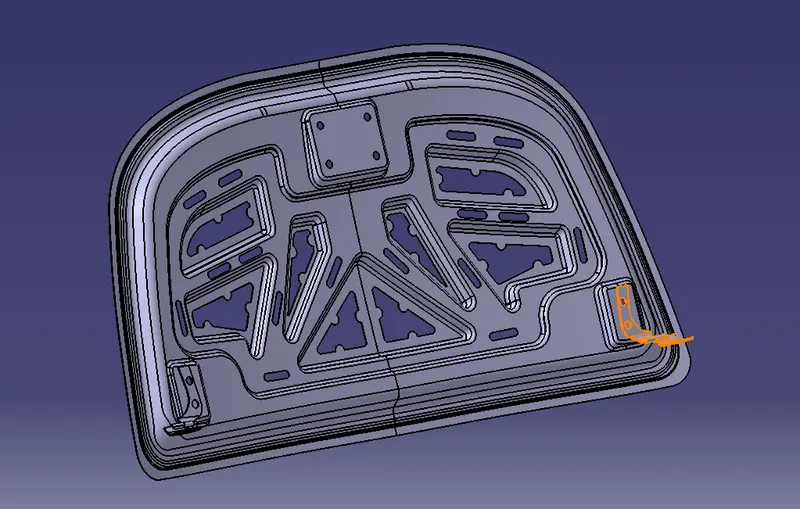
with respect to draft angle.
STRIKER ASSEMBLY:
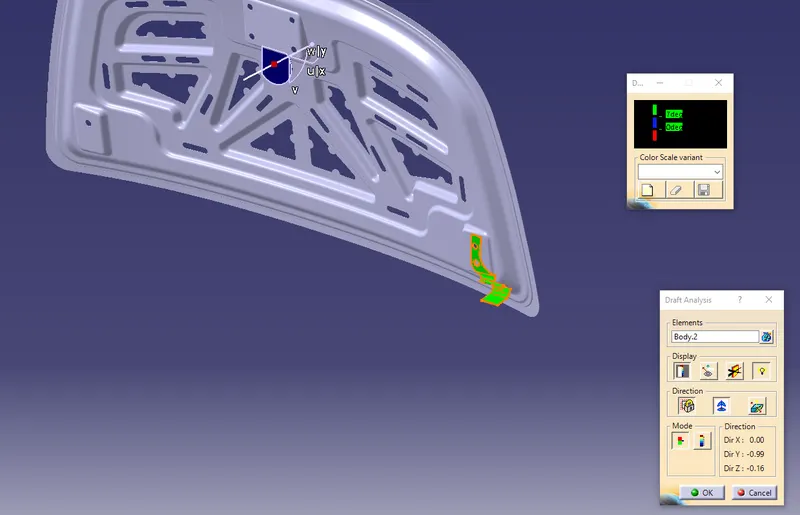
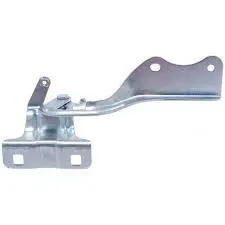
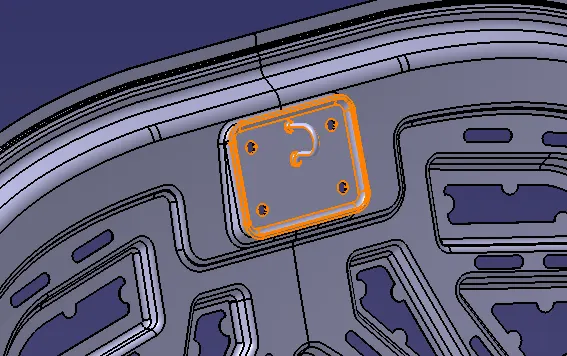
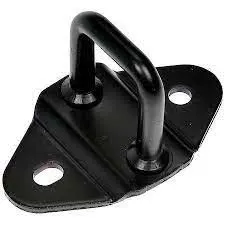
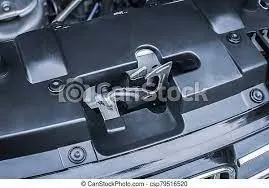
Our Hood Latch Striker is designed for long-lasting use. It's durable steel construction safeguards against body damage, ensuring the vehicle hood won't unexpectedly open while driving. The Striker plate in the inner hood panel slams in to the latch.so it certain angle that should be aligned.
Striker angle for hood:
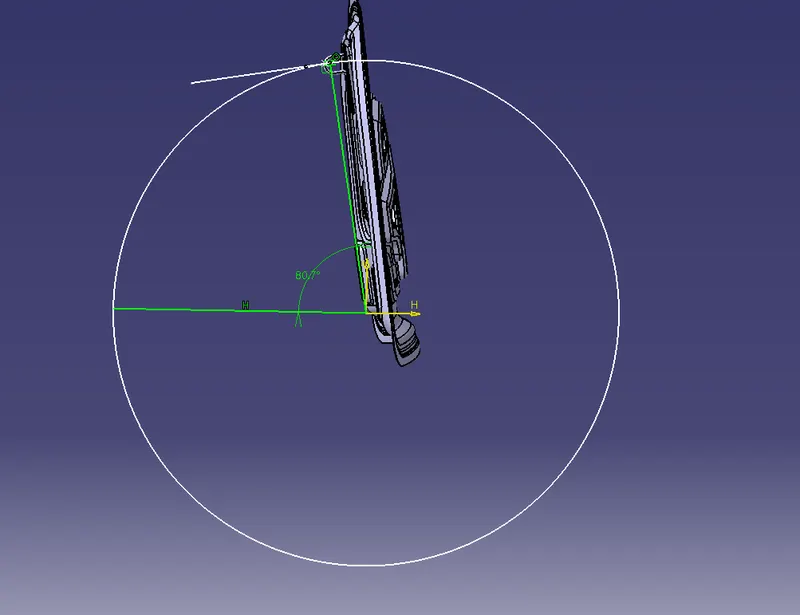
The angle used for positioning the striker 80.7 deg. It is where the striker slams the latch and hood of the car closes properly.
with respect to draft angle
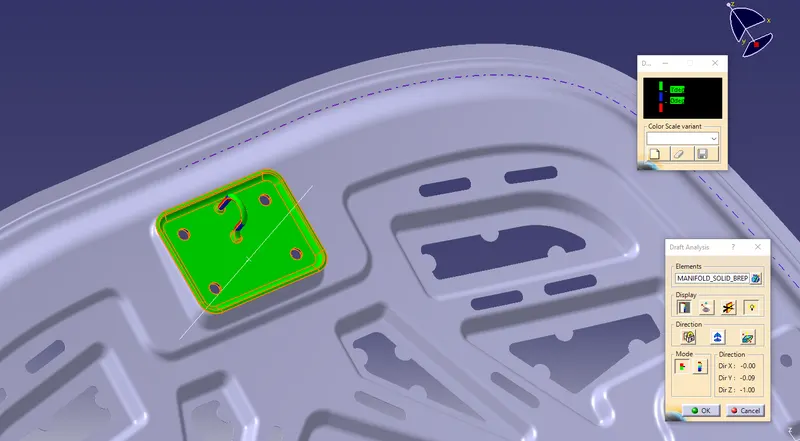
striker:
latch:
final product:
Outer panel hemming surface:
CORNER RELIEF FOR EASY MANUFACTURING :
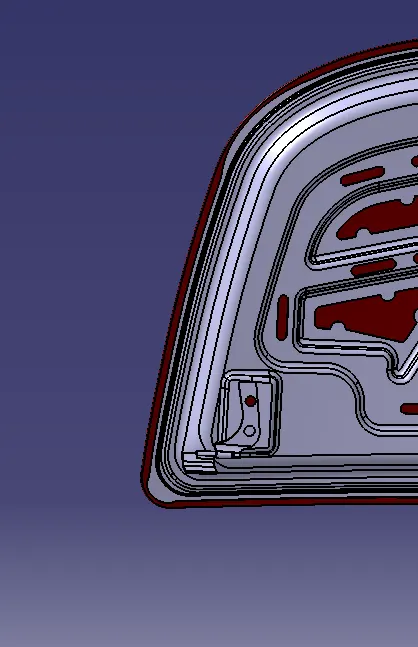
Bend relief is nothing more than two small incisions cut into a piece of sheet metal to free the metal in between. It separates the material you want to be able to fold from the rest of the part. You only need it when there is material on either side of a bend.
When the sheet metal is put through the process of bending the metal around the bend is deformed and stretched. As this happens you gain a small amount of total length in your part. The Bend Allowance is defined as the material you will add to the actual leg lengths of the part in order to develop a flat pattern.
final hood design: