Hood design-Week 2
Automotive Hood Design
Hood :A car hood, also referred to as a bonnet in some other countries, is the hinged cover that rests over the engine of a front-engine vehicle. Its purpose is to provide access to the engine for repair and maintenance. A concealed latch is typically used to hold down the hood. On vehicles with an aftermarket hood and on racecars, hood pins may be used to hold down the car hood. Hoods sometimes also contain a hood scoop, wiper jets, power bulge, and/or hood ornament. Car hoods are typically constructed from steel and sometimes from aluminum. Aftermarket car hoods may be constructed from various other materials, including carbon fiber, fiberglass, or dry carbon.
Design Parameters
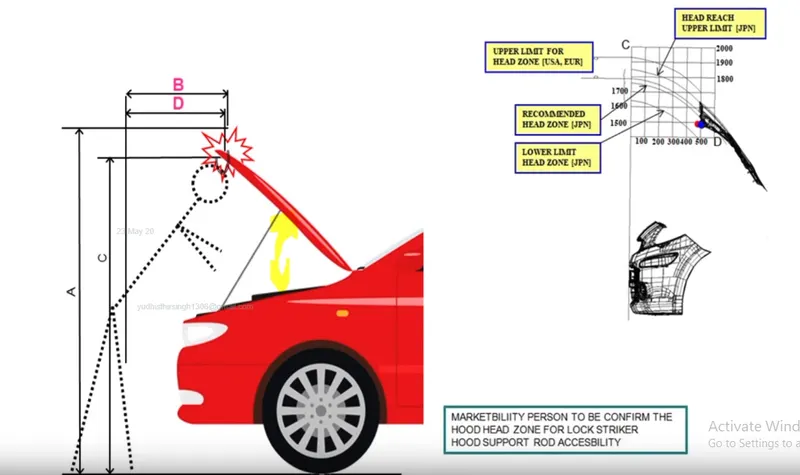
Hood Opening Angle: It is the angle measured with respect to horizontal to the point when hood is opened. It is very important to design opening angle so that person does not strike his head during woring on engine parts or while fillinf water into washer reserviour. It depends on the hinge position and stay rod length. We have upper limit head zone standards also according to different countries nominal height is considered and then calculations are made.
Hood Stay:
It is rod used to support hood to remain in open condition.Hood is opened for purposes of inspecting engine making repairs,chanig parts etc
Type
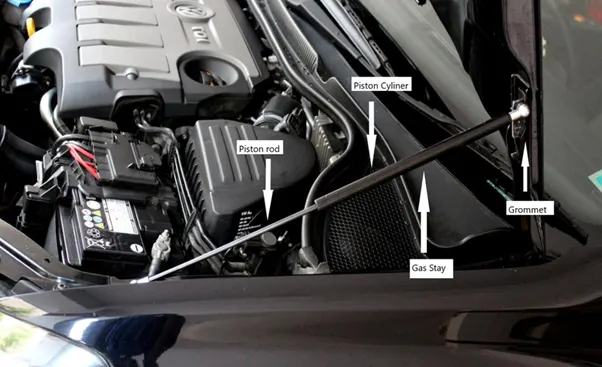
1. Support Rod: It is cylinderical shaped rod whose one of the end is fixed either to hood or engine compartment and other is put in clip during hood close position and during opening condition its one end is put inside the slot given for stay rod manualy by person.
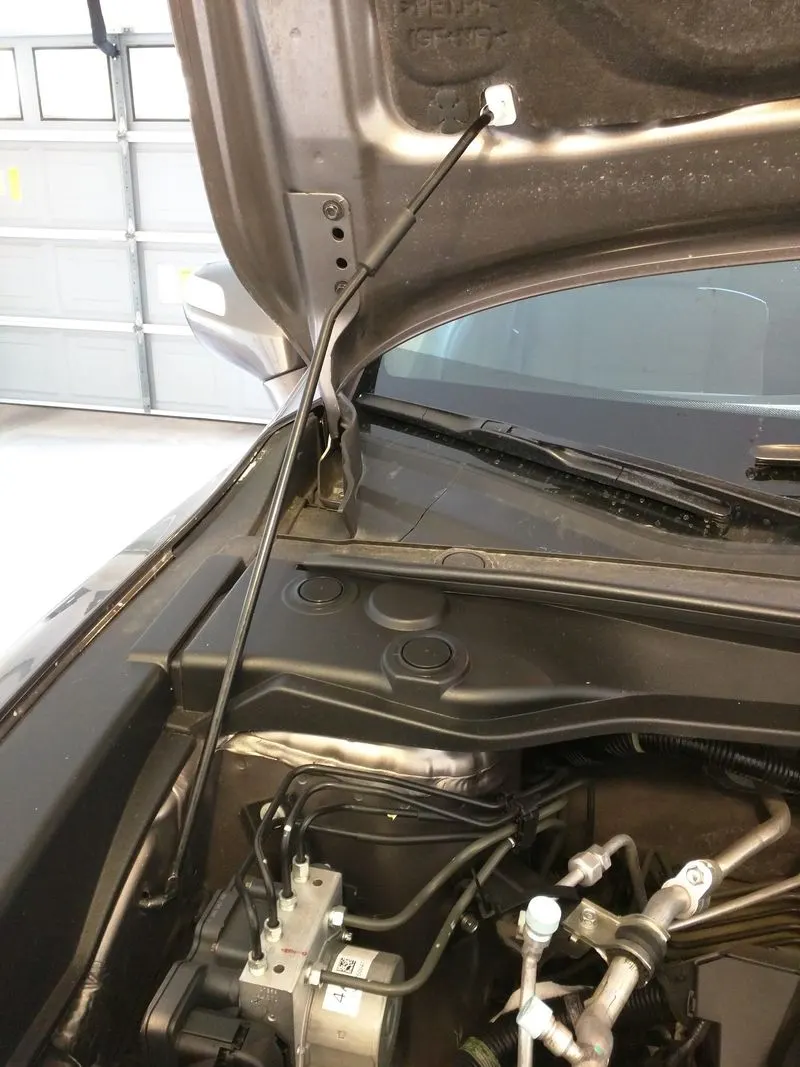
2. Gas Stay: A gas stay (also referred to as a gas spring) is a spring that operates due to the force exerted by the compressed air. It operates from the actuation of the lever which is controlled by human there is no lifting effort involved in this system.
Safety Considerations in Design:
Hood plays very prominent role in deciding of automobile hood padestrian vehicle collision safety ratings
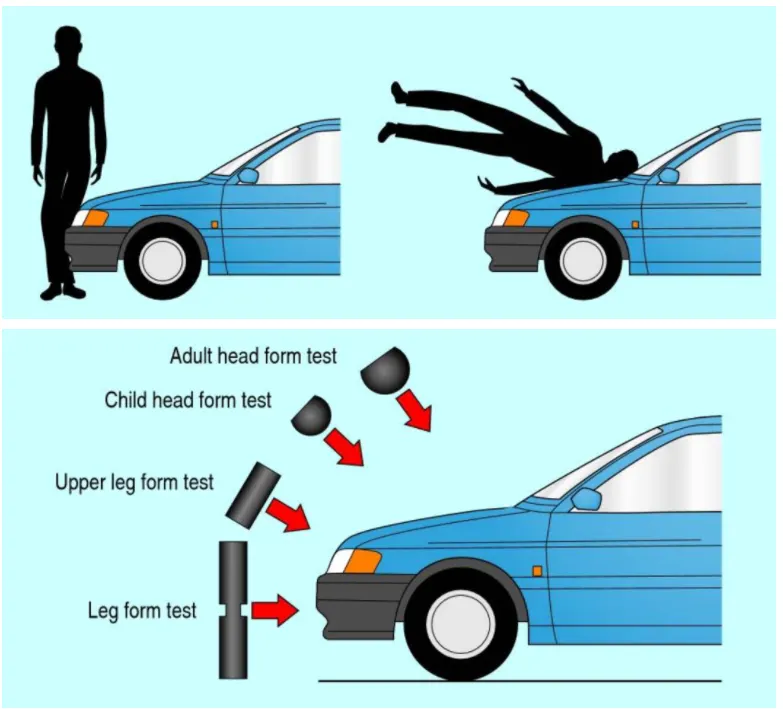
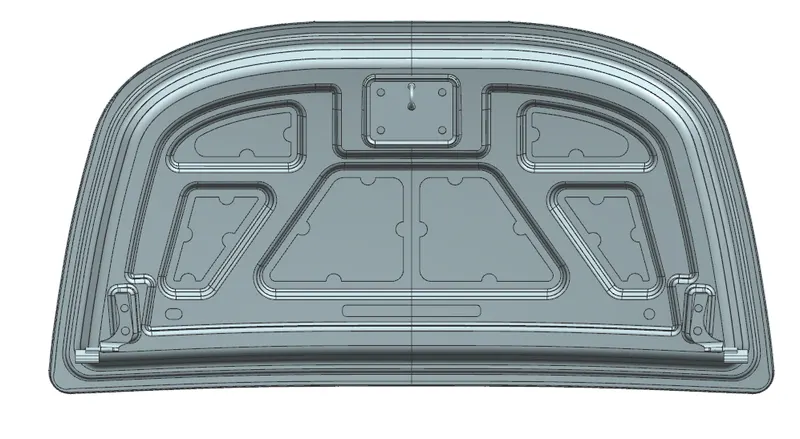
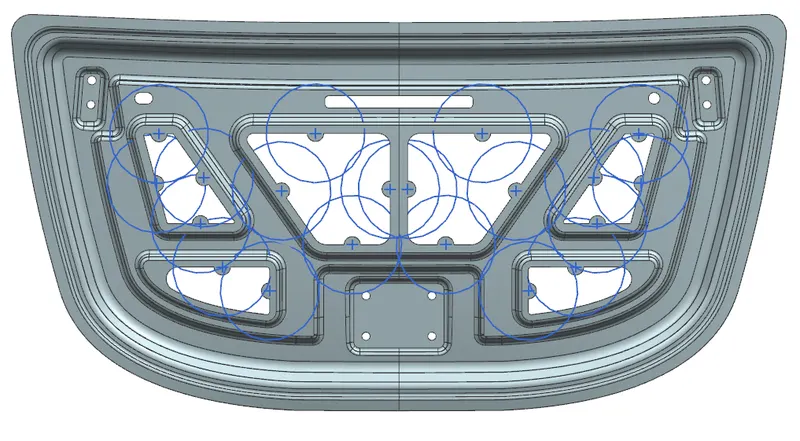
To reduce the injury to padestrian during collision we make sure that our part has less impact on the person at collision area for this to occur we make cutouts in the inner panel so that part get deformed at impact area which will absorb the energy thus preventing person from getting serious injury.
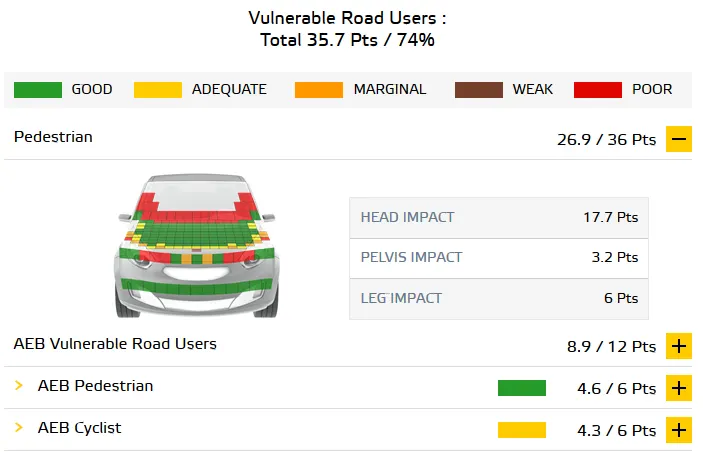
Focus of designer is to optimise the green zone more is the green area in hood more is the safety.Green zone is basicaly decided by the distance between panel and engine component at point. If distance is more than 100mm then it will come under green zone.So we provide cutouts/remove material to increase green zone
Crash Test Methodlogy
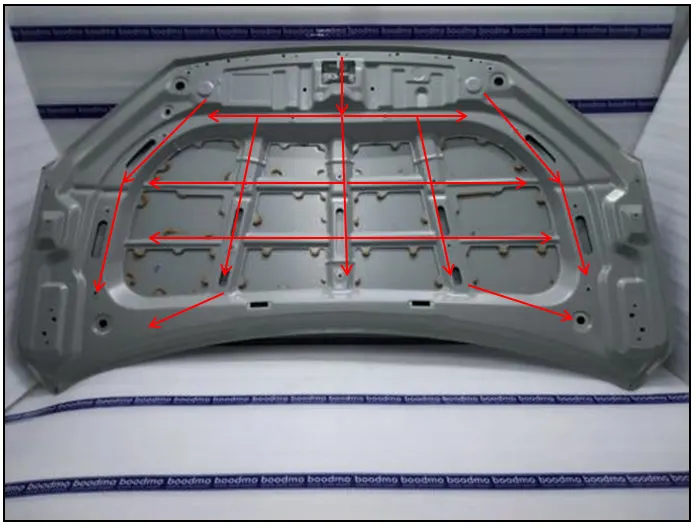
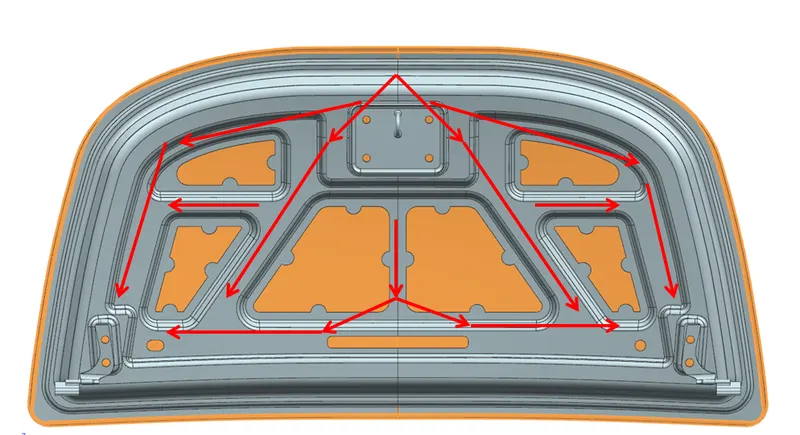
To make sure that during frontal crash passanger traveling get minimum injury we optimise its design in such a way that when force acts from the front to the hood it get distributed to the side so that it has to travel maximum distance before it reaches the passanger compartment by that time its effect will reduce drasticaly which will keep the passangers safe or protect them from serious injuries.
Manufacturing Process:
Deep Drawing Process: The manufacturing process comprises the following steps: (1) blanking, (2) stretch forming, (3) trimming and punching, (4) deburring, (5) welding, (6) grinding, (7) painting, (8) baking, (9) polishing and waxing, and (10) coating. According to the manufacturing process, an outer cover plate and an inner cover plate similar in shape are designed to use the same blanking die for blanking so as to reduce the production cost; a compound die with trimming and punching functions is adopted to reduce the steps and improve the production efficiency.
Joining Process: Outer and inner panel are joined using hemming process and sealent is also used to prevent NVH issues as we cant spot well outer and inner panel due to aesthetic considerations
Reinforcements can be joines using Weldspots easily, to joing striker and hinge we generaly use bolts,nut plate assembly
Hood Assembly contains following parts:
1. Hood Outer Panel
2. Hood Inner panel
3. Hinge Assy and its reinforcement
4. Striker and its reinforcement if necessary
Design Criteria:
Input from CAS designer: Class A surface
We receive Class A Surface from the styling team and as the cutline is defined in that data then we start preparing master section. Master section is derived from CAS.
To create master section we follow general guidelines mentioned below:
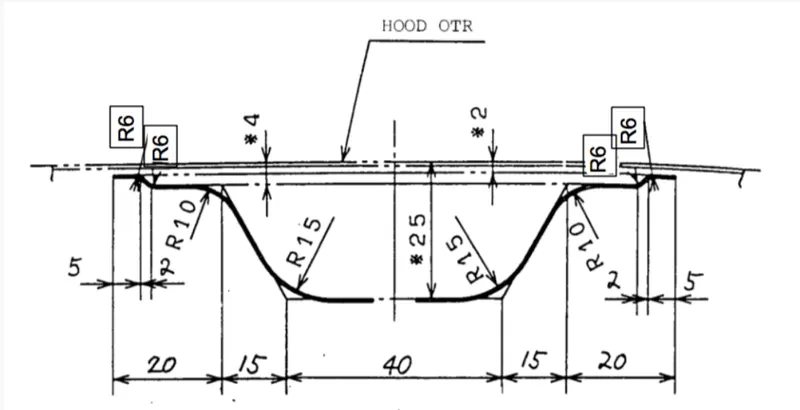
After making master section we start creating Hood Inner panel which is derived from CAS
Taking offset from outer panel(CAS) we create model as per the master section:
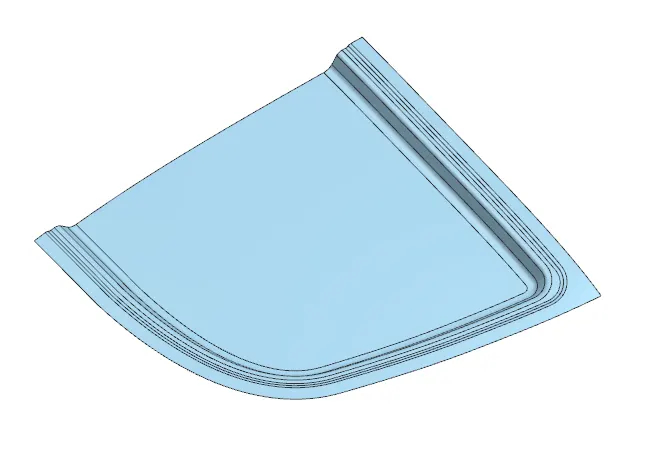
Embossing
To improve the strength of the part we make embossing it improves stiffnes of part and provides bending strength by improving section modulus.We make emboss in such a way that it distributes crash impact force away from passanger compartment to abosrb the energy
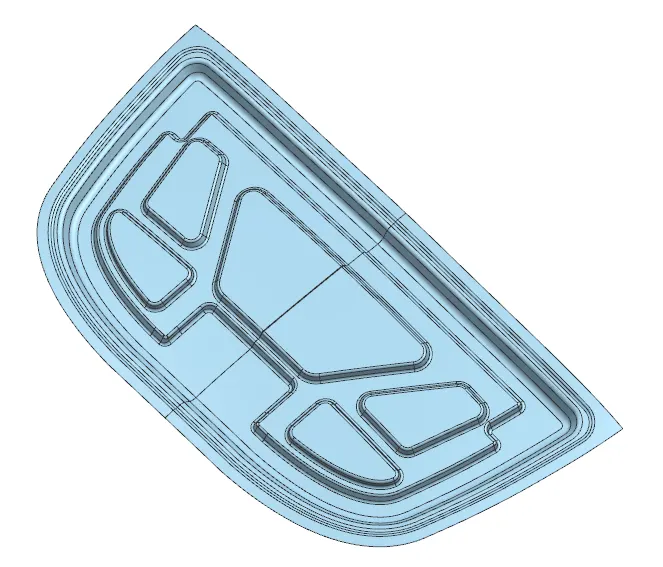
Cutouts for Padestrian saefty:
To improve padestrian safety we provide cutouts on the panel so that it can absorb energy during collision and padestrian is safe from serious injury
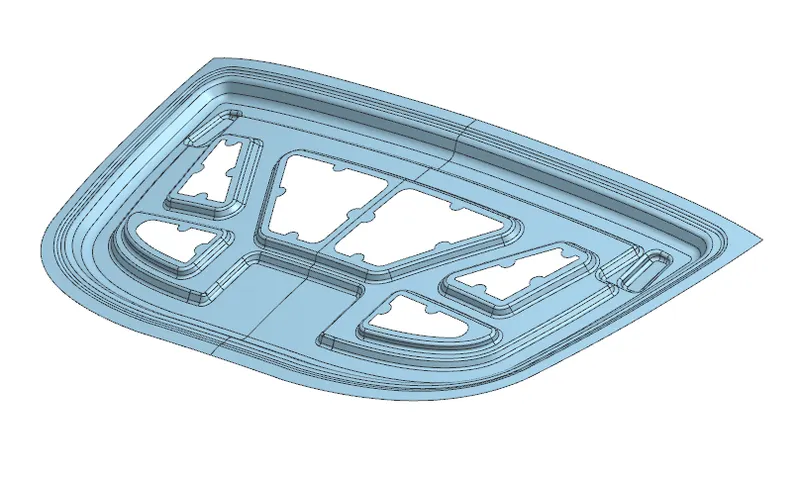
Mastic Sealent Info
Hood Latch:
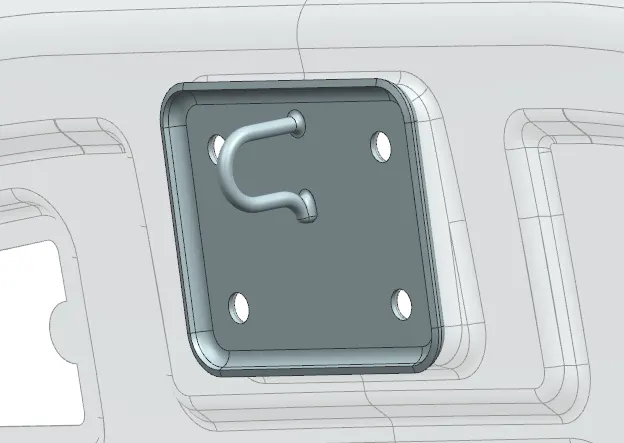
A hood latch is a component that keeps your hood closed shut. This latch ensures that your hood is securely connected to
your vehicle and that it doesn't pop open unexpectedly When tension is applied to the cable from the hood release handle, it pivots the secondary latch, which pulls away from a retaining seat located under the hood.By design, the secondary latch then releases the hood a few inches before a safety latch takes over.
Hood Hinge:
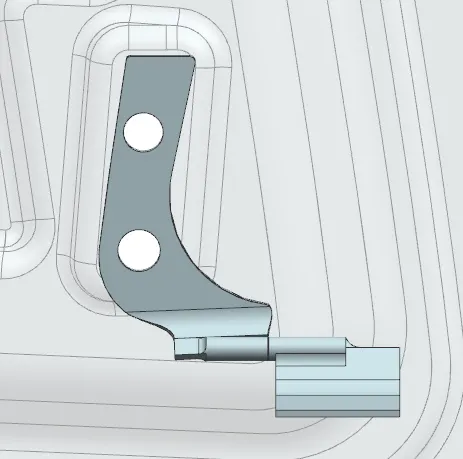
Hinge is component which provides rotary motion to hood assy, its one side is fixed on the engine compartment or on fender and other is bolted with hood inner assy.
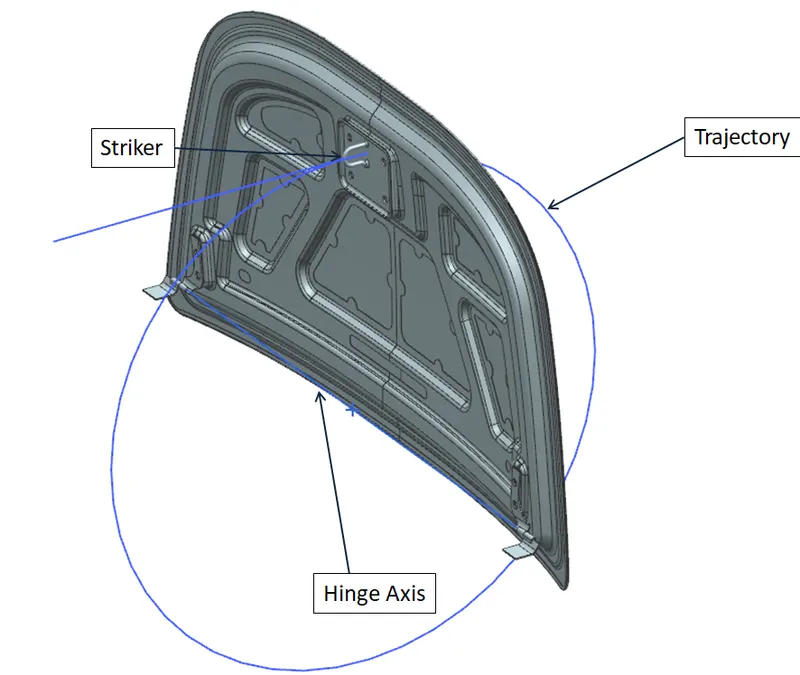
Latch Trajectory :
Impact Force Distribution:
Outer Hood Hemming Flange:
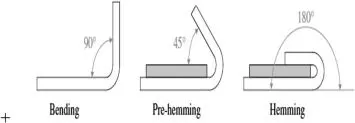
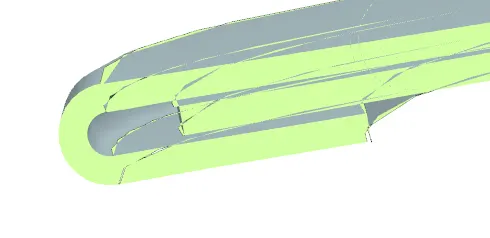
Inner and outer hood are joined using hemming operation,it is basicaly bending operation in which flange is first bend then with help of roller it is again bend inside towards sheet by looking at image section we can understand how it wraps around the part
Relief at corners:
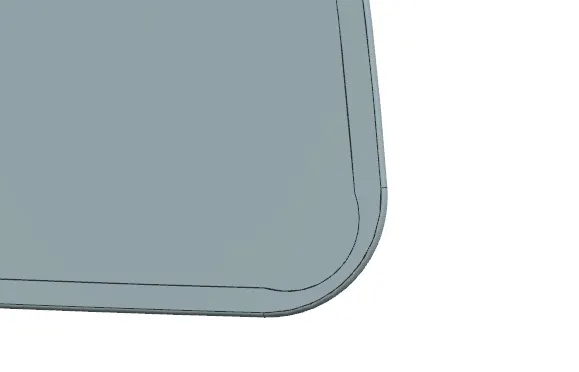
During hemming process when roller passes thorugh corner area we face some difficulties due to stress concentration so to avoid stress concentration we provide relief in corner areas
Front Corner Area:
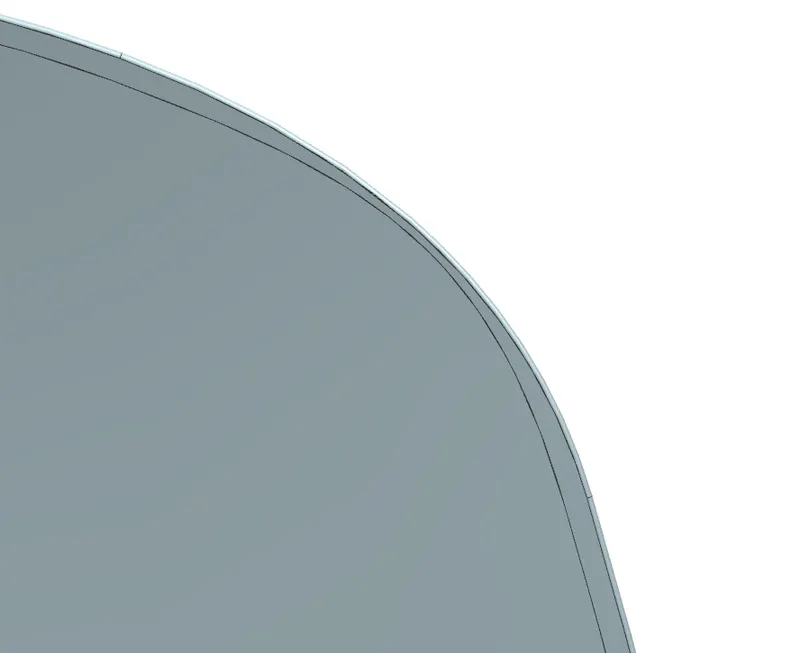
Rear Corner Relief
Draft Analysis:
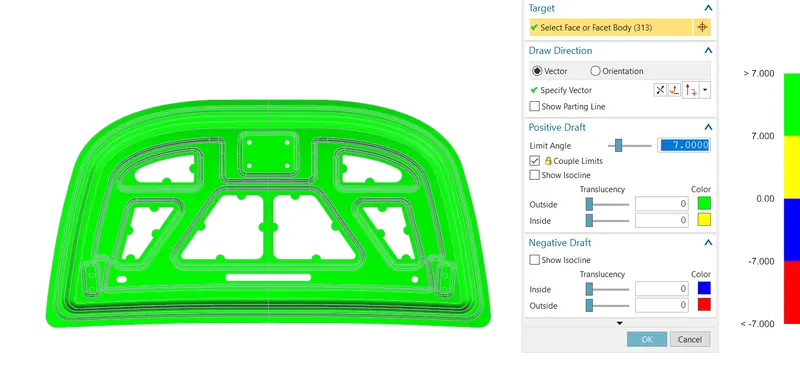
It defines that part is manufacturable here we follow deep drawing process so it should clear in tooling direction that is the direction of tool travel for drawing process. All faces should have nominal draft of 7 deegree so that part can be cleared easily in tooling.
Final Hood Assy
Isometric View:
Orthographic Views: