Hood design-Week 2
AUTOMOBILE HOOD:
Hood is the front most BIW enclosure component it covers the engine compartment and other parts in the front engine mounted automobiles. It cuts the air drag by providing good aerodynamic shape for the smoother ride and also provides good aesthetic look to the automobile. It has a Hinge mechanism which is helpful for ease of access of engine compartment and other components.
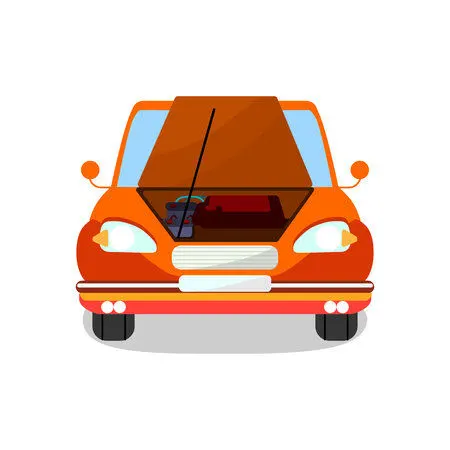
Automobile hood consists of the fallowing components
- Hood Inner panel
- Hood outer panel or skin of the hood
- Reinforcements
- Latch and striker assembly
- Hinge assembly
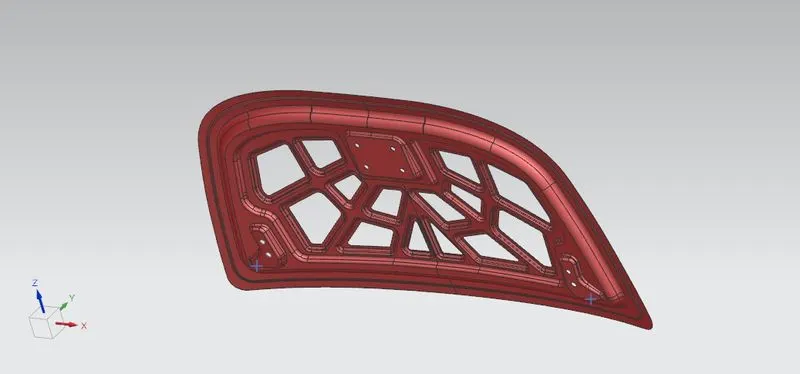
HOOD INNER PANEL: It is the skeleton of the hood and provides proper strength to the hood. It accomodates all the other components of the hood assembly based on functional requirements.
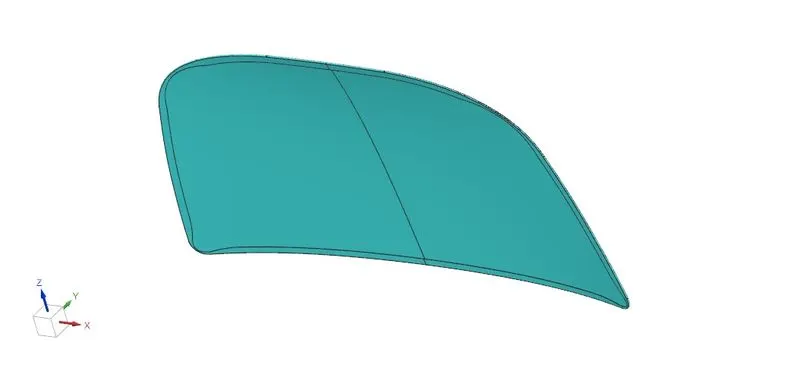
HOOD OUTER PANEL: It is the outer most skin of the hood, covers the automobile's engine compartment and other components. It enhances the overall look of the automobile and provides protection from external corrosive conditions.
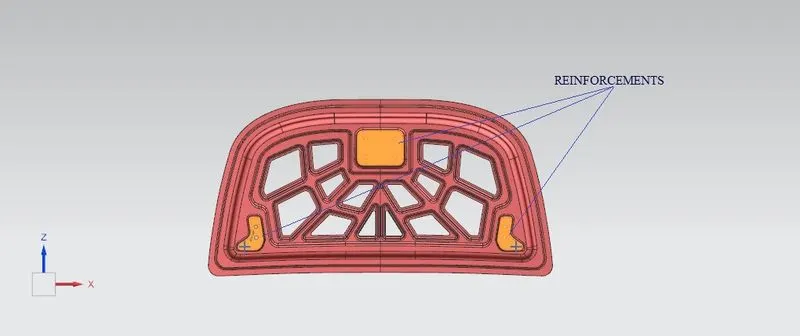
REINFORCEMENTS: These add extra strength to the areas where attachments for the Latch and striker assembly, Hinge assembly etc., are provided in the inner hood it minimizes the local stresses generated due to attachments.
LATCH AND STRIKER: It is a locking mechanisam of the hood attached to the inner panel and to the body of automobile.
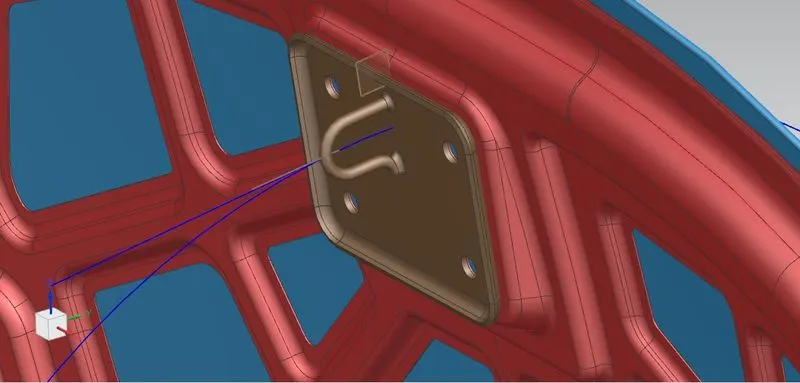
HINGE ASSEMBLY: It provides the rotational degree of freedom to the hood about the hinge axis in order to access the engine compartment of the automobile.
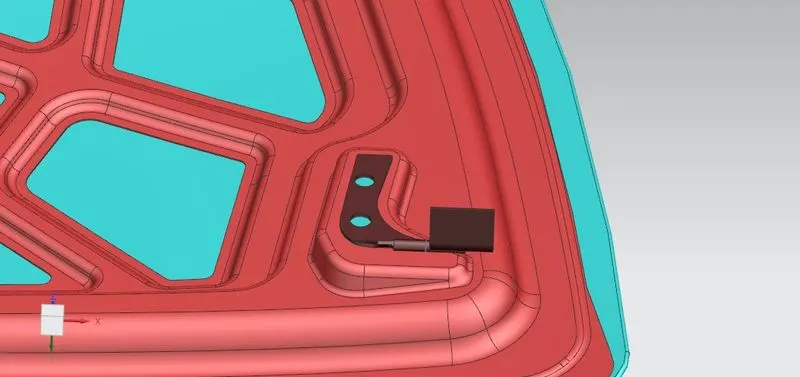
MANUFACTURING METHODS FOR PRODUCTION OF HOOD: The fallowing manufacturing methods are employed for production of Hood
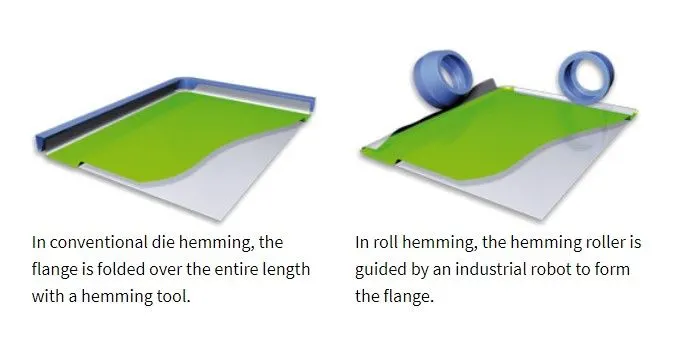
- Hemming: Hemming is a forming process in which the sheet's edges are folded or folded over another section to create a snug fit. Hemming procedures are commonly used to join parts, improve the look of a part, and reinforce part edges. In car part production, hemming is used in assembly as a secondary operation after deep drawing, trimming and flanging operations to join two sheet metal parts (outer and inner) together. Typical parts for this type of assembly are hoods, doors, trunk lids and fenders. There are various types of hemming operations:
a) Conventional die hemming b) Roll hemming
- Deep Drawing: The deep drawing process is a forming process which occurs under a combination of tensile and compressive conditions. A flat sheet metal blank is formed into a hollow body open on one side or a hollow body is formed into a hollow body with a smaller cross-section. In the automotive industry, deep drawing is usually carried out using rigid tools. When drawing complex car body parts in practice, there is usually a combination of stretch and deep drawing involved. It is necessary that the sheet metal is stretched as well as possible without reaching the material’s limits (e.g. splits, wrinkles).
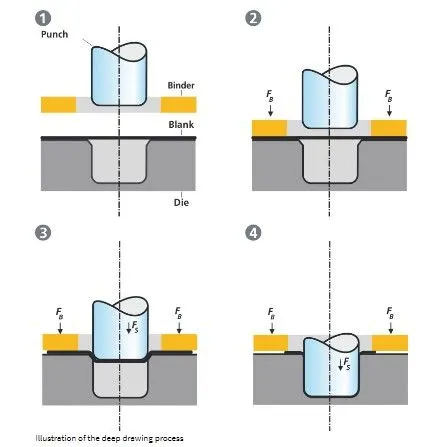
The figure illustrates the deep drawing process. The rigid tools consist of a punch, die and binder. In deep drawing, the plate holder closes after the metal sheet blank has been inserted.
- Edge-cutting and hole-punching: the outer cover plate after stretch forming and inner cover plate are placed on respectively on corresponding trimming and piercing die, carry out trimming shaping and piercing and shaping die, draw accurate overall size, blanking pressure gets 46KN to 68KN.
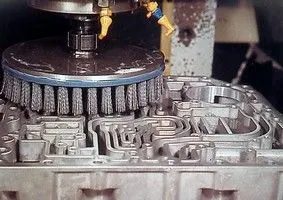
- Deburring: outer cover plate and inner cover plate are arranged on corresponding stationary fixture respectively, uses sander to get rid of the punching burr of outer cover plate and inner cover plate.
DESIGN CONSIDERATION OF HOOD: Design of the hood of an automobile is mainly based on the fallowing factors
- Safety from crash to the passenger.
- Pedestrain safety
- Functional Requiremts of Hinge Assembly.
- Functional Requirements of Latch and Striker Assembly.
- Mastic Data ( NVH)
- Based on Manufacturing method ( Allowances and Tolerances )
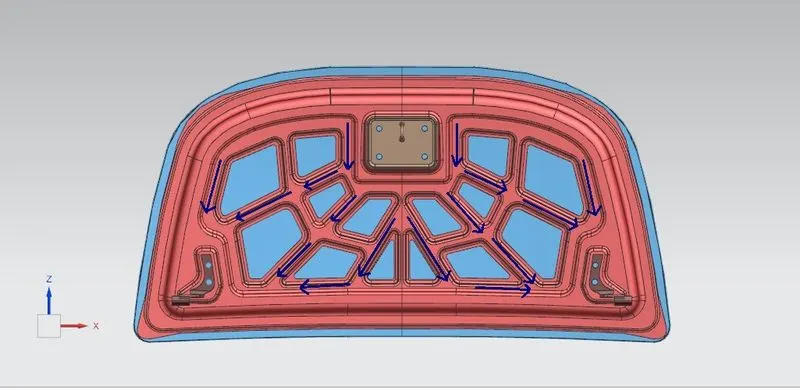
1) Safety from crash to the passenger: During the crash of an automobile the hood should be crumbled so that it can absorb the forces and directs the force distribution towards the hinges. Ribs are provided to the inner hood to stiffen the hood.
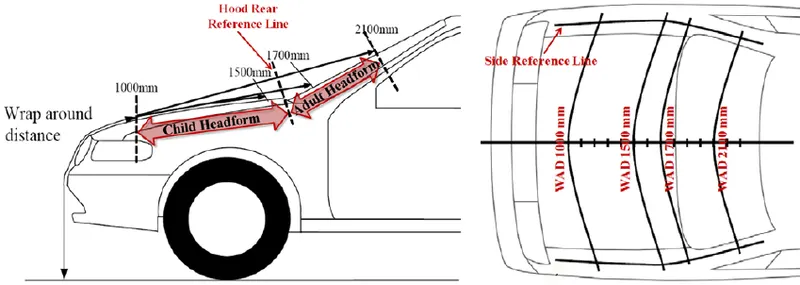
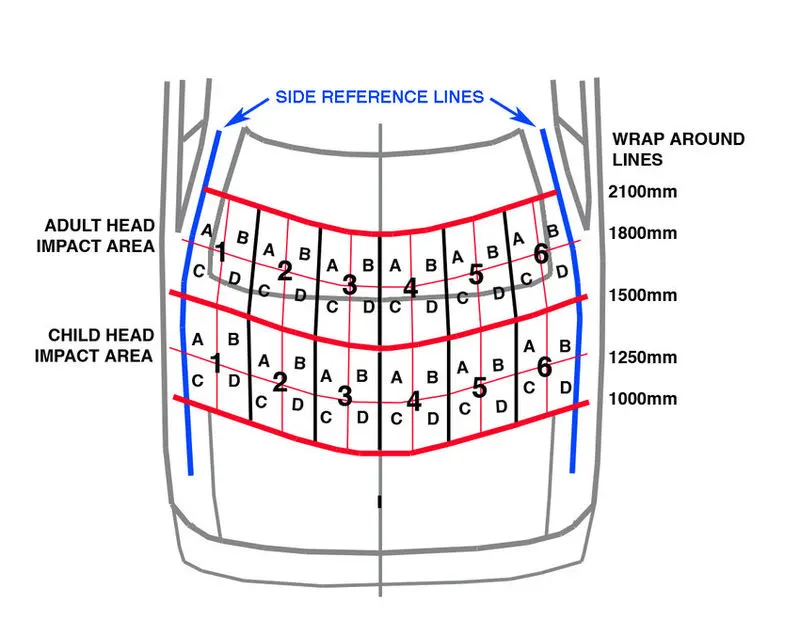
2) Pedestrian Safety: The distance between the ground and the evaluated areas of the cars,i. e., Wrap Around Distance (WAD) is measured according to the length of the area where the pedestrians’ heads hit in accidents. Impact location area for adults and children’s head is set based on the data of actual accidents. In the crosswise direction, the side line of the impact test area is from the line obtained by tracing the contact points between a straight edge and the side of the bonnet where the straight edge contacts the bonnet bumper at 45 degrees (Bonnet Side Reference Line) to the inside half diameter of the head impactor. So proper dimensions are taken while designing the Hood and the gap with proper is maintained in between inner and outer panel in order to absorb the impact of the pedestrian. Based on the simulated test NCAP rating will be given for safety.
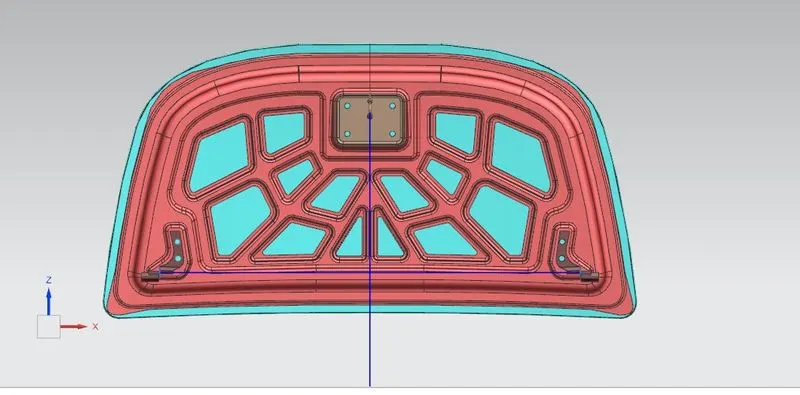
3) Functional requirement of Hinge assembly: Hinge mounting surface should not have a curvature it should be maintained as plane. Axis of rotation of both the hinges should be same in order to satisfy the functional requiremnt based on these condition hood inner panel is designed.
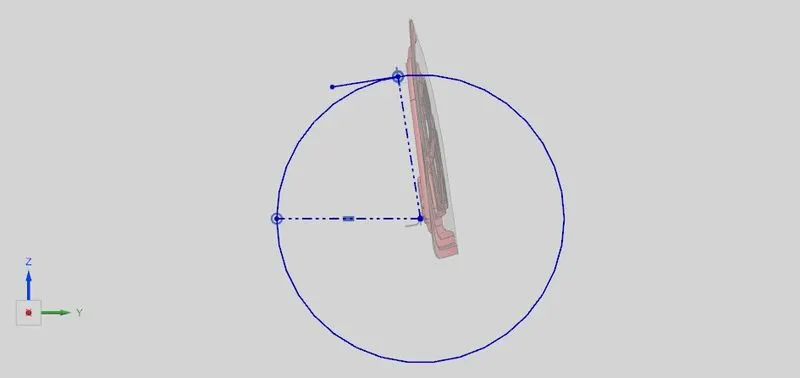
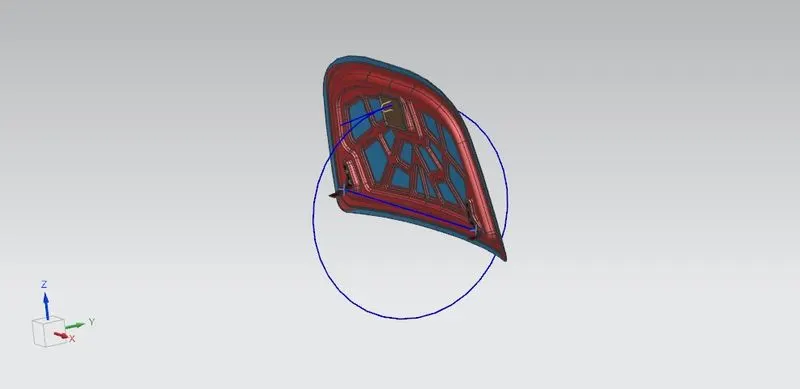
4) Functional requirement of Latch and Striker assembly: The point of intersection of Striker and Latch should be tangential to the trajectory of the hood with respect to the axis of rotation of hood ( line joining the Hinges axis) and this should be strictly maintained while designing the inner hood striker mounting emboss.
5)Mastic Data: The hood inner panel and outer panel is joined together after the joining there will be a gap which leads to noise and vibrations in order to avoid that mastic seals are provided in between them which improves NVH ( Noise Vibration Harshness). Each mastic Point has influence of 80 mm. It is a Paste like substance which gets hardened by application of heat.
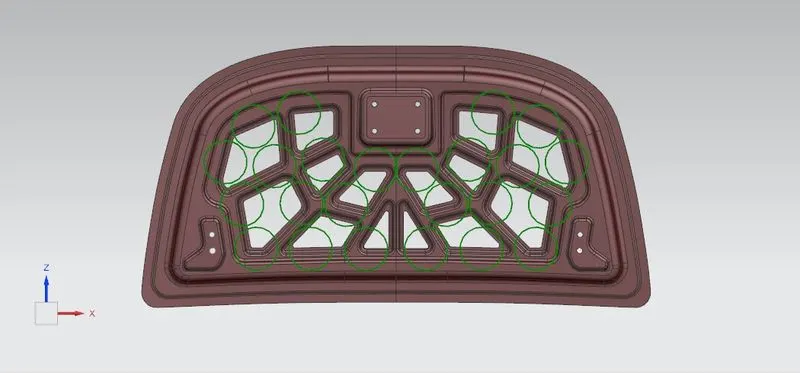
6) Based on Manufacturing Method (Allowances and tolerances): Based on master sketch provided dimensions are taken accordingly for the design using emboss, etc., for manufacturing point of view in deep Drawing a Positive Draft angle should be provided in order to tool for retraction. Hem Reliefs for the outer panel should be given. Proper Allowances and tolerances should be given.
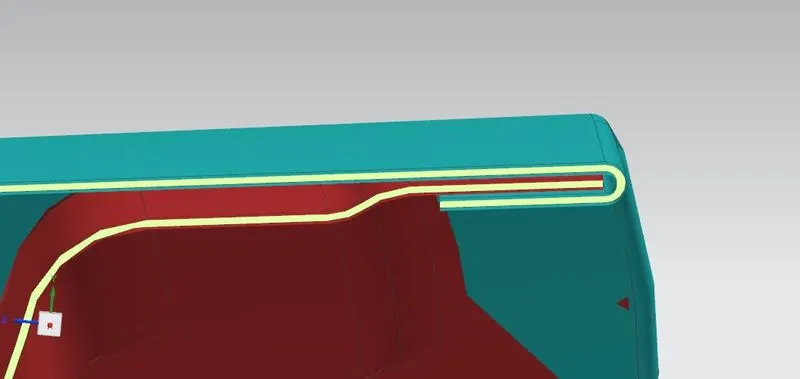
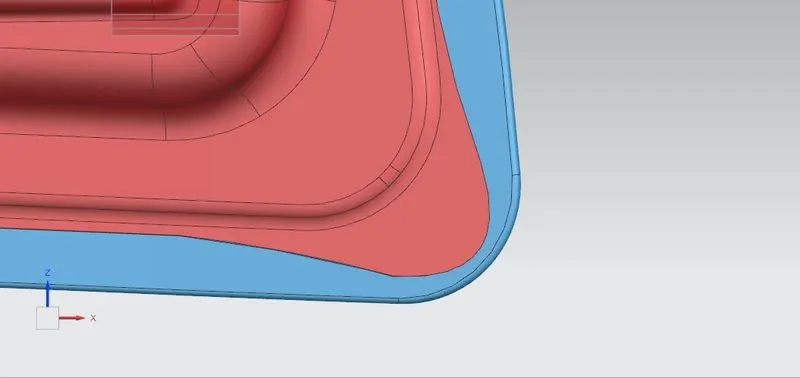
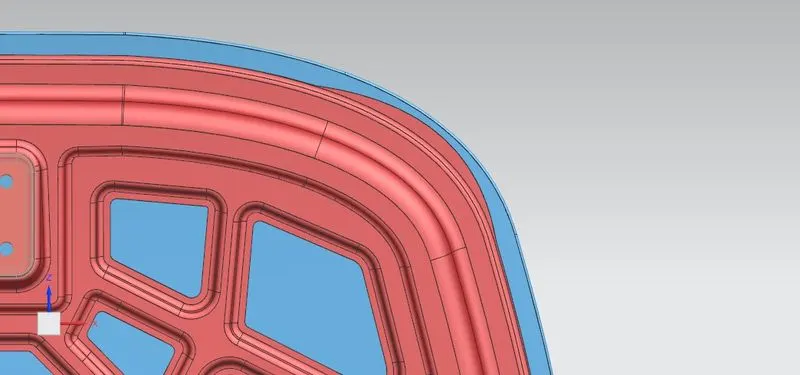
Considering all the above factors Hood assembly is designed in the NX CAD software.
- Aravind Neeladrisir please help for the hood challenge
- Ramakrishnan MHlo mam, i need your help , where we start the hood design , how to do , please help me.