Hood design-Week 2
HOOD DESIGN
OBJECTIVE : The main objective of this challenge is to create a complete hood design of a car using NX and to know about the components of the hood and how the individual parts of hood are assembled and to understand the functions and importance of it in a automobile vehicle.
INTRODUCTION
The Siemens NX is also known as Unigraphics NX is an advanced high end CAD /CAM/ CAE software package originally developed by UGS corporation, but since 2007 it is owned by Siemens PLM software. it is used for tasks such as design, engineering analysis and manufacturing finished design by using included machining module.
NX11 introduces capabilities for convergnt modelling, rapid manufacturing, improved annotations, drafting and documentation and rendering. active workspace in NX11 is build around these items to provide seamless access to PLM capabilities right within NX.
A car hood, also referred to as a bonnet in some other countries, is the hinged cover that rests over the engine of a front-engine vehicle. Its purpose is to provide access to the engine for repair and maintenance. A concealed latch is typically used to hold down the hood.
A car hood is meant to protect the performance parts of your vehicle, including the engine, while also providing easy access for repairs and maintenance. It is possible for the hood to incur damage as well. One of the most common types of damage is to the hinge, which is the device that connects the hood to the body of the vehicle. Over time, the hinge can become loose or may fall off completely. The hood is also prone to receiving scratches and dents. Although this might appear to be a minor problem, dents and scratches can lead to depreciation in the value of your vehicle. Scratches and dents can also lead to exposure to the elements that can result in rust and corrosion. This can be a serious problem that can ultimately expose the engine in your car to snow, sunlight, and rain. When this happens, it can impact the performance of your car's engine.
BODY IN WHITE (BIW)
Body-in-white (BiW) is the name given to a car body’s sheet when all its components—barring moving parts (e.g., hoods, fenders, etc.), trims (e.g., glass, seats, etc.), or chassis subassemblies—have been welded together. Usually, BiW constitutes about 27% of a car’s curb weight, and remains the key determinant of how the car will perform. BiW can be made into two structures: the more common monocoque structure where all body members are carrying load with chassis in-built with BiW and are integrated with each other, and the body-on-frame structure where the frame is the main load-carrying member.
BiW is expected to possess a number of significant properties. It must have high tensile strength as well as high bending stiffness, torsional, static, and dynamic. It must also provide good quality safety both to the car body and to its occupants against crashes of all kinds—front, rear, side, or even rollover, meeting the Federal Motor Vehicle Safety Standard No. 208. It should also be able to protect occupants from noise, vibration, and/or harshness (NVH) by absorbing or reducing these conditions. Also, it should be easy to weld and form, as well as be highly paintable and easy to design. It should provide a good surface finish that is smooth, and should also be corrosion resistant. Improvement of fuel economy also necessitates the use of lightweight materials in BiW, as it constitutes a significant share of car’s weight; in addition, given environmental concerns in recent times, it is also expected to be recyclable. Given such extensive requirements, only steel and aluminum have been used for making BiW; the former is preferred for its high strength and low cost, while the latter is preferred for its lower density that helps reduce car weight.
COMPONENTS OF A HOOD
Generally a hood of a car consists of five major components, they are
1.outer panel
2.inner panel
3.striker and latch
4.hinge assembly
5.mastic seals
OUTER PANEL:
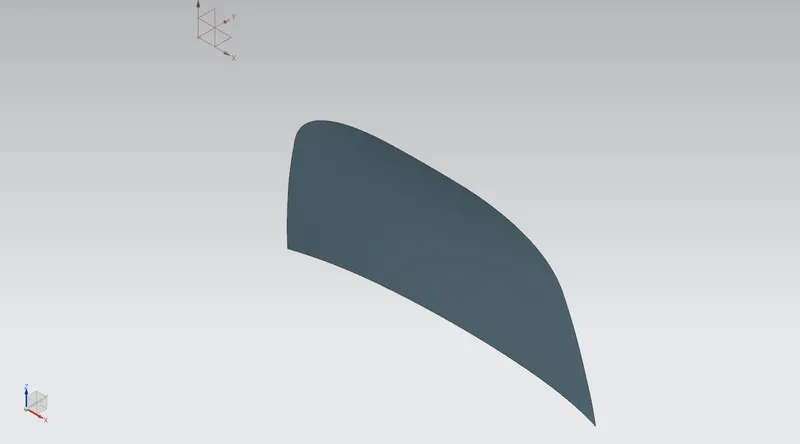
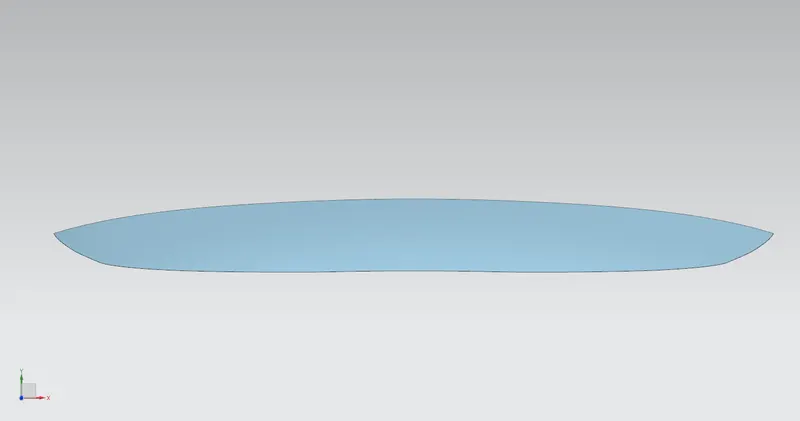
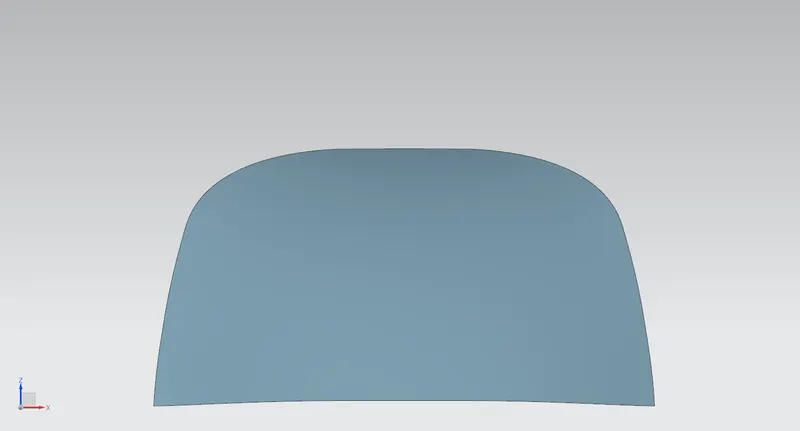
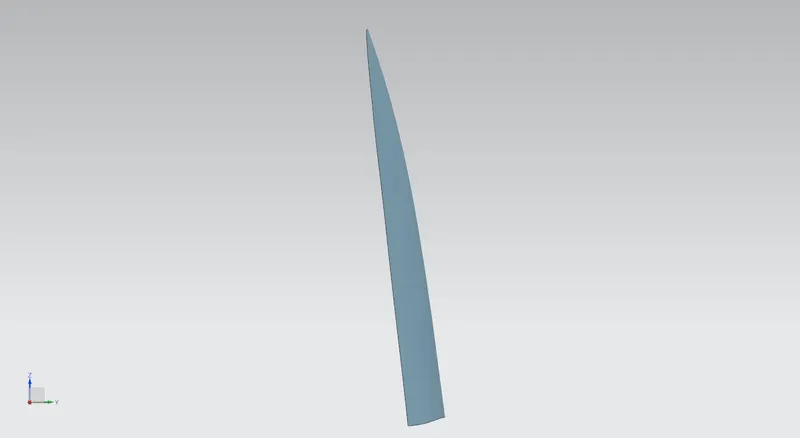
A hood panel is one of the most important components of the BIW (body in white), it is considered as the closure sheet metal component. the outer panel of a car hood is hemmed to a inner panel to form the automotive hood asssembly. generally outer panel of a hood is considered as a styling surface of the car which improves the asthetic looks of a car.
Differenet views of outer panel of a hood are given below
1.isometric view
2.top view
3.front view
4.right view
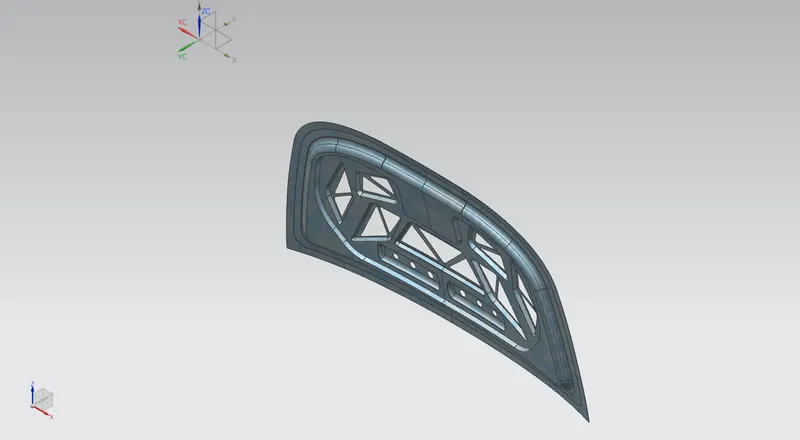
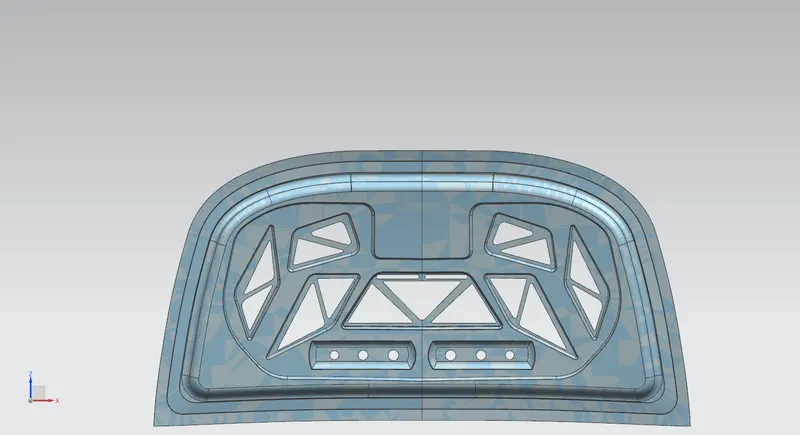
INNER PANEL:
A hood inner panel (5) includes an inner panel main body (5 a) forming part of a hood (1) of a vehicle, a front bead (7) provided on the inner panel main body (5 a) and extending along a vehicle width direction, and a rear bead (9) provided on the inner panel main body (5 a), located on the rear side of the front bead (7) toward a back of the vehicle and extending along the vehicle width direction. The front bead (7) is curved toward the front of the vehicle such that a center portion (7 a) in the vehicle width direction is located in front of each end portion (7 b) in the vehicle width direction, and the rear bead (9) is curved toward the back of the vehicle such that a center portion (9 a) in the vehicle width direction is located behind each end portion (9 b) in the vehicle width direction.
the parts are illustrated in the picture below
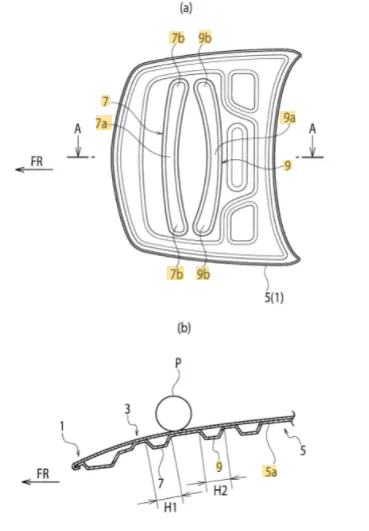
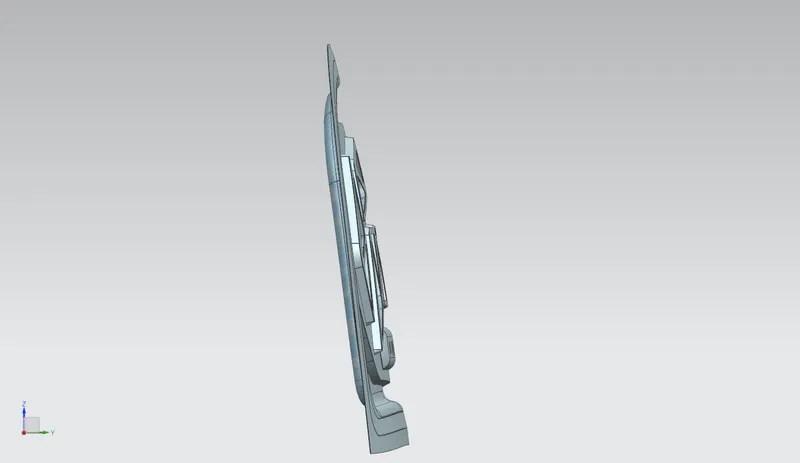
The inner panel in different views
1.isometric view
2.top view
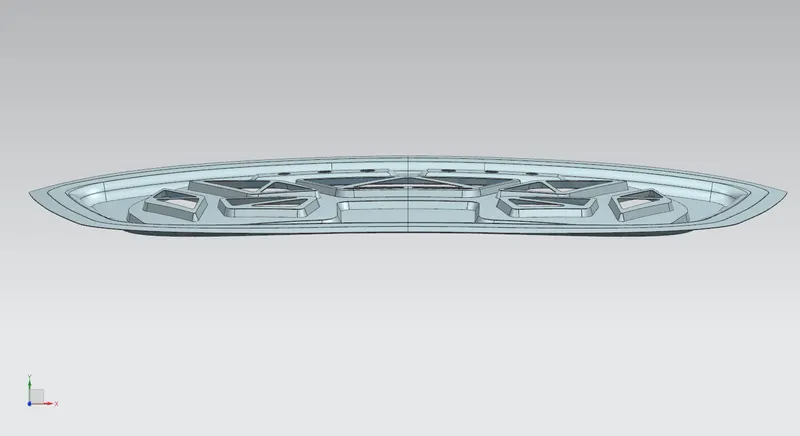
3.front view
4.right view
STRIKER AND LATCH:
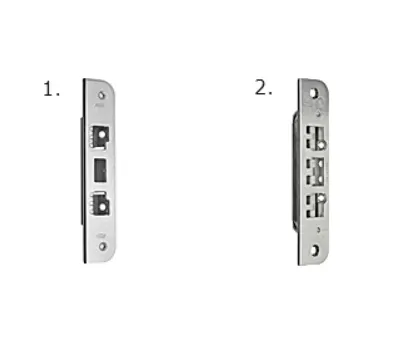
Striker is the part of an approved locking unit which is inserted in the frame. it helps to keep the door closed. when the dead bolt and the bolt is pushed into its hole, the door keeps colsed. together with a striker the hook bolt connects door and frame. the striker on image 1 is a saftey reciever, which is part of the approved lock. but we also provide fully adjustable saftey recievers(2).
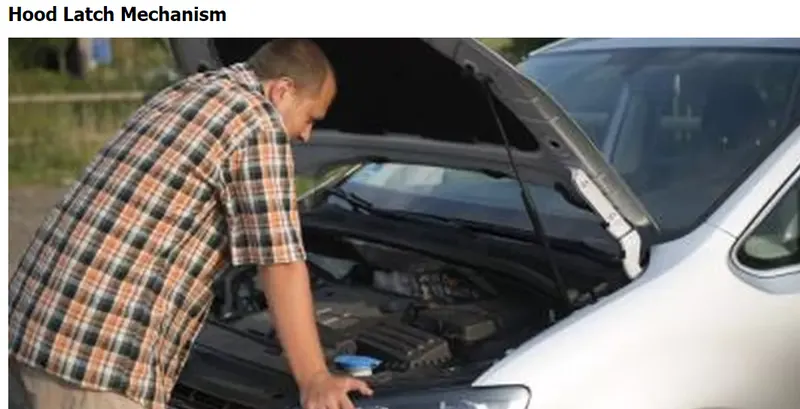
The hood latch system begins inside the compartment of the car. Located on the driver's side (usually on the left-hand lower corner of the dashboard) is the hood release handle. The hood release handle attaches to a cable which then routes through the dashboard towards the front of the vehicle.The hood latch mechanism in a car is a simple device. Although most cars are manufactured with similar hood release systems, they are individually designed for each make and model. This means that even though they all perform very similarly, they cannot be uninstalled from one make and model and then reinstalled in a different make and model. The overall concept of the mechanism is the same, but the schematics and design of the hood latch system is different on each vehicle. The hood latch system begins inside the compartment of the car. Located on the driver's side (usually on the left-hand lower corner of the dashboard) is the hood release handle. The hood release handle attaches to a cable which then routes through the dashboard towards the front of the vehicle. The other end of the cable is attached to a secondary latch, which is manipulated by the pulling of the cable (activated by pulling the hood release lever). Only an inch or two is required to pull the secondary latch away from its position, and then the hood pops open. At the front of the vehicle, a safety latch retains the hood. Locating and releasing the safety latch releases its hold on the hood and then the hood is allowed to open.
HINGE ASSEMBLY:
A hinge is a mechanical bearing that connects two solid objects, typically allowing only a limited angle of rotation between them. Two objects connected by an ideal hinge rotate relative to each other about a fixed axis of rotation. all other translations or rotations being prevented, and thus a hinge has one degree of freedom. Hinges may be made of flexible materialor of moving components. In biology, many joints function as hinges like the elbow joint.
Generally hinge assembly is used to open and close the hood or bannet of a car. it is connected between hood and car engine.
MASTICS SEALS:
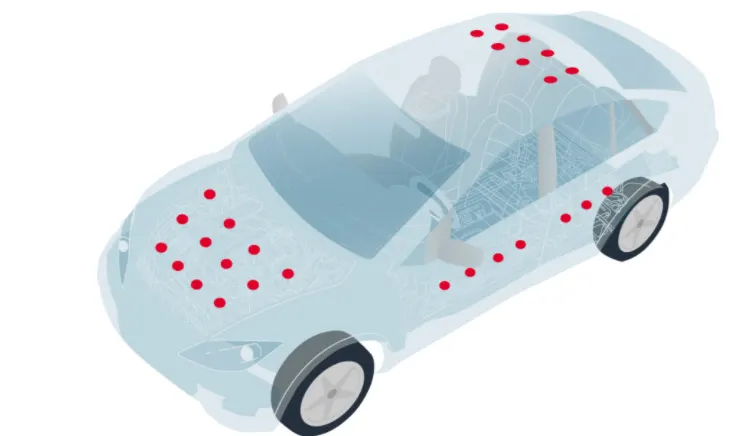
The mastic seals are the elastic components which behaves as a rubber which are placed between the hood inner panel and hood outer panel in the gap of 5 cm between the two panels. the points where the mastics seals are appplied are called mastic points. it acts like a glue between the inner panel and outer panel of a hood.
HOOD SUPPORTS
The hood support hold up the hood of a vehicle. This allows you to access the engine compartment without holding the hood up by hand or with a prop rod. Failed hood struts can be both dangerous and annoying as they could allow the hood to fall on your head.
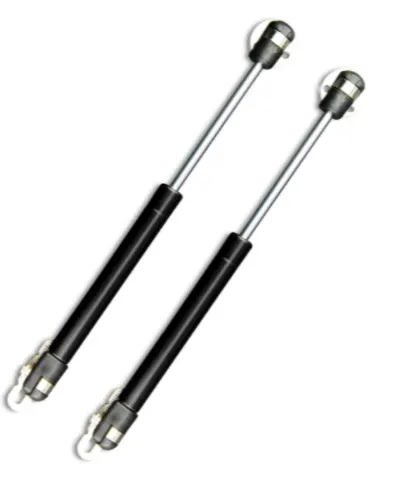
GAS LIFT SUPPORT:
Gas charged lift supports are energy storage devices that create energy by compressing gas inside a cylinder. When closed, the energy is stored. When opened the energy is released to raise a hatch, hood, liftgate or trunk, holding them safely in an open position. Gas charged lift supports are sometimes incorrectly thought of as shock absorbers or struts, which instead absorb energy to control motion. Lift supports normally store a gas charge of 1,500 psi, therefore, they cannot typically be compressed by hand.
By design, all gas charged lift supports begin to fail over time. They are typically out of sight and out of mind…until they no longer function properly. Furthermore, they may work reasonably well one day and then not at all the next. The most common causes of failure include loss of gas pressure due to natural permeation, exposure to extreme temperatures and frequent use or cycling of the part. Replacement can also be expected if the vehicle is of five years of age or older. Lift Support usage can be broken into two categories: Automotive specific applications and Universal applications.
SUPPORT ROD:
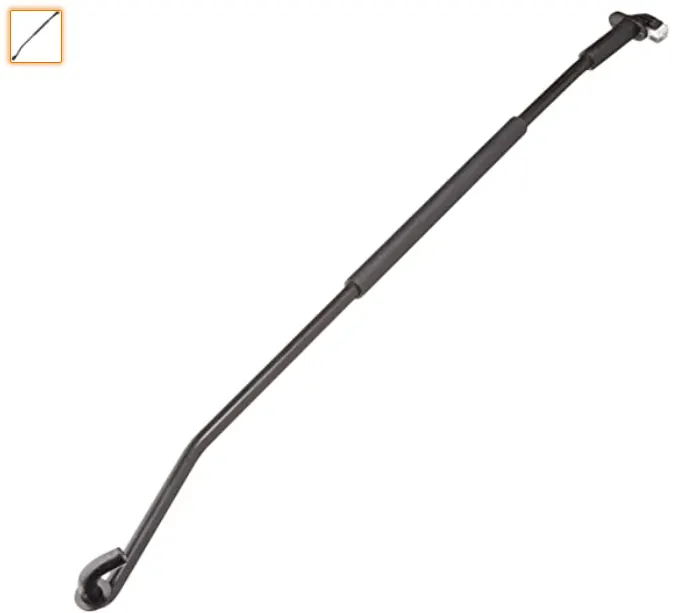
Generally in this case we have to lift the rod manually and attach it to either hood or to the engine compartment. in this type of suport one end is fixed to either hood or to the engne compartment and vice versa.
DESIGN CONSIDERATION
Design considerations inclusdes the data to be followed while designing the hood.
The design considerations generally includes the master aketch and hemming details.
The data to be followed in design of hood are given below
- hood thickness information
1.outer panel thickness is 0.75 mm
2.inner panel thickness is 0.75 mm
3. reinforcement thickness is 1.5 mm
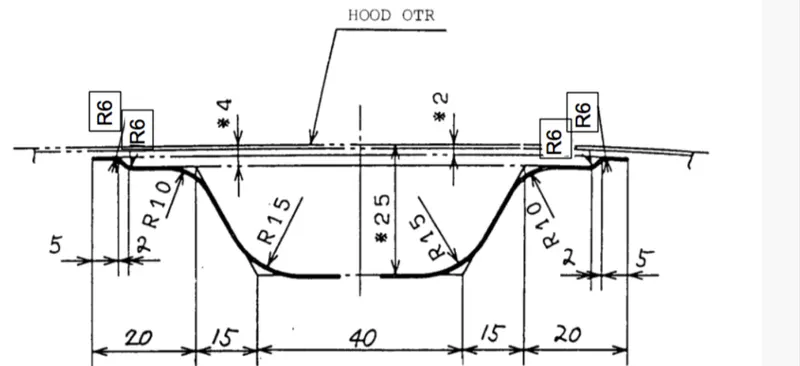
- MASTER SKETCH: A master sketch is a sketch which gives us every detail that we required in any stage of design process. in shows us the required dimenssions of the components. in our case the master sketch is as shown in below picture,
HEMMING OF HOOD:
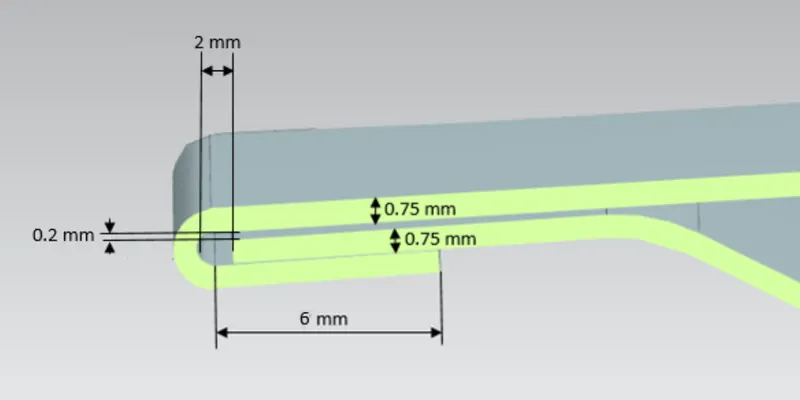
Hemming is technology that is used by automobile industries to join inner and outer panels together. it is the process of bending or folding the flange of the outer panel over the inner panel. the accuracy of the hemming process significantly affects the looks of car's outer panel and its therefore critical factor in the quality of a finished vehicle.
Hemming is performed in order to:
- Achieve a better final geometry in the vehicle´s part
- Add resistance and rigidity to the part
- Allow a safe handling of the part.
TRAJECTORY OF HOOD OPENING AND CLOSING:
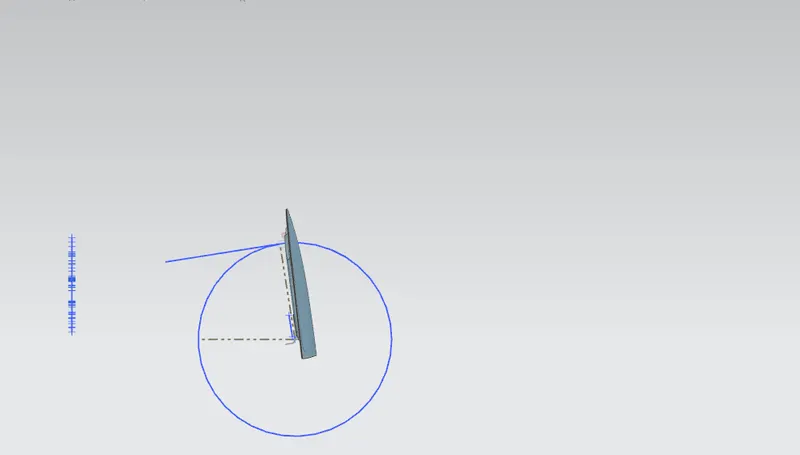
For the proper opening and closing of the hood a proper mountings of latch and striker and hinge assembly are required. in the stage of design it can be accomplished by drawing a circle whose cenre is coincident to the centre of hinge assembly. Now draw a line which is tangent to the circle. now whilw mouting the striker and hinge assembly use the intersection point of the circle and tangent that we have drawn previously.this will guide the stricker and latch to be placed or assembled accurately. these drawings should be made on the inner panel. the image of these drawings will be as shown below,
PEDESTRIAN SAFTEY WHILE DESIGNING A VEHICLE
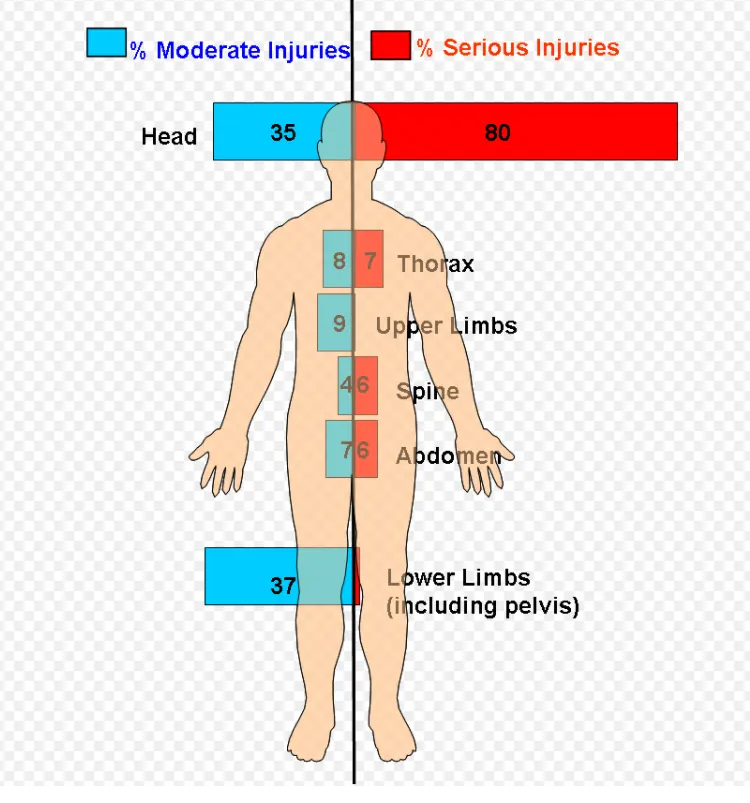
According to WORLD HEALTH ORGANIZATION (WHO) in may 2013 has reported that more than 2,70,000 pedestrians lose their leaves each year on the roads each year, accounting for 22% of the total 1.24 million road traffic deaths. Despite the magnitude of the problem, most attempts at reducing pedestrian deaths had historically focused solely on education and traffic regulation. Since the 1970s, crash engineers have begun to use design principles that have proved successful in protecting car occupants to develop vehicle design concepts that reduce the likelihood of injuries to pedestrians in the event of a car-pedestrian crash. These involve re designing the bumper, hood or (bonnet), and the winshield and pillar to be energy absorbing (softer) without compromising the structural integrity of the car. With the advent of ADAS(Automated Advanced Driver Assist Systems) since 2005, new pedestrian detection and crash avoidance and mitigation systems offer even greater improvements through active rather than passive protection systems. For example, omniview technology allows a driver to see what is a around the vehicle before moving.
Mainly the head and limbs are the parts which are majorly affected when someone met with an accident, now we will discussspecify how to protect these head and limbs by using some methods,
PROTECTION OF HEAD:
The hood of most vehicles is usually fabricated from sheet metal, which is a compliant energy absorbing structure which poses a comparatively small threat. Most serious head injuries occur when there is insufficient clearance between the hood and the stiff underlying engine components. A gap of approximately 10 cm is usually enough to allow the pedestrian’s head to have a controlled deceleration and a significantly reduced risk of death. Creating room under the hood is not always easy because usually there are other design constraints, such as aerodynamics and styling. In some regions of the hood it can be impossible. These include along the edges on which the hood is mounted and the cowl, where the hood meets the windshield. Engineers have attempted to overcome this problem by using deformable mounts, and by developing more ambitious solutions such as airbags that are activated during the crash and cover the stiff regions of the hood.
PROTECTION OF LIMBS:
Most limb injuries occur due to a direct blow from the bumper and the leading edge of the hood. This leads to contact fractures of the femur and the tibia and damage to the knee ligaments due to bending of the joint. Thus, attempts at reducing these injuries involve reducing the peak contact forces by making the bumper softer and increasing the contact area and by limiting the amount of knee bending by modifying the geometry of the front end of the car. computer simulations and experiments with cadavers show that when cars have lower bumpers, the thigh and leg rotate together causing the knee to bend less and thus reducing the likelihood of ligamnet injuries. Deeper bumper profiles and structures under the bumper (such as the air dam) can also assist in limiting the rotation of the leg.
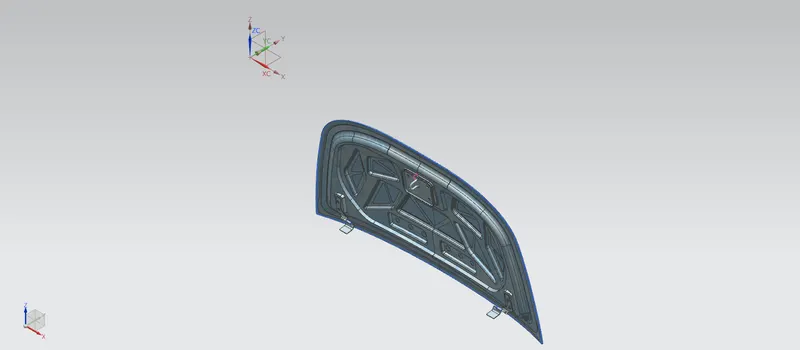
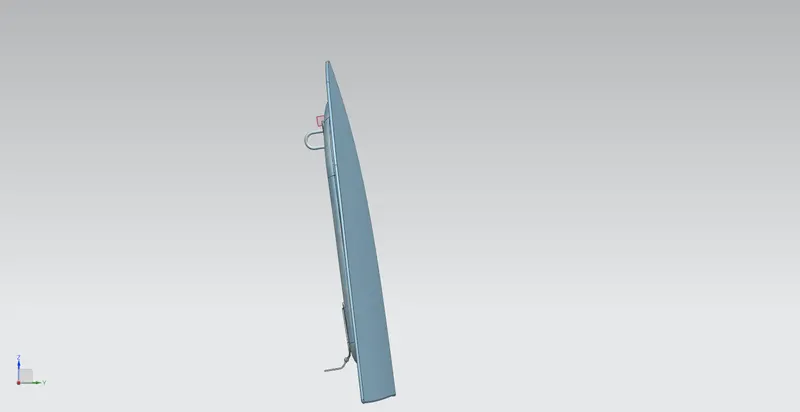
ASSEMBLY VIEWS OF HOOD
- ISOMETRIC VIEW
- TOP VIEW
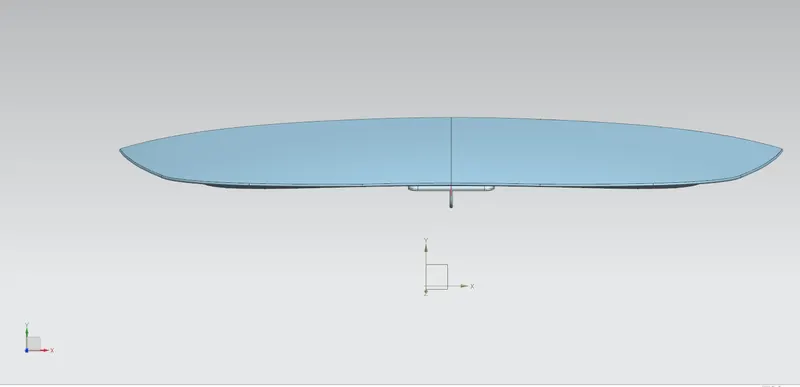
- FRONT VIEW
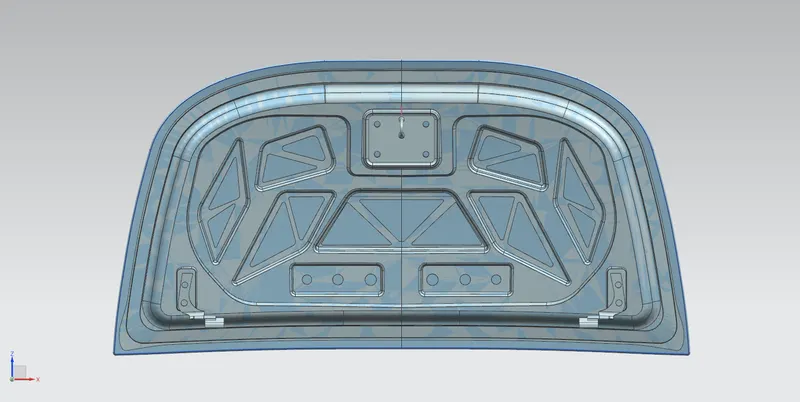
- RIGHT VIEW
CONCLUSSIONS
Thus, we are concluding that we have designed the hood componets and assembled them successfully by following the considerations mentioned in the design considerations and files are saved successfully for future reference.